
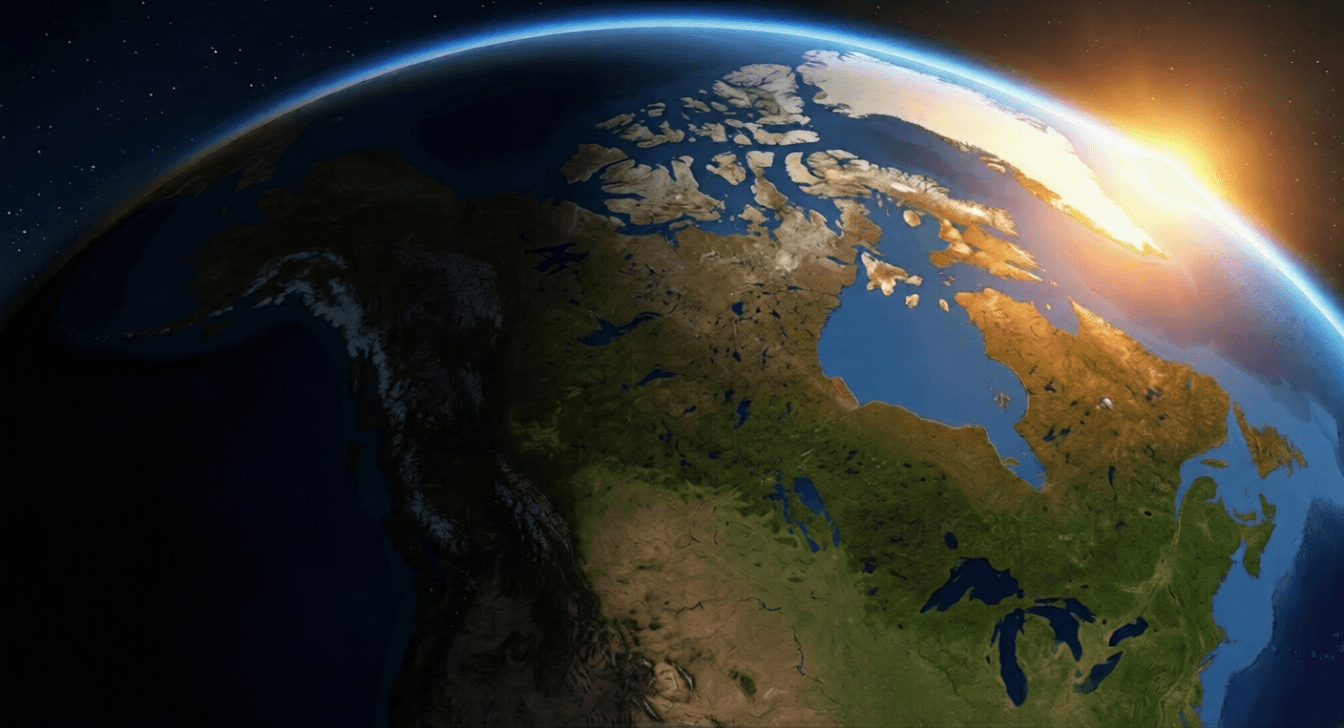
The Weird Places, Creatures, and Legends Behind Warriors of the Last Days
What if the strangest parts of Canada were not inventions?
Canada has creatures that sound impossible, places with names that make you stop and read them twice, landscapes shaped by extraordinary weather, plants that survive where they should not, and legends that have outlived the people who first told them.
At Warriors of the Last Days, we like to take those things seriously.
Not necessarily literally. But seriously enough to research them, ask what makes them unusual, and wonder what might happen if the world changed around them.
Our post-apocalyptic fiction begins with a simple premise: the world has changed, but the places we know have not stopped being themselves. Their geography, ecology, history, folklore, and peculiarities still matter. Sometimes, those details are more unsettling than anything we could invent from scratch.
That is why we challenge ourselves to write stories about Canada’s strangest places, most unusual creatures, forgotten legends, and ecological oddities. The result is a growing collection of Canadian post-apocalyptic fiction that explores the country one strange detail at a time.
And we are always looking for the next one.
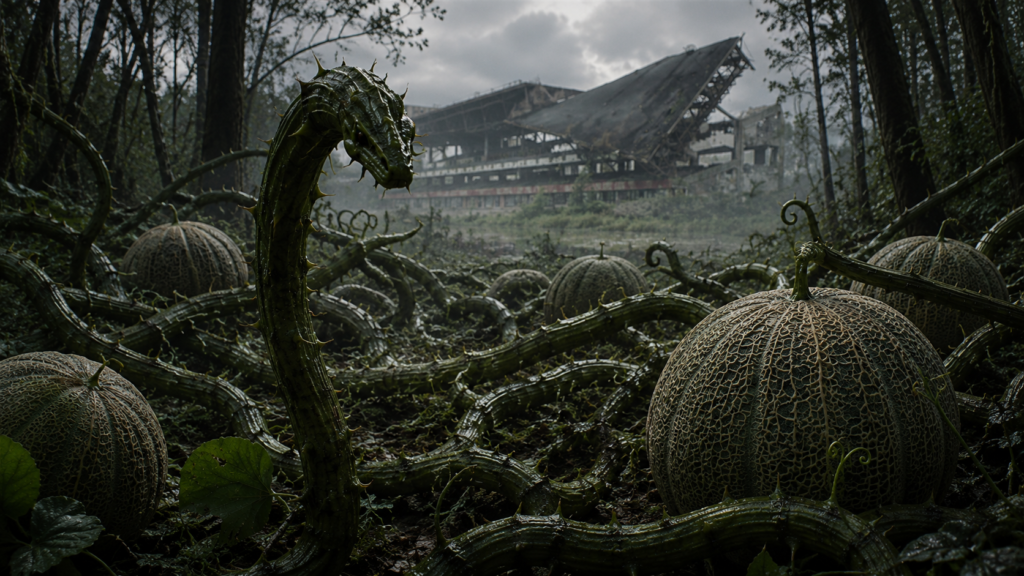
Strange Creatures: When Nature Refuses to Cooperate
One of the pleasures of writing Warriors of the Last Days is imagining what happens when familiar animals and plants adapt to a world that no longer follows the rules we expect.
Our creatures are not simply monsters placed in a landscape to give our characters something to fight. We research their biology, behaviour, habitat, and possible evolutionary pressures. Even when a creature is fantastical, we want its existence to make sense within the altered ecology of our fictional world.
Consider the creatures in The Drift. A carnivorous sundew becomes a threat on the forest floor. Feral descendants of domestic chickens become formidable predators. And something immense, the Colossus of Rivière-des-Prairies, looms over the water between Montréal and Laval.
Each creature raises a different question. What happens when an ordinary organism develops an extraordinary advantage? What happens when domesticated animals return to a harsher existence? And what happens when we encounter something so large that our usual understanding of animals no longer applies?
We are interested in the space between scientific plausibility and the genuinely inexplicable. We want readers to wonder whether a creature could exist, how it might survive, and what its presence would mean for the people living nearby.
Sometimes, the most effective horror begins with an ordinary species and one terrible change.

Microclimates and Microecology: A Different World Around the Corner
Canada is enormous, but you do not need to travel thousands of kilometres to encounter a radically different environment.
A sheltered valley can retain heat while the surrounding terrain freezes. A temperature inversion can carry sound across a landscape in unexpected ways. A wetland can sustain a distinctive community of organisms. A forest, cave, quarry, or stretch of coastline can create conditions unlike those found just beyond its boundaries.
These local differences become particularly interesting after a catastrophe.
In Warriors of the Last Days, we explore what happens when environmental peculiarities become survival problems. A local weather phenomenon might change how people travel. A changed ecosystem might make a familiar forest dangerous. A plant might flourish in contaminated ground while every other species struggles.
Our Snag, Yukon research is a good example. The real settlement is associated with Canada’s record-low temperature of −63°C, recorded in February 1947. The extreme cold also produced unusual conditions for sound transmission. Those facts offer more than an interesting historical footnote: they provide the foundation for imagining a landscape in which hearing something from a great distance could change the outcome of a journey.
We look for details like these because they make fictional environments feel specific rather than interchangeable.
A story set in the Yukon should not feel as though it could just as easily happen in southern Ontario. The land should influence the plot, the creatures, the dangers, and the decisions people make.
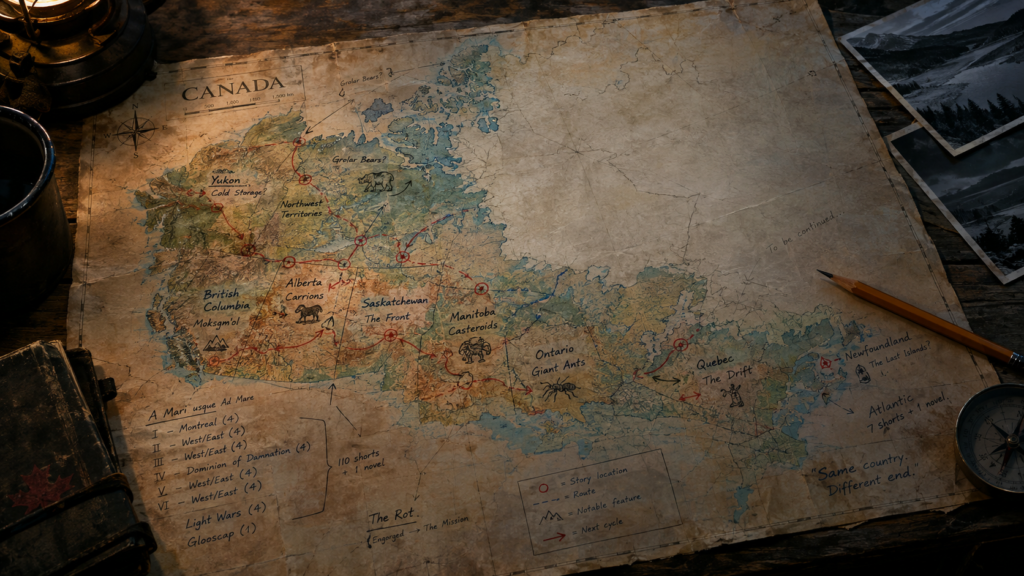
Strange Places: Canada’s Geography Has Stories to Tell
Some places seem to arrive with a story already attached.
Take Pekwachnamaykoskwaskwaypinwanik Lake in Manitoba, whose extraordinarily long name is associated with fishing for wild trout with hooks. Or Saint-Louis-du-Ha! Ha! in Québec, a real municipality whose name contains two exclamation marks. Or Meat Cove, Nova Scotia, a remote coastal community at the northern tip of Cape Breton Island.
These are real places, not inventions created for a novel.
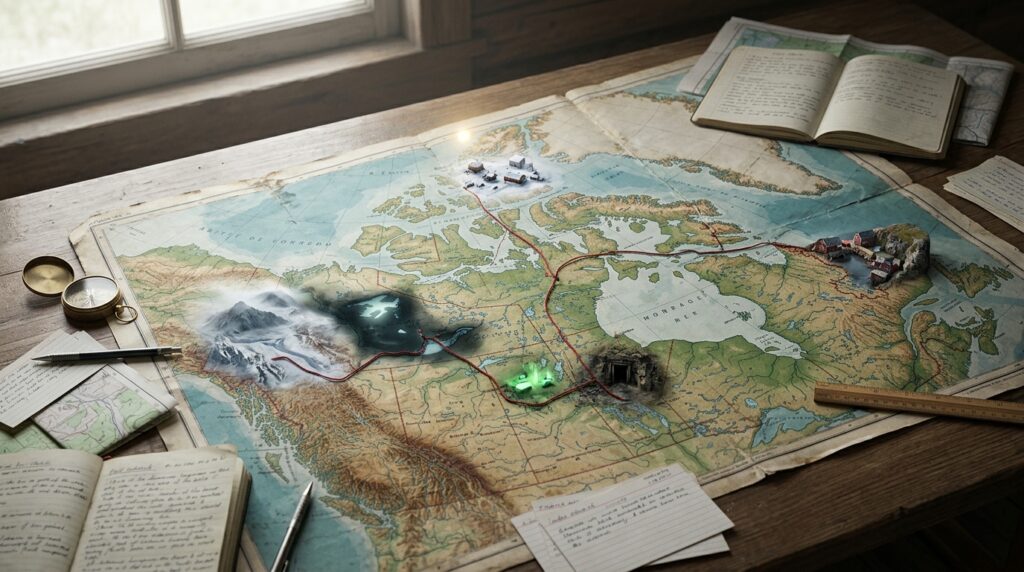
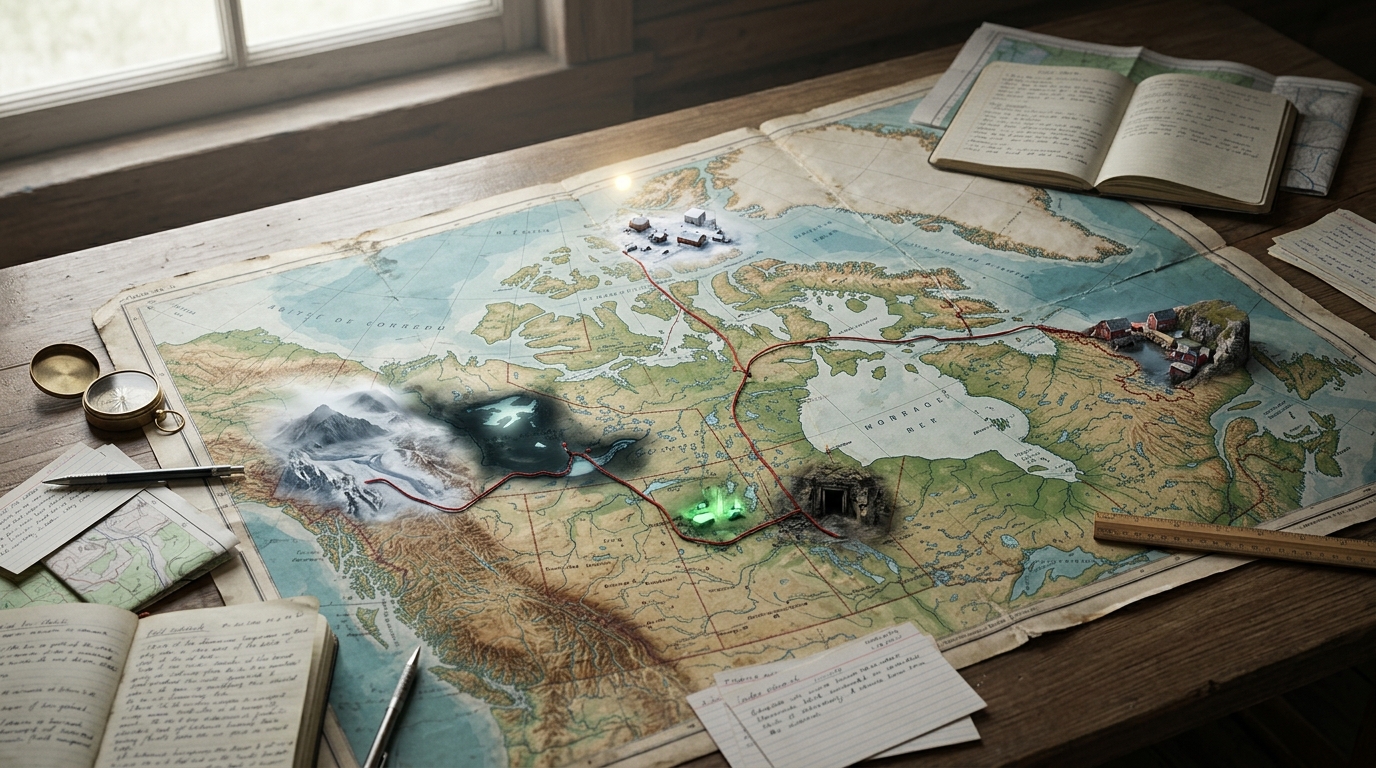
Our Strange Maps article explores the self-imposed challenge of building stories around unusual Canadian place names. The challenge is not simply to find a funny name and attach a monster to it. It is to discover what makes the location distinctive and then find the story that belongs there.
A place name can suggest a mood, but its history can suggest something more substantial. A former mining settlement might lead to a story about isolation and buried secrets. A remote coastal village might inspire a tale about the sea and the obligations it imposes. An abandoned northern outpost might become the setting for a survival story in which the environment is as important as any human antagonist.
We are also interested in places that are difficult to reach, places that have disappeared from ordinary maps of public attention, and places whose histories are stranger than their reputations.
Canada has no shortage of them.
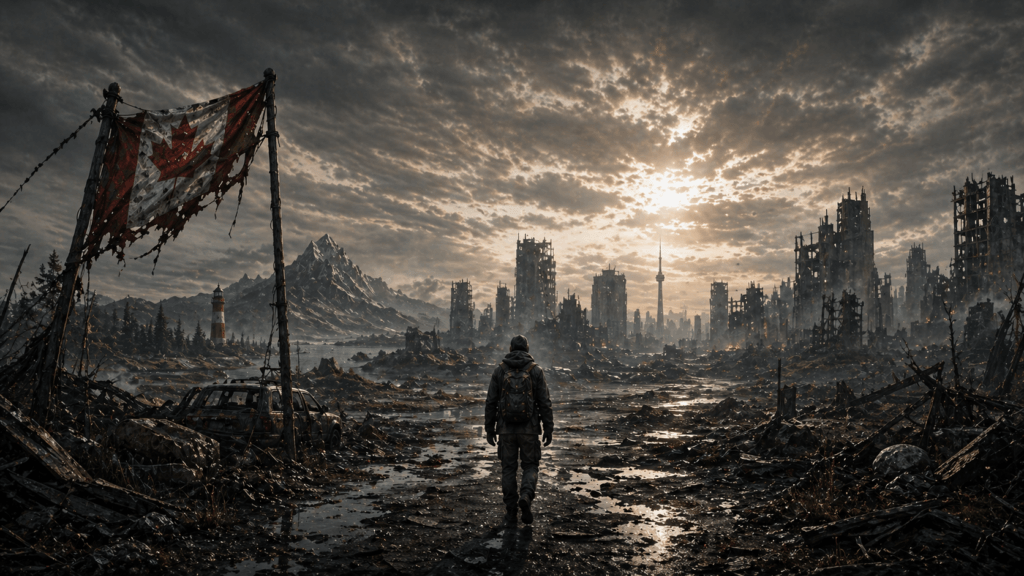
Folklore, Mythology, and Legends That Refuse to Die
Every region has stories that people pass down. Some explain the landscape. Others warn against certain places or behaviours. Some describe creatures that supposedly inhabit nearby lakes, forests, mountains, or waters.
We are fascinated by what happens when those stories enter a post-apocalyptic setting.
What if a creature from local folklore appears in a world where conventional explanations have already begun to fail? What if a legend survives because generations of people have observed something they could never adequately explain? What if a familiar tale becomes a practical warning rather than an entertaining story told around a fire?
Our fiction draws on a wide range of Canadian settings and traditions, including stories associated with Ogopogo, the legendary lake creature of British Columbia, and the Ijirait of Inuit folklore.
These subjects require care. Indigenous stories and traditions are not interchangeable collections of monsters and spooky tales. They belong to living cultures, histories, and communities. We want to understand the context of the material we explore, distinguish documented traditions from our own inventions, and avoid treating cultural knowledge as decoration.
The aim is not to claim that every legend is true. It is to ask why a story endured, what it means in its original context, and how its presence might shape a fictional encounter.
Sometimes the most interesting question is not whether the creature exists.
It is why people have continued to tell its story.
Flora and Fauna: The Strange Things That Grow in Specific Places
Not every oddity has teeth, claws, or a legendary reputation.
Sometimes, the most interesting discovery is a plant that grows in a very particular habitat, an animal found only in a limited region, or an organism whose survival depends on an unusual relationship with its environment.
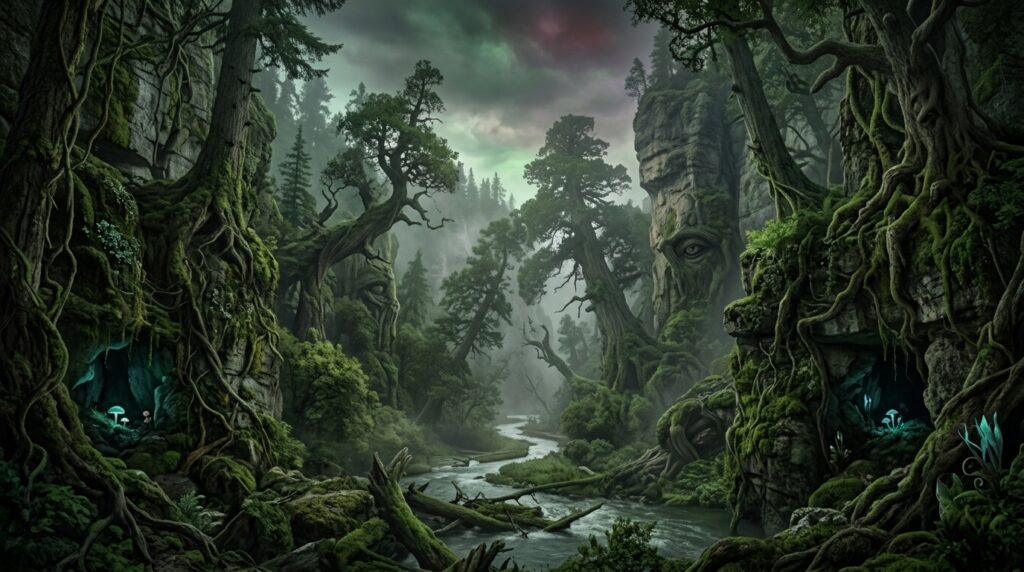
Canada’s ecosystems offer an extraordinary range of possibilities. Carnivorous plants grow in nutrient-poor wetlands. White-coated Kermode bears inhabit parts of British Columbia’s coastal region. Unique northern and island ecosystems support organisms adapted to conditions found nowhere else in quite the same combination.
For a writer, these are starting points.
What happens when a plant’s natural defences become more effective? Could an organism adapted to a specific habitat exploit environmental changes after a catastrophe? How might a species that once occupied a small ecological niche spread into new territory? What happens when two species begin interacting in ways that neither evolved to handle?
Our approach is to start with the real organism, understand its characteristics, and then consider what might change in the world of Warriors of the Last Days.
The fictional result can be extraordinary. The underlying inspiration should still have roots in something real.
The Challenge: Find the Story That Belongs to the Place
We do not want every story to be about the same kind of monster, the same environmental disaster, or the same familiar post-apocalyptic landscape.
Canada offers too many possibilities for that.
A story inspired by an extreme cold record should raise different questions from one inspired by a carnivorous plant. A legendary creature should not behave like a laboratory experiment simply because both appear in a post-apocalyptic setting. A remote settlement with an unusual history deserves a different approach from a community living beside a strange geological formation.
Sometimes we begin with a place and search for the story hidden in its geography and history. Sometimes we begin with a creature, a local legend, or an ecological phenomenon and search for the right setting.
Occasionally, we discover something so peculiar that we have to build an entire story around it.
That is part of the challenge.
We want to explore the Canada that exists beyond the familiar landmarks: the small communities, forgotten settlements, unusual habitats, obscure historical incidents, regional legends, and geographical curiosities that rarely receive attention in fiction.
And we want the details to matter. They should shape the story, not merely decorate it.
Help Us Discover Canada’s Next Strange Story
Here is where you come in.
Canada is too vast, and its local histories too numerous, for any one writer to know everything. There are places we have never visited, stories we have never heard, species we have not studied, and local peculiarities that may be well known in one community but virtually unknown elsewhere.
What strange Canadian oddity should we investigate next?
We are looking for suggestions such as:
- Unusual places: Strange place names, abandoned settlements, isolated islands, forgotten industrial sites, unusual geological formations, mysterious caves, and places with surprising histories.
- Odd creatures and wildlife: Unusual animal behaviour, rare or locally distinctive species, unexplained sightings, regional cryptids, and creatures associated with particular landscapes.
- Plants and fungi: Rare plants, carnivorous species, unusual growth patterns, distinctive fungi, and organisms with remarkable ecological relationships.
- Microclimates and ecosystems: Places where weather behaves unexpectedly, isolated habitats, unusual temperature patterns, peculiar water conditions, and ecosystems that differ sharply from their surroundings.
- Myths, legends, and folklore: Regional ghost stories, legendary creatures, traditional tales, local superstitions, and stories passed down through generations.
- Historical and geographical oddities: Forgotten experiments, abandoned infrastructure, unusual natural events, peculiar local traditions, and facts that sound fictional until you investigate them.
Your suggestion does not need to be frightening. It does not even need to be supernatural.
It simply needs to be interesting enough to make us ask questions.
Perhaps you grew up near a lake with an unusual reputation. Perhaps there is a plant in your region that almost nobody outside the area knows about. Perhaps your town has a strange name whose origins are worth investigating. Perhaps you know a local legend that deserves more attention, or you have read one of our stories and spotted a detail we overlooked.
We want to hear about it.
Contact us through the Warriors of the Last Days website and tell us what you think we should explore. Include the location, the story behind it, and any reliable sources or references you know of, if available.
If the subject belongs to a particular Indigenous nation or cultural tradition, relevant community sources and guidance are especially valuable.
We cannot promise that every suggestion will become a story. But your discovery might become the starting point for one.
A Stranger Canada, One Story at a Time
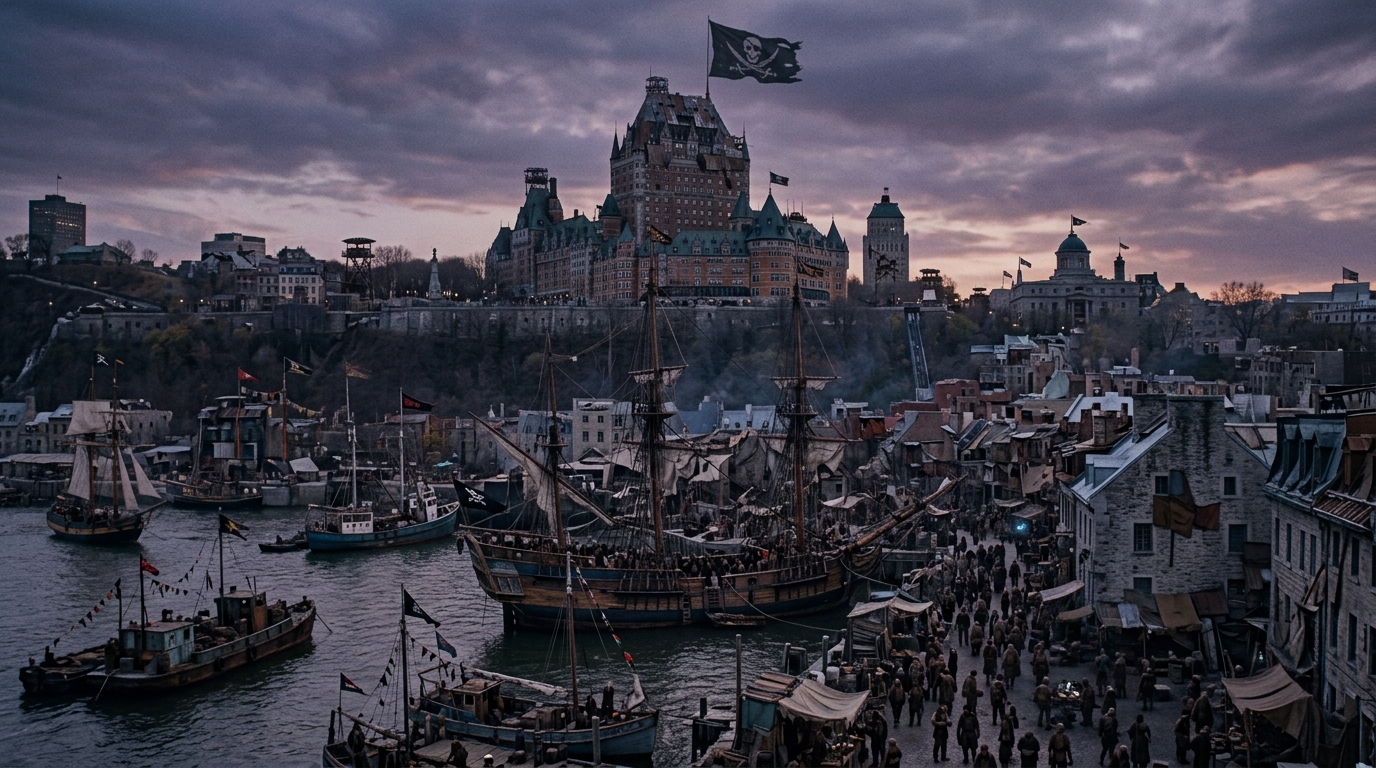
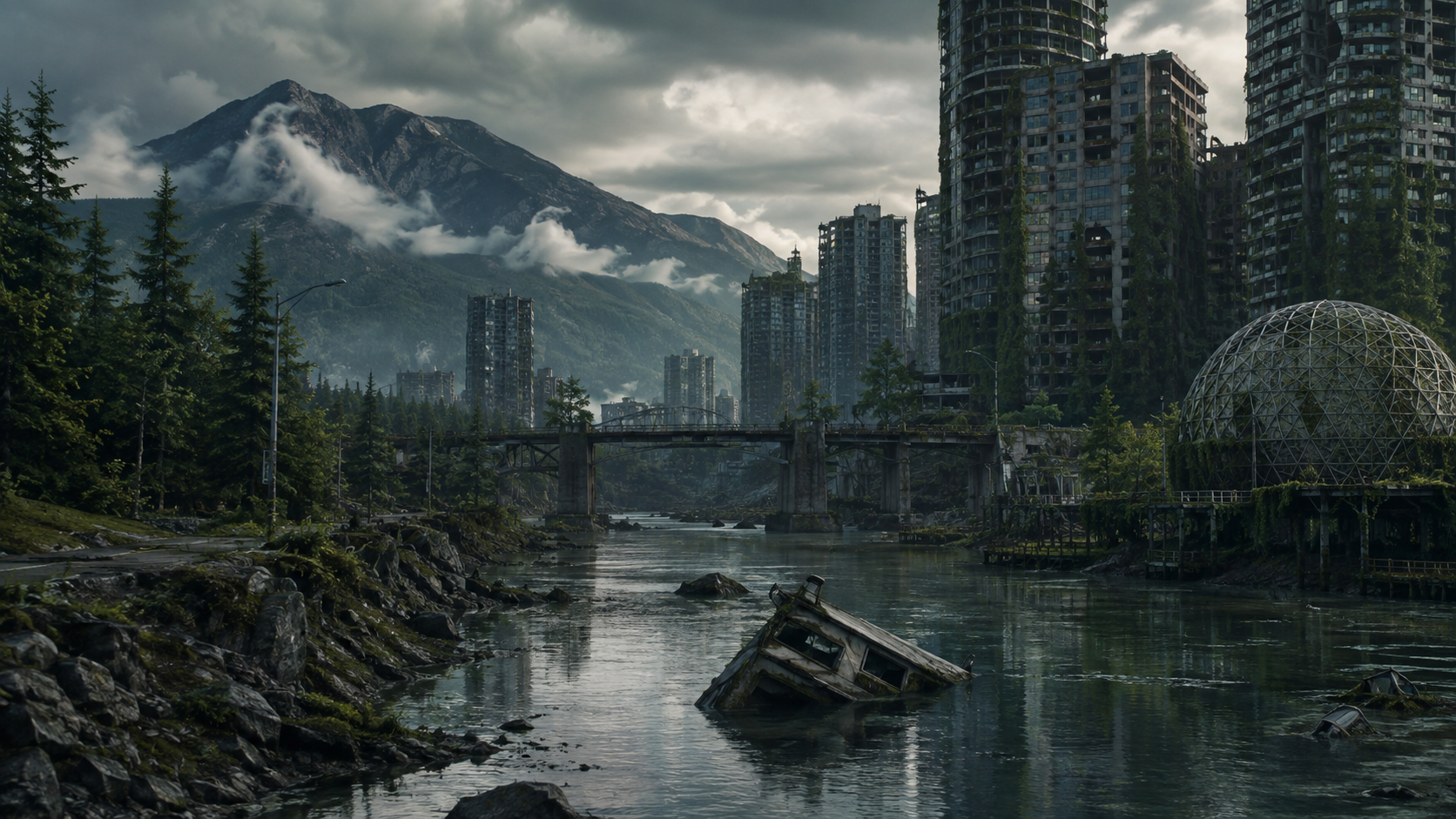
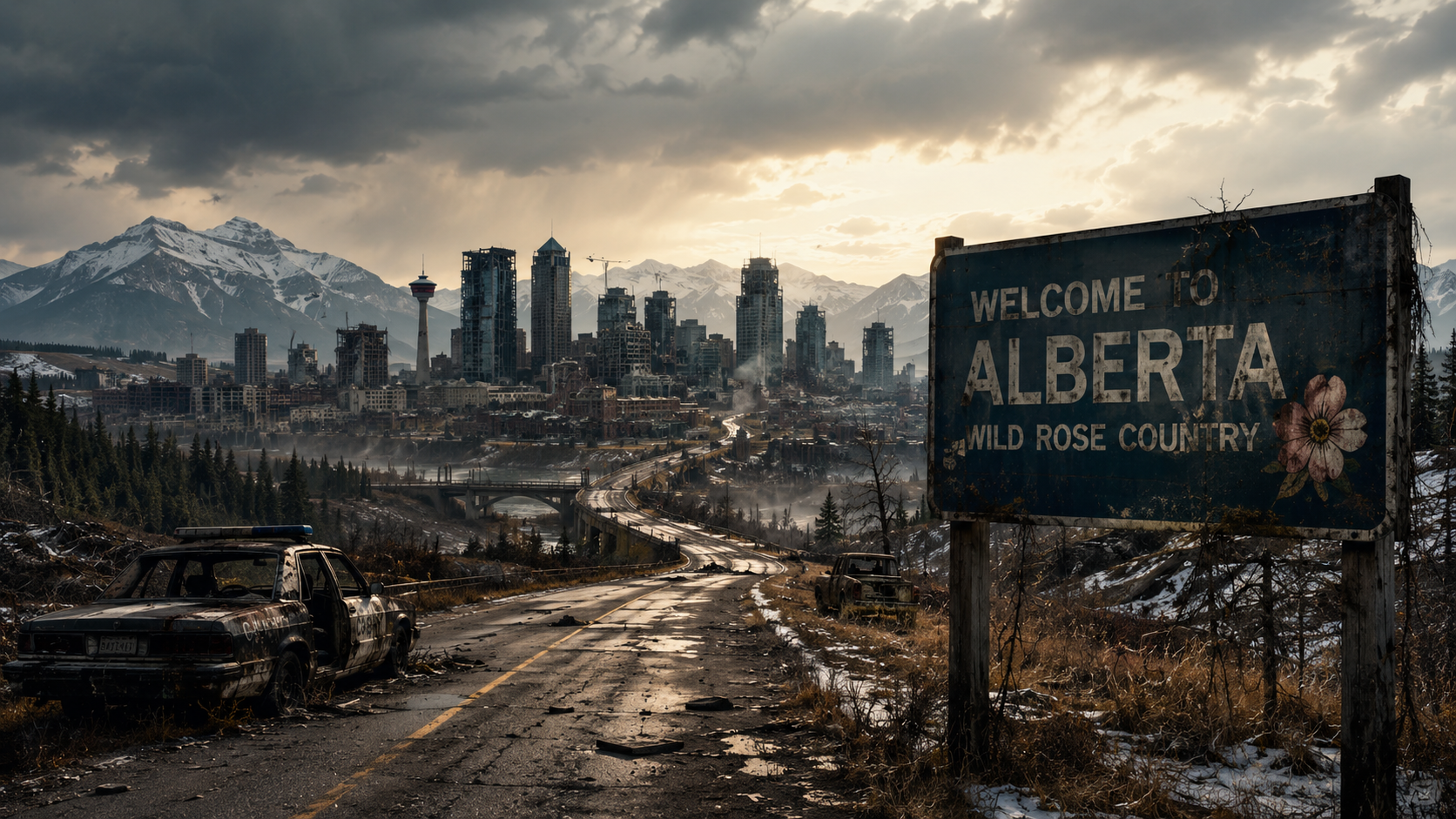
Warriors of the Last Days is a post-apocalyptic fiction universe rooted in Canada. Its stories explore what remains after the world changes, from the familiar streets of Montréal to distant communities, unusual landscapes, and places where nature no longer behaves as expected.
Our goal is not simply to imagine the end of the world. It is to explore the extraordinary details of the world that was already here.
There are still places we have not written about, creatures we have not imagined, and legends we have not investigated.
Help us find them.
Know something strange about Canada? Tell us. It might be the beginning of our next story.
Explore more on the Warriors of the Last Days website, including our creature guide, Canadian short stories, and Strange Maps.
HOW TO READ THE STORIES
If you are new to the series, start at the beginning with The Refusal. Every book stands on its own, but the arc lands harder in order.
Never miss a release. Join the Last Days Dispatch.
A new short story opens every month, and a novel closes the quarter. Subscribe to the Last Days dispatch and they arrive on their own.

- The Weird Places, Creatures, and Legends Behind Warriors of the Last Days
- Strange Creatures: When Nature Refuses to Cooperate
- Microclimates and Microecology: A Different World Around the Corner
- Strange Places: Canada's Geography Has Stories to Tell
- Folklore, Mythology, and Legends That Refuse to Die
- Flora and Fauna: The Strange Things That Grow in Specific Places
- The Challenge: Find the Story That Belongs to the Place
- Help Us Discover Canada's Next Strange Story
- A Stranger Canada, One Story at a Time
- HOW TO READ THE STORIES
Two new post-apocalyptic stories from Canada. Every month.
The earlier you join, the larger your library becomes.
Join now. Start building your library.
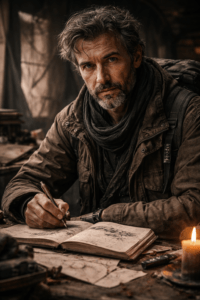 Stéphane Roy is a lifelong reader and writer with a deep love for science fiction, apocalyptic worlds, and tightly constructed mysteries. He lives in the Yukon with his dog and his aquarium, where long winters, silence, and wide, sometimes glowing, skies leave plenty of room for imagining the end of the world, and what might come after it. He is also waiting, with cautious optimism, for the aliens to finally reveal themselves and straighten us all out.