
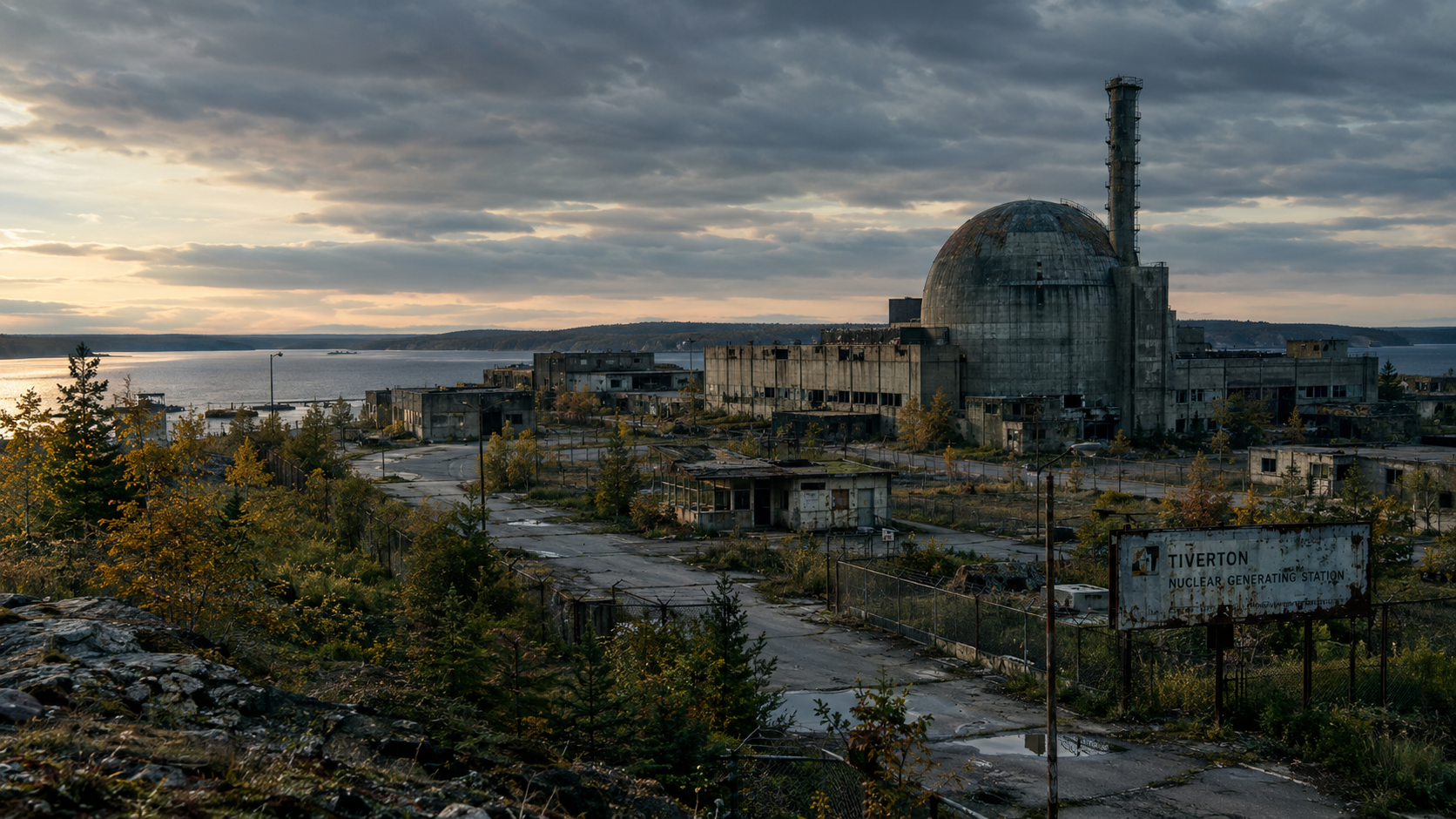
Nuclear Power, Buried Waste, and the Landscape of a Post-Apocalyptic Canada
Tiverton, Ontario, is a small community on the shores of Lake Huron, in Bruce County, where rural Ontario meets one of Canada’s most significant nuclear energy installations. Its surroundings offer a fascinating intersection of agricultural landscapes, Great Lakes ecology, industrial infrastructure, and the long-term question of what happens to radioactive waste after the power plants that produced it have reached the end of their useful lives.
For readers of Warriors of the Last Days, Tiverton represents something particularly unsettling: the persistence of human decisions long after the people who made them have disappeared. Nuclear facilities are built to operate for decades. Some radioactive materials require isolation for far longer. The landscape must somehow accommodate both the ordinary rhythms of life and the consequences of technologies whose timelines extend far beyond a human lifetime.
In a post-apocalyptic Canada, that contrast becomes even more compelling. What would remain of the nuclear industry after the collapse of the institutions responsible for operating, monitoring, and securing it? Which dangers would be immediately visible, and which would remain hidden beneath the ground?
Tiverton provides a real Canadian setting in which to explore those questions.
Where Is Tiverton, Ontario?
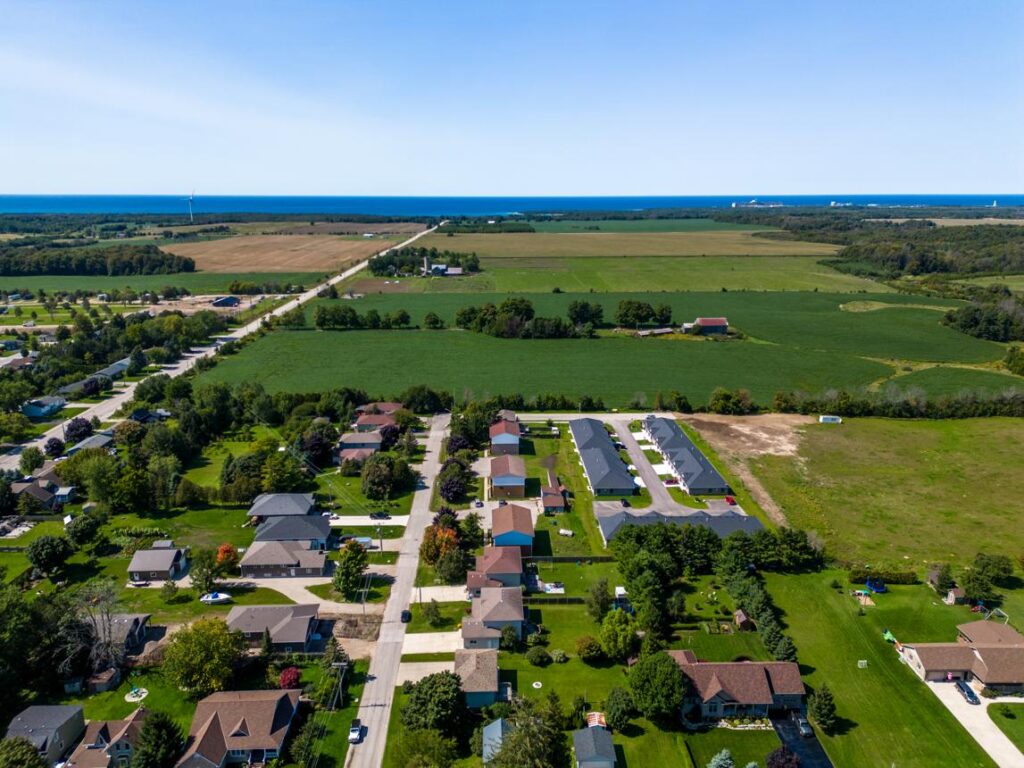
Tiverton is a small community in the Municipality of Kincardine, in southwestern Ontario’s Bruce County. It lies close to the eastern shore of Lake Huron, north of the town of Kincardine and within a region known for its agricultural land, shoreline communities, beaches, and rural roads.
The area’s geography is central to its identity. Lake Huron forms part of the Great Lakes freshwater system, connecting communities across Ontario and the American Midwest. Farmland, wooded areas, wetlands, and small settlements surround the industrial infrastructure concentrated along this stretch of the lakeshore.
That juxtaposition makes Tiverton particularly interesting. A visitor can encounter the familiar landscape of rural Ontario while living within the shadow of a nuclear installation that plays a major role in the province’s electricity supply.
Tiverton is also part of the traditional and treaty territory of the Saugeen Ojibway Nation, which includes the Chippewas of Saugeen First Nation and the Chippewas of Nawash Unceded First Nation. Any account of the region’s industrial development and environmental future must recognize that Indigenous history and relationships with the land predate the nuclear industry.
Bruce Power: One of Canada’s Most Important Nuclear Sites
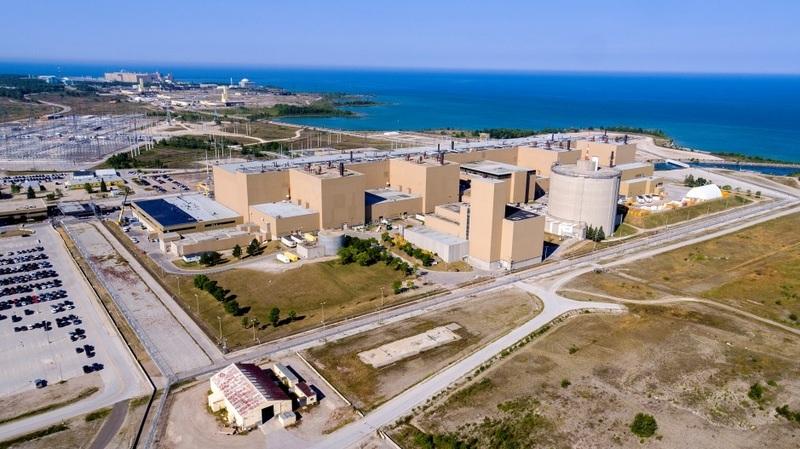
The defining feature of the Tiverton area is the Bruce Nuclear Generating Station, operated by Bruce Power.
The facility occupies a large site on Lake Huron and contains two generating stations, Bruce A and Bruce B, with four reactor units each. Its history dates to the development of Canada’s commercial nuclear industry in the 1960s. Today, the Bruce Power site is one of the world’s major nuclear electricity-generating complexes.
Bruce Power reports that it produces approximately 30% of Ontario’s electricity. Its operations also support the production of medical isotopes used in healthcare, including applications involving cancer treatment and medical equipment sterilization.
Nuclear power is often discussed in terms of electricity generation, emissions, and energy security. Those subjects matter, but they represent only part of the story.
A nuclear generating station is a long-term industrial commitment. It requires specialized workers, regulatory oversight, security systems, maintenance, and waste management. Equipment must be replaced, reactors refurbished, and facilities eventually decommissioned. Some materials produced during operation remain hazardous long after the original purpose of the facility has ended.
For a location-based story about post-apocalyptic Canada, this is a crucial distinction. The electricity might stop flowing, but the physical and environmental responsibilities associated with producing it would not necessarily disappear.
Douglas Point: A Pioneer of Canadian Nuclear Energy
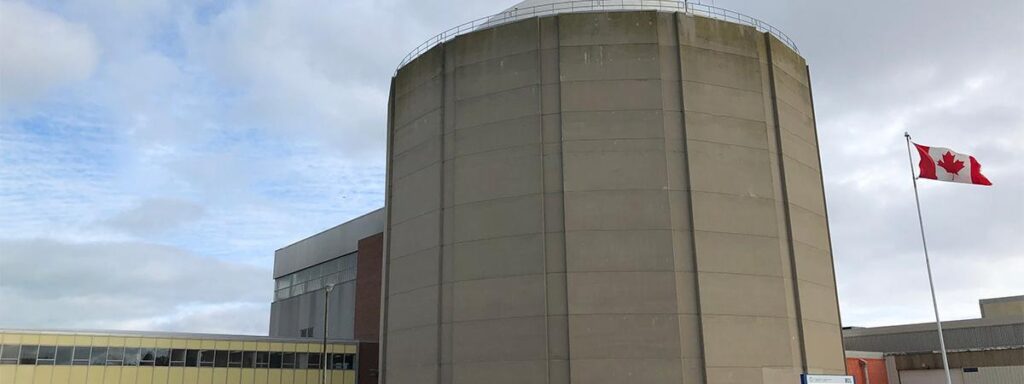
Before Bruce Power became the dominant presence in the area, the Bruce site was home to Douglas Point Nuclear Generating Station.
Douglas Point was a prototype CANDU nuclear reactor and an important step in the development of Canada’s nuclear technology. It began commercial operation in September 1968 and was shut down in May 1984.
The reactor is now a decommissioning project under Canadian Nuclear Laboratories. The site includes the former reactor and associated buildings, as well as facilities used to store radioactive materials, including used nuclear fuel in concrete canisters. Its current regulatory status includes storage with ongoing surveillance.
Douglas Point illustrates a fact often overlooked in discussions of nuclear power: shutting down a reactor is not the same as eliminating the site.
Decommissioning is a complex process that can involve removing equipment, managing contaminated materials, dismantling structures, and maintaining safeguards around radioactive substances. Some components can be removed relatively quickly. Others require prolonged monitoring and carefully managed storage.
Imagine returning to this stretch of Lake Huron thirty years after a societal collapse. A reactor might no longer generate electricity. Its workforce might have disappeared. The systems that maintained the site could have failed. Yet the buildings, stored materials, and contaminated components would still be there.
The facility’s history would have become part of the landscape, whether the people living nearby understood it or not.
Nuclear Waste in Tiverton: What Is Actually Stored There?
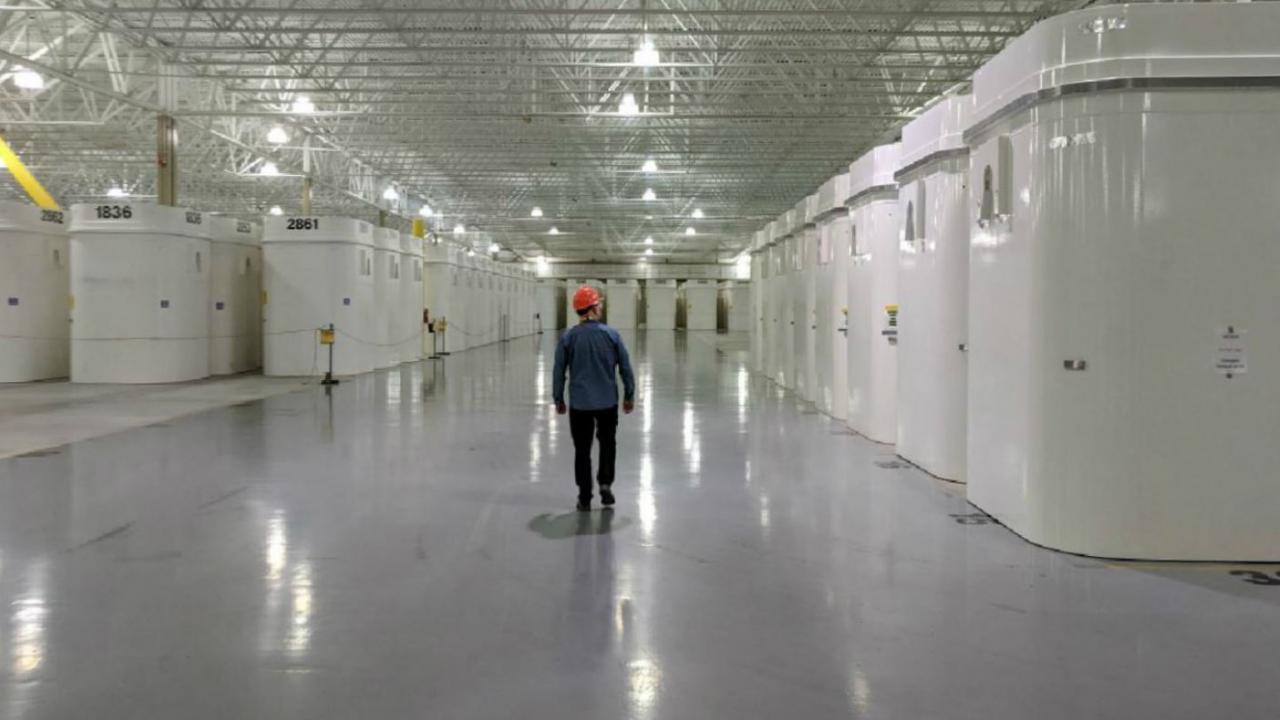
The nuclear waste issue is particularly important when examining Tiverton. The Bruce nuclear site contains several distinct waste-management facilities, and understanding the differences between them is essential.
The Canadian Nuclear Safety Commission identifies the following facilities in the Tiverton area:
- Western Waste Management Facility: Operated by Ontario Power Generation (OPG), this facility manages radioactive waste and stores used nuclear fuel in dry storage.
- Radioactive Waste Operations Site 1: An OPG facility associated with the storage of low- and intermediate-level radioactive waste.
- Douglas Point Waste Facility: A decommissioning site containing used nuclear fuel and other radioactive materials under the responsibility of Canadian Nuclear Laboratories.
The regulator’s national inventory lists these facilities as operating or undergoing storage with surveillance, depending on the site.
These are not interchangeable categories of waste. Their hazards, handling requirements, and storage arrangements differ.
Low-Level Radioactive Waste
Low-level radioactive waste can include contaminated protective clothing, tools, filters, and other materials generated by nuclear operations. Its radioactivity and required isolation period vary considerably according to its composition.
Some materials can be managed using established storage and disposal methods. Others require additional controls. The term low-level describes a waste category; it does not mean that every item is harmless or that all such material becomes safe within a short period.
Intermediate-Level Radioactive Waste
Intermediate-level waste can include reactor components, resins, and materials that have become significantly radioactive through nuclear operations. Depending on the material, it may require shielding and more substantial containment than low-level waste.
The long-term management of this category was central to a major proposal once considered for the Bruce site.
Used Nuclear Fuel and High-Level Radioactive Waste
Used nuclear fuel presents a different challenge. It contains highly radioactive fission products and other radionuclides, some of which remain hazardous for extremely long periods.
At nuclear generating stations, used fuel is initially managed in water-filled storage pools. After sufficient cooling, some fuel can be transferred to dry storage systems engineered to provide containment, shielding, and passive cooling.
The Bruce site includes facilities for both wet and dry storage of used nuclear fuel. The Canadian Nuclear Safety Commission identifies the Western Waste Management Facility as a location for dry storage and the Bruce Nuclear Generating Station as a location for wet storage.
This distinction matters when imagining the aftermath of a disaster. A sealed dry-storage system and an operating reactor have different requirements and failure mechanisms. Neither should automatically be assumed to fail immediately when a civilization collapses. Their long-term condition would depend on the design, physical damage, environmental conditions, maintenance history, and integrity of the surrounding infrastructure.
The credible horror lies in the uncertainty: what happens when the people responsible for assessing those conditions are no longer there?
The Proposed Deep Geological Repository: A Project That Was Withdrawn
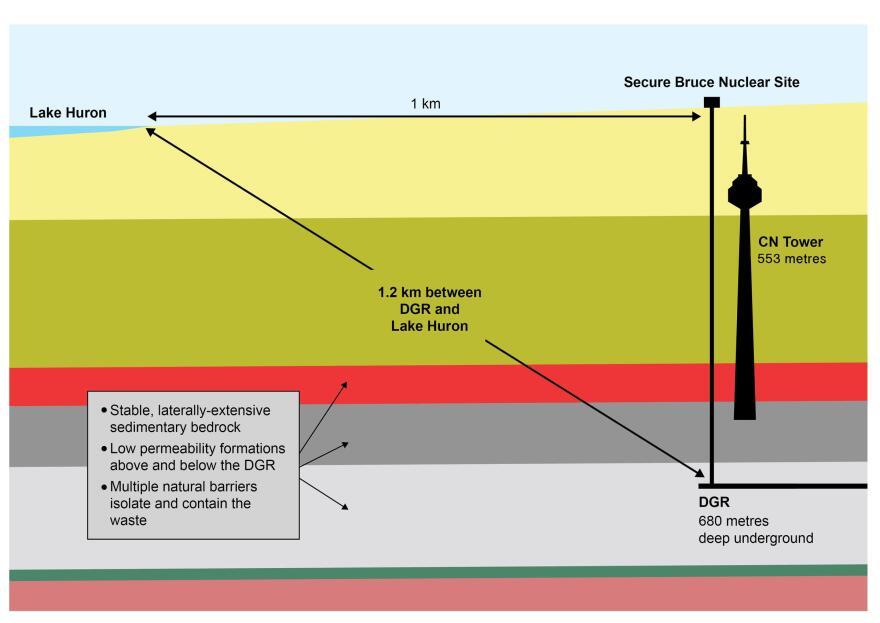
One of the most significant chapters in Tiverton’s nuclear history concerns a proposed underground radioactive waste disposal facility known as the Deep Geological Repository.
Ontario Power Generation proposed constructing the repository beneath the Bruce nuclear site to manage low- and intermediate-level radioactive waste generated by its nuclear stations at Bruce, Pickering, and Darlington.
The concept involved placing waste in an engineered facility approximately 680 metres underground, within a formation of low-permeability limestone beneath layers of shale. The objective was to use both engineered barriers and the surrounding geology to isolate the waste over the long term.
The proposal attracted extensive scientific review and public debate. Its location near Lake Huron made the protection of groundwater and the Great Lakes a particularly important concern.
In 2020, however, Ontario Power Generation formally withdrew its application. The Canadian Nuclear Safety Commission confirms that the project would not proceed under that application. The associated federal environmental assessment was terminated at the proponent’s request.
This point requires a clear distinction: the proposed deep geological repository was not built. It would be inaccurate to describe Tiverton as the location of an operating underground nuclear waste repository.
The existing waste-management facilities remain a separate matter. Radioactive waste continues to be managed at the Bruce site through authorized storage and other arrangements.
Why Was the Repository Controversial?
The proposal raised a fundamental question: how should society isolate radioactive waste whose hazardous life can extend far beyond the lifespan of the institutions responsible for it?
Supporters emphasized the geological investigations, engineered containment, and potential for long-term isolation. Opponents raised concerns about the consequences of placing radioactive waste near the Great Lakes, the possibility of future groundwater pathways, and the difficulty of guaranteeing protection over geological timescales.
The debate was not simply about whether nuclear energy is useful. It concerned the responsibilities created by the technology, the reliability of long-term predictions, and the degree of risk that communities should be expected to accept.
These are difficult questions because no engineered system exists outside the physical world. Geological formations change, water moves, materials age, and human institutions evolve.
That does not mean that a proposed repository would inevitably leak, or that radioactive waste stored at Tiverton is currently contaminating Lake Huron. Those would be unsupported conclusions. It means that long-term waste management must account for uncertainties that extend beyond the usual horizons of infrastructure planning.
For a writer examining Canada’s nuclear landscape, the history of the repository proposal is as significant as the facility itself. It demonstrates that the future of a place can be shaped by a project that was investigated, debated, and ultimately abandoned.
Lake Huron: The Environmental Stakes

Lake Huron is more than a scenic backdrop to Tiverton. It is part of the interconnected Great Lakes system, which supplies drinking water, supports fisheries and wildlife, and sustains communities on both sides of the Canada–United States border.
That geography explains why radioactive waste management at the Bruce site attracts attention beyond Bruce County. Questions about containment, groundwater, monitoring, and environmental protection have implications for a much larger region.
It is important, however, to distinguish environmental risk from demonstrated environmental damage. The presence of nuclear facilities and radioactive waste does not, by itself, establish that Lake Huron is contaminated. The facilities operate within Canada’s nuclear regulatory framework, and environmental protection and monitoring are part of that framework.
For Warriors of the Last Days, the more compelling question is what happens when that framework disappears.
A nuclear installation depends on more than concrete walls and steel containers. It also depends on people who inspect equipment, interpret monitoring data, repair infrastructure, enforce safety procedures, and respond to unexpected events.
A community thirty years after a nuclear holocaust might inherit a landscape that looks deceptively ordinary. The water might appear clear. Fields might continue to grow crops. Buildings might remain intact. Yet the people living there would have to make decisions about infrastructure they could neither fully understand nor safely ignore.
That tension between visible normality and invisible risk makes the Tiverton region a valuable reference point for post-apocalyptic fiction.
Visiting Tiverton, Ontario
Tiverton is not solely an industrial destination. The surrounding region offers several places to explore the Lake Huron shoreline, local history, and the natural environment.

Bruce Power Visitors’ Centre
The public-facing education centre explains nuclear electricity generation, Bruce Power’s role in Ontario’s energy system, and related technologies. Seasonal narrated site tours may also be available. Check the official Bruce Power website for current visitor arrangements before travelling.
Inverhuron Provincial Park
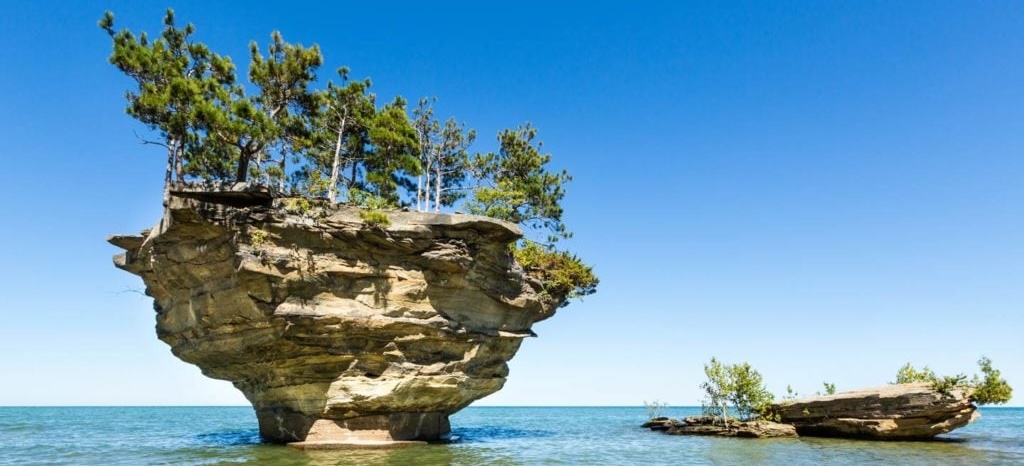
Located near Tiverton, the park offers a Lake Huron beach, camping, and opportunities to explore the shoreline and surrounding natural environment. Its quieter landscapes provide a striking contrast with the nearby nuclear infrastructure. Check Ontario Parks for seasonal access and reservations.

Stoney Island Conservation Area
This conservation area offers forest trails and seasonal outdoor recreation near the Lake Huron shoreline. It is useful for experiencing the area’s wooded terrain and rural character. Check the Saugeen Valley Conservation Authority for current trail information.

King’s Pearl Pub & Eatery
A local pub and restaurant in Tiverton, offering a place to stop for a meal while exploring the community. Its setting in a historic-style residence reflects the small-town character that persists alongside the region’s large industrial operations.
The Bruce nuclear generating site itself is a controlled industrial facility, not a general-access tourist attraction. Visitors interested in its history should use the official public education facilities and authorized tours rather than attempting to enter restricted areas.
Tiverton and the Future of Post-Apocalyptic Canada

In Warriors of the Last Days, the Canadian landscape is more than a setting for survival. It is a record of what people built, what they believed would last, and what they failed to anticipate.
Tiverton offers a particularly rich example of that idea.
The nuclear industry transformed this part of Bruce County into a strategically important location in Canada’s energy system. It brought specialized employment, complex infrastructure, and a responsibility to manage materials that cannot simply be discarded when they are no longer useful.
Douglas Point demonstrates how a nuclear facility can outlive its electricity-generating role. The Western Waste Management Facility illustrates the continuing need to manage radioactive waste. The withdrawn deep geological repository proposal reveals the difficult decisions involved in determining how that waste should be isolated for the future.
Together, these elements tell a story about technological ambition and long-term responsibility.
Imagine the region three decades after a nuclear holocaust. The generating stations are silent. Roads have deteriorated. Vegetation is reclaiming industrial land. The last people who understood the site’s operating systems are dead or scattered across the country.
A settlement nearby might depend on Lake Huron for drinking water and fishing. Its inhabitants might know that the old nuclear site is dangerous without understanding the different hazards associated with its reactors, spent fuel, and stored waste. Rumours could become indistinguishable from reliable information. A sealed structure might inspire more fear than a visibly damaged building because nobody knows what it contains.
None of these possibilities requires inventing an immediate radioactive catastrophe. They emerge from a more fundamental problem: the loss of knowledge and institutional capacity required to manage a complicated technological inheritance.
The people of a post-apocalyptic Canada would not simply be surviving the catastrophe that destroyed their world. They would also be living with the consequences of decisions made by generations they could no longer question.
That is the real significance of Tiverton as a setting for dystopian fiction.
The Lasting Question
Tiverton, Ontario, occupies a revealing place in Canada’s nuclear story. It is a rural community beside one of the country’s most important electricity-generating sites, a landscape where the beauty of the Great Lakes meets the demands of industrial technology.
Its nuclear history includes pioneering reactor development, the ongoing management of radioactive waste, and a proposed underground repository that was ultimately withdrawn. These are documented elements of the region’s history, not speculative disasters.
For Warriors of the Last Days, they offer a starting point for a different kind of post-apocalyptic story: one concerned with what survives after the systems that once made modern life possible have ceased to function.
A reactor can be shut down. A facility can be abandoned. An institution can disappear. The responsibilities created by their existence are harder to leave behind.
And beside Lake Huron, the landscape will continue to exist long after the people who once believed they had everything under control are gone.
A FREE FOR EVERYONE SHORT STORY SET IN A POST-APOCALYPTIC TIVERTON
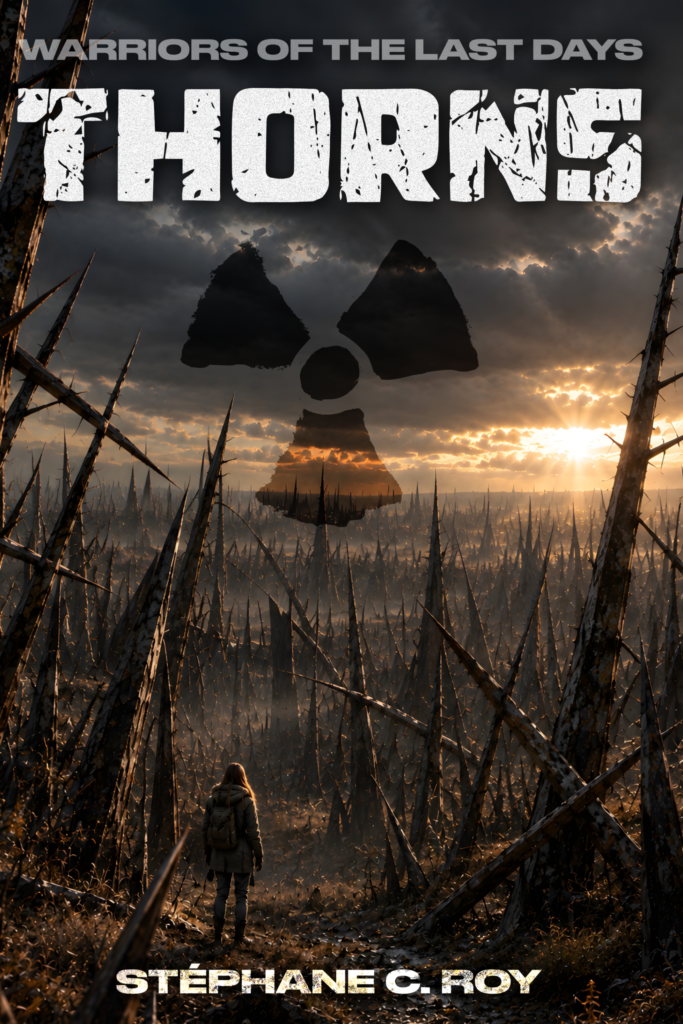
Nothing valued is here. Three men disagreed. One woman followed them.
A post-apocalyptic revenge western set inside a real “Landscape of Thorns”: the 15 metres concrete warning designed to keep us out of our own nuclear waste.
The Thorns: A Warning Without a Future
In Thorns, the landscape surrounding Tiverton, Ontario, is more than a post-apocalyptic setting. It is a warning built to outlast the civilization that created it, and a warning whose meaning has been lost.
The story draws on a real Canadian nuclear site and on the work of architect and environmental designer Michael Brill, whose ideas explored one of the most difficult problems of nuclear waste management: how do you warn people away from a place that must remain dangerous for thousands, perhaps hundreds of thousands, of years, even after every language, government, institution, and cultural memory that could explain the danger has disappeared?
The real-world connection is unusually close to home. Tiverton is the location of the Bruce nuclear site, which includes several facilities for managing and storing radioactive waste. The fictional Thorn Field is not a depiction of an actual repository there, it is an imagined future built around a genuine Canadian nuclear landscape.
The real Tiverton connection
Tiverton is home to the Bruce nuclear site, one of Canada’s major nuclear generating locations. The site contains more than the operating Bruce A and B reactors. It also includes the Western Waste Management Facility (WWMF), operated by Ontario Power Generation, where radioactive waste is processed and stored. The WWMF manages low- and intermediate-level waste, as well as used nuclear fuel in dry storage. The site also contains the former Douglas Point reactor, now being decommissioned, and facilities associated with its radioactive waste.
This is important because the fictional story does not need to invent an implausible nuclear history for the region. It takes a real concentration of nuclear infrastructure and imagines what its landscape might become after the collapse of the society responsible for maintaining it.
There is, however, an important distinction: Canada’s long-term plan for the permanent disposal of used nuclear fuel is a deep geological repository, not a Thorn Field in Tiverton. The proposed repository is in the Wabigoon Lake Ojibway Nation–Ignace area of northwestern Ontario, and is still subject to regulatory review. Canada’s current approach relies on engineered barriers and suitable geological formations to isolate the waste deep underground.
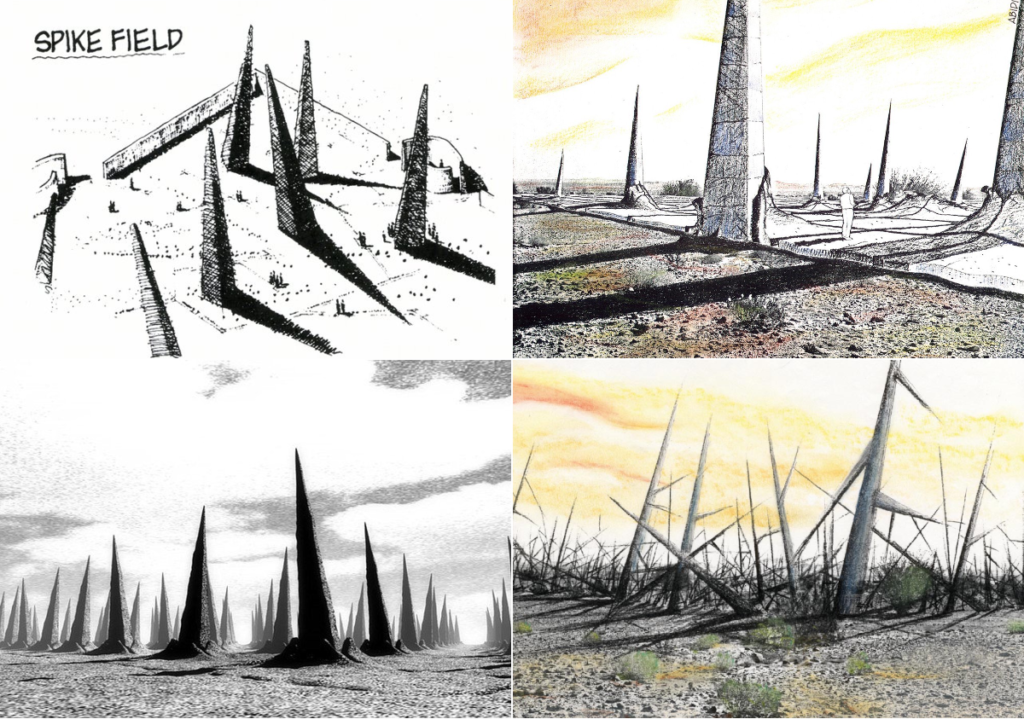
Michael Brill and the Landscape of Thorns
The most direct inspiration for the story comes from work undertaken in the United States during the late twentieth century. The US Department of Energy’s Human Interference Task Force examined how a nuclear waste repository could warn people not to disturb it thousands of years into the future. The problem was not simply how to make a sign last. It was how to communicate danger to people whose languages, cultures, sciences, and understanding of the world might be entirely different from ours.
Architectural theorist Michael Brill developed concepts for landscapes intended to communicate danger without depending entirely on language. Among them was the Landscape of Thorns, a field of immense concrete spikes and irregular, threatening forms emerging from the ground. The shapes were meant to suggest bodily injury: a place that looked hostile, unnatural, and fundamentally unsafe. Other concepts included fields of stone spikes and enormous, menacing earthworks.
The intention was to make the landscape itself the warning. Even if every written message became unreadable, even if the people who built the repository were forgotten, the physical environment would continue to tell future visitors that something was wrong here.
But there was a problem with the concept. A monumental, mysterious, forbidden landscape might not repel everyone. It might attract explorers, adventurers, scavengers, and people convinced that something valuable lay hidden beneath it. A structure intended to keep people away could become an irresistible invitation to investigate.
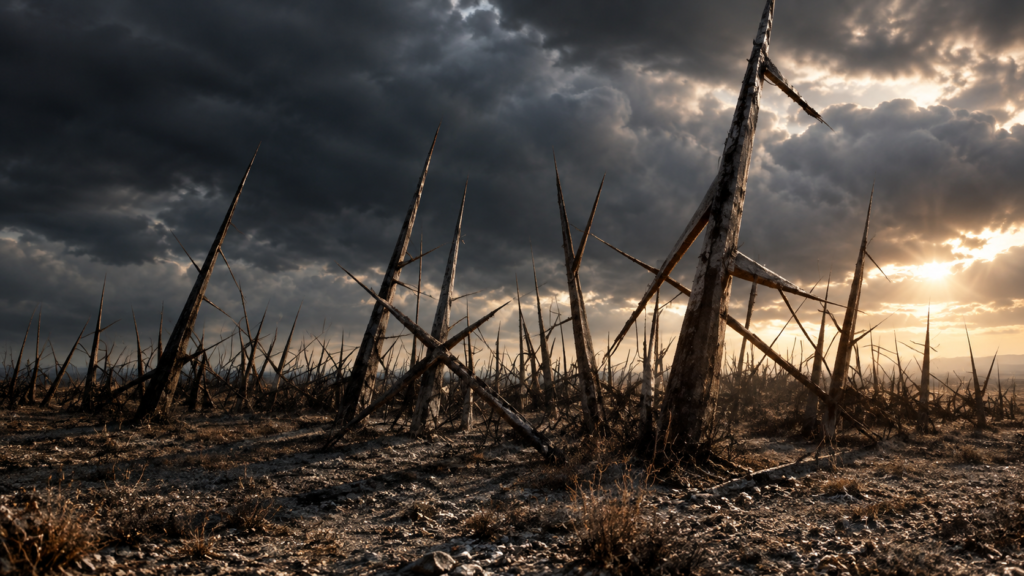
Thorns in WARRIORS OF THE LAST DAYS
That contradiction is the foundation of Thorns.
Thirty years after the Light, the original purpose of the structures has disappeared. The Thorns remain, but the knowledge that gave them meaning has not survived. Three brothers see an opportunity: something so heavily guarded by the landscape must surely be worth finding. They interpret the warning as evidence of treasure.
Hannah understands more. She carries a Geiger counter and knows what the invisible danger can do. Yet she enters the field anyway, because revenge has become more important to her than survival.
The story takes Brill’s concept one step further. The landscape is not the only warning that fails. Hannah’s Geiger counter continues to tell her that she is in danger, but she chooses not to listen. The brothers cannot understand the warning; Hannah understands it and disregards it. Their motivations are different, but they are drawn into the same trap.
Thorns are therefore both a physical place and a metaphor for the things that drive people forward when they should turn back: greed, curiosity, desperation, and revenge.
The original designers wanted to protect a future they could neither predict nor understand. Their warning survives, but its meaning does not. The brothers mistake it for an invitation. Hannah recognizes it for what it is, but cannot bring herself to leave.
In the end, the Thorns have not failed because they disappeared or because their construction was inadequate. They have failed because the people who encounter them bring a different world, a different understanding, and different priorities.
The warning survived. The meaning did not.
Further reading and primary sources
- Canadian Nuclear Safety Commission: Ontario Power Generation’s Deep Geological Repository
- Canadian Nuclear Safety Commission: Radioactive Waste in Canada
- Canadian Nuclear Safety Commission: Douglas Point Waste Facility
- Bruce Power: About Us
- Impact Assessment Agency of Canada: Deep Geological Repository Project
- Canadian Nuclear Safety Commission — Douglas Point Waste Facility.
- CNSC — Canada’s radioactive waste facilities and operations.
- Nuclear Waste Management Organization — Canada’s Plan.
- WIPP — Message to 12,000 A.D. (Michael Brill’s concepts).
- Sandia National Laboratories — Expert Judgment on Markers to Deter Human Intrusion (1993).
- Nuclear Power, Buried Waste, and the Landscape of a Post-Apocalyptic Canada
- Where Is Tiverton, Ontario?
- Bruce Power: One of Canada's Most Important Nuclear Sites
- Douglas Point: A Pioneer of Canadian Nuclear Energy
- Nuclear Waste in Tiverton: What Is Actually Stored There?
- The Proposed Deep Geological Repository: A Project That Was Withdrawn
- Why Was the Repository Controversial?
- Lake Huron: The Environmental Stakes
- Visiting Tiverton, Ontario
- Tiverton and the Future of Post-Apocalyptic Canada
- The Lasting Question
- A FREE FOR EVERYONE SHORT STORY SET IN A POST-APOCALYPTIC TIVERTON
- The Thorns: A Warning Without a Future
- The real Tiverton connection
- Michael Brill and the Landscape of Thorns
- Thorns in WARRIORS OF THE LAST DAYS
- Further reading and primary sources
A new post-apocalyptic story from Canada. Every month.
The earlier you join, the larger your library becomes.
Join now. Start building your library before the next hundred.
 Stéphane Roy is a lifelong reader and writer with a deep love for science fiction, apocalyptic worlds, and tightly constructed mysteries. This is his first novel. He lives in the Yukon with his dog and his aquarium, where long winters, silence, and wide, sometimes glowing, skies leave plenty of room for imagining the end of the world, and what might come after it. He is also waiting, with cautious optimism, for the aliens to finally reveal themselves and straighten us all out.