
REVIEWS & TESTIMONIALS
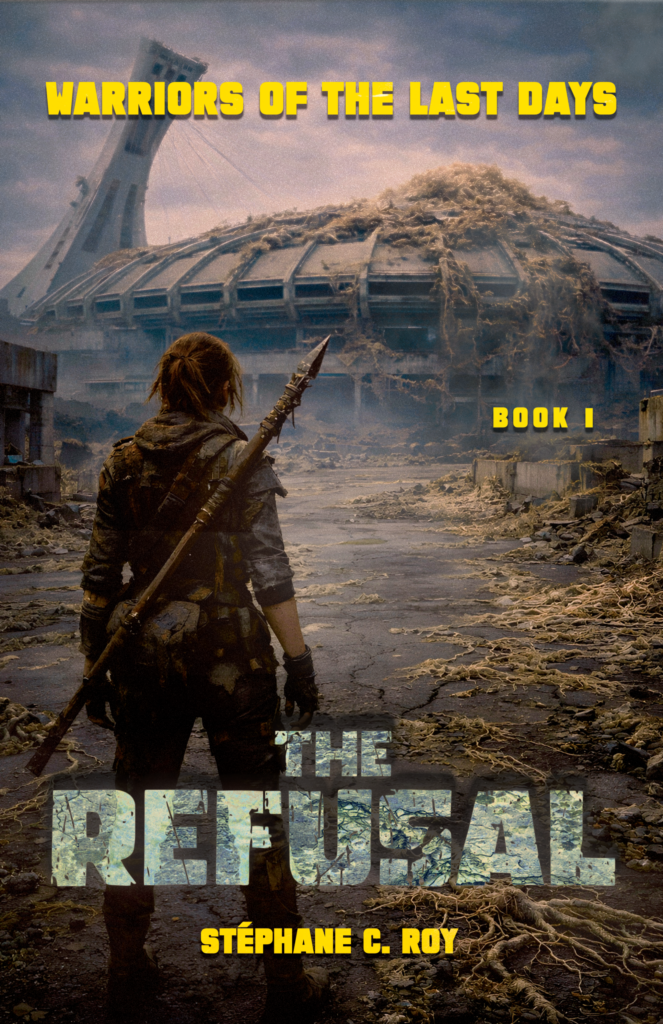
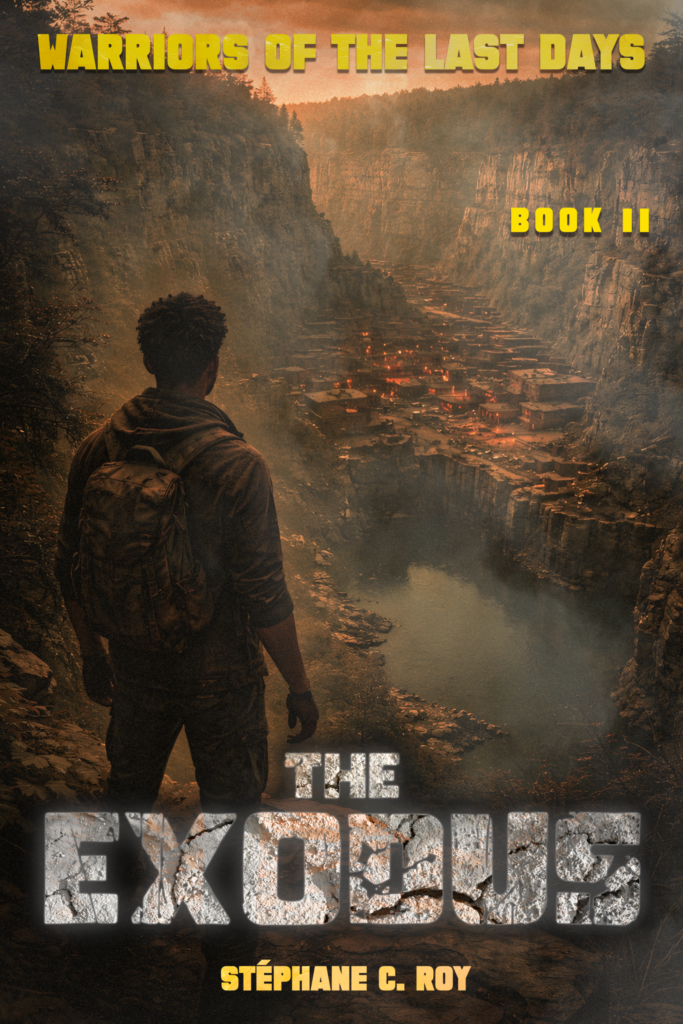

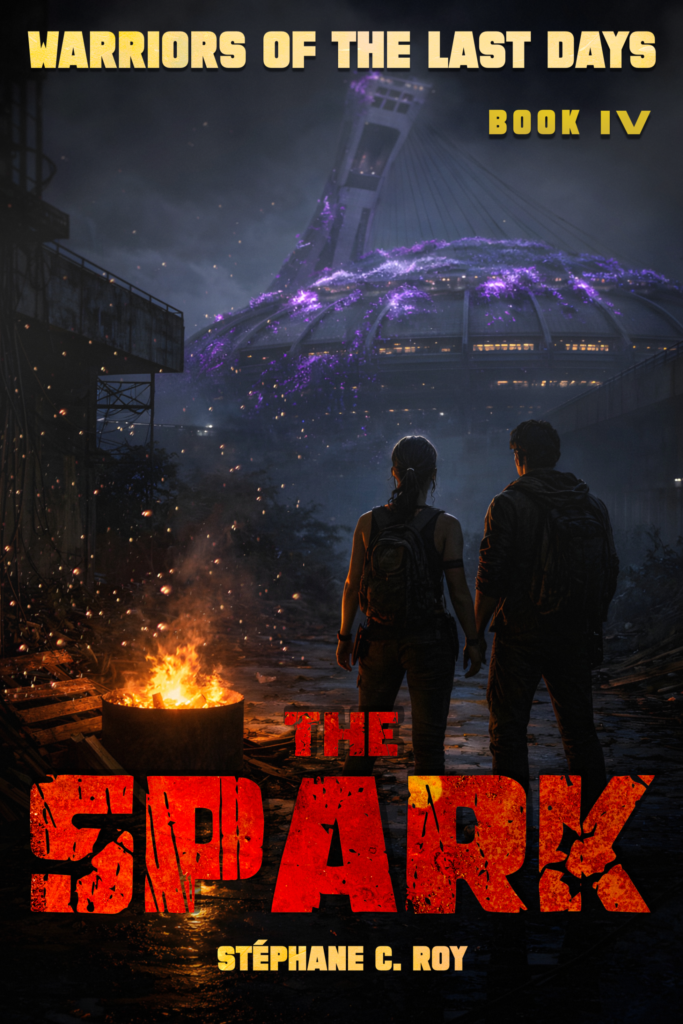
Want to contribute a review?
Phenomenal!
The ending of this book is a phenomenal, earned set piece: messy, costly, ambitious and ambiguous, true to the series tone. Roy has been building this since book one in that series and it only shows in all its glory, at the very end. Your patience is more than rewarded, a masterpiece in connective storytelling.
Unlike anything else I have read in the genre
A strong, morally challenging piece with vivid set-pieces. The worldbuilding is the manuscript’s best weapon: it’s tactile, rule-driven, and constantly surprising. The ending is thematically consistent and brave.
When Survival Is All That Matters
I found this to be a fascinating post-apocalyptic story. Stephane Roy has created a harsh and dangerous world where survival is never guaranteed, and I enjoyed following Una and her friends as they faced one challenge after another.
Una is a particularly interesting character. Her instincts and determination to keep going, even when things look hopeless, help her survive situations where others don’t. What I liked most is that, despite everything she goes through, she doesn’t lose her sense of humanity and kindness.
The story is well written and very descriptive. There are some brutal and quite gory scenes, but they fit the harsh world and show just how far people can be pushed when survival is at stake. The author does a good job of showing both the strength and darker side of human nature.
If you enjoy post-apocalyptic stories, survival, danger, and characters who are tested to their limits, this is definitely a book worth giving a try.
https://www.goodreads.com/book/show/252273333-the-refusal
https://www.amazon.com/gp/customer-reviews/R1SDA8USE86OY
Just a tight, grotesque, darkly hilarious horror story that earns every star.
Night of the Living Toes is precisely the kind of story that reminds you why horror should be weird. It takes a genuinely disgusting premise, reanimated severed toes crawling across a bar looking for faces to burrow into, and executes it with such skill, wit, and narrative control that by the end, you’re not just entertained, you’re impressed. The writing is sharp, the humor lands with perfect timing, and that epilogue twist transforms what could have been a clever one-off into something genuinely memorable and eerie.
A concise, perfectly-executed piece of dark fiction that proves the best horror comes not from what makes you squirm, but from what makes you think about toes for weeks afterward.
SPECIAL DELIVERY
A tightly wound, atmospheric piece that blends Indigenous mythology with creeping cosmic dread — the dialogue between Gary and Mary carries real warmth and weight, and the slow reveal of the cedar box’s significance is genuinely unsettling
Excellent
Thanks. I enjoyed it!
Superb world-building
The apocalypse continues in Book 2 as the human race still suffers the aftermath of the apocalypse. Driven out of The Sump by the Glowers, Andy takes the lead of the group, even though he was never chosen for the role. They set out to find somewhere they can settle, but the journey takes them through dangerous territories with devastating consequences.
Andy’s leadership is tested again and again, but he continues to hold on to his humanity as they fight to survive in this dangerous and unforgiving world.
I enjoyed the world-building and the descriptive writing, which really brings this harsh world to life and keeps you turning the pages. Absolutely worth the read.
THE SUB — Review
This is a tight, controlled piece of maritime speculative fiction: a submarine vignette that earns its atmosphere the hard way, through sentence-level discipline rather than exposition.
Strong voice, disciplined prose, and a genuinely unsettling atmosphere. The central mystery is well-constructed and mostly well-preserved. But the brevity leaves the narrative arc underdeveloped, and the final line undercuts the ambiguity the piece otherwise sustains. Worth reading for the logbook device and the quietly devastating “the crew had done nothing wrong” refrain alone.
Where the Colour Went
A quiet, chilling piece. The clinical “Je me sens très bien” loop slowly becomes the horror as the reader realizes Sandrine is no longer the one walking. The Newfoundland texture (Gower Street’s painted houses, the Narrows fog, Mun Wavey’s salt fish cakes) is precise and lived-in, and the unsent letter lands with real weight.
High-Arctic cosmic horror
This is a masterfully paced, deeply atmospheric piece of high-Arctic cosmic horror that brilliantly weaponizes the rigid routine of postal bureaucracy against an ancient, reality-warping presence. By letting the tension build purely in the peripheral vision and the steady erosion of memory, the story achieves a haunting, unforgettable restraint.
THE LAST ROUTE
A quietly devastating slow burn that uses the postal worker’s route log as both framing device and psychological anchor. Gary Mallet’s voice is exactly right — precise, unshowy, professional to a fault, and slowly cracking at the seams. The story earns its scale: a 2,147-kilometer delivery across Arctic ice feels not like plot contrivance but like stubborn adherence to a duty that outlived its reason.
The route log / notebook format difference is brilliant: the shift from institutional record-keeping to personal testimony mirrors Gary’s arc from driver to witness, and the “write everything down immediately” refrain becomes genuinely unsettling.
The horror is environmental rather than supernatural: permafrost thaw as both literal ground instability and metaphor for things emerging that were meant to stay buried. Mary’s “Snake Men” and the inuksuk pointing south are handled with restraint — the story trusts implication.
The postcard itself, “Thinking of you. Hope you’re well. Love.” is a perfect MacGuffin. Seven words that launch a man across an arctic ocean because the job requires it. That’s the whole thesis.
Bottom line: A strong, atmospheric piece that understands what a story is, it’s not the postcard, it’s the delivery. The prose is clean, the voice is consistent, and the horror is intellectual rather than gory. The missteps are at the margins; the engine of the story (duty, memory, and what happens when the things we keep buried finally thaw) runs true from the first kilometer marker to the last.
A Postal Odyssey into the Arctic Uncanny
This is a masterclass in slow-burn cosmic horror: a mail carrier’s routine delivery becomes a journey into the unknowable, where the true terror isn’t a monster but the creeping erosion of reality itself, told with chilling precision and a haunting sense of inevitability.
It has the best lines of the Death Row short stories trilogy
Clarence does its job. It fills in the marriage, the assignment, the inside game, and the solitary, and it hands off cleanly to Nomi’s story and the novel. The voice is consistent, the Deke subplot is the strongest action, the parallel structure (Light from Nomi’s desk / Light from Clarence’s window) is well handled, and the ending lands hard.
The strongest aspect of Clarence is its structure.
Nomi’s story is about deciding to enter Millhaven. Clarence’s is about what happened to him inside and why she has to enter it. The two stories therefore add information to each other rather than merely repeating scenes. The letters are one of the best connective devices between the two stories. In Nomi, her letters to Clarence establish how she maintains a relationship with someone she cannot reach. In Clarence, we discover that he is reading those same letters with exactly the same awareness of surveillance. The detail that he recognizes hidden meanings in them makes their relationship feel intelligent rather than sentimental. The solitary section is probably the strongest material in the entire piece. Clarence doesn’t panic when he is isolated. He turns the situation into a problem to solve. The probability assessment, the consideration of why Cobb has moved him, and his decision to think about what information to give and what to withhold all feel consistent with the character established earlier.
clean and confident
This is a tightly controlled post-apocalyptic procedural with a strong central character and a clear sense of escalation. Nomi comes across as competent without being written as invulnerable, and the story does a good job making her preparation, reconnaissance, training, and tactical thinking feel like character rather than merely exposition. The notebook entries are particularly effective because they give the otherwise very restrained protagonist a private emotional register. The relationship with Clarence is established economically, and the fact that she keeps moving toward Millhaven despite having no confirmation that he is alive gives the story its emotional engine.
Nomi’s point of view
The voice is the story’s best asset. Nomi reads as a real person doing a real job: an OPP organized crime operator who has trained, prepared, and decided. The writing has a kind of professional restraint: short sentences, concrete detail, no overwriting. The roadblock scene (Chapter 3) is the high-water mark: she clocks all four men’s positions in thirty seconds, understands their tactical errors, and neutralizes them in about ninety seconds. That reads like someone who actually knows what she’s doing, not a novelist pretending.
The relationship with Clarence is the emotional engine and it works through absence. She writes to him in a notebook she can’t send; she believes he’s alive “because you’re too stubborn to die before I get there.” That’s a clean sentiment. The knife he gave her for their anniversary is a small detail that does actual work. It tells you something about them without a single line of exposition about their relationship.
The world-building is mostly effective. We learn about the collapse through functional detail: Patricia running the pharmacy on a goodwill basis, the fuel-tax roadblock, the biker gang consolidating inside Millhaven, Henley the corrections officer drinking two beers at a bar that used to be a restaurant. These are small, specific, and they add up to a world that feels like it actually happened to.
The ending: the strange crimson dust, the door opening on its own, sets up a mystery without over-explaining. As a chapter ending, it’s a decent hook and a good leadin in the Death Row upcoming novel.
A short, sharp piece of crime noir.
The prose is the whole story. It’s restrained, almost surgical. Cobb is a fascinating construct: a man who built twenty years of power on the principle that decisions should leave no words behind, then watched the state’s machine chew through his world anyway because machines run on paper and his whole life was engineered out of paper. That irony lands hard.
The central tension, a question is not an order, but a jury will build the order out of certainty anyway, is sharp and genuinely interesting. The “coffee poured and never lifted” becomes a kind of negative signature, which is a nice touch.
Strong, self-contained noir. Would rate higher if the human stakes beneath the method had a little more room to surface.
OSMIUM
A quietly devastating Cold War ghost-story of a secret osmium refinery buried beneath a Sudbury mine since 1957, told through the eyes of a shift physicist who realizes too late he’s midwifing fifty tonnes of it to Halifax. The prose is spare and claustrophobic: garlic and chlorine under machine oil, the cold of an ingot through gloves, the mine going dark, building to a white flash over Bedford Basin that lands with the weight of the fifty-tonne threshold the title names. It’s short, but the restraint in the telling makes the unspoken end hit hard.
The road had forgotten what it was for
This is a substantially stronger and more confident novel than a simple “post-apocalyptic survival story.” Its central idea, the relationship between Una and a world increasingly governed by invisible systems of control, gives the book an identity of its own. The main weakness is that the prose sometimes explains or reinforces that idea after the scene has already communicated it, and the middle of the book occasionally becomes more conceptually repetitive than dramatically progressive.
Overall, I would put it around 4/5 as a finished novel, with some very strong passages that approach 4.5 territory.
Unusually controlled concept
A cold, tightly controlled crime story that gets much of its power from the gap between what Cobb says, what he leaves unsaid, and what other men understand from it. The deliberate, analytical prose suits the character exceptionally well, although the emotional distance make it feel more cerebral than viscera at timesl. The ending does a lot to justify the story, though.
A cleanly staged miniaturist piece
A tightly controlled, visually memorable miniature whose strongest imagery and ritualistic staging.
A silence is not an order
A controlled, procedural noir that earns its shapeliness through voice: Cobb reading men from the back of rooms, the silence-shaped question that killed three strangers and left nothing a machine could seize, the cup poured and never lifted that turned into testimony, the Crown’s “careful silence shaped exactly like the murders,” and the closing line (“the plan was already running, at its own pace, which was the only pace it would ever use”) carrying the same vacuum the whole piece is built on, but the legal-procedural middle (indictment, meet-with-lawyer, pleading guilty twice, the twelve-years-vs-trial-column arithmetic) is the exoskeleton the thriller holds itself up with, and Cobb’s interior stays so deliberately suppressed that the piece reads more as a calculus of power than a portrait of a man, which is the intended effect but also the thing that keeps it one move short of resolving into a full character study.
Cold, controlled, and unusually cohesive
Cobb’s world is built almost entirely through systems, observation, and consequence, and the five chapters in the story steadily turn that machinery against him. The final chapter gives the story a strong sense of inevitability without over-explaining it, making this feel like a complete character study rather than simply a crime story.
Beneath us, something lives
A quiet, patient Arctic piece that trusts silence as its medium. The Inuksuit read as landscape grammar rather than landmarks, the north-and-slightly-west line nobody ever followed to water, the narwhal with the tusk curved like a question mark and blue-white light at the tip, and the closing move from “Adlivun means those who live beneath us” to “beneath us, something lives”, but the Sedna thread is mostly atmosphere rather than mechanism (tangled hair, the angakkuit gone, fingers-becoming-sea-creatures, whether the narwhal grew in the tanglement or was always waiting in the deeper water), and the fifth-spring decision not to go back is a resolution that sits a touch too neatly for a story trying to hold onto unresolvedness.
THE WATER KNOWS
The longest and most formally ambitious piece in the set: the tri-voice structure (Rose Beaulieu’s NDilǫ journal, Aklavik’s remediation log, the unsigned federal apology-draft with its handwritten marginalia) does real cumulative work, the C-14 lee sector and the frost-signature thinning each spring are exactly the right slow-accumulation evidence, and the child’s name finally written into Aklavik’s log “in the right hand” and then into the unsigned apology by unidentified hands is a genuine formal act of witness, but at roughly 800 lines the piece is wrestling with its own length, the passive-system-apology-reading-itself is a beautiful device that nearly becomes a register the story inhabits rather than a tool it uses, and the four-winter accumulation earns the conclusion so completely that anything beyond a sentence of set-up in Part Four is surplus.
Things are starting to connect
A tense, professional Carver’s-eye piece that works as the missing link between The Lullaby, The Refusal, the Drift and The Spark, the Pius-XII park detour, the woman with the wounded leg who leads him to the iron gate and concrete door of the Saint-Léonard cave, the underground river, the deep lake, the white thing rising from it, and the Carver going in because he smells of blood the same way the lake has been taking in for years, but the woman never claims the name Una though we’re told it at the end, and the step he takes toward the water needs a touch more push to fully earn the pull that follows. 4.5 out of 5 stars.
Two words on a sign he drove past
A well-built Cape Breton horror that earns its dread through accumulation rather than reveal: the north-by-instinct drive, the eight kilometres of gravel, Margaret’s genuine hospitality, the wrong-tide fishing, the avoided north end, the structure at the water’s edge, the log with three generations of the same number, and the final hit of “Meat Cove” as something he drove past without absorbing, but the creature’s taxonomy (giant crustacean, chelipeds, antennules in the window gap) is a touch less surprising than the other stories’ monsters, and the seventh-night window scene opens the door to the physical monster slightly wider than the story’s own restraint ideally needs, and the final “Meat Cove” repeated three times lands one beat too many.
A quietly powerful piece
A quietly powerful piece. The double-log structure (official stewardship record against the grandmother’s worn Sm’algyax notebook), the Kermode bear pressing her face to the grandmother tree and receiving something Marvin only catches as “chemical, sub-linguistic, with the meaning arriving before the mechanism was visible,” the Raven’s memory-bearing reconceived as ecological function, and the notebook line “I could feel its grammar without the content”, but the Light’s mechanism (electromagnetic residue embedding in the mycelium, spreading west at “forest speed”) is delivered in the flat register of a field report, and the ending slips back into habit (“he would climb to the ridge… which he had always done”) without quite landing the question the piece spent its whole length asking.
The road does not leave tracks
A well-paced road piece that knows exactly how to stage a walk. The WEST sign, the two walkers matching Una’s pace without closing, the copper-wire girl fidgeting her wire, the fire scene where the Hive almost gets named, and the fork where the pressure behind Una’s eyes makes her teeth ache, but the older woman’s pivot (“We are leaving because we know they will show up anyway… maybe we choose which ones kill us”) lands harder emotionally than the scene has earned, Una never fully lands on what she wants from going west beyond “it’s open,” and the ending goes thin the moment the other two split north and fade out.
The wood had a face before I touched it
The most ambitious and layered of the lot: the cedar grain dividing into an organized branching pattern with nodes that read “more like a circuit than a root,” the inner face already forming a face before James cuts it (“the wood had a face before I touched it”), his decision to carve the ancestor face over the network’s face rather than fight it, and the closing pivot from “this is what we protect” to “the cedar bore its own story”, but the journal format wins on texture and loses on arc (five sections accumulate detail but the emotional turn is all in the last few lines), the Orca-counting is haunting but only loosely integrated into the plot, and the Light itself stays an abstraction that James observes but the scene never makes you feel.
The wolverine won on points!
The hardware-store calendar, the Yukon logic of “What is the situation? What are the options? What do you do next?”, the Sourdough Saloon’s toe-drinking oath, the wolverine cache with the toe wrapped in a piece of Edouard’s own boot, and the hair in the whisky that lets Edouard say “The wolverine had won on points” and quietly ask for another, but the Sourdough Saloon’s room gets less texture than its ritual, and the hair twist, though earned, is the one note that doesn’t quite need to be there.
Lanterns until the water carried stars
A gentle, well-observed piece: the Décarie trench as a Sump, crawfish traps, a man missing three fingers, lanterns multiplying until the water carried stars, but most of its running time is a conversation where the subtext is the text, the central question (stay or leave?) dissolves by mutual agreement rather than friction, and the stump-vibration thread is atmospheric without pulling enough weight to justify its presence.
A question waiting for someone who could almost read it
It’s the most confident story I read on this site so far: the climb to the top, the sulfur-ghost smell of Sub-Level 9, the warm cable drawing itself down with a rhythm that “had the quality of something that had intent,” and especially that last line where the seventh symbol shifts on the page, but Soot and Noah read as function characters around Olivia, and the Tom Creighton / missing back pages digression is a fascinating myth-seed planted on the surface rather than rooted in the scene. More 4.5 than a 5.
What the line transmits
A measured, clinical encounter-story that builds terror through what the line transmits rather than what the eye sees, anchored by a genuinely respectful handling of Cree place-names and a final image of a name written in full with space left beneath it. However, the fisherman stays too opaque and the middle’s torch-fishing explanation leans slightly didactic.
“Tactile, earned, and mostly there”
A solid, intimate prequel that does what it sets out to do: establish the emotional bedrock before the Refusal, with a few lyrical missteps that don’t quite undermine the whole.
STRONG STORY
A genuinely effective short horror story with a strong premise, excellent setting integration, and a memorable ending. Highly recommended.
Atypical
This is definitely not a book for everyone. It is out there. Wildly so. Somehow, it manages to be funny, horrific, dramatic, epic and intimately tender somehow without breaking any of the different tones. I have not seen that happen often. If you like pot-apocalypse stories that balance action, quiet moments, insane biology and exploring the various ways communities deal with a collapsing order, you are in for a threat. If you expect a typical dystopian YA novel, you might be disappointed. Personally, I was enchanted.
Too clever for its own good
This book is smart. It knows it. Sometimes too much. It ruined parts of it for me. But the world building is out of this world, if it is your thing.
Stunning imagination
This book is wildly imaginative. It goes in directions you do not expect or consider. At times, it gets so strange as to be almost surreal. And while the wildlife certainly deserve the wild part of its name, the really terrifying creatures in this thing are the humans. Every single faction in there, even the ones that are polite and nice, are scary and dangerous if you scratch the veneer they hide behind. There is even a ten years old kid in there. He loves his mom’s cooking, he is good natured, patient, kind, but he is possible the most terrifying child you would ever encounter. This book is totally wild.
They are literally on the fence
This book has some of the wildest and strangest creatures I have seen in any post-apocalyptic novel I ever read. But that is saying very little compared to the characters Una encounters during thus extremely strange odyssey. Without spoiling anything, she encounters an entire village of people sitting on a fence in a park. Their whole system and philosophy to deal with the chaos brought on by the collapse is to literally commit to nothing, not even a roof over their head. They are literally sitting on the fence. It is so crazy, it should not work. It should have been a one line joke. It is an entire act in the book! And it is so hilarious, I was in tears laughing almost the entire time. I do not think I have ever seen a more incisive satire of our Canadian politics. Highly recommended. For its weirdness alone, if nothing else.
Where to start…
I can honestly say I have never read something as weird yet as entertaining than this. Even the wild melons are out to get you!
Una is an impressive character. A woman of few words, sharply intelligent, but that still makes mistakes and atone for them as she pays dearly for each of them. This book is brutal in its exploration of the consequences of one’s choices. The conclusion is as surprising as it is a master degree in continuity and connectivity. If you paid attention since book one and through the intersped short stories, you are deeply and satisfyingly rewarded by the end of this.
You have never seen Montreal under this lens
I am from Montreal. I can honestly say that I have never seen my city under this lens. While the book is off to a bit of a slow start, boy, when they finally pick up after everythign was explained, it does not let down and certainly does not disappoint. Una literally covers at least half the island and everywhere she lands is wilder than the next. All I can say is after this, you will never look at sheep the same way again… An astonishing wildly inventive post-apocalypse story.
Worthwhile
A high-caliber, ambitious horror concept executed with sensory violence and systemic dread.
Weird but worth every page!
Roy is a writer who knows how to build a weird machine and then set his characters loose inside it.
Awesome!
This is a terrific, ambitious novel, razor‑sharp in ideas and textured in prose.
Morally complex
This is a sophisticated, readable, morally complex dystopia. It has intelligence and guts: the Stadium as antagonist is a rare, excellent idea staged with specificity and cruelty. A ride you will not forget easily.
Surprising
This is a sophisticated, atmospheric horror that earns its dread through accumulation, sensory precision, and escalating moral cost.
Masterful
The book strengths are the confidant command of certain scenes (the crossing, the river, the quarry) and thematic unity: the book consistently asks hard questions about how communities preserve themselves and what is demanded in return.
Inventive
An ambitious, rigorous remix of post‑apocalyptic survival with uncanny, geomorphic horror. An immersive, visceral experience.
Memorable
This is the kind of speculative social fiction I want to read and to recommend: original, ethically thorny, and tactically specific. It balances bodily survival with morality in a way that forces a reader to choose which small cruelty they’d accept for group survival. The set pieces are clear and muscular; the quieter scenes give the necessary emotional weight. The manuscript is a robust, memorable piece of social SF that lingers.
 Stéphane Roy is a lifelong reader and writer with a deep love for science fiction, apocalyptic worlds, and tightly constructed mysteries. This is his first novel. He lives in the Yukon with his dog and his aquarium, where long winters, silence, and wide, sometimes glowing, skies leave plenty of room for imagining the end of the world, and what might come after it. He is also waiting, with cautious optimism, for the aliens to finally reveal themselves and straighten us all out.