
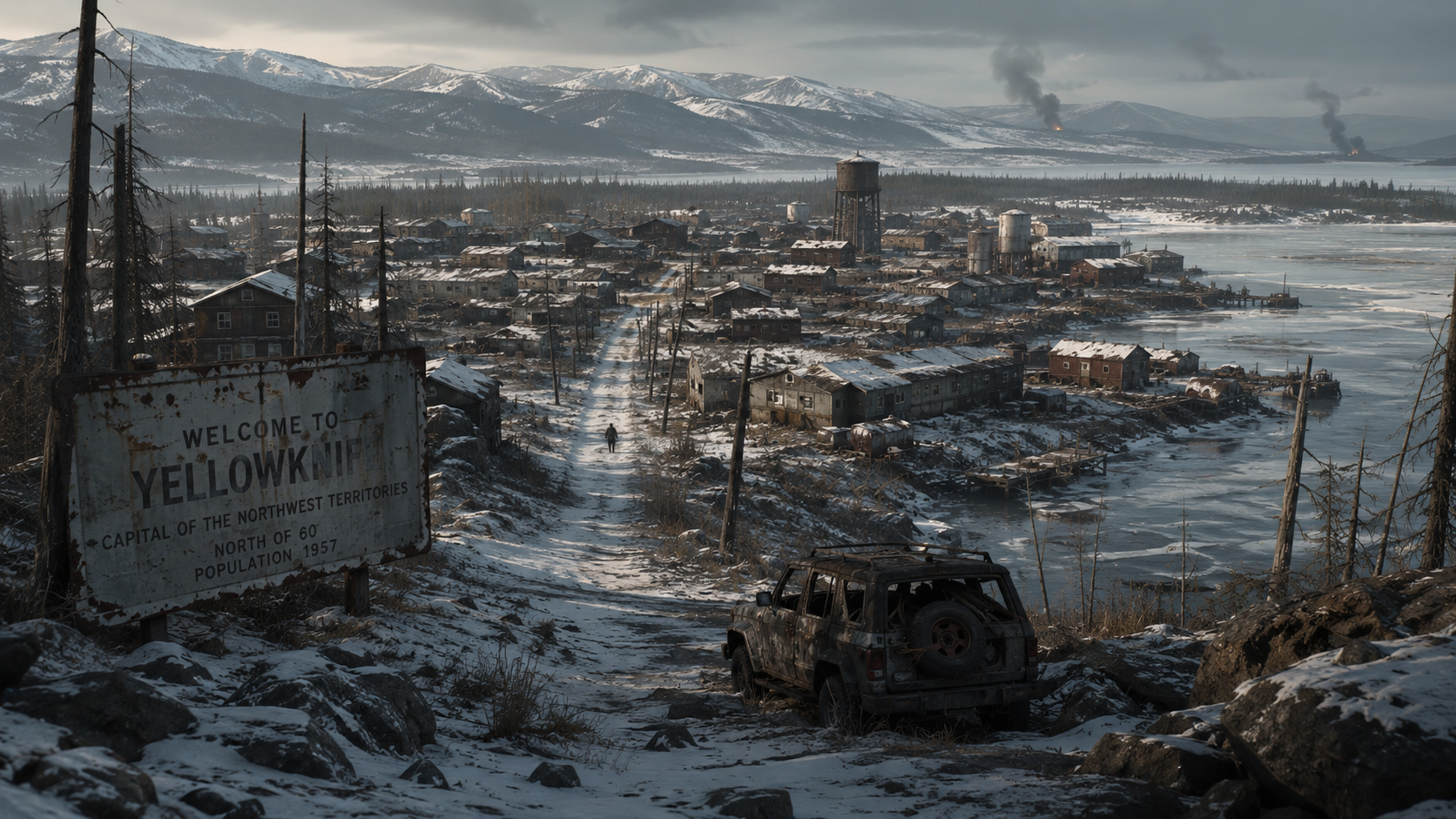
Post-Apocalyptic Fiction in the Northwest Territories
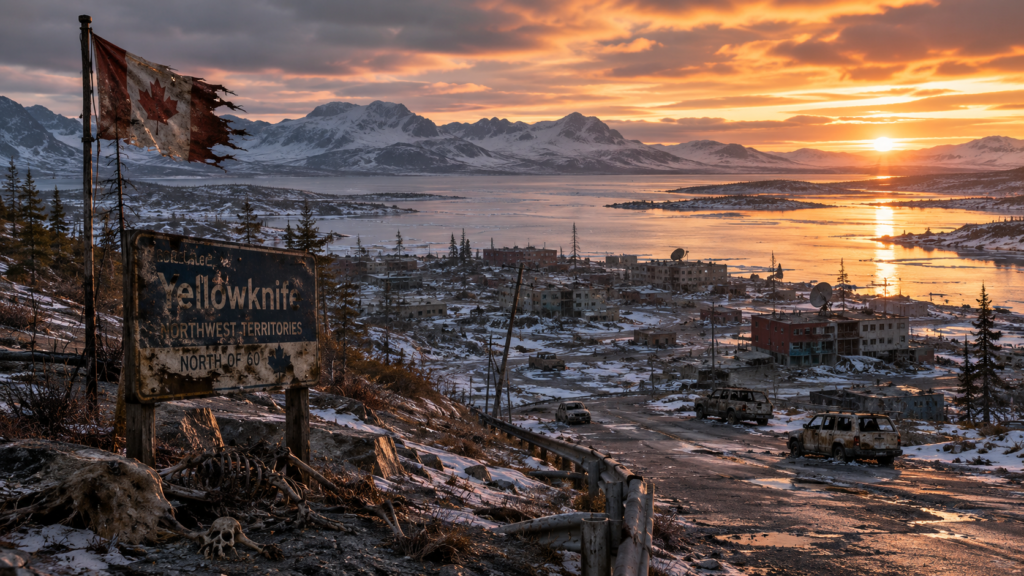
The Northwest Territories (NWT) offers one of the most compelling natural settings for post-apocalyptic fiction in North America. Its vast distances, sparse population, extreme seasonal cycles, and dependence on long and fragile supply chains create conditions where societal breakdown is not only plausible, but immediate and structurally revealing. In this landscape, survival is less about rebuilding civilization from ruins and more about adapting to systems that were never fully stable to begin with.
Why the Northwest Territories Works So Well for Post-Apocalyptic Fiction
The NWT is defined by scale and isolation. Communities are separated by hundreds of kilometers of tundra, forest, and ice. Road networks are limited, and many settlements rely on seasonal winter roads or air transport for essential goods. When those systems fail, there is no nearby fallback, only distance.
This creates a natural amplification of post-apocalyptic conditions. A single disrupted supply route can reshape the survival prospects of an entire community. Power failures, communication breakdowns, or environmental disruptions quickly become existential rather than inconvenient.
At the same time, the region is not defined solely by fragility. It is also shaped by deep continuity of Indigenous presence, particularly Dene Nations, including the Tłı̨chǫ, Sahtúot’ine, and Yellowknives Dene. These cultures carry extensive knowledge systems tied to land navigation, seasonal cycles, hunting practices, and community governance. In post-apocalyptic fiction, this knowledge becomes more than background, it becomes infrastructure.
As a result, stories set in the NWT often shift away from the familiar imagery of collapsed cities and scavenged ruins. Instead, they focus on land-based survival, oral memory, and the tension between imposed systems and lived environmental knowledge.
Key Works and Northern Survival Narratives
Several notable works explore themes that align closely with post-apocalyptic storytelling in the North.
Taaqtumi: An Anthology of Arctic Horror Stories brings together Inuit and northern writers to explore isolation, survival, and supernatural disruption in Arctic environments. Contributors such as Richard Van Camp ground their stories in the realities of northern life, where extreme conditions shape both physical survival and psychological endurance.
This Place: 150 Years Retold is a graphic anthology that reframes Canadian history through Indigenous perspectives. While not strictly post-apocalyptic, it engages with the idea that Indigenous communities have already survived profound civilizational rupture following colonization. In doing so, it reframes apocalypse not as a future event, but as an ongoing historical condition.
Hiero’s Journey by Sterling E. Lanier presents a far-future post-nuclear world where remnants of human civilization reorganize into new cultural and political formations. While fictionalized and stylized, it incorporates northern and Indigenous-inspired cultural elements in its depiction of post-collapse societies.
More broadly, works like The Wolves of Winter by Tyrell Johnson, set in the neighboring Yukon, extend similar themes of isolation, resource scarcity, and environmental extremity, reinforcing the Arctic and sub-Arctic regions as ideal frameworks for survival narratives.
Warriors of the Last Days: Northwest Territories Stories
Within this landscape, Warriors of the Last Days explores the NWT as a place where collapse is not a single event but a layered process unfolding across environment, infrastructure, and memory.
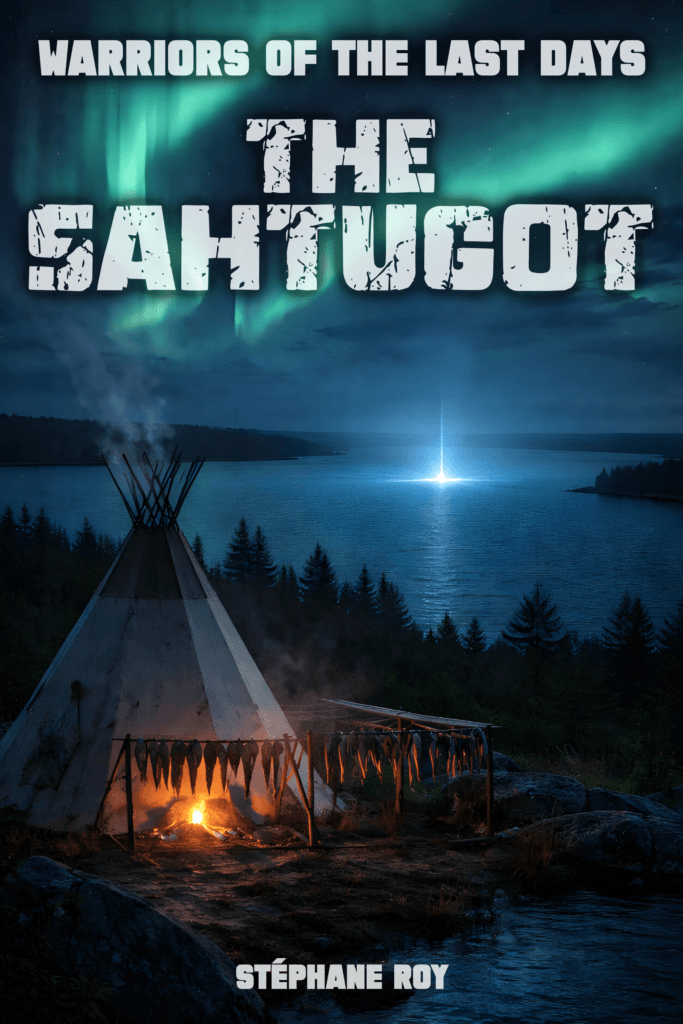
The Sahtúgot
A nuclear inspector is dispatched to investigate an unexplained blue glow emerging from a remote northern lake system. What appears at first to be a standard environmental anomaly becomes increasingly difficult to categorize as scientific data begins to conflict with local accounts and inherited warnings.
The investigation reveals a missing diver’s report, fragmented testimony from a nearby community, and evidence that the lake may function as a repository for what has been lost to it. The deeper the inspector goes, the less reliable conventional frameworks of evidence become, forcing a confrontation with systems of knowledge that do not separate memory from material reality.
The story becomes an atmospheric moral thriller about accountability, perception, and the physical persistence of unresolved events.
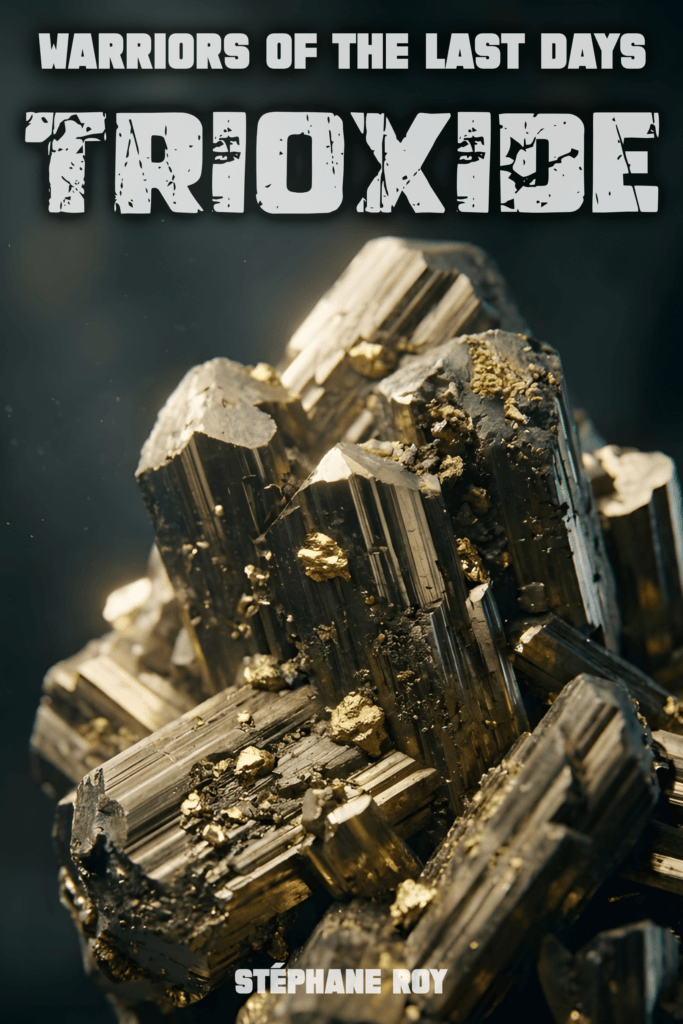
Trioxide
When the thermosyphons fail due to lack of maintenance after the Light, a systems engineer and a Yellowknives Dene rights-holder must salvage truth and names from logs and drafts to prevent history from being erased as arsenic contamination migrates to the river.
The story explores the fragility of recorded history, treating information systems as unstable terrain where survival depends on preserving not just data, but meaning itself.
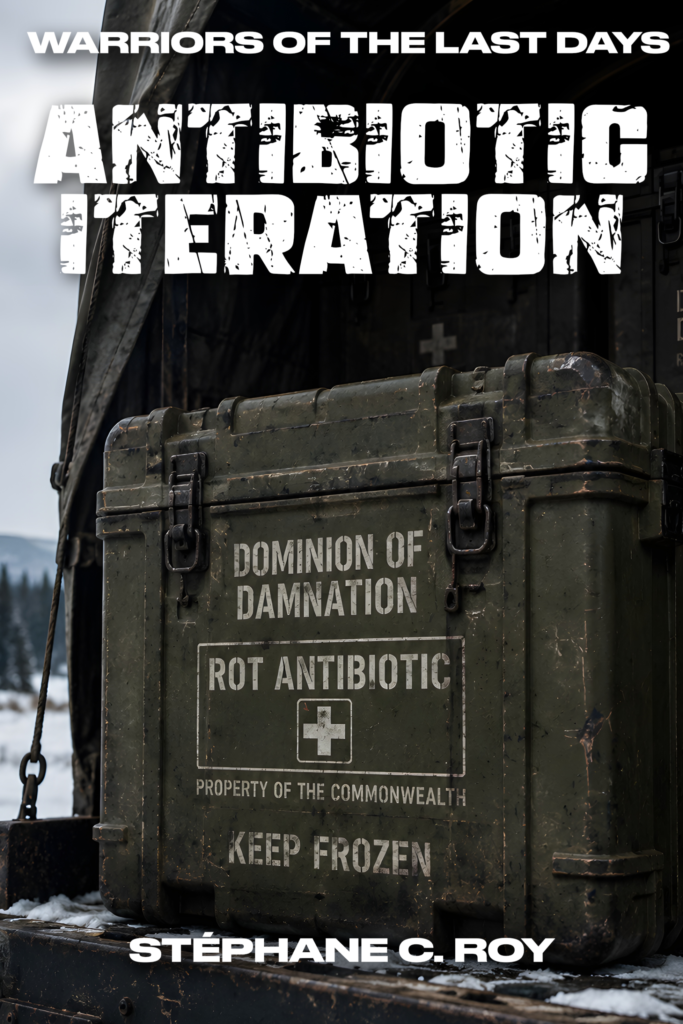
ANTIBIOTIC ITERATION
Gary Mallet has delivered the mail across the Dempster Highway for twenty-two years. Blizzards, washed-out roads, snow worms: none of it has stopped him. He is not about to let a pharmaceutical crew stop him either.
When his truck disappears overnight, along with the rot antibiotic meant for every community in the Northwest Territories and the Yukon, Gary does what any reasonable mailman would do: he goes to get it back.
He does not expect help. He does not expect it to come from a waitress named Pascale, who ended up in the wrong camp at the wrong time and turns out to be considerably more useful than she has any right to be.
The mail goes through. It always does.

THE DATE
Mary Vittrekwa has been trying to introduce Gary Mallet to her niece Pascale for two years. She did not expect the Arctic to do it for her.
Gary stops by for tea with a story about a stolen truck, a pharmaceutical crew, and one remarkably useful civilian. Days later, Pascale arrives with a story about a mailman, a firefight, and one very long night she is doing her best not to think about. Mary listens to both accounts.
She already knows what neither of them will say.
Some things settle on their own. Like tea.
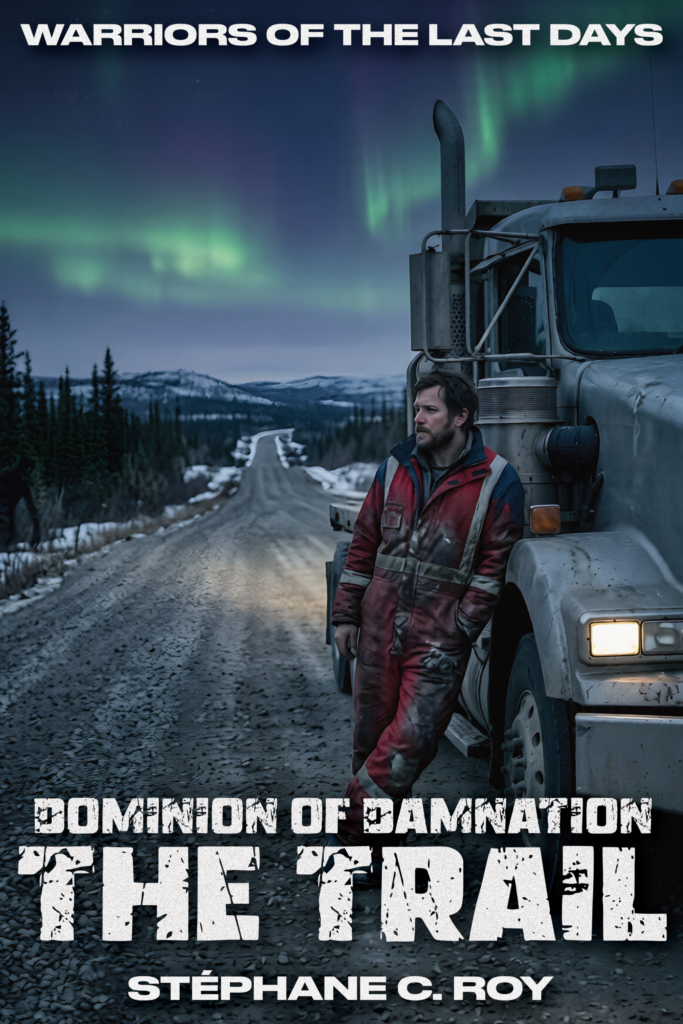
THE TRAIL
Conclusion
Post-apocalyptic fiction set in the Northwest Territories succeeds because the region already exists at the edge of systemic tension. Environmental extremes, logistical fragility, and deep cultural continuity intersect in ways that naturally amplify the core questions of the genre: what remains when systems fail, and what forms of knowledge persist when infrastructure disappears.
Rather than relying on familiar collapse tropes, the NWT encourages a different kind of narrative, one where survival is collective, knowledge is land-based, and the future is shaped less by reconstruction than by reinterpretation of what was never fully stable to begin with.
© Copyright 2026 WARRIORS OF THE LAST DAYS All rights reserved Privacy Policy
 Stéphane Roy is a lifelong reader and writer with a deep love for science fiction, apocalyptic worlds, and tightly constructed mysteries. This is his first novel. He lives in the Yukon with his dog and his aquarium, where long winters, silence, and wide, sometimes glowing, skies leave plenty of room for imagining the end of the world, and what might come after it. He is also waiting, with cautious optimism, for the aliens to finally reveal themselves and straighten us all out.