British Columbia After the End: Why the West Coast Makes Such a Powerful APOCALYPSE Setting
British Columbia is almost unfairly well suited to post-apocalyptic fiction.
Few places in Canada offer such a dramatic collision of environments in such a relatively small geographic area: a dense Pacific metropolis, enormous forests, mountain ranges, isolated islands, remote coastal communities, agricultural valleys, resource towns, highways that can become lifelines or traps, and an ocean that can either connect survivors or cut them off completely.
Before the apocalypse, British Columbia is one of Canada’s most visually recognizable provinces. After the apocalypse, almost every one of those recognizable features can become something else.
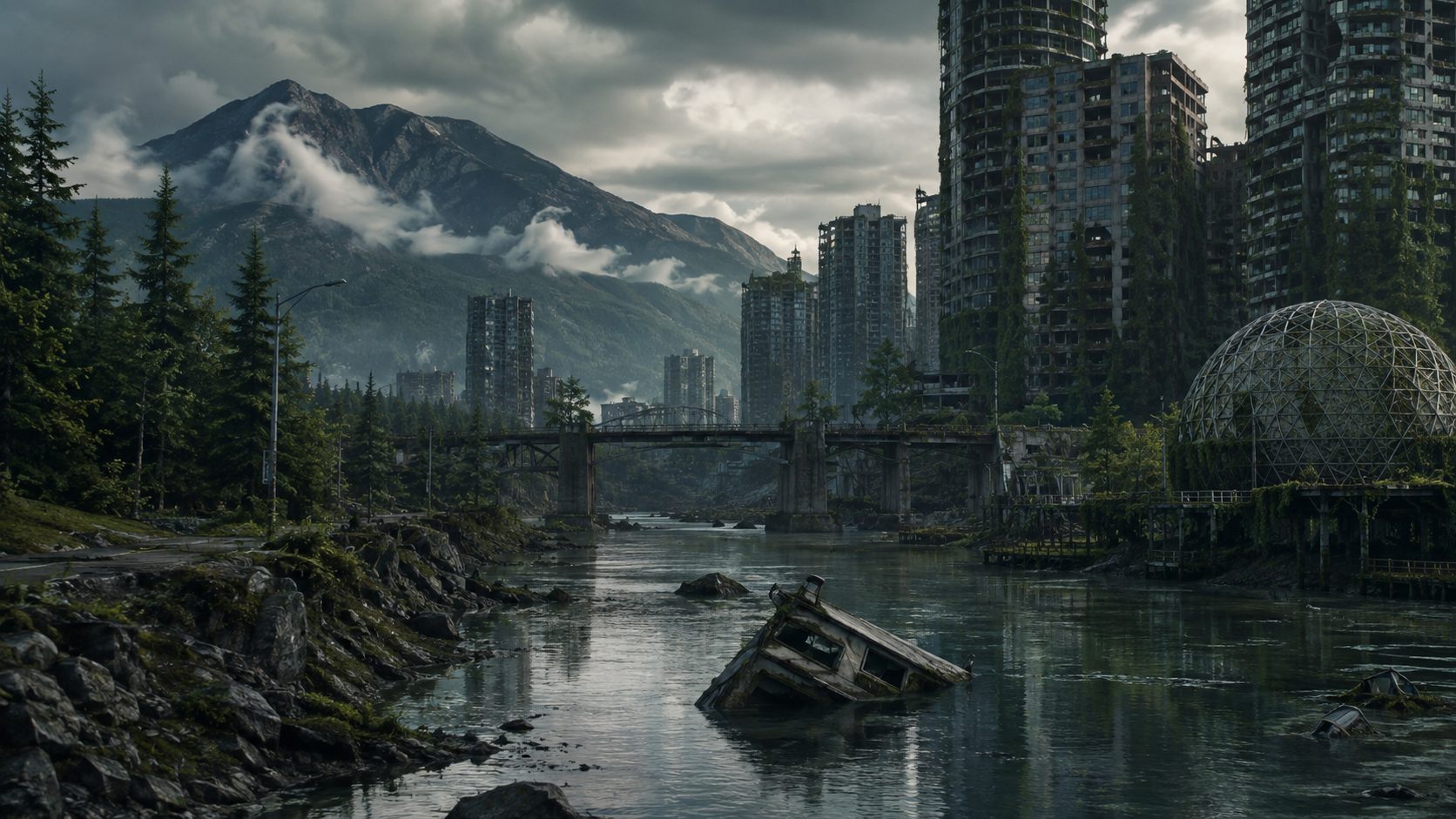
Vancouver becomes a city threatened by the sea. The forests become an almost limitless wilderness. The mountains become barriers. The Inside Passage becomes a network of isolated communities. The islands become refuges — or prisons. Former resource roads become the only routes between settlements. And the Pacific becomes both a source of food and an enormous geographic wall.
That combination gives British Columbia something especially valuable to post-apocalyptic fiction: isolation without emptiness.
There is always somewhere else to go. The question is whether you can get there.
A province built for the post-apocalypse
British Columbia’s geography naturally creates the kinds of problems post-apocalyptic stories need.
The province stretches from the Pacific coast to the Rocky Mountains and contains radically different climates and landscapes. Vancouver and the Lower Mainland are dense, urban, and heavily dependent on transportation and infrastructure. Further north and inland, population becomes increasingly sparse. The coast fragments into islands, fjords and inlets. The interior contains enormous forests, mountain valleys and resource communities.
In a functioning society, modern infrastructure connects these places.
After a collapse, that infrastructure becomes a vulnerability.
A bridge can become a checkpoint. A ferry terminal can become a fortress. A mountain pass can determine who controls an entire region. A highway can become the only safe route for hundreds of kilometres. A port can become more valuable than an entire town.
And the further north or west you travel, the more obvious the basic problem becomes: British Columbia is enormous, while its population is concentrated in relatively small pockets.
That makes the province particularly useful for stories about fragmented societies rather than a single civilization simply disappearing.
The apocalypse does not necessarily erase British Columbia.
It breaks the connections between its pieces.
Vancouver: the drowned city
Vancouver provides perhaps the most obvious post-apocalyptic setting in the province.
It is a dense coastal city surrounded by mountains and water, with enormous infrastructure concentrated in a relatively constrained geographic area. That makes it ideal for stories involving climate change, flooding, ecological collapse or the breakdown of centralized government.
Michael Kluckner’s graphic novel 2050: A Post-Apocalyptic Murder Mystery takes exactly this approach. Published in 2016, the book imagines Vancouver after the Patriotic War and a pandemic, with the city transformed into a dystopian society governed by strict environmental laws. Detective Sara Fidelia investigates a murder and travels through a damaged landscape beyond the city’s walls.
The important thing about 2050 is that Vancouver does not simply become a pile of ruins.
It becomes a functioning post-apocalyptic society.
That distinction is important.
A ruined Vancouver is visually easy to imagine. A Vancouver that has survived — but survived by becoming something fundamentally different — is much more interesting.
The city’s existing geography makes that transformation particularly compelling. Water can reclaim streets. Former neighbourhoods can become islands. Buildings can become vertical settlements. Transit infrastructure can become tunnels through an altered city. The seawall can become a defensive boundary rather than a recreational landmark.
And the mountains remain.
Even after civilization changes, the North Shore mountains still dominate the horizon.
That gives a post-apocalyptic Vancouver an unusual visual identity: a city that has been transformed below, surrounded by a landscape that looks almost untouched above.
The coast: civilization reduced to islands
British Columbia’s coastline offers another advantage that few Canadian provinces can match.
The coast is already fragmented.
Hundreds of islands, inlets and narrow passages create natural isolation. Communities can be separated by water while remaining geographically close. In a world without reliable aviation, fuel, telecommunications or large-scale shipping, that separation becomes enormous.
A community might know that another settlement exists only a few kilometres away — while still being effectively unreachable.
That creates excellent conditions for stories about cultural divergence.
One island might preserve a functioning fishing economy. Another might become authoritarian. A third might have abandoned modern technology almost completely. Another might believe the rest of the world is gone.
The ocean also changes the meaning of movement.
On land, a survivor can walk.
On the coast, movement requires a boat, fuel, knowledge of tides and weather, and somewhere safe to land.
A broken bridge is an inconvenience.
A broken boat can be a death sentence.
This makes the Pacific coast particularly effective for quieter post-apocalyptic stories. The threat does not always need to be a marauding army or a monster. Sometimes the enemy is distance.
The Great Bear Rainforest: wilderness after humanity
Few environments are as immediately evocative as British Columbia’s coastal rainforest.
The Great Bear Rainforest contains immense old-growth forests, wetlands, rivers, islands and highly productive marine ecosystems. It is also home to the Kermode, or Spirit Bear, a rare white-furred form of the American black bear. Kermode bears are strongly associated with the north and central coast of British Columbia, including territory connected to the Gitga’at Nation.
This is where British Columbia can move beyond conventional post-apocalyptic survival fiction.
The forest itself can become a character.
A post-apocalyptic rainforest does not have to be a dead landscape. It can be overwhelmingly alive.
Trees continue growing.
Salmon continue returning.
Bears continue moving through territory.
Rain continues falling.
The forest does not care that human civilization has collapsed.
That creates an interesting inversion of the traditional apocalypse. Instead of asking how humanity survives in a ruined world, British Columbia allows writers to ask what happens when the natural world begins recovering faster than humanity can rebuild.
The result can be beautiful, threatening or both.
Fractured and the Canadian apocalypse
British Columbia also appears in the broader Canadian post-apocalyptic tradition through the anthology Fractured: Tales of the Canadian Post-apocalypse, edited by Silvia Moreno-Garcia and published by Exile Editions in 2014.
The anthology deliberately treats Canada itself as a post-apocalyptic landscape, with stories ranging across different regions and forms of catastrophe. Its premise includes a Vancouver surrounded by rising waters, alongside disasters affecting the Prairies, northern Canada and other parts of the country.
That regional approach is particularly appropriate for British Columbia.
The province demonstrates why there is no single Canadian apocalypse.
An event that destroys Vancouver might barely affect an isolated coastal community.
A collapse of petroleum distribution might devastate an interior town while leaving a fishing village comparatively functional.
A pandemic could produce entirely different outcomes in the Lower Mainland than in the North.
The same apocalypse can therefore produce multiple societies.
British Columbia is almost a miniature continent in that respect.
The wilderness frontier: The Wolf Road
Beth Lewis’s The Wolf Road takes British Columbia in another direction.
The novel is set in a post-apocalyptic wilderness in what was once British Columbia, following seventeen-year-old Elka as she attempts to survive after civilization has been devastated by an unnamed catastrophe. She has been raised in the wilderness by a man known as Trapper and possesses the hunting and tracking skills necessary to survive in the altered landscape.
The result is almost a post-apocalyptic western.
That is another reason British Columbia works so well.
The province already contains the physical ingredients of a frontier story: enormous distances, wilderness, isolated settlements, resource extraction, hunting, mountains and dangerous terrain.
Remove modern infrastructure and those characteristics become dramatically more important.
A character who knows how to read a forest suddenly possesses knowledge that is worth more than money.
A person who knows a mountain pass becomes strategically important.
Someone who understands boats, tides, hunting or trapping may be more valuable to a settlement than someone who once worked in an office.
The apocalypse does not necessarily create a new frontier.
In British Columbia, it reveals the one that was already there.
The mountains as walls
The Coast Mountains and Columbia Mountains give British Columbia another natural storytelling tool: vertical geography.
Mountains divide.
They create weather systems, restrict travel and isolate communities. In a functioning country, roads, tunnels, bridges, airports and telecommunications defeat that isolation.
Remove those systems and the mountains return to being walls.
That means British Columbia can support stories where two communities are separated not by hundreds of kilometres, but by terrain that makes those kilometres effectively impossible to cross.
It also creates natural borders between competing post-apocalyptic societies.
A valley can become a kingdom.
A mining town can become a fortress.
A mountain pass can become a contested border.
A ski resort can become a winter settlement.
A logging camp can become a self-sufficient community.
The province’s geography constantly supplies writers with plausible reasons why one group knows something another does not.
Resource country after the collapse
British Columbia is also a resource province.
Forestry, mining, fishing, agriculture, hydroelectricity and other resource industries have shaped its economy and settlement patterns.
In a post-apocalyptic setting, those industries do not simply disappear.
Their infrastructure remains.
Mines become shelters.
Dams become strategic assets.
Logging roads become transportation networks.
Fishing boats become some of the most valuable vehicles left on the coast.
Warehouses become stockpiles.
Resource towns can become isolated strongholds.
And industrial knowledge becomes survival knowledge.
This is particularly useful because it allows post-apocalyptic societies to retain fragments of the old world without simply recreating it.
A community might know how to operate a hydroelectric facility but no longer have access to the wider electrical grid.
A settlement might possess heavy machinery but lack replacement parts.
A mine might provide shelter while simultaneously becoming a dangerous underground environment.
The remnants of industrial civilization therefore become both salvation and liability.
British Columbia in Warriors of the Last Days
The British Columbia stories in Warriors of the Last Days approach the province from another direction: not simply as a landscape devastated by the apocalypse, but as a place where the boundary between ecological change, memory, culture and the human world becomes increasingly unstable.
Three short stories currently anchor the British Columbia setting.
MOKSGM’OL
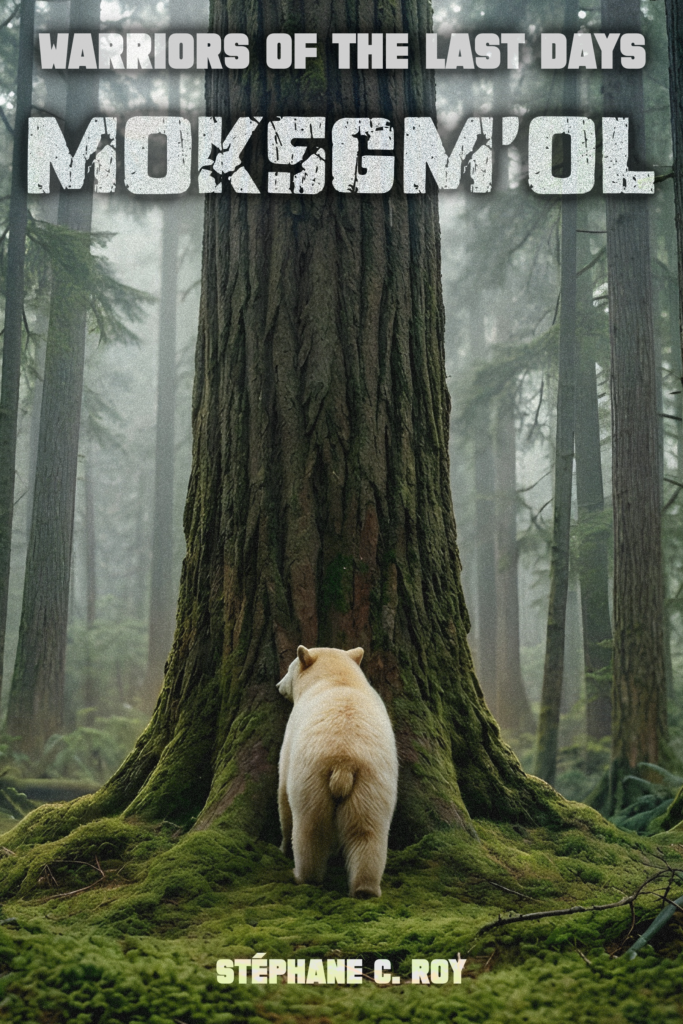
In Moksgm’ol, an unexplained Light alters the old-growth mycorrhizal network.
A Gitga’at guardian follows a cream-white Kermode bear that has become something more than an animal, a carrier of the forest’s changed memory.
The choice of the Kermode bear is particularly appropriate to the setting. The animal is inseparable from the ecology and cultural landscape of British Columbia’s North Coast, and the Moksgm’ol/Chapple-Cornwall area encompasses old-growth forests, salmon habitat and culturally significant sites in the traditional territories of the Gitga’at and Gitxaała Nations.
The story therefore uses British Columbia for something beyond atmosphere.
The landscape is part of the mechanism of change.
The forest remembers.
And that creates a distinctly British Columbian form of post-apocalyptic horror: not a wasteland, but an ecosystem that has begun operating according to rules humanity no longer understands.
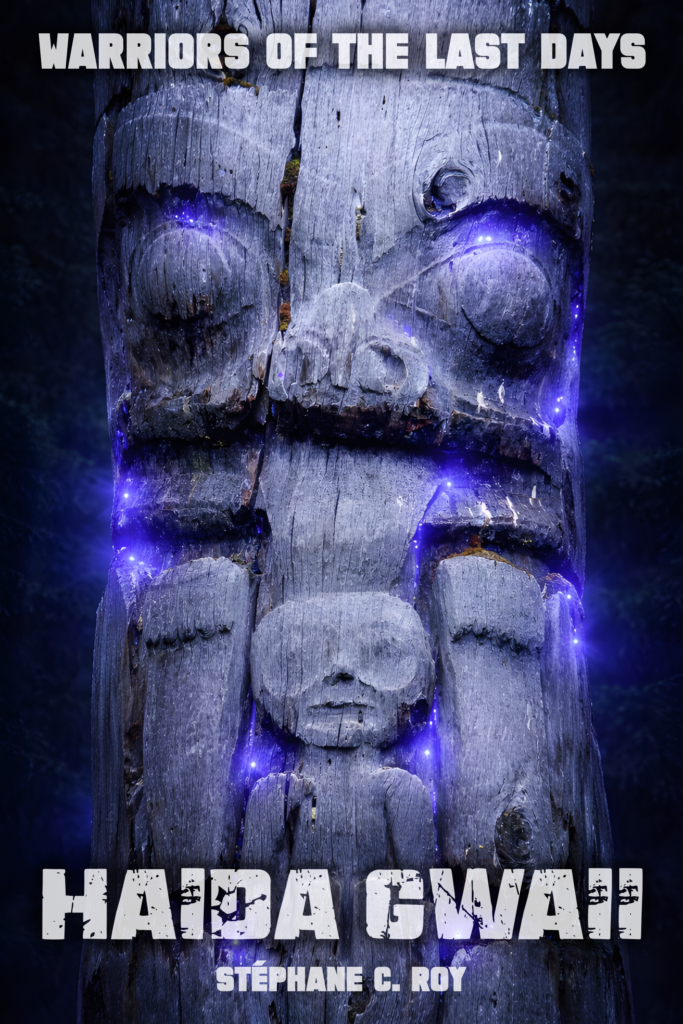
HAIDA GWAII
Haida Gwaii moves even further into the relationship between landscape, culture and transformation.
A carver discovers that cedar in his shed has begun mapping a face of its own. What begins as an unsettling disturbance becomes a confrontation with a spreading forest intelligence, forcing him to reconcile craft, tradition and an environment that may no longer be passive material.
Haida Gwaii is an exceptionally powerful location for this kind of story because the geography itself emphasizes separation.
The islands are isolated from mainland British Columbia.
They possess their own distinctive ecosystems and cultural history.
And cedar is not simply another tree in the context of Northwest Coast artistic traditions.
That allows the story to make the material world itself significant.
The apocalypse is no longer something that happened somewhere else.
It is inside the wood.
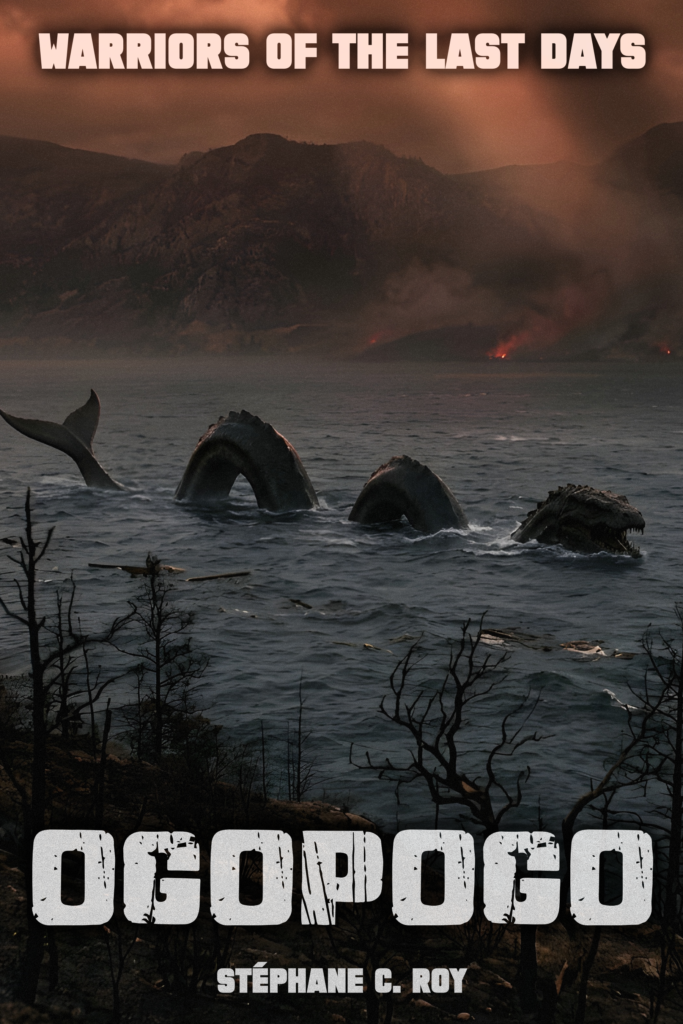
OGOPOGO/N’HA-A-ITK
Ogopogo/N’ha-a-itk shifts from the coast to the interior.
Here, the post-apocalyptic landscape becomes the setting for an encounter with one of British Columbia’s most enduring legendary creatures.
A man who has spent eleven years turning a legend into jokes finally encounters the thing itself at dusk.
But the central question is not simply whether Ogopogo exists.
It is what the encounter demands from him.
The story uses British Columbia’s mythology in much the same way Moksgm’ol uses its ecology: as something that survived the collapse because it was never entirely dependent on modern civilization in the first place.
The old stories remain.
The landscape remains.
And eventually, the two meet.
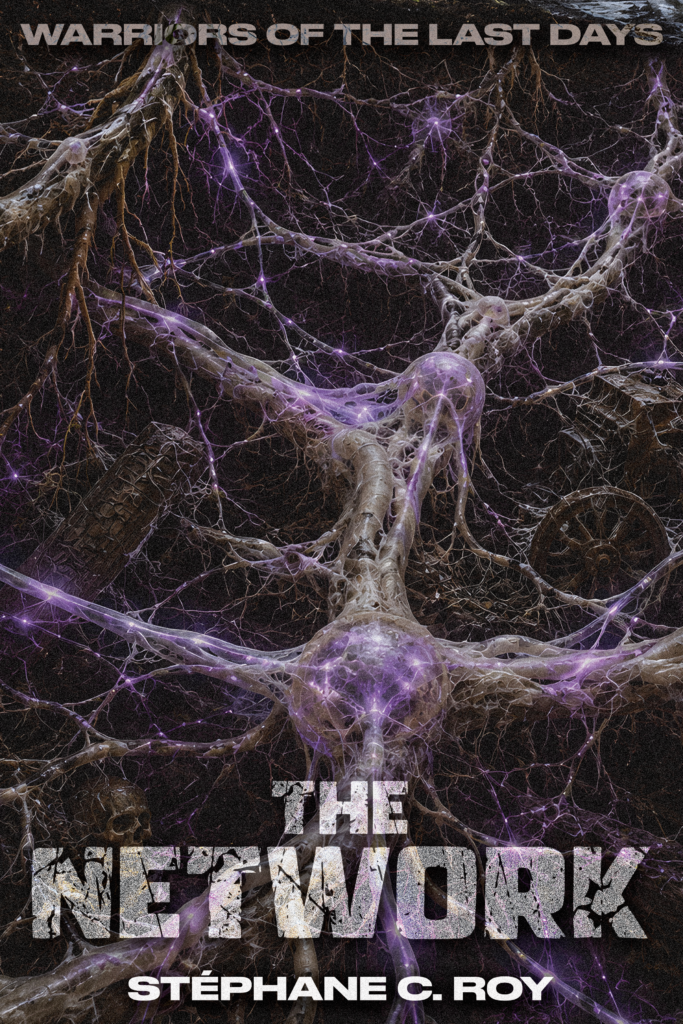
THE NETWORK
The Mycelial network that crosses the country sends a distress signal that will lead three native men from different tribe to convene together and try and assess the upcoming threat. They will team up with Brett Cole and his team and head east, towards an abandoned quarry where light is wrong and a former nurse holds an enormous power that threatens to destroy the entire country.
WARRIORS OF THE LAST DAYS NOVELS SET IN BRITISH COLUMBIA
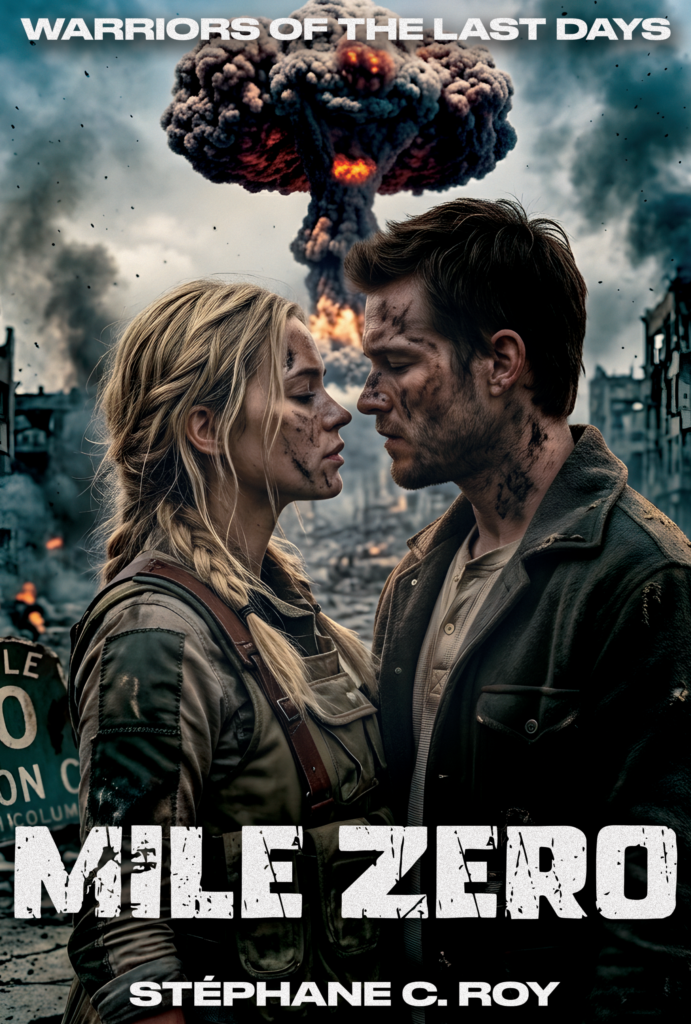
MILE ZERO: the western frontier of the apocalypse
The larger British Columbia cycle will eventually culminate, geographically, in Mile Zero, the Western entry of A Mari usque ad Mare Cycle III.
Its setting is Dawson Creek, at the real Mile 0 of the Alaska Highway. That location provides an entirely different vision of British Columbia after the collapse.
Instead of rainforest or island isolation, Mile Zero uses the Peace region, winter, agriculture, fuel scarcity and the strategic importance of the Alaska Highway.
The settlement’s heart is the real Mile 0 landmark: the arch, cairn and Surveyor Statue associated with the beginning of the Alaska Highway. Walter Wright Pioneer Village becomes the residential and agricultural core, while the Ovintiv Events Centre becomes a central gathering and market space.
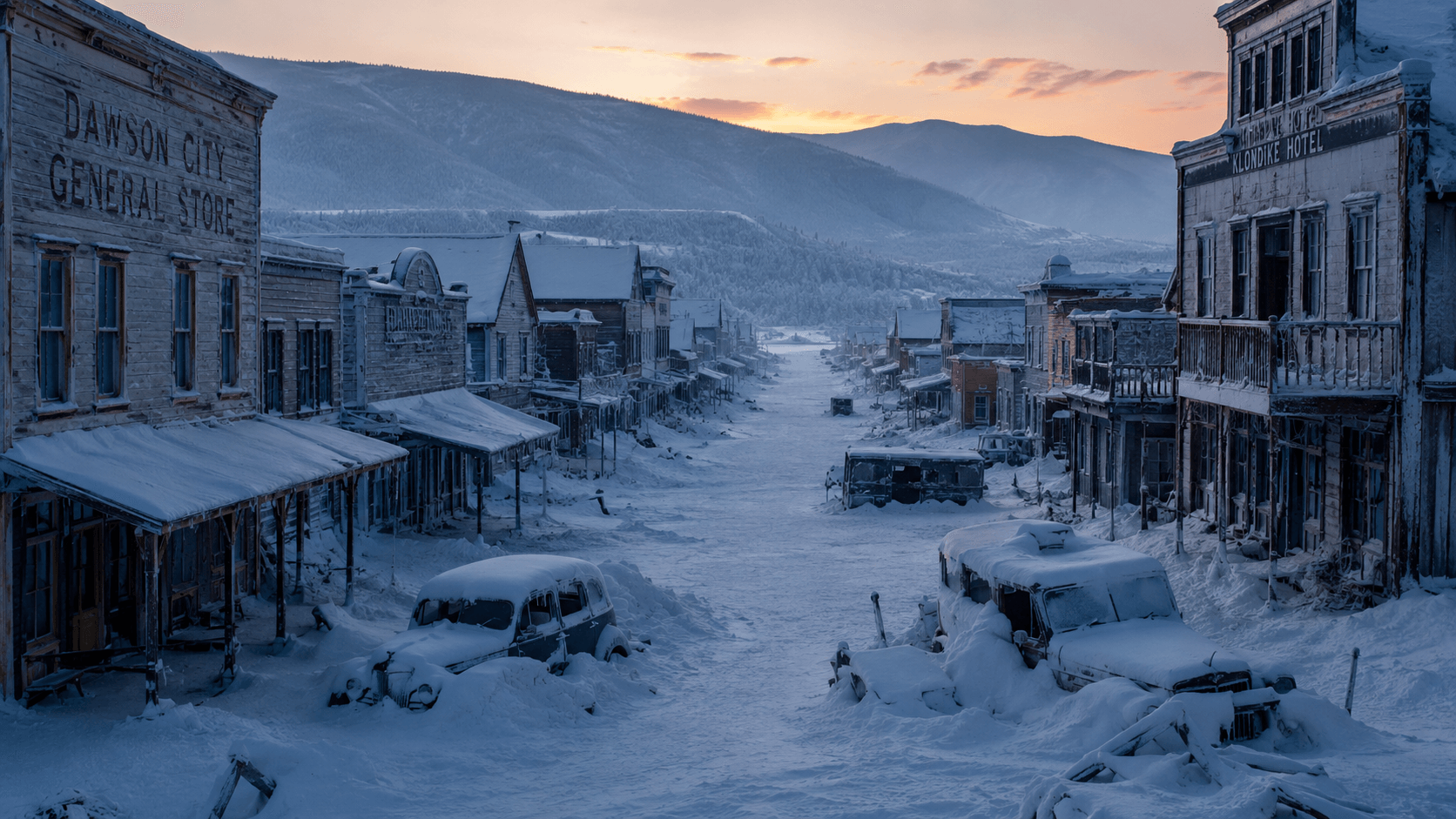
The geography creates the conflict. North of the line lies a contested highway. Fuel is scarce. The region’s historical relationship with oil and gas becomes part of the survival economy. And winter is not scenery.
At temperatures dropping well below -20°C, fuel determines whether people can heat buildings, move supplies and remain alive.
That makes Mile Zero a particularly Canadian form of apocalypse. The apocalypse is not merely about fighting. It is about logistics. Who controls the road? Who has fuel? Who has antibiotics? Who can survive the winter? And who can keep the settlement’s infrastructure functioning?
Even the story’s darkly comic structure depends on that tension. The settlement behaves almost like a high-school social ecosystem while underneath it sits a much more serious struggle over fuel, security and survival. And then the story takes that logic to its catastrophic conclusion.
The Alaska Highway, originally constructed as a massive wartime infrastructure project, becomes the road through which the final disaster reaches Dawson Creek.
The place that once connected civilization becomes the route by which civilization’s destruction arrives.
From British Columbia to Montreal
The British Columbia material also has a larger role in A Mari usque ad Mare.
The Network, currently planned as Cycle IV, will follow a west-to-east route from British Columbia toward Montreal.
Brett Cole, the protagonist of Cole’s War, survives a vision-triggered accident and is helped eastward by an inter-tribal Indigenous group acting at the request of the Mycelial Network and an apparently angelic voice.
Along the way, he begins working with another Cole — the unrelated Cole from Ogopogo. That creates an unusual structural possibility for the British Columbia stories. They are not isolated tales at the western edge of the Warriors universe. They are part of a geographic progression.
Moksgm’ol, Haida Gwaii and Ogopogo establish different aspects of British Columbia’s altered world. Mile Zero explores the province’s eastern gateway and the brutal logic of fuel, winter and infrastructure. The Network then turns the province into the beginning of a journey across Canada.
British Columbia becomes the western edge of the larger story.
Why British Columbia works
Ultimately, British Columbia is powerful in post-apocalyptic fiction because it contains several contradictory worlds at once.
It has one of Canada’s largest metropolitan areas and some of its most isolated communities. It has enormous forests and dense urban neighbourhoods. It has oceans and mountains. It has islands and highways. It has modern infrastructure and landscapes where human presence can disappear surprisingly quickly.
Most importantly, British Columbia does not need to be turned into a wasteland to feel post-apocalyptic. The forest can still be green. The mountains can still be beautiful. The ocean can still be blue. Salmon can still run. Rain can still fall.
A Spirit Bear can still move through the trees. And that may be more unsettling than a landscape of ashes. Because the most effective post-apocalyptic British Columbia is not necessarily a place where the world has died.
It is a place where the world has continued without us.
That gives British Columbia an enormous range as a setting: climate dystopia in Vancouver, wilderness survival in the interior, maritime isolation along the coast, ecological horror in the Great Bear Rainforest, mythological encounters around the Okanagan, cultural and environmental transformation on Haida Gwaii, and infrastructure-driven survival in the Peace region.
The apocalypse can arrive in many forms.
British Columbia simply has more ways for it to stay.
- British Columbia After the End: Why the West Coast Makes Such a Powerful APOCALYPSE Setting
- A province built for the post-apocalypse
- Vancouver: the drowned city
- The coast: civilization reduced to islands
- The Great Bear Rainforest: wilderness after humanity
- Fractured and the Canadian apocalypse
- The wilderness frontier: The Wolf Road
- The mountains as walls
- Resource country after the collapse
- British Columbia in Warriors of the Last Days
- THE NETWORK
- WARRIORS OF THE LAST DAYS NOVELS SET IN BRITISH COLUMBIA
- MILE ZERO: the western frontier of the apocalypse
- From British Columbia to Montreal
- Why British Columbia works
A new post-apocalyptic story from Canada. Every month.
The earlier you join, the larger your library becomes.
Join now. Start building your library before the next hundred.
 Stéphane Roy is a lifelong reader and writer with a deep love for science fiction, apocalyptic worlds, and tightly constructed mysteries. This is his first novel. He lives in the Yukon with his dog and his aquarium, where long winters, silence, and wide, sometimes glowing, skies leave plenty of room for imagining the end of the world, and what might come after it. He is also waiting, with cautious optimism, for the aliens to finally reveal themselves and straighten us all out.