
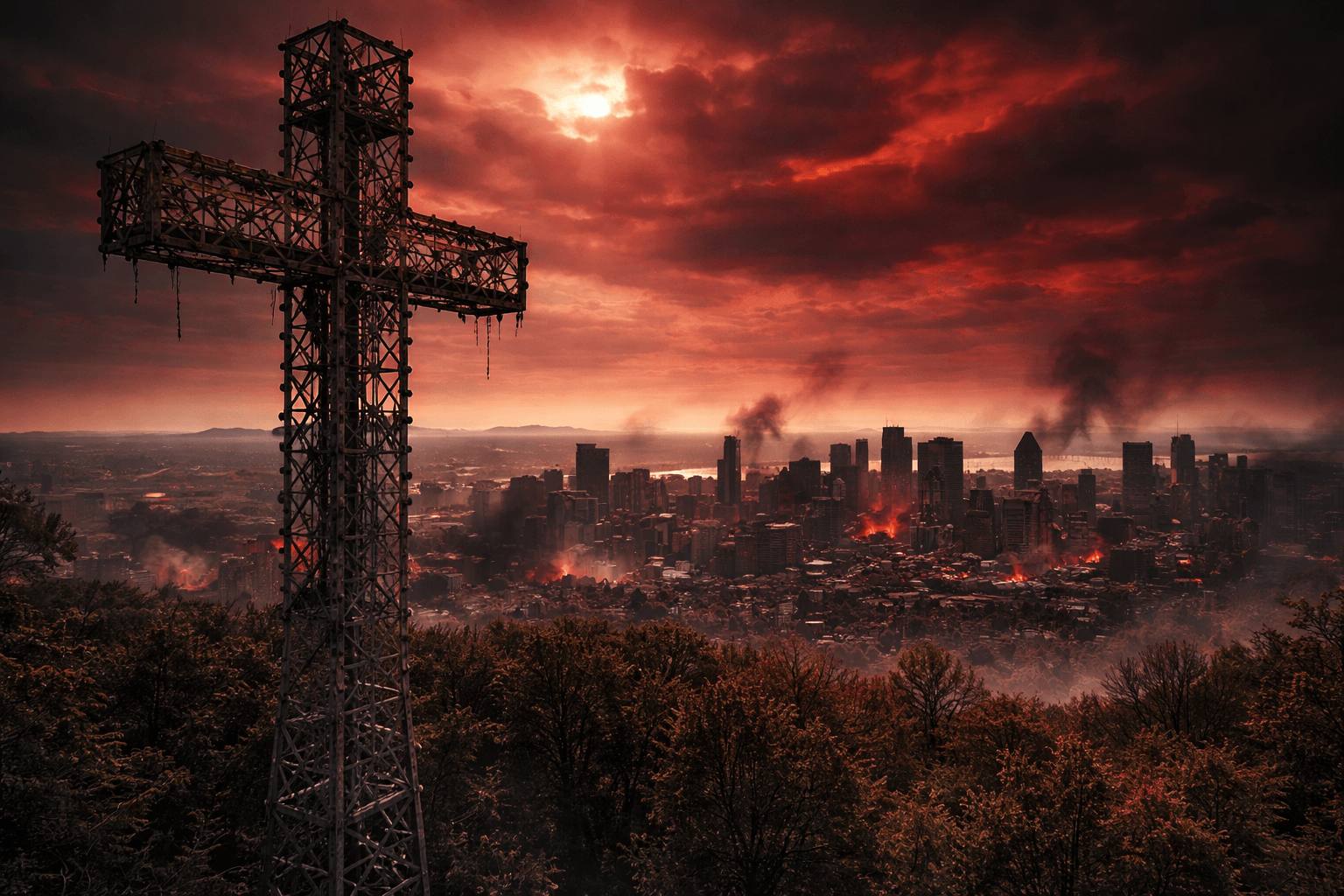
Post-Apocalyptic Fiction Set in Montreal: From Surréal 3000 to Today
Most post-apocalyptic fiction takes place somewhere else.
The American Southwest. Small towns in the Midwest. Anonymous ruins that could belong to almost any city. Montreal rarely appears on lists of famous apocalypse settings, yet it may be one of the most naturally suited cities in North America for stories about collapse.
It is an island city surrounded by water. It contains hundreds of kilometers of underground infrastructure. It sits at the meeting point of French and English Canada. It experiences winters capable of turning a simple mistake into a fatal one.
More importantly, Montreal has developed its own quiet tradition of post-apocalyptic fiction. From underground civilizations hidden beneath Mount Royal to contemporary novels exploring a collapsed Quebec, writers have repeatedly returned to the city when imagining the end of the world.
This guide explores that tradition and the books that define it.
Why Montreal Works So Well as a Post-Apocalyptic Setting
An Island Defined by Water
Montreal’s geography shapes everything.
The city sits on an island in the middle of the St. Lawrence River, connected to the mainland by bridges, tunnels, rail corridors, and a limited number of major routes. In normal times, those connections make Montreal a transportation hub. In a collapse scenario, they become chokepoints.
Control a bridge and you control movement. Lose a bridge and entire districts become isolated.
For post-apocalyptic fiction, this geography creates natural tension. Communities can become separated without needing walls. Trade routes emerge naturally. Defensible territory already exists.
The same geographic realities appear throughout discussions of the cities of a collapsed Canada.
The Underground City and the Metro
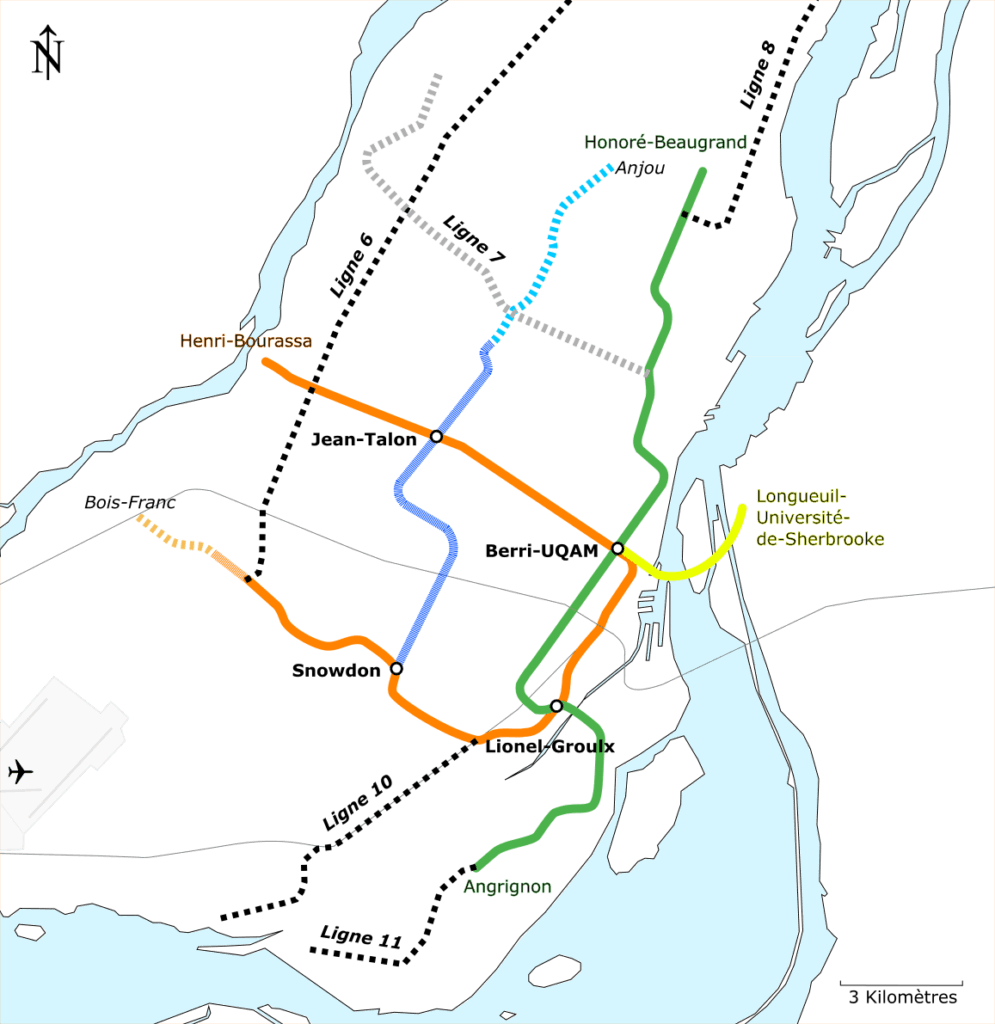
Few North American cities possess an underground network as extensive as Montreal’s.
The Montreal Metro, service tunnels, utility corridors, commercial passages, and underground connections provide shelter, heat retention, transportation corridors, and defensible positions. During winter, those spaces become even more valuable.
A post-collapse Montreal does not simply occupy the streets. It expands below them.
This reality appears repeatedly in local speculative fiction and helps explain why so many writers return to the city as a setting.
Mount Royal as Infrastructure
Mount Royal is more than a landmark.
The mountain shapes navigation, communication, visibility, and territory. It contains roads, reservoirs, tunnels, service spaces, and major institutions. Any group attempting to control a future Montreal would eventually have to reckon with the mountain.
One Quebec novel goes even further and places an entire civilization beneath it.
A City Built in Two Languages
Most post-apocalyptic fiction treats language as a given.
Montreal cannot.
French and English coexist throughout the city, but not always evenly. Different neighborhoods, institutions, and communities possess different linguistic identities.
Under normal conditions, that complexity enriches the city.
Under collapse conditions, language becomes infrastructure.
Who can read surviving documents? Who can negotiate between communities? Which groups trust one another? Which networks remain connected when larger institutions disappear?
These questions create forms of tension unavailable in most American apocalypse fiction.
A Timeline of Montreal Post-Apocalyptic Fiction
| Year | Work |
|---|---|
| 1963 | Surréal 3000 — Suzanne Martel |
| 1974 | The Last Canadian — William C. Heine |
| 2016 | Chroniques post-apocalyptiques d’une enfant sage — Annie Bacon |
| 2020 | Forgotten Work — Jason Guriel |
| Present | Warriors of the Last Days — Stéphane Roy |
Taken together, these works form a surprisingly coherent literary tradition spanning more than sixty years.
The Origins of Montreal’s Post-Apocalyptic Tradition
Suzanne Martel’s Surréal 3000 (1963)
Long before most readers associated Montreal with post-apocalyptic fiction, Quebec author Suzanne Martel imagined a future civilization hidden beneath Mount Royal.
Originally published as Quatre Montréalais en l’an 3000, the novel takes place roughly a thousand years after atomic destruction. Humanity survives in an underground city beneath the mountain. Children grow up believing the surface world is dead.
When a young protagonist discovers a path to the outside, that assumption begins to unravel.
The novel remains one of the foundational works of Quebec science fiction and arguably the earliest major post-apocalyptic work centered on Montreal itself.
Its use of Mount Royal as both geography and survival infrastructure continues to feel uniquely local.
The Last Canadian (1974)
Published under the name William C. Heine, The Last Canadian became one of Canada’s most recognizable post-apocalyptic novels.
The story follows a Montreal-born protagonist navigating a devastated Canada after biological warfare destroys much of the population.
While much of the novel unfolds beyond the city itself, Montreal remains central to the character’s identity and origins.
For decades, it stood as the primary Canadian reference point for readers looking for Montreal-adjacent apocalypse fiction.
Contemporary Montreal Collapse Fiction
Chroniques post-apocalyptiques d’une enfant sage (2016)
Annie Bacon’s novel brings the apocalypse directly into contemporary Montreal.
Set in the ruins of the Plateau-Mont-Royal, the story follows a teenage survivor navigating a transformed city.
The book belongs to Quebec’s strong jeunesse tradition, but its importance extends beyond age category. It demonstrates that Montreal itself can function as the primary setting rather than merely a point of departure.
Specific streets, neighborhoods, and urban realities become part of the survival narrative.
Forgotten Work
Jason Guriel’s Forgotten Work may be the least discussed entry in Montreal’s post-apocalyptic tradition.
Written as a novel in verse, it presents a future in which Montreal has been reduced to rubble.
The book occupies a more literary register than many genre works, but its importance lies in the fact that it explicitly imagines the destruction of Montreal itself rather than treating the city as background detail.
Because relatively few critics discuss the novel within the context of post-apocalyptic Montreal fiction, it remains one of the most overlooked entries in the field.
Warriors of the Last Days
The contemporary adult entry in Montreal’s post-apocalyptic tradition is the series Warriors of the Last Days by Stéphane Roy, published by Isotope Press.
Unlike many post-apocalyptic stories that use generic locations, the series builds its collapse directly around Montreal, Quebec, and the realities of a fractured Canada.
Readers interested in the Warriors of the Last Days series will find a long-form exploration of communities, infrastructure, survival networks, and the consequences of collapse across the region.
Rather than treating Montreal as scenery, the series places the city and its surrounding communities at the center of the narrative.
What Makes Montreal Different from the American Template
Bilingualism as a Survival Variable
Most American post-apocalyptic fiction assumes a common language.
Montreal does not.
The ability to move between French and English can determine access to information, trade opportunities, alliances, and trust networks.
In a fragmented society, translation becomes a practical skill rather than a cultural preference.
Winter Never Stops Mattering
Cold weather appears in many post-apocalyptic stories.
In Montreal, it never disappears from the equation.
Winter influences food storage, fuel consumption, shelter design, transportation, clothing, and mortality. Every community must prepare for it every year.
The environment becomes a permanent pressure rather than a seasonal obstacle.
Community Over Isolation
American apocalypse fiction often centers on individuals.
Montreal’s density encourages a different model.
Apartment buildings, duplexes, neighborhood networks, local businesses, and shared infrastructure naturally push people together.
Stories set in Montreal frequently become stories about communities rather than lone survivors.
Where to Start if You Want More Canadian Post-Apocalyptic Fiction
Readers interested in Montreal-specific collapse fiction often branch into the wider Canadian tradition.
One of the strongest contemporary examples is the work of Waubgeshig Rice, particularly Moon of the Crusted Snow, which explores societal collapse through the lens of an Anishinaabe community in Northern Ontario.
Margaret Atwood’s speculative fiction remains essential reading for understanding Canada’s broader relationship with dystopian literature.
Readers looking for comparable titles in the Canadian post-apocalyptic tradition can also explore anthologies and collections that bring together voices from across the country, including work connected to Quebec and the wider Canadian speculative fiction scene.
Final Thoughts
Montreal may not dominate lists of famous post-apocalyptic settings, but it possesses something more interesting: a distinct literary tradition.
From Suzanne Martel’s underground civilization beneath Mount Royal to contemporary visions of a fractured Quebec, writers have repeatedly found reasons to imagine the end of the world in this city.
The result is a body of work that feels different from its American counterparts. Geography matters. Winter matters. Language matters. Communities matter.
And perhaps that is why Montreal continues to survive, even after the world ends.
© Copyright 2026 WARRIORS OF THE LAST DAYS All rights reserved Privacy Policy
- Post-Apocalyptic Fiction Set in Montreal: From Surréal 3000 to Today
- Why Montreal Works So Well as a Post-Apocalyptic Setting
- A Timeline of Montreal Post-Apocalyptic Fiction
- The Origins of Montreal’s Post-Apocalyptic Tradition
- Contemporary Montreal Collapse Fiction
- What Makes Montreal Different from the American Template
- Where to Start if You Want More Canadian Post-Apocalyptic Fiction
- Final Thoughts
 Stéphane Roy is a lifelong reader and writer with a deep love for science fiction, apocalyptic worlds, and tightly constructed mysteries. This is his first novel. He lives in the Yukon with his dog and his aquarium, where long winters, silence, and wide, sometimes glowing, skies leave plenty of room for imagining the end of the world, and what might come after it. He is also waiting, with cautious optimism, for the aliens to finally reveal themselves and straighten us all out.