
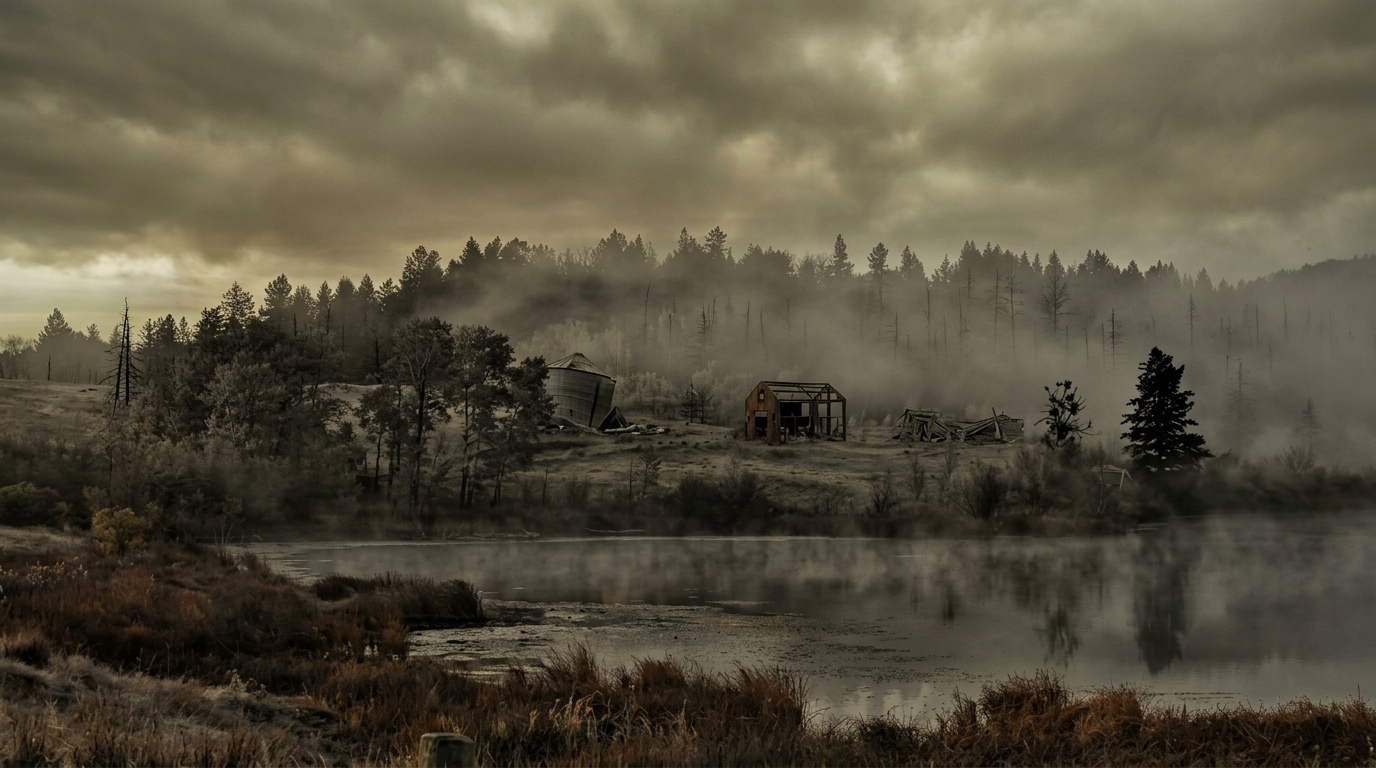
CHARACTERS FROM MILE ZERO
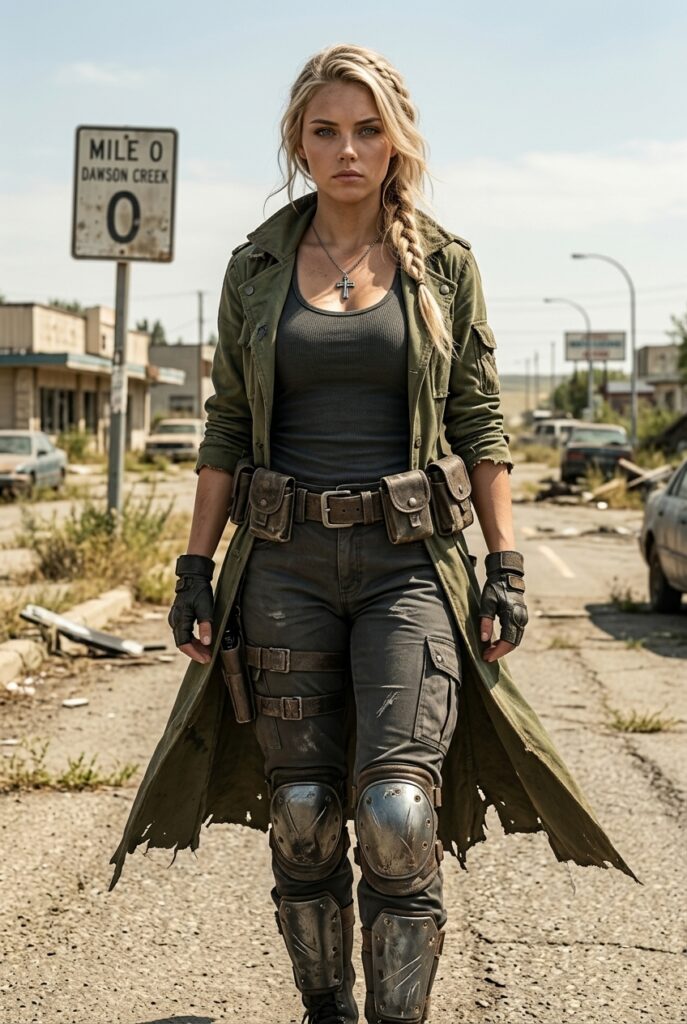
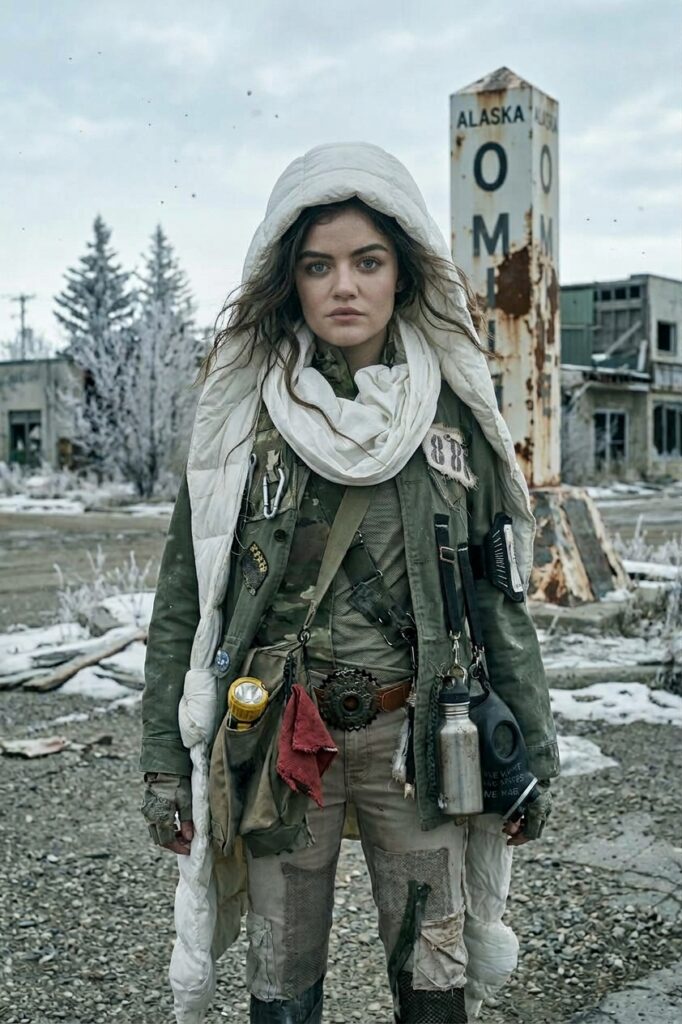
WREN:
Wren is the pragmatic centre of Mile Zero: the one everyone in the settlement actually listens to, whatever the council votes. She is torn between Beckett and Doyle, and not out of indecision about who she prefers: committing to either means giving up the other, and both of them are whole answers to how to survive this.
To her, Beckett is the comfort of the known, a defensible place, a form of immobility that reassures even as it walls her in. Part of her feels like a bird in a steel cage, torn between what he sees and what she wants to become. Doyle is risk and change: scary, thrilling, alive. She swings because the swing is honest. The town calls it indecision. It is the most decisive thing about her.
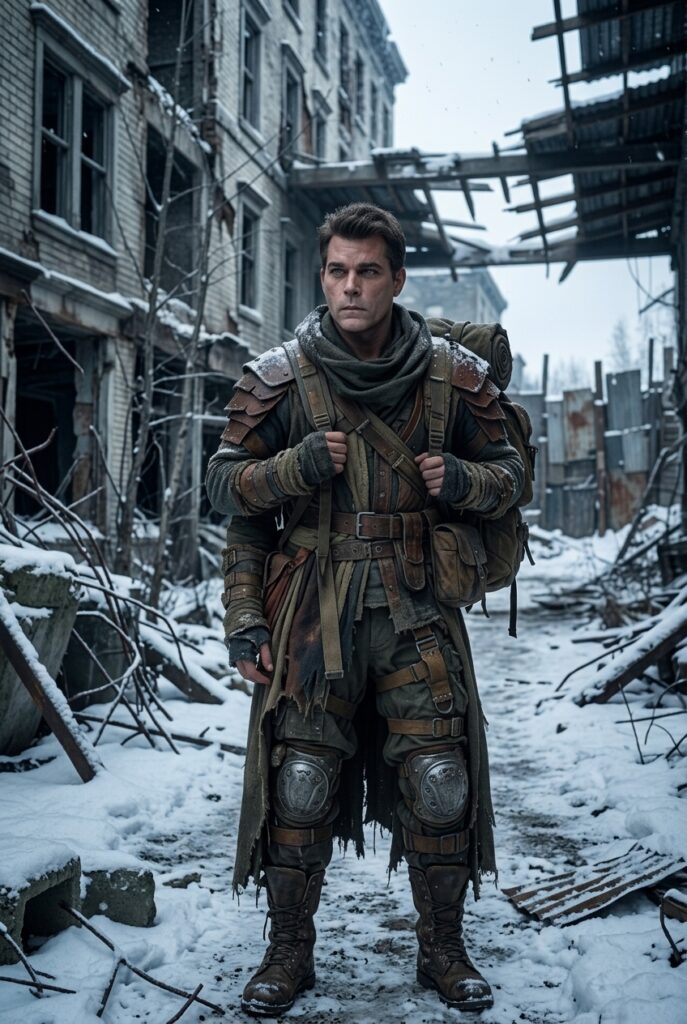
BECKETT:
Beckett is the man the settlement leans on: the one who believes Mile Zero is worth building permanent things in rather than running from the cold, the raiders, or the fuel math. In council he argues fortification against Odette’s outreach, a genuine strategic disagreement conducted politely and never resolved.
His certainty runs deeper than politics. He has decided what his relationship with Wren is, to her and to himself, and his feelings idealize both of them enough that he cannot see the parts of her that don’t fit the picture. It isn’t control. It’s certainty. In a settlement that leans on men like him, the outside can’t tell the difference.
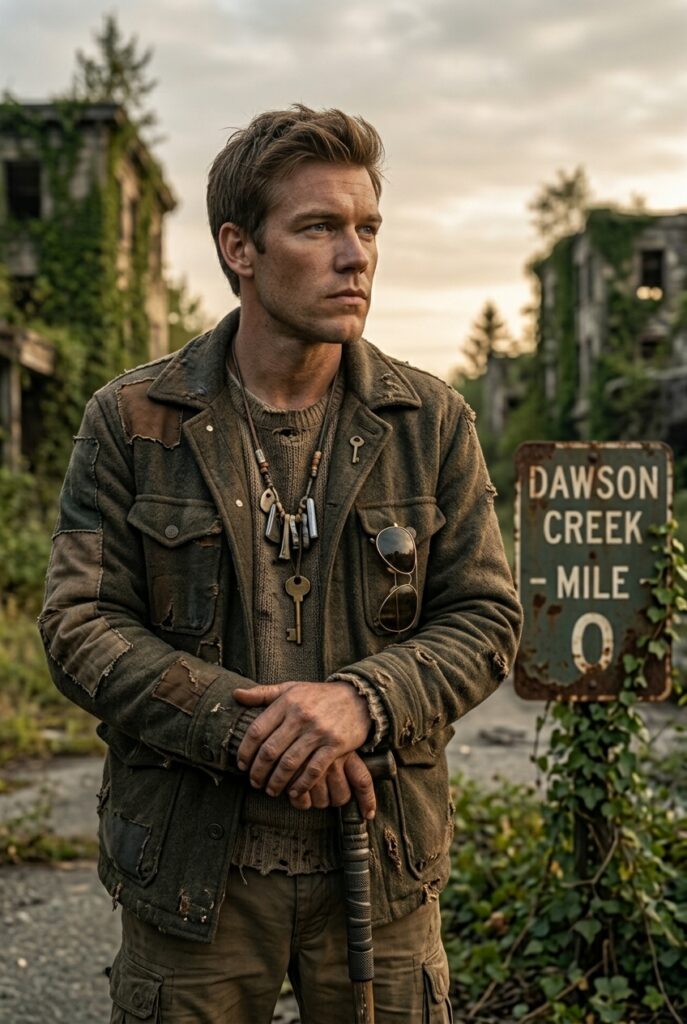
DOYLE:
Doyle is the settlement’s reckless one: funny, undervalued by council, and drawn to supply runs because the open road is the one place his skills matter more than his reputation. He volunteers first to run the highway north and scout Ferris’s numbers, and asks Wren to come with him.
Her answer matters to him more than he has words for. She is the grounding presence he can’t name, the thing that gives the fire in him someone to care for besides himself. The town undervalues him. The road doesn’t.
ODETTE:
Despite her age, Odette is the settlement’s council elder: not always right, never simple to argue with, and the one voice at St. Paul’s that treats the town’s future as something to be planned instead of joked about. Her standing argument with Beckett, fortification versus outreach, is the settlement’s real politics wearing the story’s comedy like a coat. Ahead of the solstice gathering she and Beckett quietly move the town’s last antibiotics to where they will matter if the night goes wrong. The town dances. Somebody has to count.
She shuns Clay’s fires every time he lights one, and the shunning is the kindest thing anyone does to him: it comes out of belief in him, out of the stubborn position that he is better than the stunt and shouldn’t need to set fires to be seen. She has never once explained that to him. He has never once heard it.
CLAY:
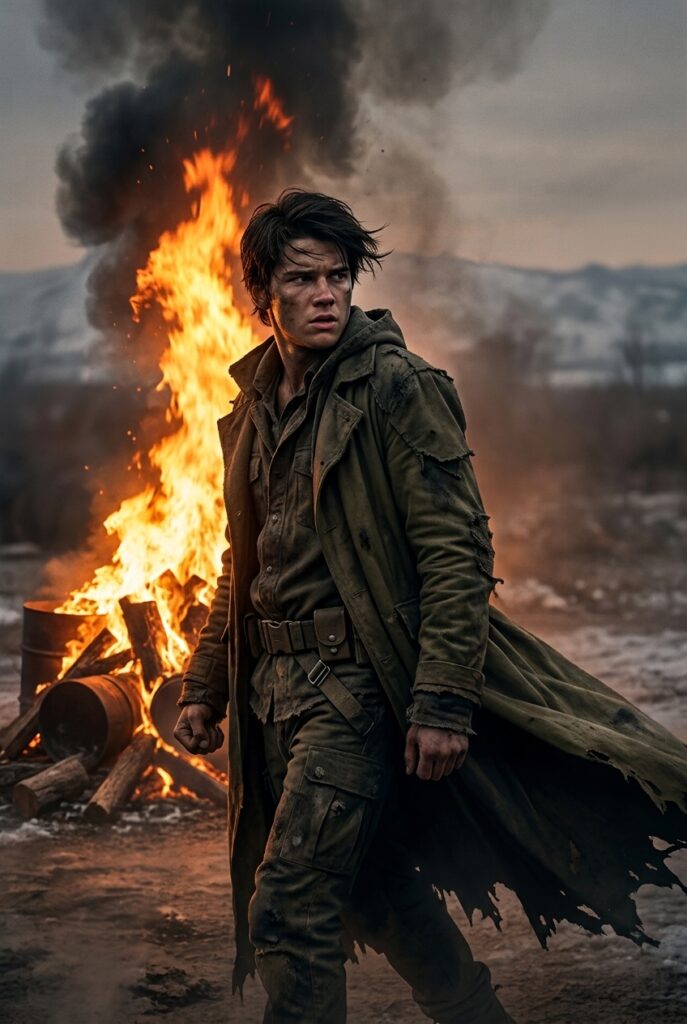
The settlement’s comic relief and its most reliable fire alarm, Clay is the boy who sets things on fire: a barrel here, a stump there, each stunt bigger than the last, greeted by the whole town with the chant he can rely on more than his own name: “More, Clay! More!” What the town sees is a troublemaker who keeps the winter cheerful. What the town misses is that every stunt is aimed at one person: Odette, the council elder who shuns the behaviour every single time.
Odette’s shunning is the gentler kind. She believes Clay is better than the fires and shouldn’t need to set them to be seen. Clay has never once read it correctly. To him it lands as rejection, every time, which is the engine of everything: the town cheers the one thing the one woman wants him to stop doing.
MYLES:
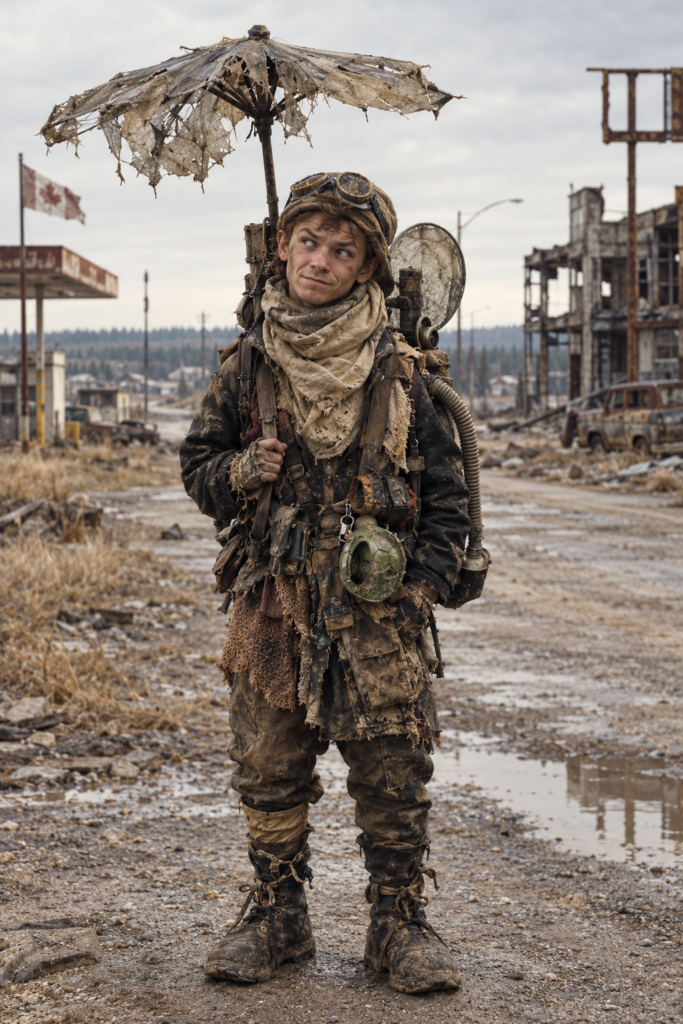
Myles is Clay’s closest friend and the chant’s author: mouthy, awkward, a dwarf in a settlement that builds everything at everyone else’s scale. He lives by procuration through Clay: the recklessness he can’t reach himself, he commissions. The chant is his voice with a crowd’s permission. Myles cheers loudest for the fires he would never light, and the town never catches that either.
His loyalty has a shape: he attaches himself to someone louder and gets to be brave by proximity, and he would tell you so himself if anyone asked. Nobody asks. Around Clay, Myles is scenery.
FERRIS:
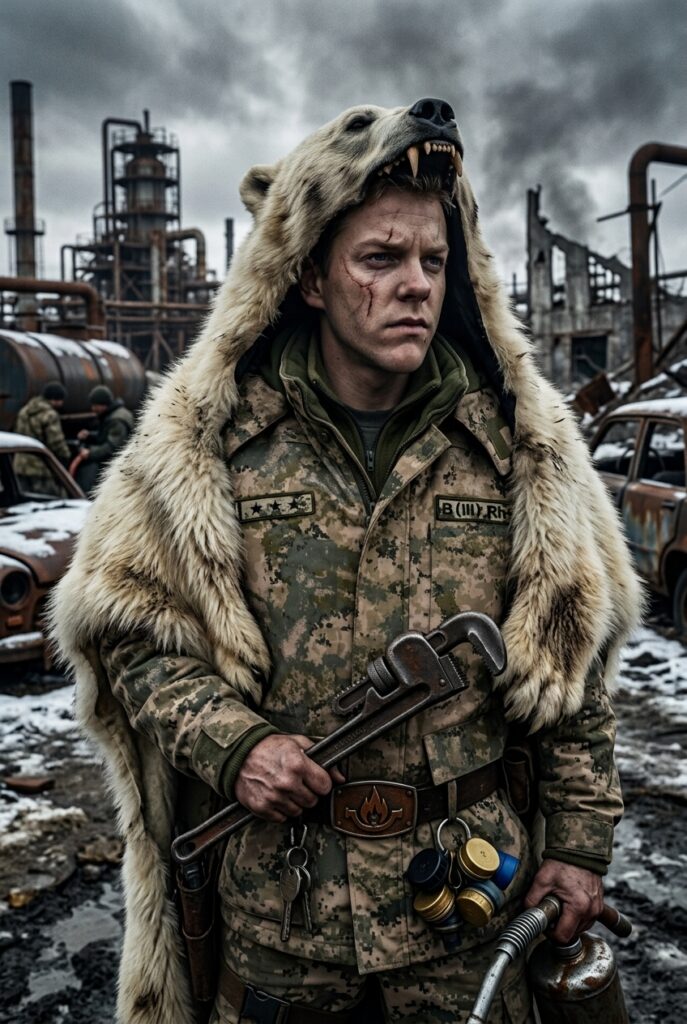
Ferris is the man the road north is afraid of: leader of the Hot-Tappers, the raider faction consolidating around the old Fort St. John gas fields, sitting on what the settlement’s survival depends on, and moving it all south. His people ride snowmobiles, carry crude flamethrowers and bows, and save the guns for when speed demands them: arrows can be recovered, bullets can’t. The leadership wears hollowed-out polar bear pelts, and the name is exactly what it sounds like: hot tapping, the real and dangerous practice of piercing a live pipeline to steal what’s pressurized inside it.
The outline is careful with him: not a cartoon villain, a man making hard, defensible calculations about fuel and survival at the scale of his own people. What his calculations cost everyone smaller than his faction is the story’s problem, and the settlement knows he is coming before it knows anything true about him.
MARLOWE:
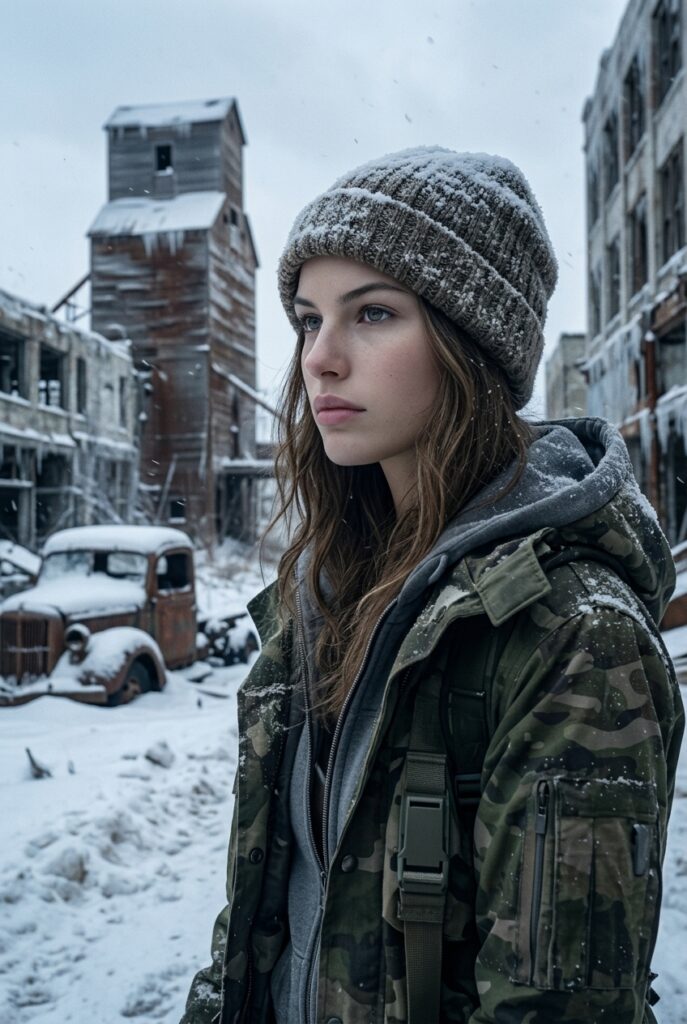
Marlowe arrives through the north checkpoint partway into the first act: half-starved, frost-bitten, carrying real intelligence. A raider faction is consolidating around the old Fort St. John gas fields under a man named Ferris, and it is moving south. The settlement takes the warning and gives her a place by the fire.
What she doesn’t say is the rest of it: that her history with the north is not tactical, that she knows Ferris’s faction from the inside, and that there is a reason she crossed the line in winter, alone. There is a hint, early, for the reader only, that her history with Ferris is not purely tactical. She is owed the rest of her story, and the book pays it slowly.
 Stéphane Roy is a lifelong reader and writer with a deep love for science fiction, apocalyptic worlds, and tightly constructed mysteries. This is his first novel. He lives in the Yukon with his dog and his aquarium, where long winters, silence, and wide, sometimes glowing, skies leave plenty of room for imagining the end of the world, and what might come after it. He is also waiting, with cautious optimism, for the aliens to finally reveal themselves and straighten us all out.