
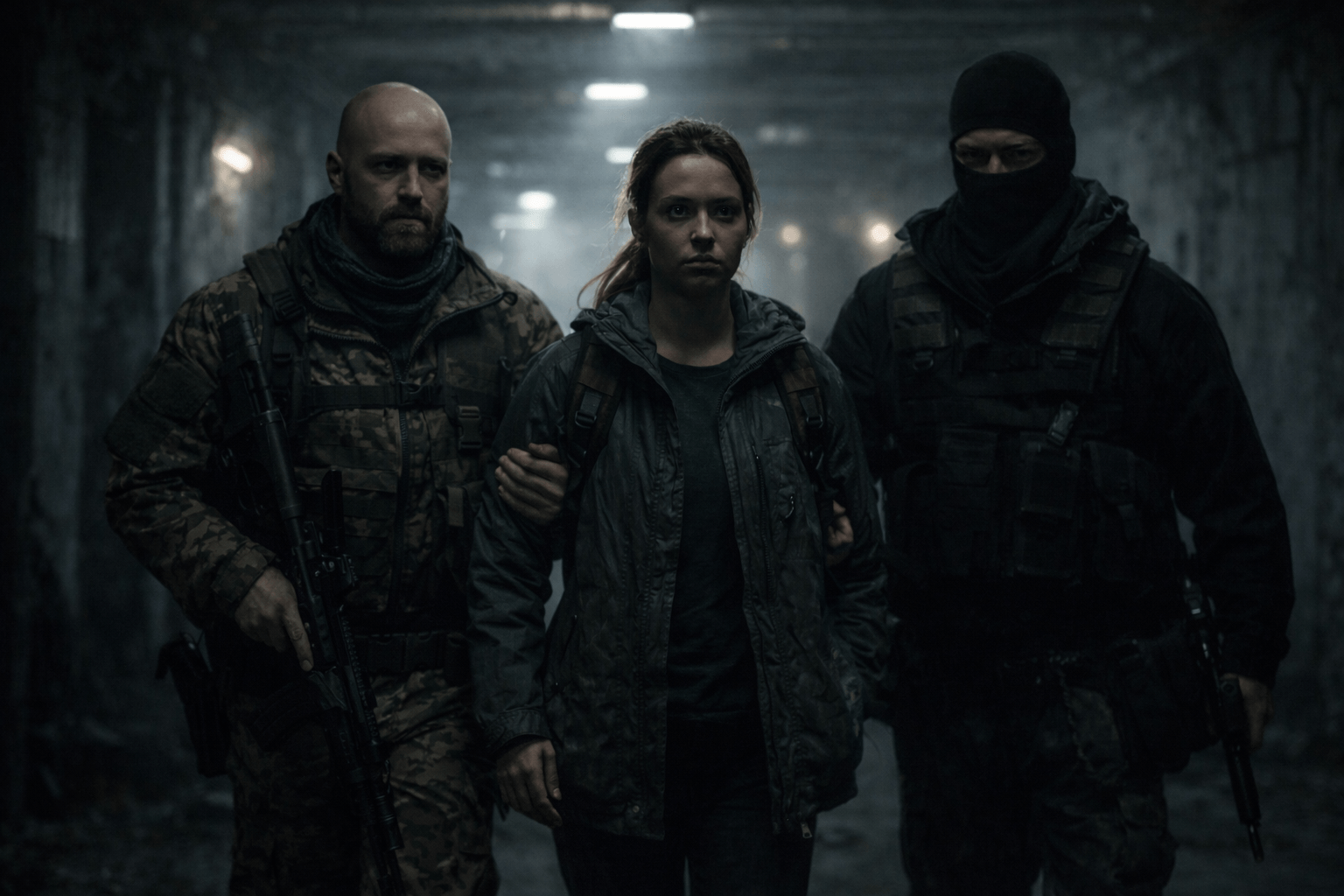
BOOK I: THE REFUSAL CHARACTERS
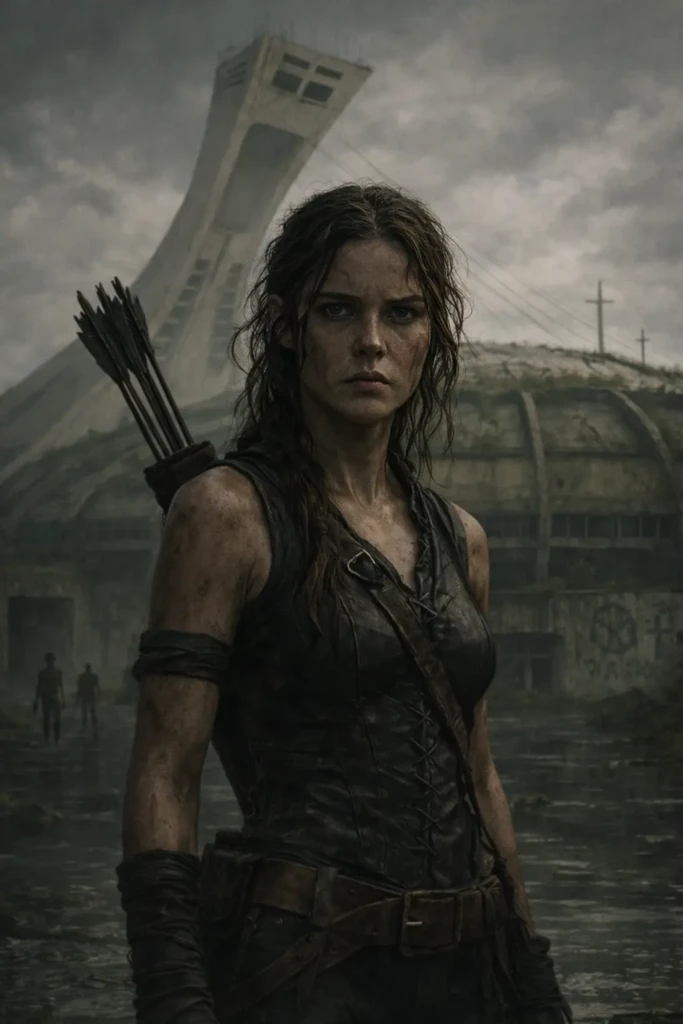
UNA THE GIRL FROM THE STONE
Una learned early how to endure.
She is not driven by belief or destiny. She moves because stopping is dangerous, because motion keeps the past from closing its grip. Her intelligence is practical, bodily, forged through repetition and loss. She reads environments the way others read faces. Pressure, airflow, materials, patterns of use: these tell her more than promises ever could.
Trauma has not made her fragile. It has made her precise.
When Una enters systems of power, she does not rage against them. She studies them. She notices where rules fray, where procedures contradict themselves, where efficiency leaves blind spots. Her resistance is quiet, often invisible, and therefore difficult to erase.
What sets her apart is not strength or moral certainty, but refusal. Refusal to perform gratitude. Refusal to surrender interiority. Refusal to become the version of herself that systems require in order to function smoothly.
She was raised in scarcity, shaped by stone, silence, and the discipline of listening longer than was comfortable. Survival was never heroic to her. You observe. You adapt. You keep what works and discard what does not, even when what must be discarded has a name.
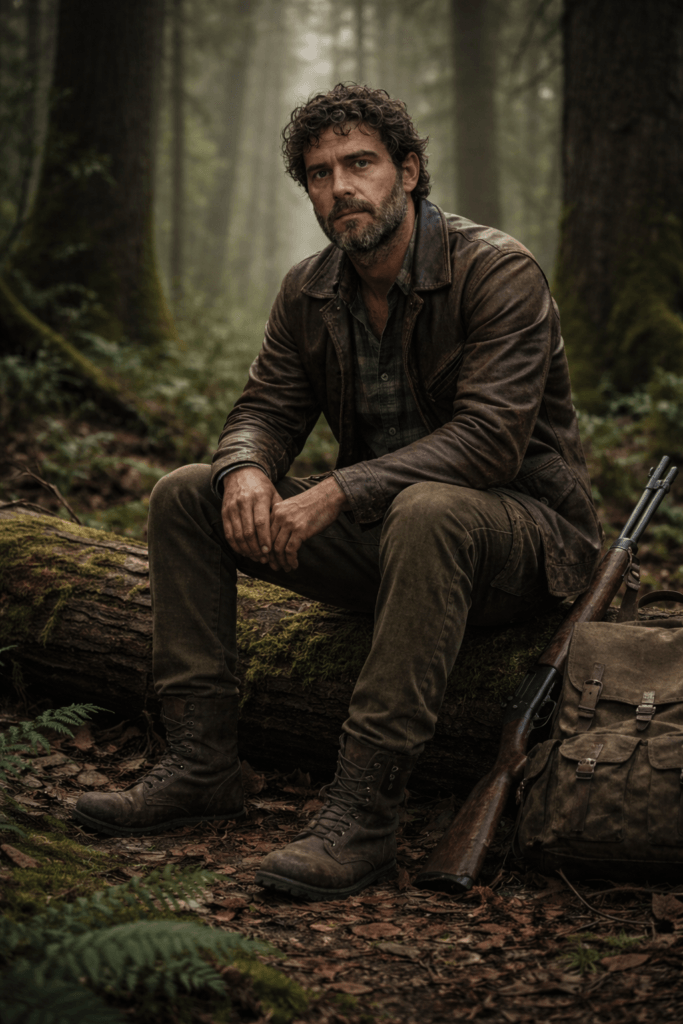
JOEL (UNA’S FATHER)
Before collapse had a name, Joel measured it in reassurances.
He was never a leader of systems. He was a keeper of small promises: a hand on a shoulder, a lie softened into hope, a voice steady when the air was not. He understood that fear spreads faster than fire, and that sometimes survival begins with saying what must be believed, even when it is no longer true.
Joel does not command pressure. He absorbs it.
In the Lullaby, he stands at the threshold between denial and inevitability, holding together what he can with the only tools he has left: restraint, presence, and the quiet refusal to let his family see the full shape of the end.
He is not the architect of what follows.
He is the last ordinary man before myth begins.

LOUISE (UNA’S MOTHER)
Louise knew the world was ending before it learned how to say so.
She carries decay without spectacle. The rot marks her body, but not her discipline. She understands containment, not as control, but as tenderness. Where Joel shields, Louise prepares. Where others speak of systems, she speaks in memory and song.
Her lullaby is not comfort.
It is inheritance.
She does not fight collapse. She teaches her daughter how to stand inside it without surrendering to it.
Louise is not a survivor in the conventional sense.
She is a transmission.
Through her, stillness becomes something other than fear.

BISHOP FROM THE STADIUM
Bishop is not a monster. He is something colder.
A senior functionary inside the Stadium’s machinery, Bishop believes in order the way others believe in God. He does not shout. He does not rage. He calibrates. To him, cruelty is not an impulse but a necessity: measured, procedural, optimized for stability. He understands systems, pressure points, thresholds. He knows exactly how much fear maintains obedience without igniting revolt.
Yet Bishop is not immune to doubt. Beneath the discipline lies a man who has sacrificed intimacy, warmth, and perhaps even his own moral center in service of structure. He sees the fractures forming. He recognizes the cost. He proceeds anyway.
His relationship with Una exposes the fault line. She is not merely a prisoner; she is a variable he cannot fully solve. In Bishop, the series explores a dangerous question: what happens when a good mind chooses the system over the human?
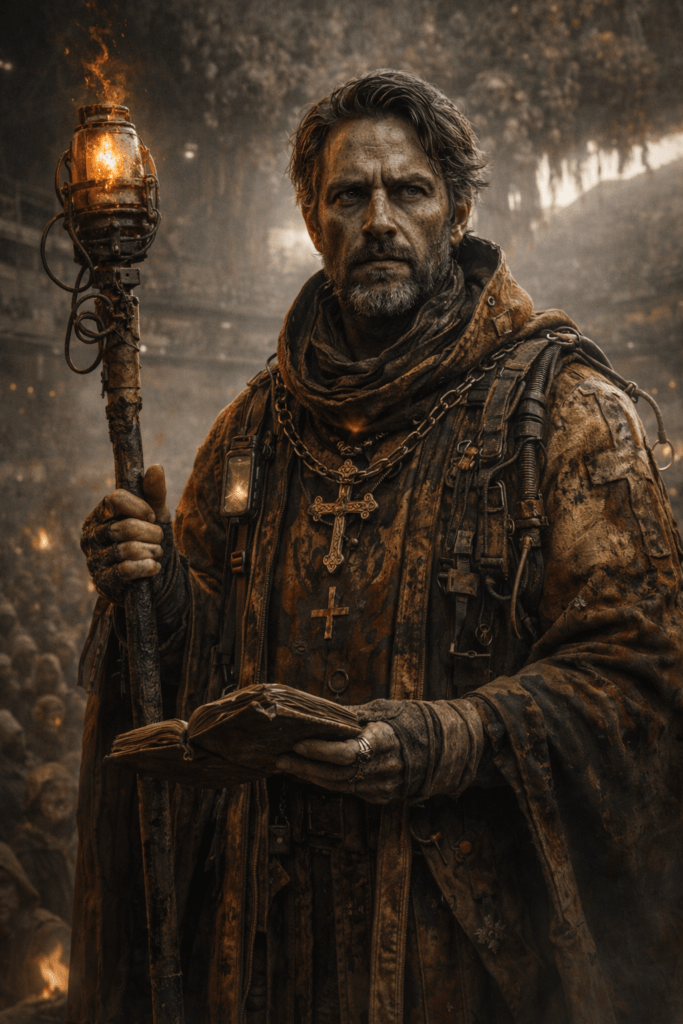
PRESTER JOHN
Prester John is less a man than a presence.
He stands at the intersection of spectacle and doctrine, cloaked in ritual and conviction. Where others command through force, he commands through meaning. His voice does not need to rise; it resonates. In a fractured world desperate for coherence, he offers narrative. Purpose. A frame that turns chaos into destiny.
Prester John understands the power of symbols: the weight of light, the choreography of silence, the way a crowd can be shaped by cadence alone. To his followers, he is visionary, shepherd, architect of spiritual survival. To his critics, he is something far more deliberate: a strategist who knows belief can be engineered as precisely as any machine.
He does not present himself as tyrant. He presents himself as necessity.
In Prester John, faith and control blur. He embodies the unsettling truth that hope, when carefully structured, can bind just as tightly as fear.
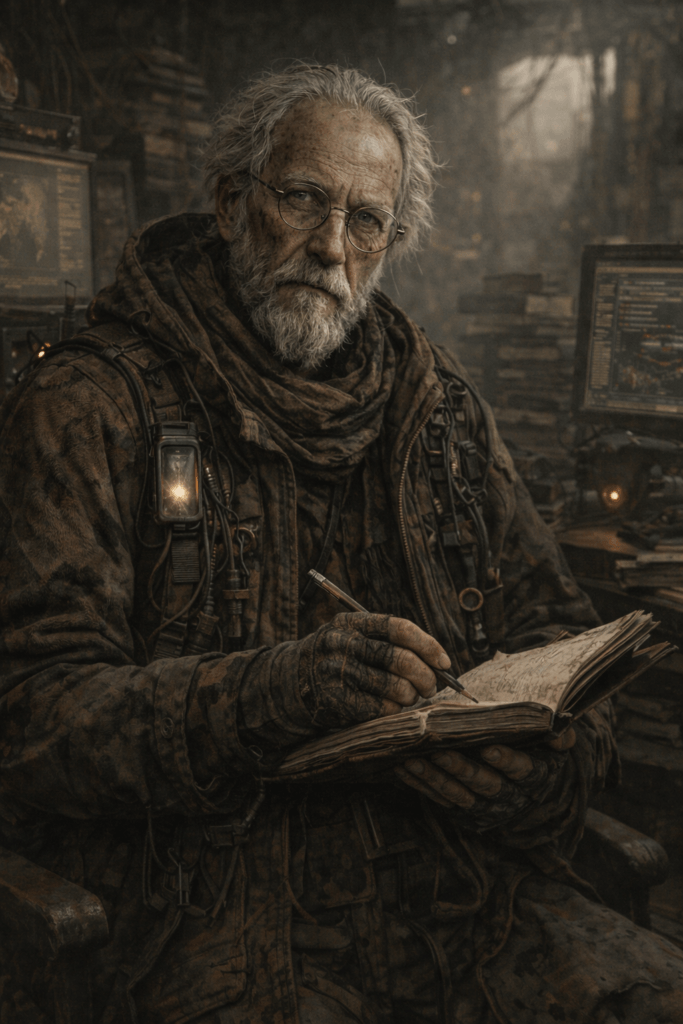
WERHU THE ARCHIVIST
Werhu moves at the edge of visibility.
He is not the loudest voice in the room, nor the most visibly powerful, yet his presence alters the air. Where others react, Werhu observes. He listens longer than is comfortable. He measures before he speaks. In a world driven by spectacle and systems, he operates in the quiet spaces between them.
There is a contained intensity to him: disciplined, deliberate, difficult to read. He does not waste words. When he acts, it is with purpose, not impulse. His strength lies less in force than in endurance: the capacity to absorb pressure without fracturing.
Werhu carries history in his stillness. His loyalty is not naïve, and his skepticism is not careless. He understands that survival is rarely clean and that choices leave residue.
As a character, Werhu represents the power of restraint, the kind that does not seek control, but refuses to surrender agency, even when the world insists otherwise.
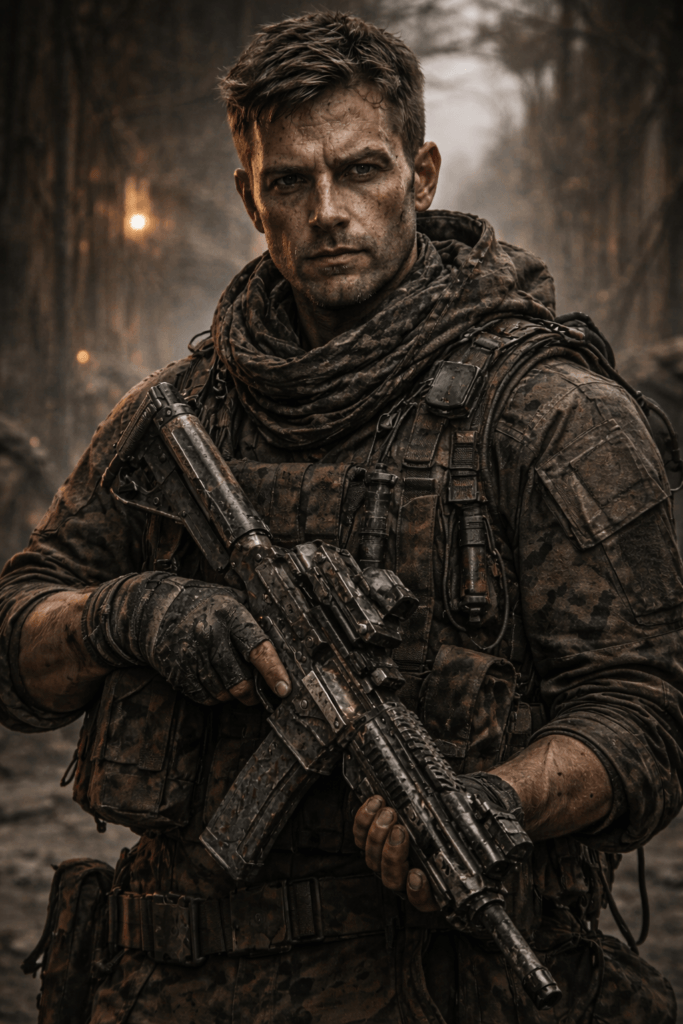
VULANI THE SOLDIER
Vulani carries heat in a world built on calculation.
He is instinctive where others are procedural, direct where others hide behind abstraction. His presence unsettles carefully maintained equilibrium. He does not accept imposed narratives easily, and he does not soften his reactions to appease authority. In spaces designed to compress individuality, Vulani pushes outward.
There is volatility in him: anger, conviction, impatience with half-truths, but it is not recklessness. He feels deeply and refuses the safety of numbness. Where some survive by hardening into silence, Vulani survives by staying fiercely alive to what is happening around him.
He reads people quickly, recognizes hypocrisy without effort, and speaks with a clarity that can cut. Yet beneath that sharpness lies loyalty that runs uncompromising and protective.
Vulani embodies what systems struggle to contain: passion that resists optimization, empathy that cannot be reduced to metrics, and a will that refuses to be translated into data.

NUKILIK THE WARRIOR
Nukilik carries quiet gravity.
She does not demand attention, yet rooms shift when she enters. Her strength is not spectacle but steadiness. An intelligence shaped by endurance rather than ambition. Where others react to crisis, Nukilik absorbs it, studies it, and responds with measured clarity.
There is an economy to her presence. She wastes neither words nor emotion. When she speaks, it is deliberate. When she acts, it is with consequence in mind. She understands systems not as abstractions, but as forces that press against flesh and memory.
Nukilik holds contradiction without breaking. Compassion and severity coexist in her. She can comfort without illusion and confront without cruelty. Her resilience is not loud; it is lived.
In a world fractured by ideology and control, Nukilik represents continuity: the thread that binds past to present, survival to dignity. She reminds others that strength is not always force, and that endurance, when chosen rather than imposed, becomes its own form of power.
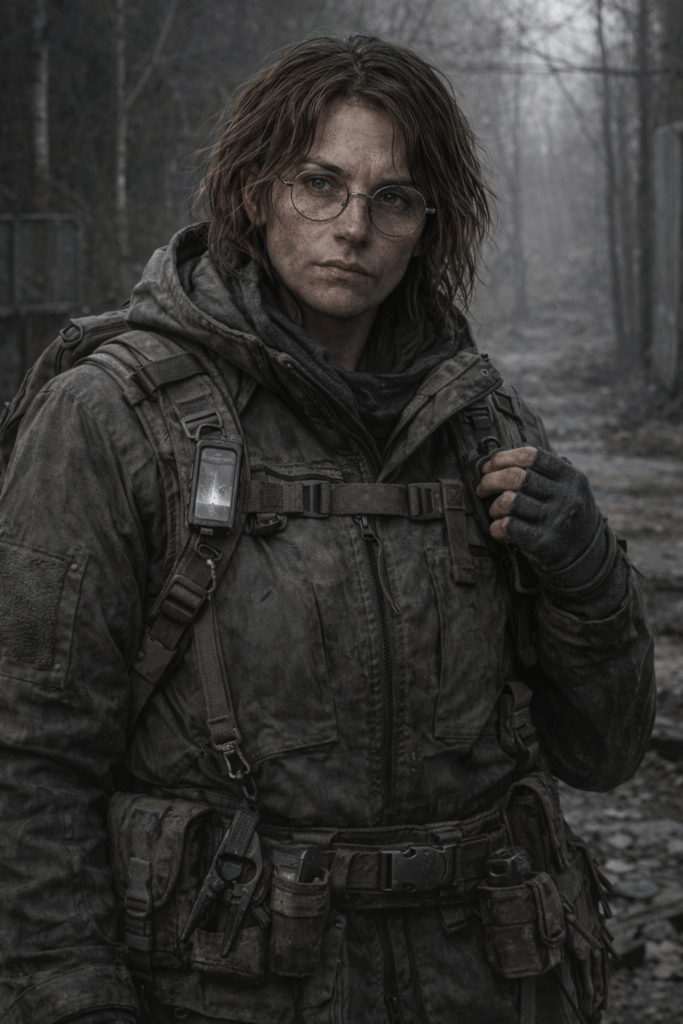
KONDA THE SCHIZOPHRENIC NURSE
Konda lives at the threshold between worlds.
She is not unstable in the way others assume; she is fractured in ways that do not fit clean categories. Her mind moves along paths invisible to most: connections forming where others see emptiness, patterns surfacing in noise. At times she withdraws inward, retreating into a private architecture of thought that feels safer, clearer, more coherent than the external world.
This does not make her weak. It makes her porous. She absorbs more than she can always organize. Voices of memory, flashes of meaning, sudden certainties: her reality can blur at the edges. Yet within that fissure lies perception others lack. She senses shifts before they register. She feels undercurrents long before they break surface.
Konda is not emptied out. She is wounded and still moving. Her brokenness is not spectacle; it is lived, daily, quiet. In her, fragility and insight coexist, inseparable, forming a presence both vulnerable and unexpectedly profound.
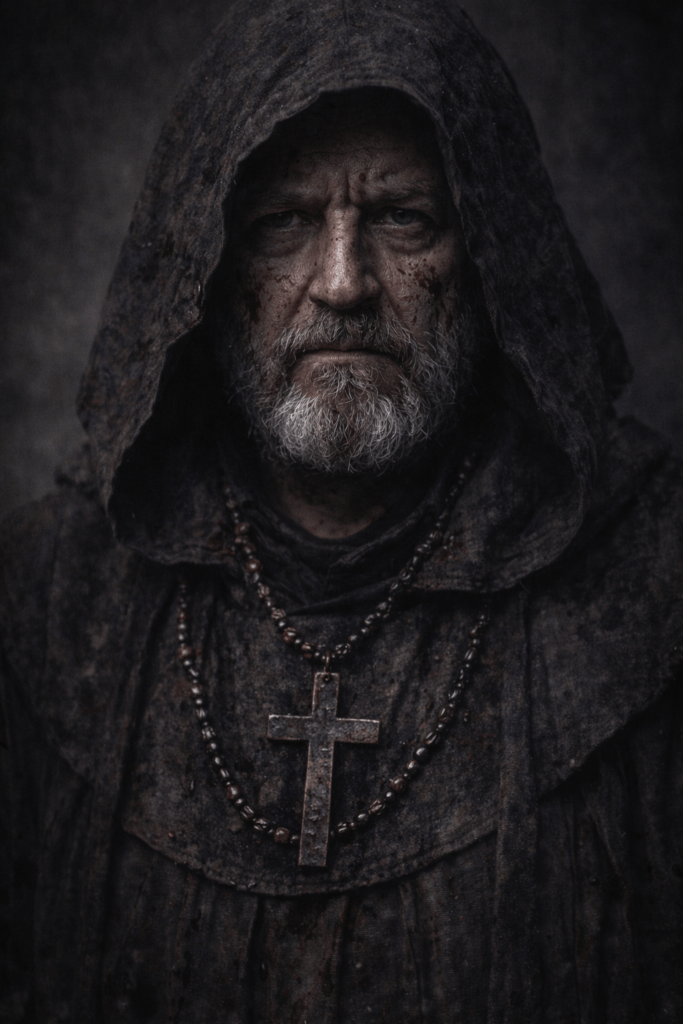
THE CONFESSOR
The Confessor is not a comfort. He is an instrument.
Clad in ritual and shadow, he stands at the intersection of faith and enforcement. His presence is austere, stripped of warmth. He does not shout or posture; he listens. He absorbs secrets, fears, hesitations and reflects them back with unsettling clarity.
To some, he represents spiritual order, a necessary conduit between guilt and absolution. To others, he is something far more ambiguous: a man who understands how belief can be shaped, guided, even redirected. His power lies not in spectacle but in intimacy. He works close, in whispers, in confessions offered under pressure.
The Confessor believes in structure. Whether that structure serves salvation or control depends on who is speaking. And who is kneeling.
He embodies the quiet machinery of conviction, where faith becomes architecture and doubt becomes leverage.

THE VENERABLE
The Venerable is precision given flesh.
Tall, composed, and unsettlingly controlled, he carries himself with the restraint of someone who believes emotion is a liability. His white coat is immaculate, his movements economical, his voice measured to the point of surgical clarity. Around his neck hangs a golden stethoscope: not ornament, but symbol. He listens. Always.
He does not posture as a savior, nor does he present as cruel. Instead, he frames his authority as necessity. Health, stability, longevity: these are his language. He speaks in outcomes, in probabilities, in corrective measures. Compassion, in his world, is structural rather than sentimental.
There is something disquieting in his calm. He observes people the way others observe data: patterns, weaknesses, potential deviations. Yet he is undeniably human, capable of patience, even courtesy. That humanity makes him harder to dismiss.
The Venerable represents medicine as governance: care intertwined with control, healing braided with oversight.

DAX FROM RESO
Dax does not lead by spectacle. She leads by structure.
As the technical head of RESO, her authority feels less like command and more like gravity: inescapable, precise, and quietly absolute. She speaks without excess. Every word is placed. Every silence calculated. Where others rely on fear or faith, Dax relies on structure and stability.
Her intelligence is systemic. She sees patterns before they become crises, consequences before they become visible. Emotion does not disappear in her presence: it is simply deprioritized. Efficiency, sustainability, survival: these are her moral coordinates.
Yet, Dax is not mechanical. She understands cost. She knows what stability requires and what it erodes. The weight of decision rests on her, and she carries it without theatrics.
In Dax, power is neither tyrannical nor benevolent. It is procedural. She embodies the unsettling possibility that the most dangerous form of control is the one that believes it is necessary, and may, in some ways, be right.

THE ADJUSTERS
The Adjusters are not soldiers. They are not police. They do not shout, chase, or threaten. They arrive.
In RESO, where infrastructure replaces ideology and compliance is measured in data rather than confession, the Adjusters serve a precise function: correction. When a household’s metrics drift. When a worker’s output misaligns. When a neighborhood’s consumption patterns ripple outside predictive tolerance. The Adjusters are dispatched.
They wear neutral colors. No insignia beyond the RESO mark. Their language is procedural, almost courteous. They do not accuse. They inform. A transfer has been scheduled. A temporary relocation will optimize long-term stability…
Most people comply because the Adjusters rarely need force. They operate with documentation already approved, signatures already logged, outcomes already modeled. By the time they knock, the decision has been made elsewhere: inside systems no one sees.
Rumors persist, of course. Of doors that close and never reopen. Of quiet facilities beneath the Ville-Marie tunnels. Of memory edits, contract revisions, identity restructures. RESO denies nothing and confirms less. Officially, adjustments are temporary. Necessary. Beneficial.
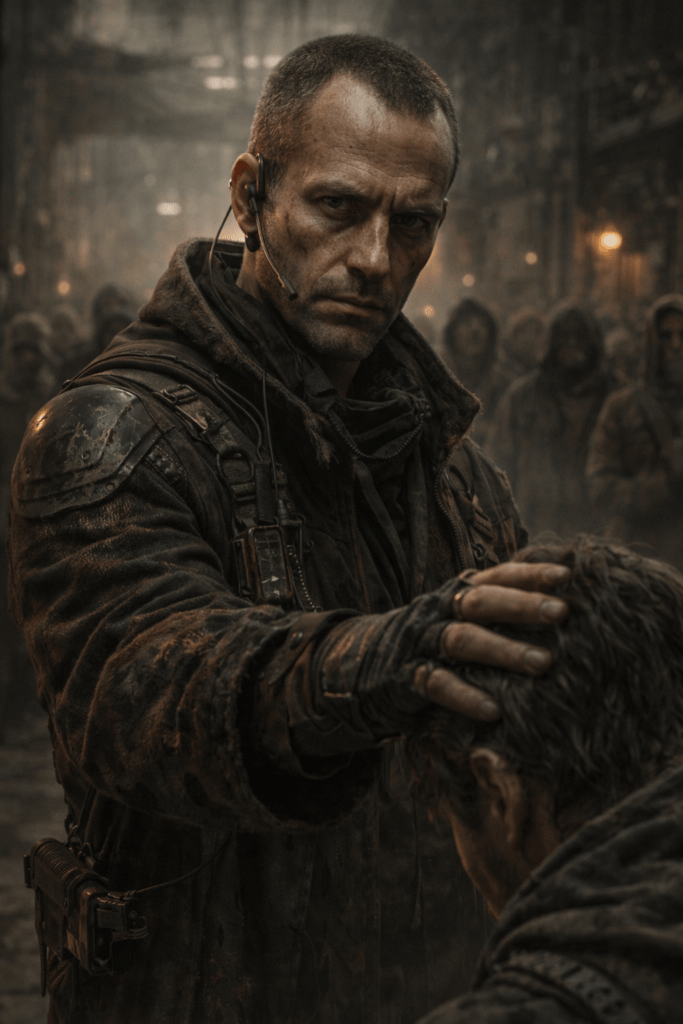
VANCE FROM RESO
Vance leads the Warriors with a presence that is both steady and combustible.
He is not driven by ideology as much as by conviction: an unshakable belief that submission corrodes the soul. Where others hesitate, calculating cost and consequence, Vance chooses clarity. To him, resistance is not strategy. It is survival.
He commands loyalty not through fear, but through embodiment. He stands at the front. He absorbs risk first. His authority is earned in action, in scars, in the visible proof that he does not ask of others what he will not shoulder himself.
There is fire in him, anger at what has been taken, impatience with compromise, but it is disciplined fire. He understands that fury without direction burns allies as easily as enemies. So he shapes it, contains it, turns it outward.
As leader of the Warriors, Vance represents defiance made organized: a refusal not just to endure the system, but to confront it.

JESSY (JESSIKA) FROM RESO
Jessy—Jessika, when she allows the full name to surface—moves through RESO with a softness that feels almost subversive.
In a structure built on optimization and restraint, she collects flowers. Not as rebellion. Not as performance. Simply because she cannot stop noticing what still grows in controlled spaces.
She is in her mid-twenties, unassuming, approachable: more neighbor than symbol. There is no theatrical defiance in her. She does not posture. She observes. She listens. And in listening, she understands more than she lets on.
Jessy carries a quiet resilience. She adapts without surrendering her interior world. She does not challenge the system directly, yet she resists in smaller, persistent ways: through memory, through care, through the refusal to let beauty become irrelevant.
In RESO’s calculated environment, Jessy represents something disarming: gentleness that survives without permission.
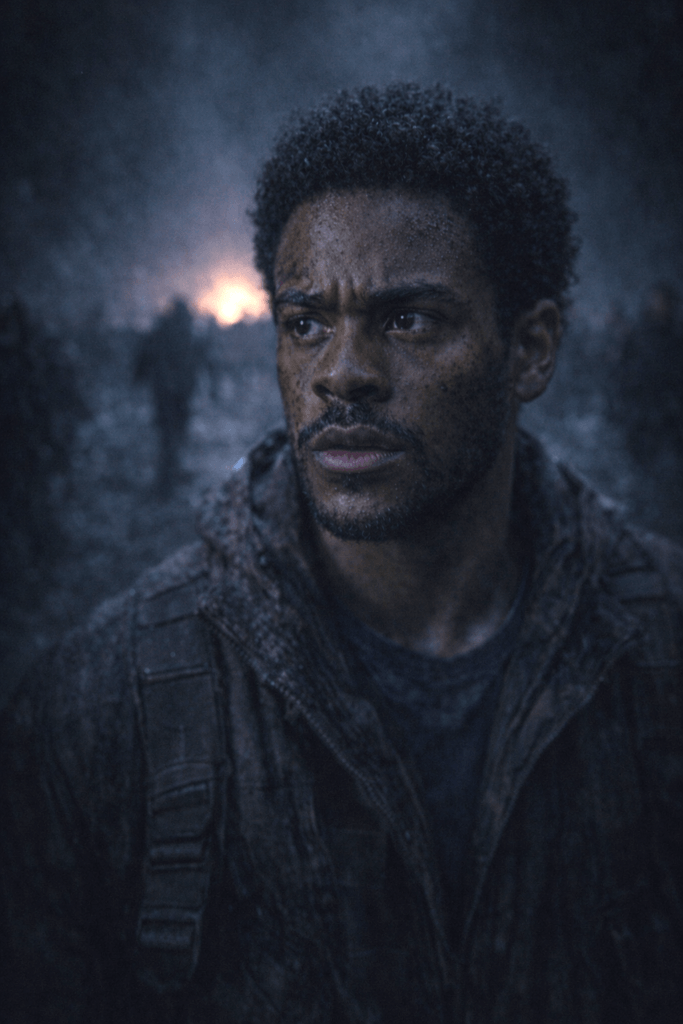
ANDY FROM THE LOW-LANDS
Andy is forged in hope and motion.
In Exodus, he becomes more than a survivor; he becomes a man defined by the space between instinct and responsibility. He carries himself with contained intensity: alert, watchful, rarely at rest. The world has trained him to anticipate danger before it fully forms, and that vigilance never entirely leaves him.
He is not reckless, though he can appear so. His risks are calculated in ways that are almost internalized, decisions made in seconds but grounded in hard-earned experience. There is physical competence in him, but it is his moral tension that defines him. Andy feels the weight of consequence. He does not act lightly, even when action is unavoidable.
He struggles with trust, not because he lacks loyalty, but because he understands how fragile it is. Beneath the guarded exterior lies a capacity for connection he does not easily display.
Andy embodies endurance under pressure: not unbreakable, not untouched, but still hoping and moving forward.
© Copyright 2026 WARRIORS OF THE LAST DAYS All rights reserved Privacy Policy
 Stéphane Roy is a lifelong reader and writer with a deep love for science fiction, apocalyptic worlds, and tightly constructed mysteries. This is his first novel. He lives in the Yukon with his dog and his aquarium, where long winters, silence, and wide, sometimes glowing, skies leave plenty of room for imagining the end of the world, and what might come after it. He is also waiting, with cautious optimism, for the aliens to finally reveal themselves and straighten us all out.