
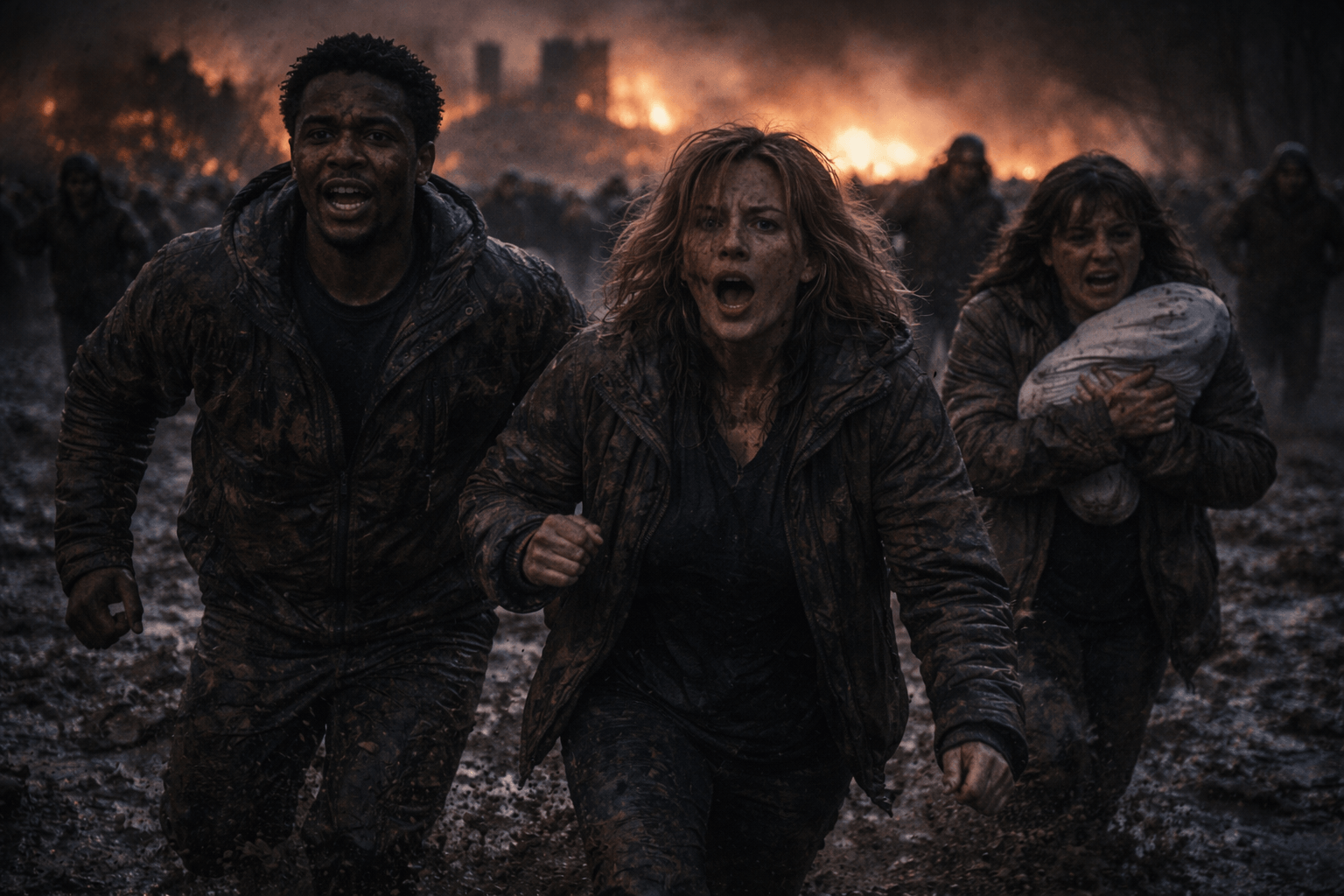
CHARACTERS BOOK II: THE EXODUS
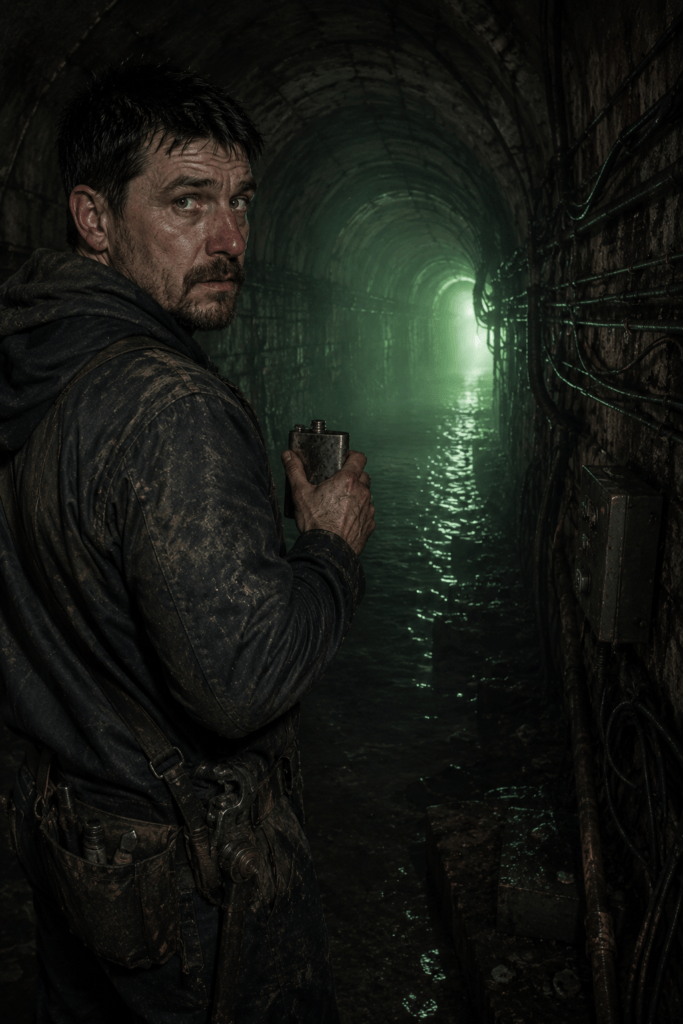
GAUTHIER
Before the flood, Gauthier maintained the tunnels and utility corridors beneath RESO. After the world collapsed, that knowledge made him valuable in the Sump, where he now crawls through flooded sewers salvaging copper and keeping the lights alive. A heavy drinker with a permanent red nose and a flask never far from reach, Gauthier prefers the company of old wires to people. Deep below the city, he has begun to encounter things he cannot explain and would rather forget.
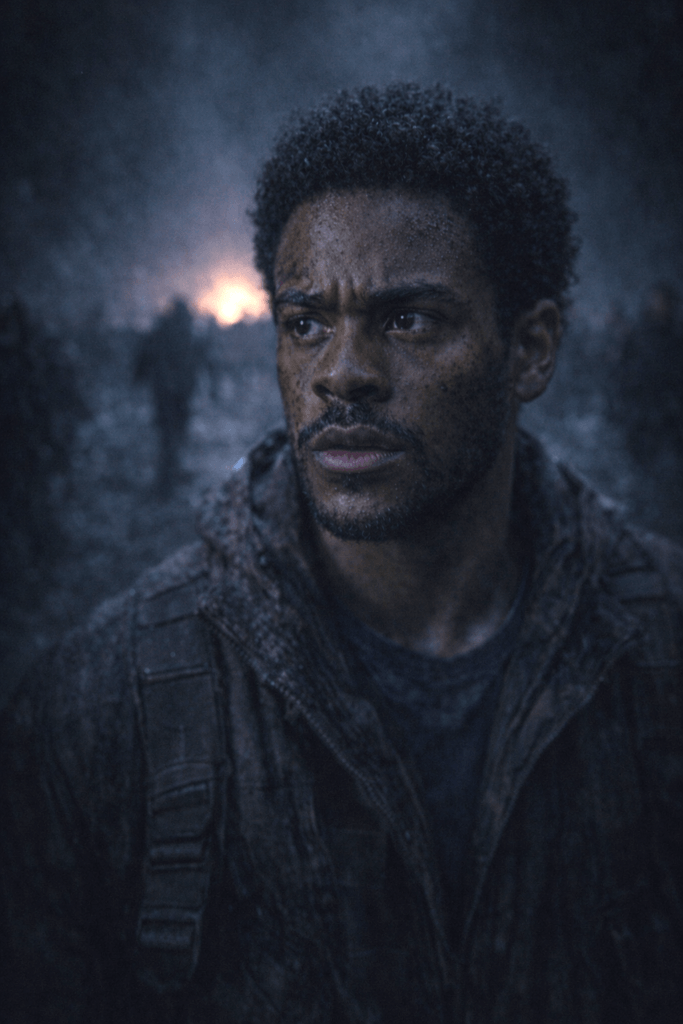
ANDY
Andy is forged in hope and motion.
In Exodus, he becomes more than a survivor; he becomes a man defined by the space between instinct and responsibility. He carries himself with contained intensity: alert, watchful, rarely at rest. The world has trained him to anticipate danger before it fully forms, and that vigilance never entirely leaves him.
He is not reckless, though he can appear so. His risks are calculated in ways that are almost internalized, decisions made in seconds but grounded in hard-earned experience. There is physical competence in him, but it is his moral tension that defines him. Andy feels the weight of consequence. He does not act lightly, even when action is unavoidable.
He struggles with trust, not because he lacks loyalty, but because he understands how fragile it is. Beneath the guarded exterior lies a capacity for connection he does not easily display.
Andy embodies endurance under pressure: not unbreakable, not untouched, but still hoping and moving forward.
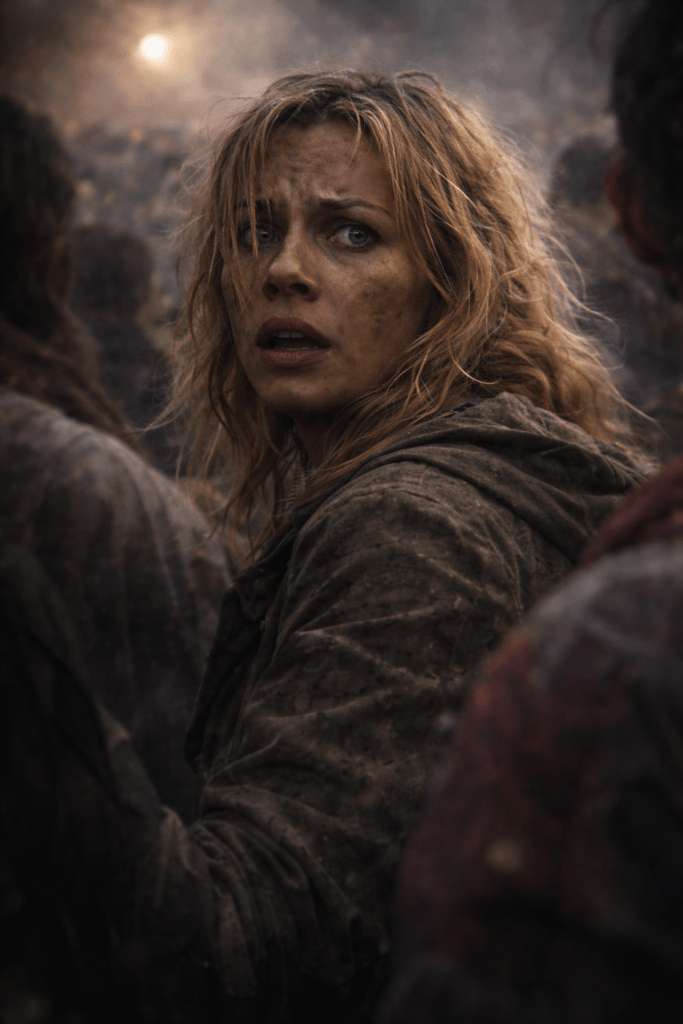
RENÉE FROM THE SUMP
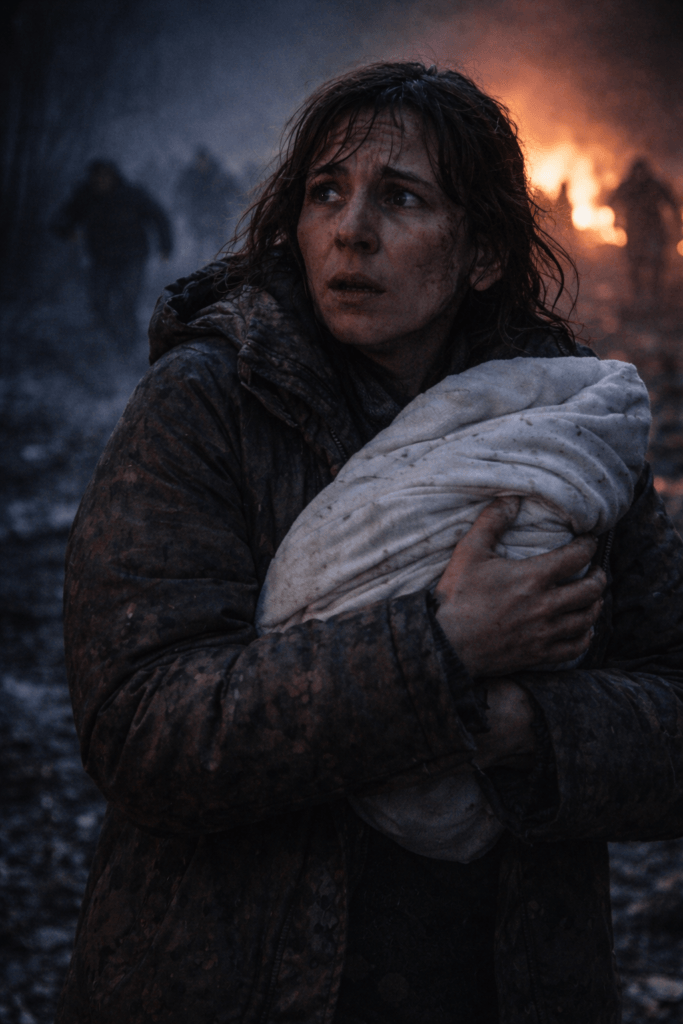
Renee carries the raw edge of survival.
In Exodus, she is defined not by certainty but by urgency. The world presses in on her from all sides, and she feels it: visibly, physically, emotionally. Fear does not paralyze her, but it never fully leaves either. It sharpens her awareness. It keeps her moving.
She is not hardened in the way some others are. There is still openness in her, still the capacity to hope even when evidence thins. That vulnerability is not weakness; it is what makes her choices matter. Renee reacts honestly. When she is afraid, it shows. When she is determined, it burns through hesitation.
She reads danger instinctively and adapts quickly, yet she struggles with the moral weight of survival. What must be done versus what should be done is never simple for her.
Renee embodies the human cost of collapse: the tension between terror and courage, between wanting safety and refusing surrender.
MIREILLE & TINY TOM
Mireille enters the story as a Warrior, but she is more than a fighter.
From her first appearance, she carries a steadiness that contrasts with the chaos around her. She does not seek attention, yet her presence anchors those beside her. There is discipline in the way she moves, in the way she listens before she speaks. She understands the cost of conflict. Not just in theory, but in muscle and memory.
In Book II, her depth becomes clearer. Beneath the hardened exterior lies a woman shaped by responsibility. She feels the weight of others’ safety as if it were her own burden to carry. Courage, for Mireille, is not spectacle. It is repetition: standing her ground again and again when retreat would be easier.
She balances resolve with empathy, strength with exhaustion. Mireille represents the quiet backbone of resistance when the world demands more than it should.
LUC BÉDARD
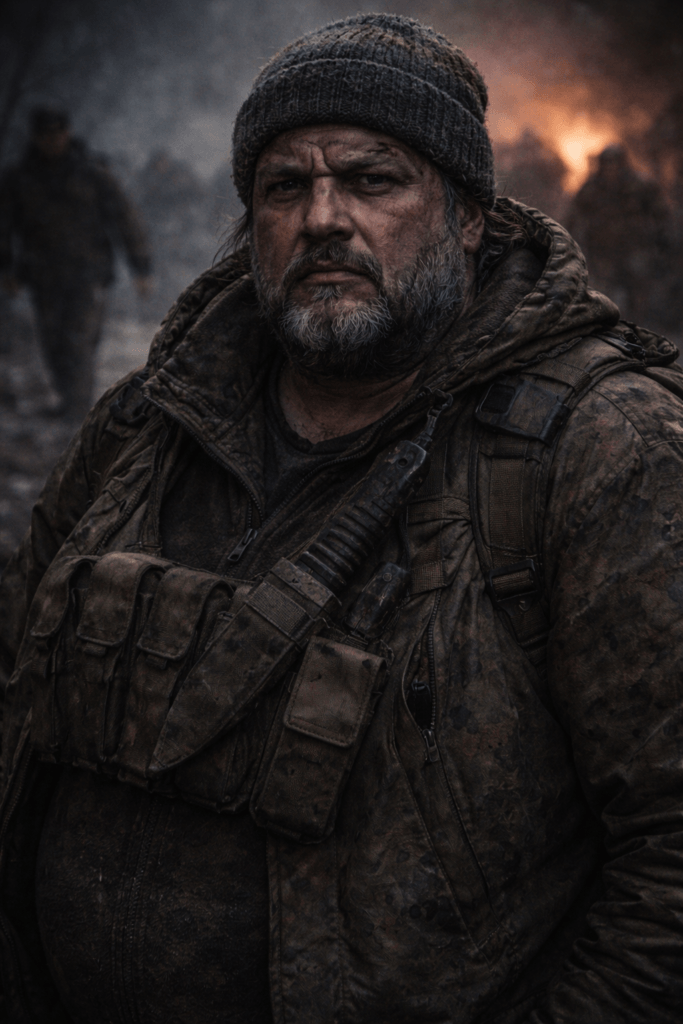
Luc Bédard is solidity in human form.
Broad, heavyset, and unapologetically grounded, he carries himself without flourish. There is nothing theatrical about him. No grand speeches. No visible hunger for leadership. He is the kind of man who shows up, lifts what needs lifting, and keeps walking.
In Exodus, Bédard embodies endurance. The road does not make him heroic; it makes him necessary. He moves with the steady determination of someone who understands that survival is often logistical before it is ideological. Supplies, pace, shelter: he thinks in practical terms, not abstractions.
His Québécois roots show in his bluntness and dry restraint. He does not waste words, and when he speaks, it is usually to correct, clarify, or ground the conversation in reality. Beneath the no-nonsense exterior, however, lies quiet loyalty. He watches over others without announcing it.
Bédard represents the backbone of any exodus: not the spark, not the symbol, but the weight-bearing structure that keeps everyone moving forward.
MAURICE
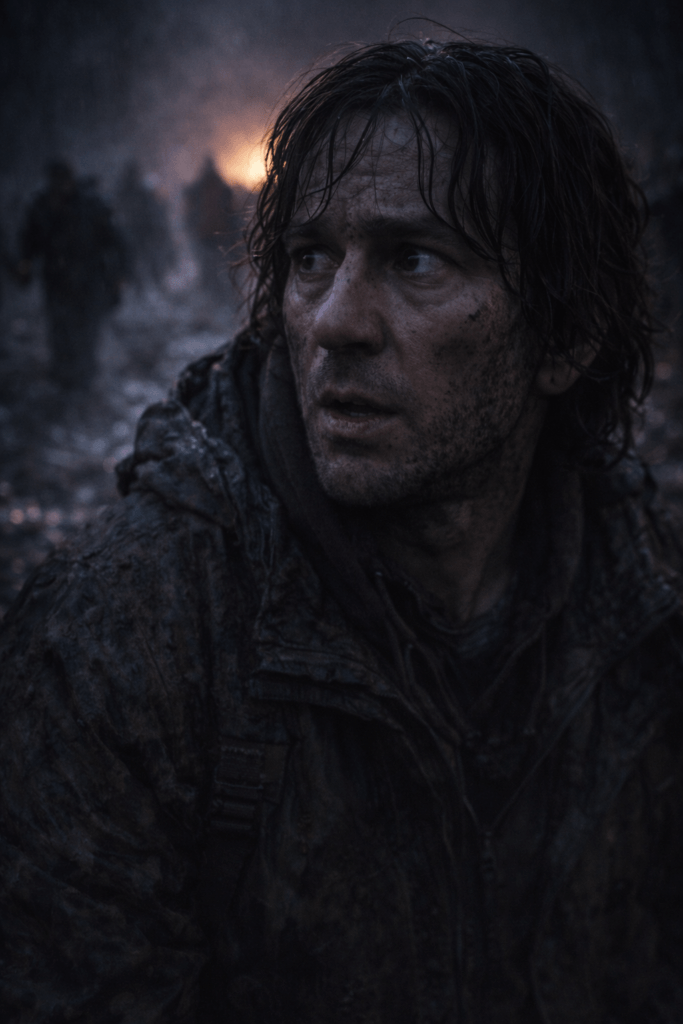
Maurice does not announce himself.
At first, he is easy to overlook: quiet, observant, conserving energy while others speak too quickly or too loudly. He studies dynamics the way some study maps. Who defers. Who hesitates. Who needs reassurance. He rarely interrupts. He rarely volunteers. But he is always calculating.
His silence should not be misinterpreted as passivity. It is pure assessment.
Maurice understands that power is rarely seized outright; it is positioned for. He senses when structures begin to loosen and when authority starts to break. In those moments, he does not rush. He steps forward with measured confidence, framing decisions as inevitabilities rather than ambitions.
Psychologically, he is pragmatic and unsentimental. He believes leadership is less about charisma and more about timing, leverage, and perception. He knows how to align himself with necessity.
When he plants his stakes, it feels almost natural. Earned not through spectacle, but through careful, patient maneuvering. Maurice embodies the strategist who waits until the ground is ready before claiming it.
STAN (SHORT FOR STANLEY) TREMBLAY
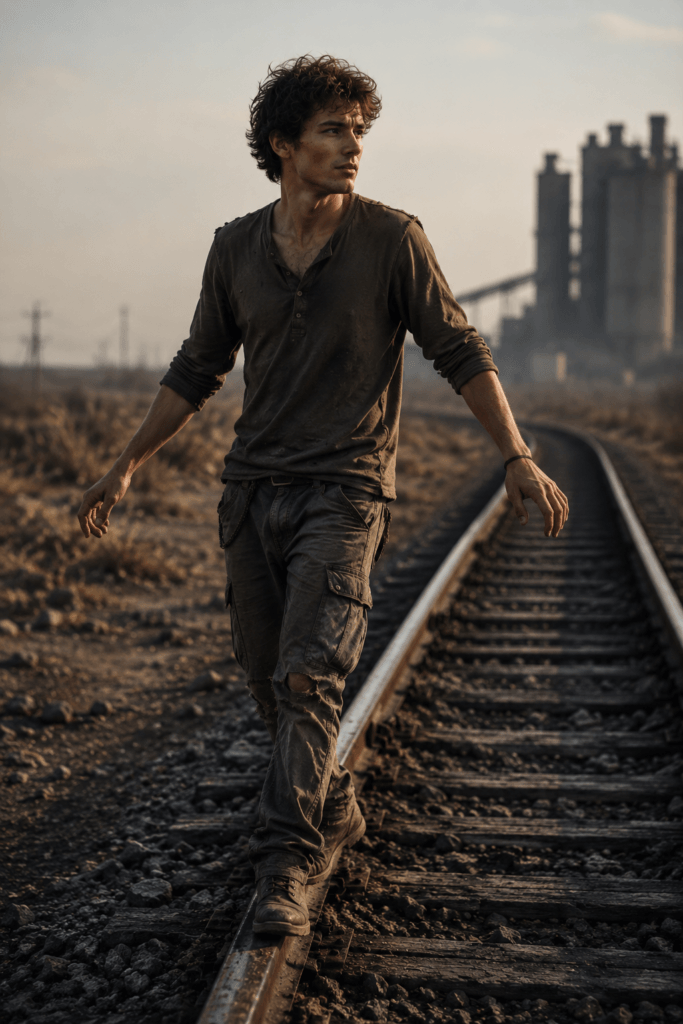
Stanley “Stan” Tremblay is a young drifter who moves through ruin as if it still has space left in it. Lanky, loose-jointed, always slightly ahead of his balance, he treats unstable ground like a stage rather than a threat.
Stan refuses to fully compress himself into caution. He walks rails instead of ties, turns fatigue into performance, and makes motion itself a kind of distraction for those around him.
The others read it as recklessness or levity. What it actually is remains harder to place: a learned refusal to let the weight of the world dictate posture, even when the world is collapsing underfoot.
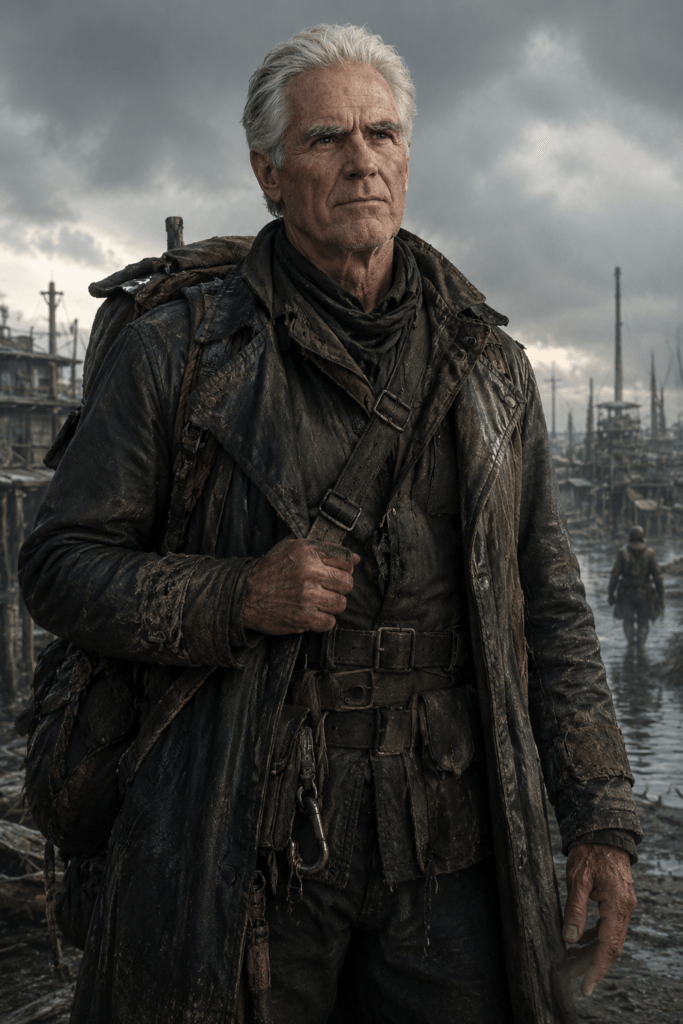
WALSH
Walsh survived the Light and everything that followed. Once a towering, broad-shouldered man who could outwork and outfight almost anyone, age has stolen more from him than he is willing to admit. Proud, stubborn, and deeply disillusioned, Walsh still measures himself against the man he was twenty years ago, and refuses to believe that man is gone. In a world built on loss, surrendering to age may be the one thing he cannot endure.
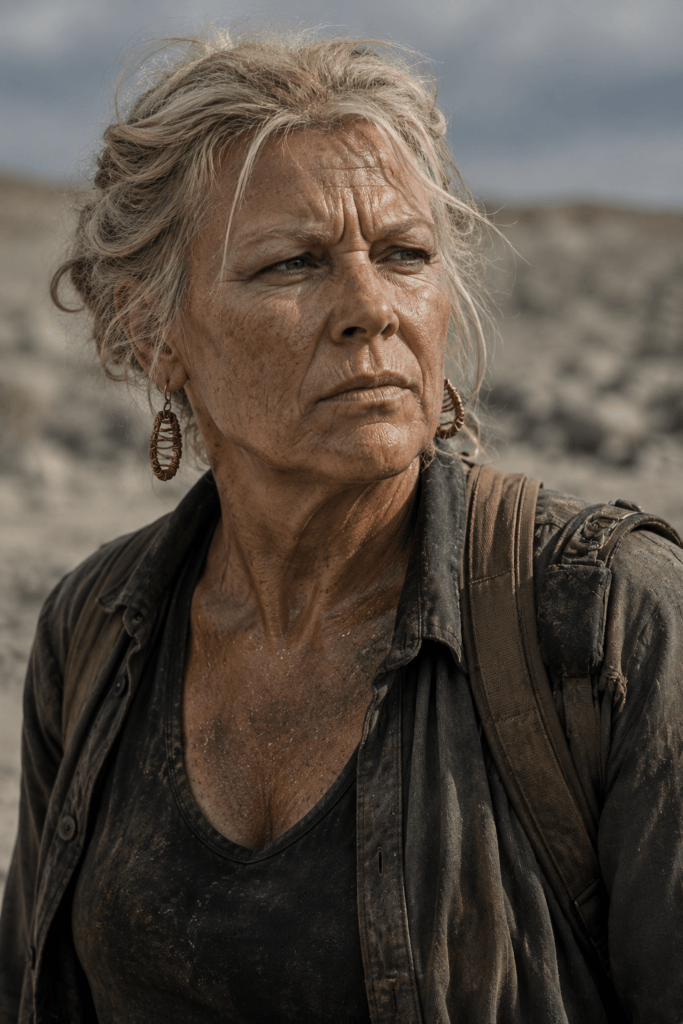
SIMONE
Simone used to sell Boil-in-a-Bag crawfish to labourers, scavengers, and anyone with enough scraps to eat back in the Sump. Practical, stubborn, and utterly without patience for nonsense, she has survived losses that would have broken most people. The handmade copper earrings she never removes are all that remains of her daughter Julia, a constant reminder of the family taken from her, and of the reason she keeps moving forward with the group from the Exodus.
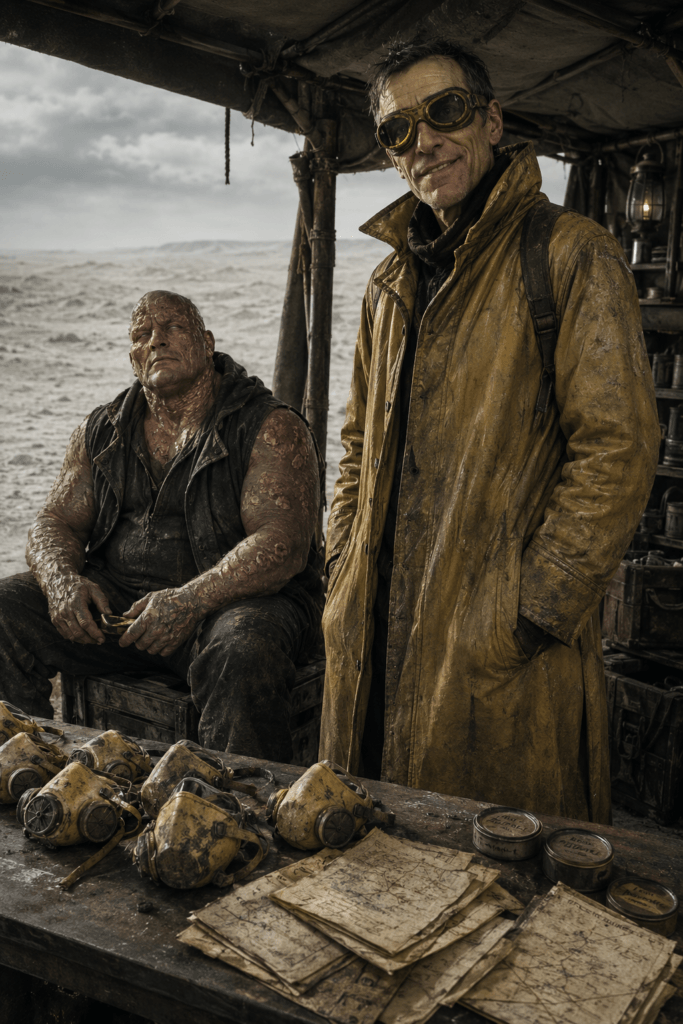
LEARY & MUTIE
Leary and Mutie wait at the edge of the ash fields, selling survival to anyone desperate enough to cross. Leary never stops smiling, his silver tongue turning junk into necessity, while Mutie watches in silence, missing nothing. Whether they’re opportunists, predators, or simply men making a living at the end of the world depends entirely on who survives the journey ahead.
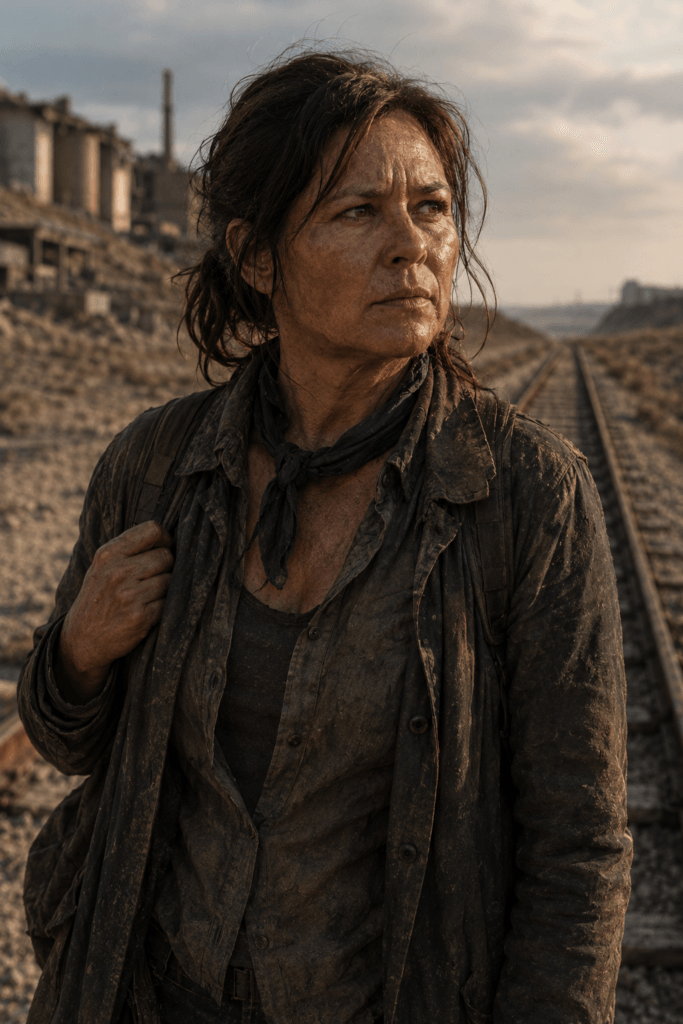
SYLVIE
Sylvie is a survivor of the Sump, hardened by long treks through the wastelands and shaped by the collapse of anything that once resembled safety. Mid-forties, with sunburned skin, brown hair worn down by distance and exhaustion, she carries the quiet marks of someone who has lived through too many forced departures to still expect stability.
Forced to flee during the Stadium Army’s assault, she left behind whatever fragile order had formed in the Sump and kept moving as part of the Exodus. Resilient without denial, resigned without surrender, she moves through the ruins with a steady resolve and an unbroken sense of direction, holding onto a restrained optimism that refuses to fully disappear.
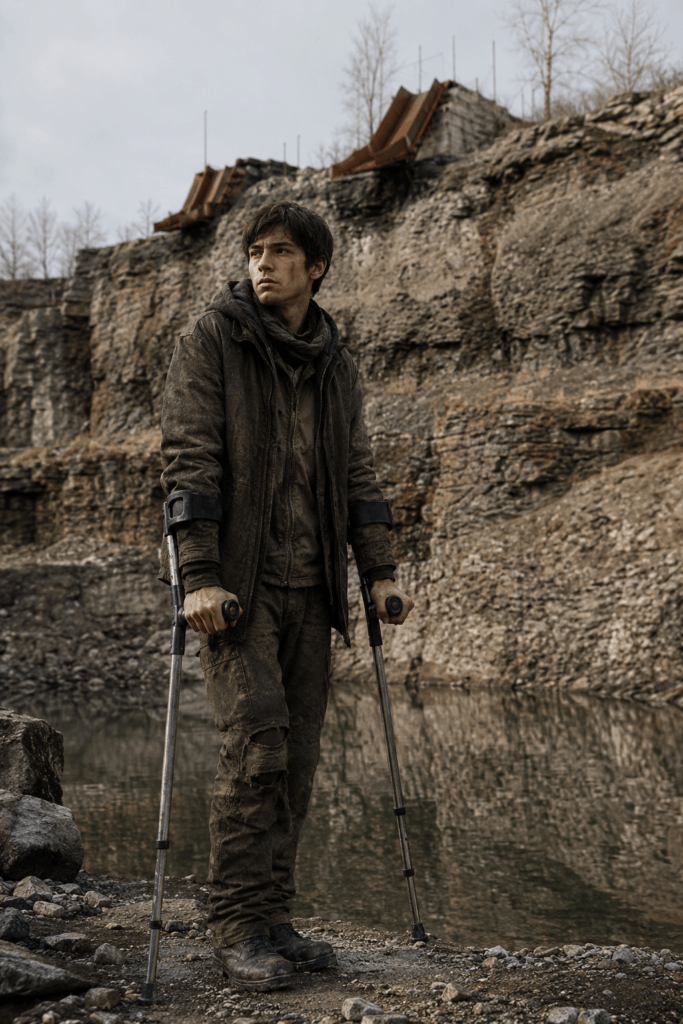
QUIET HANDS (ÉMILE)
Émile has brittle bones. He was born during the Fell, when the grey snow smothered the city, and he is the only child from that time who survived at Francon. The others didn’t. People around him remember this, and it never quite leaves their eyes when they look at him.
He works with rope, cord, nets, anything requiring precision over strength. His hands are exact. His movements cost nothing extra. He carries a crutch and doesn’t complain about it.
The quarry villagers call him Quiet Hands. Some call him Cap, as in handicap. He answers to both without arguing. His real name is Émile, though most people stopped using it a long time ago.
He knows what people think when they see him. He made his peace with it early. What he hasn’t made his peace with is being told what he can’t do.
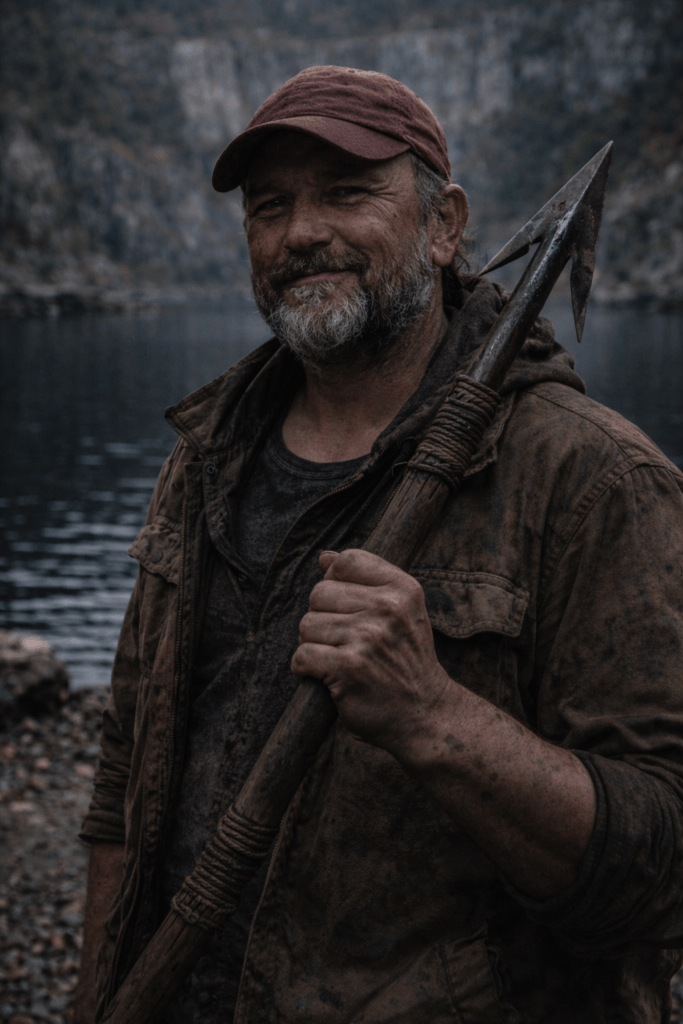
MARCEL OF FRANCON
Marcel stands just behind power and that is exactly where he prefers to be.
As second-in-command in Francon, he understands that influence often travels sideways rather than from the front. He watches. He absorbs. He anticipates the fractures others miss. Where leaders speak in declarations, Marcel speaks in adjustments. A suggestion here. A recalibration there. He rarely needs the spotlight to shape the outcome.
In Book II, his loyalty appears steady, almost understated. He is pragmatic, grounded, and capable of hard decisions without dramatics. Yet beneath that composure lies a deeper current: an ability to read not only people, but momentum. He senses when authority shifts and when alliances thin.
Marcel’s interior landscape reveals itself as more layered than assumed. He is neither zealot nor rebel. He is something more unsettling: a man who understands systems from the inside and knows exactly how to live within their margins.
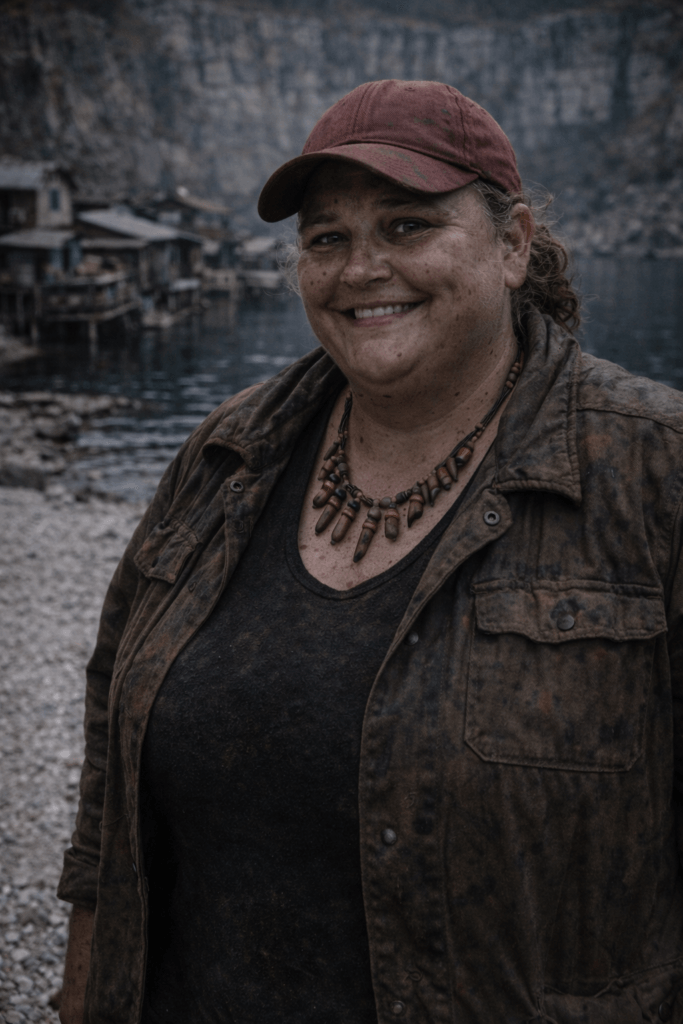
Cécile of Francon
Cécile does not believe in clean beginnings. By the time she arrived at the quarry, the damage was already there: subtle, creeping, undeniable. Where others searched for blame or superstition, she looked for patterns. Residue. Pressure. Reaction. What the earth tolerates. What it demands.
She is not a zealot, nor a tyrant. She is a systems thinker in a place built on fracture.
When Francon faced a slow, creeping threat beneath the stone, Cécile understood something most refused to accept: survival is not about purity. It is about necessity. Stories matter. Language matters. If people are going to endure what the quarry requires, they need meaning as much as they need structure.
Aris sees compromise and calls it corruption. Cécile sees restraint. She sees what would happen if the fragile balance collapsed all at once.
She carries the burden of decisions no one wants to name, let alone defend. Not because she enjoys them.
Because someone has to translate damage into continuity.
© Copyright 2026 WARRIORS OF THE LAST DAYS All rights reserved Privacy Policy
 Stéphane Roy is a lifelong reader and writer with a deep love for science fiction, apocalyptic worlds, and tightly constructed mysteries. This is his first novel. He lives in the Yukon with his dog and his aquarium, where long winters, silence, and wide, sometimes glowing, skies leave plenty of room for imagining the end of the world, and what might come after it. He is also waiting, with cautious optimism, for the aliens to finally reveal themselves and straighten us all out.