How Chemistry Inspires Warriors of the Last Days
What does a chemical element have to do with the end of the world?
In the Warriors of the Last Days universe, the answer can take many forms. An element can inspire a story, connect a fictional setting to Canada’s mining history, or introduce a scientific detail that takes on a different significance in a post-nuclear world.
For me, this connection goes back much further than the books. I am a former chemist, and I have been fascinated by the elements and the periodic table since childhood. That interest has never disappeared. It continues to influence the way I look at the world, the subjects that capture my attention, and, inevitably, the stories I write.
Chemistry finds its way into our fiction in different ways. Sometimes it provides a central theme. Sometimes a mineral or compound offers the starting point for a story. And sometimes the fascination lies in the material itself: its unusual properties, its appearance, or its place in the history of science and industry.
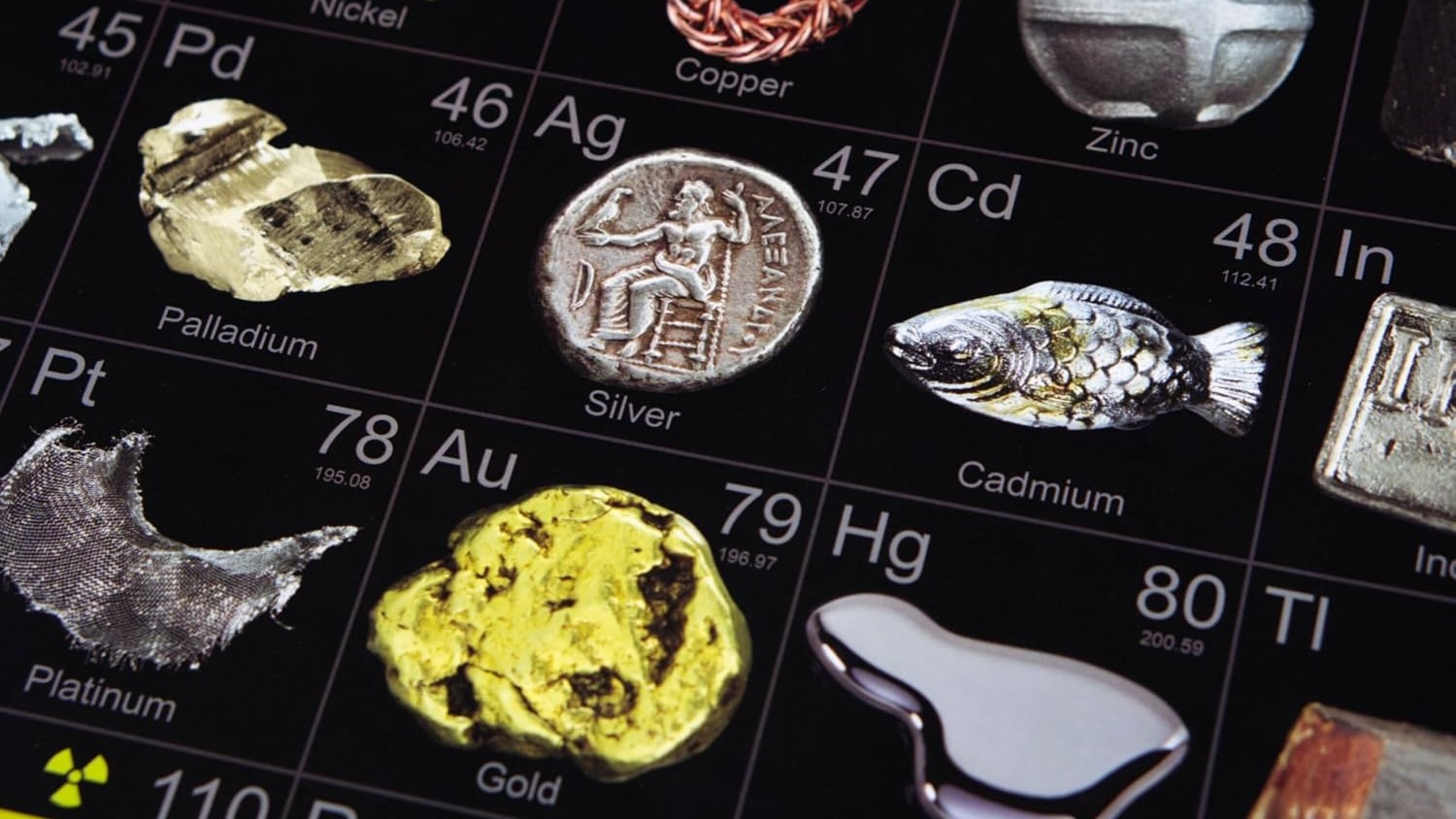
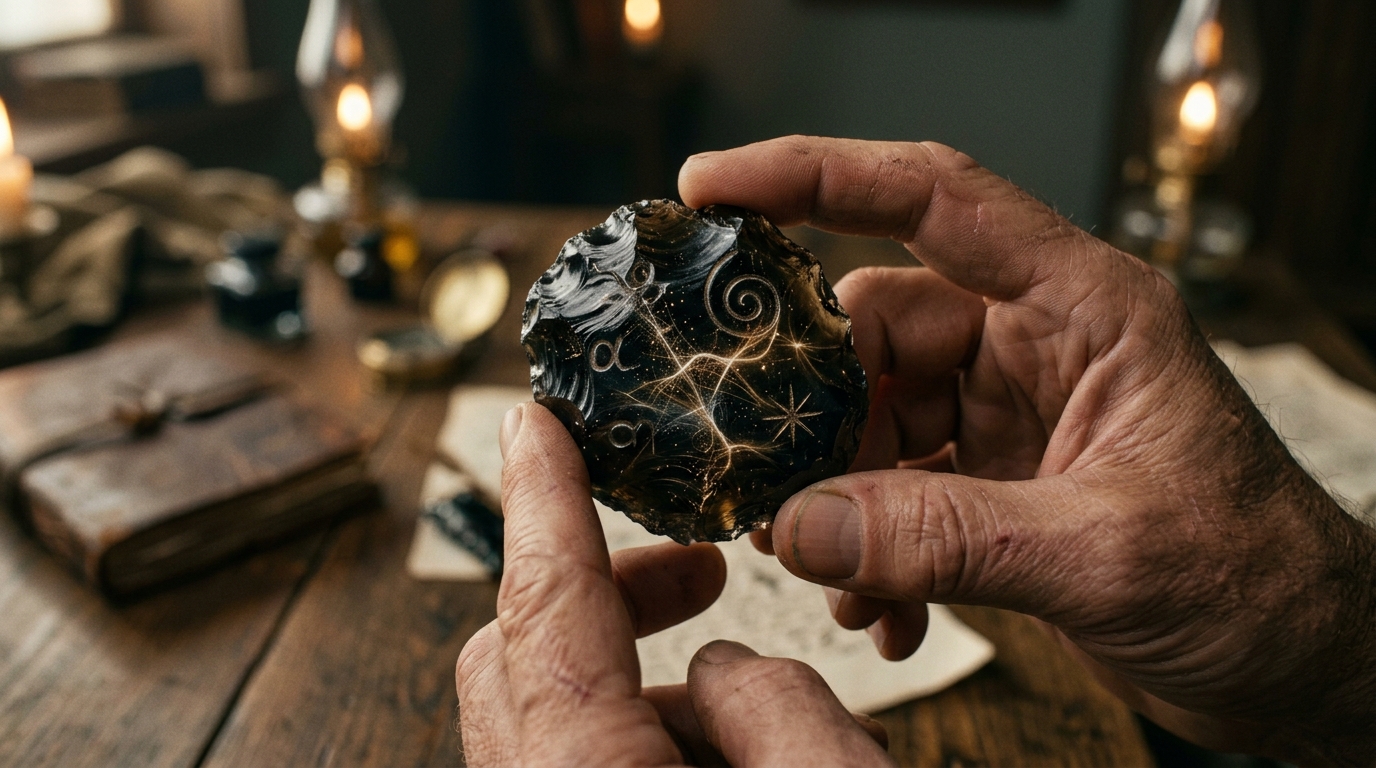
This interest also shapes how we present some of our short stories. Inspired by the extraordinary photography of Nick Mann, we create covers and website banners that showcase elements and minerals against dark backgrounds, emphasizing their colours, textures, and natural forms.
The result brings together three things that have long fascinated me: chemistry, the Canadian landscape, and storytelling.
Theodore Gray, Nick Mann, and the Beauty of the Elements
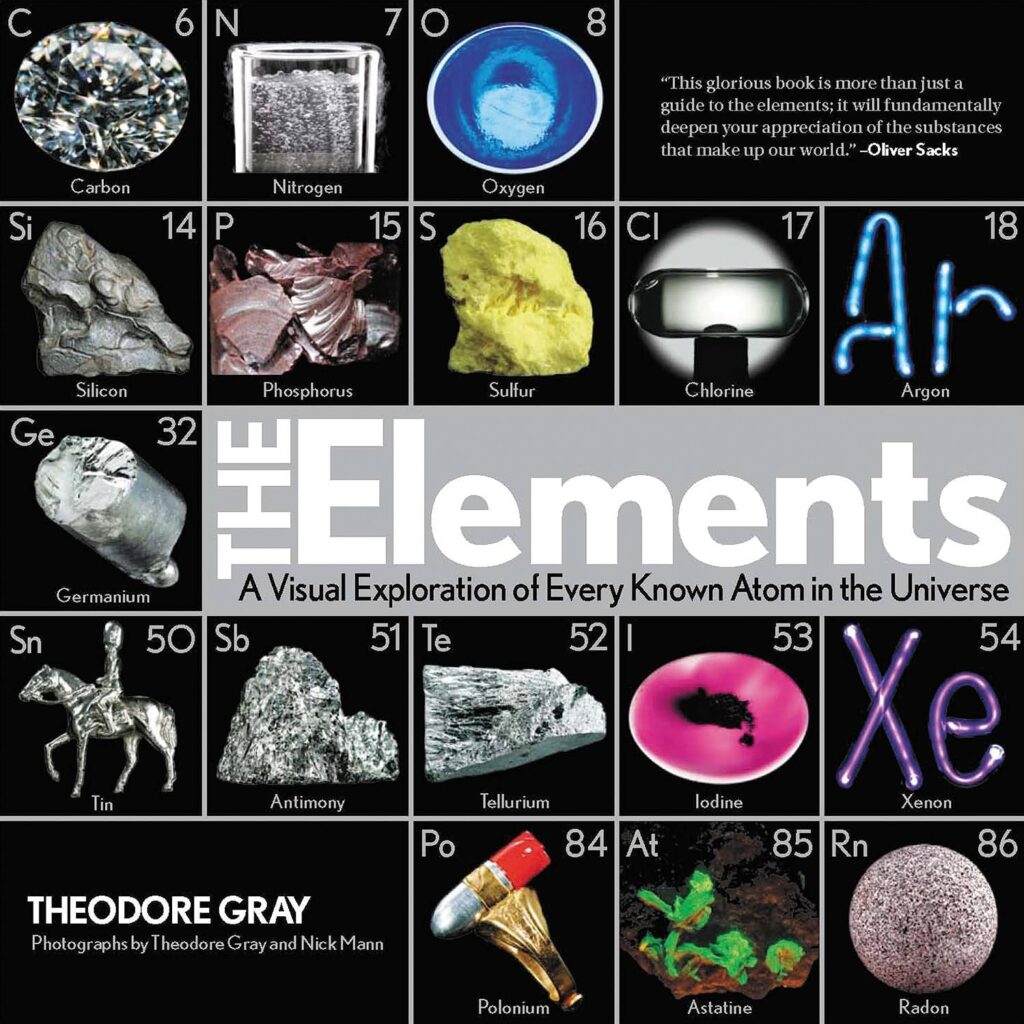
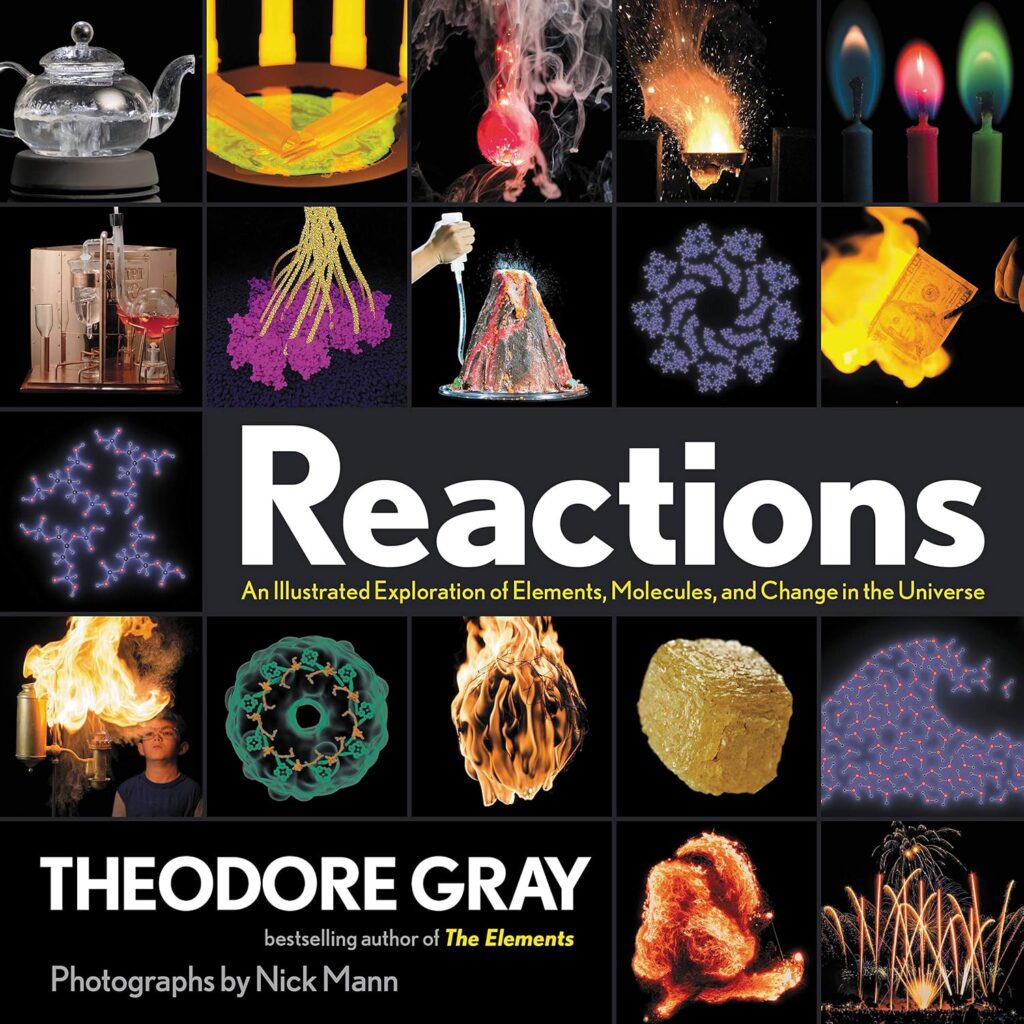
The visual inspiration for this approach comes from Elements, the book by Theodore Gray featuring photography by Nick Mann.
When I first read it, I was struck by the way it presented the periodic table. Rather than relying on diagrams or conventional textbook illustrations, the book showed the elements themselves, or the minerals in which they occur, through beautifully composed photographs.
Against predominantly black backgrounds, the specimens become the centre of attention. Metallic surfaces catch the light. Crystals reveal intricate structures. Colours and textures that might go unnoticed in an ordinary setting become extraordinary.
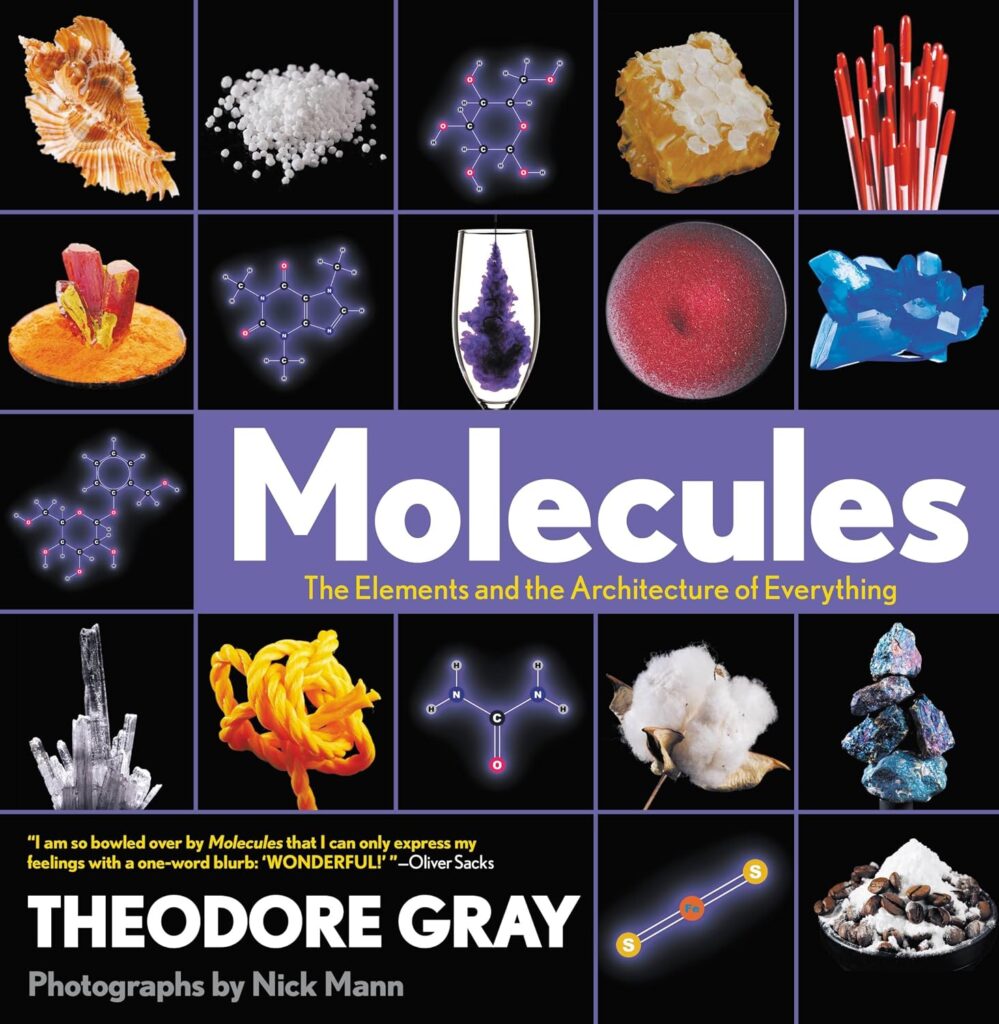
Gray and Mann eventually expanded this approach into what became known as the Elements Trilogy, with Molecules and Reactions, exploring the structures of matter and the transformations it undergoes.
Together, these books demonstrate how scientific subjects can be presented with the visual impact of fine art while retaining their connection to the physical world.
That combination appealed to me immediately.
As someone with a background in chemistry, I appreciate the science behind these materials. As a writer, I am interested in the possibilities they suggest. And as someone developing a fictional universe set in a country rich in resources, I see an opportunity to bring that fascination to readers who might discover a story through its cover before they know anything about its subject.
Our approach takes inspiration from Gray and Mann’s visual presentation and applies it to the world of Warriors of the Last Days. Each image focuses on the material itself, giving it a distinctive appearance while maintaining a consistent visual identity across the collection.
Why Chemistry Belongs in a Post-Apocalyptic Universe
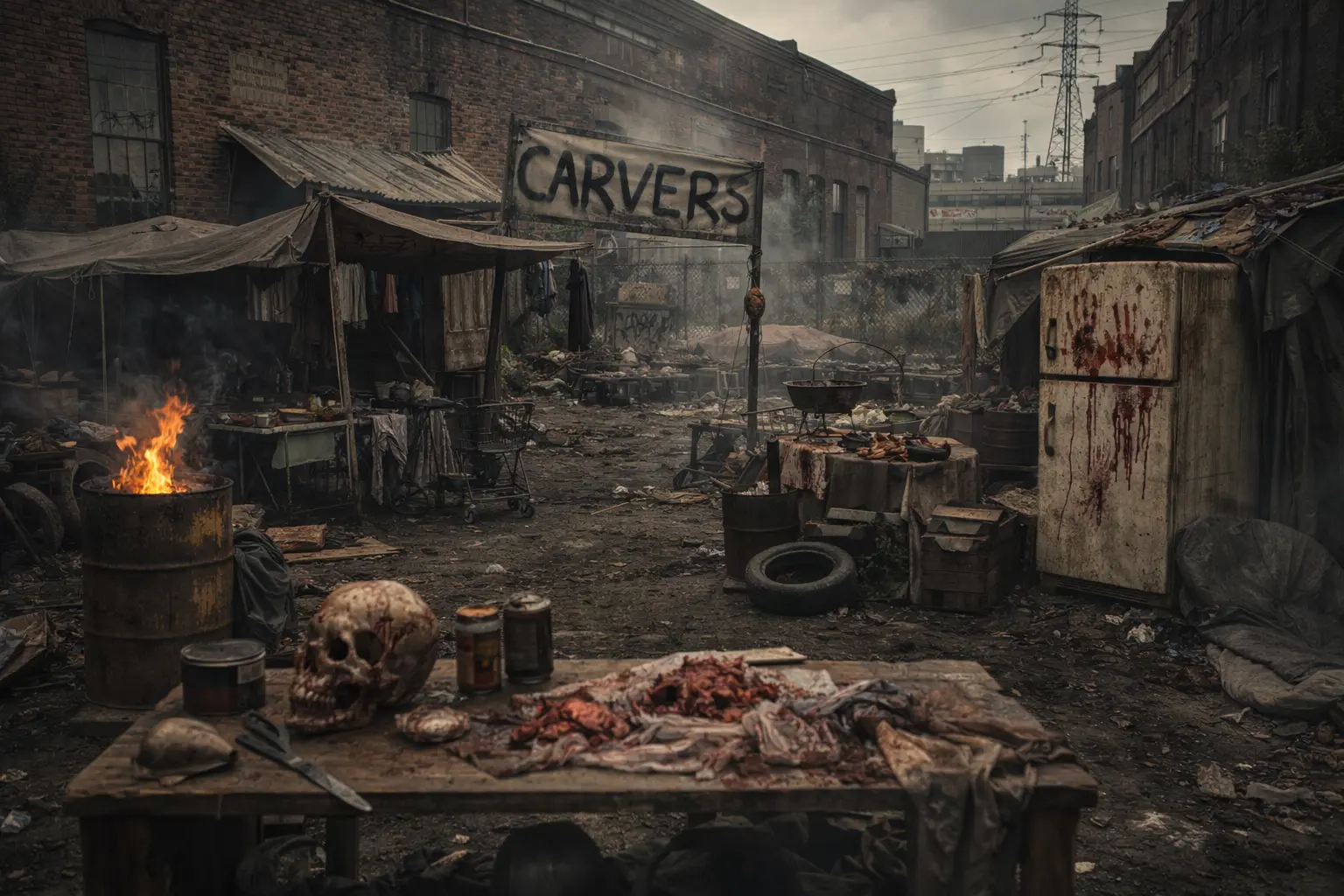
Warriors of the Last Days is a dystopian novel series set in post-nuclear Canada. Its world draws on Canadian geography, history, legends, science, and the realities of survival after civilization has collapsed.
Chemistry belongs naturally in that setting.
The physical world does not stop following the laws of chemistry when society falls apart. Materials retain their properties. Contaminants remain dangerous. Minerals continue to exist in the ground. The resources that once supported industries may acquire new importance when supply chains, infrastructure, and institutions no longer function.
My background in chemistry makes these details particularly interesting to explore. Scientific knowledge offers a way to examine the world beyond its surface, whether that means understanding a material’s properties, recognizing a hidden danger, or considering how people might use the resources available to them.
The periodic table is also an extraordinary source of inspiration for fiction. Its elements range from familiar substances essential to life to rare metals, toxic compounds, radioactive materials, and minerals with striking physical characteristics.
Each one has its own story to tell.
In a post-apocalyptic setting, those stories can intersect with the history of the places where materials are found, the industries built around them, and the people whose lives depend on them.
This is particularly relevant to Canada, where natural resources and mining have helped shape the country’s development.
Canada’s Mining History: The Landscape Beneath the Stories
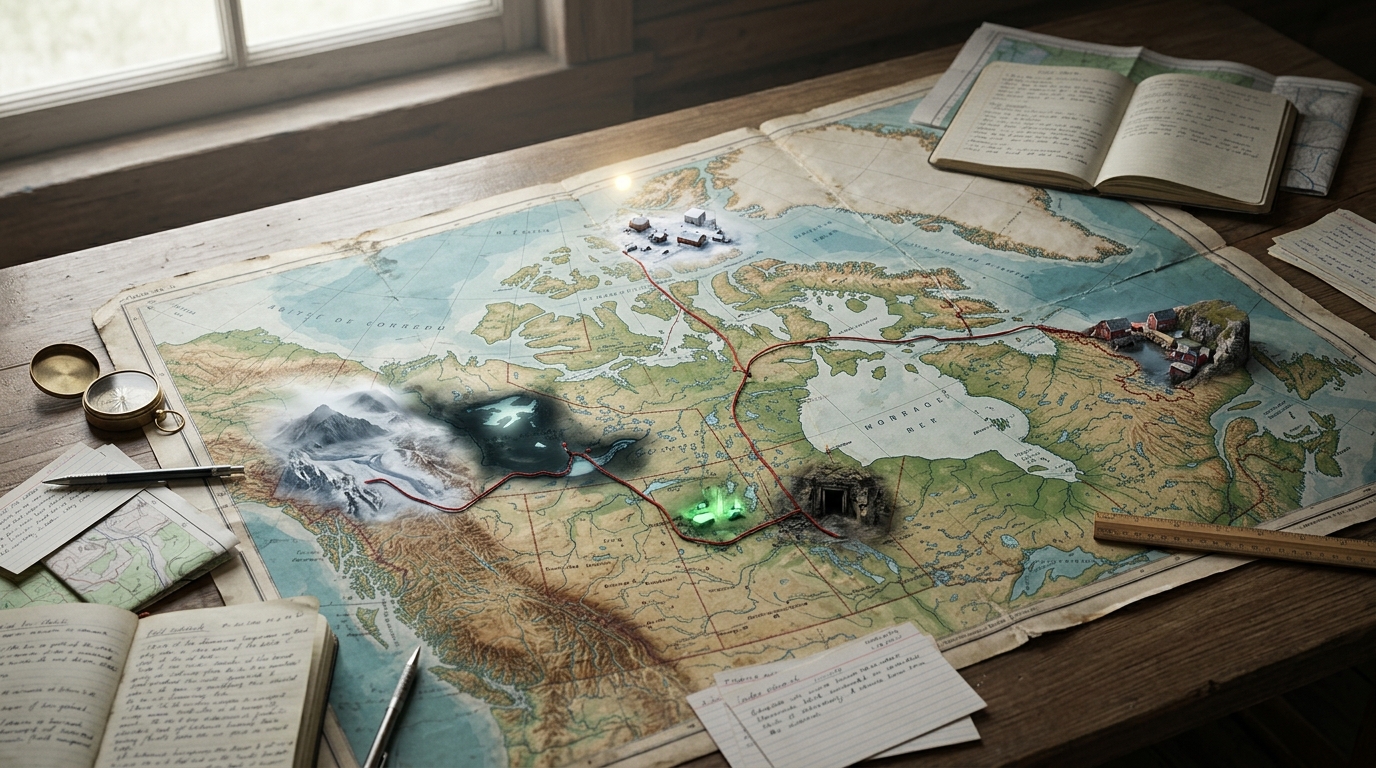
Canada is rich in natural resources. The discovery and extraction of valuable minerals helped establish communities across the country, often in regions where few other industries could have supported permanent settlement.
Mining brought workers, businesses, transportation networks, and infrastructure to remote areas. Some settlements grew into lasting communities. Others declined when mines closed, leaving behind abandoned buildings, industrial remains, and landscapes marked by decades of extraction.
These places offer compelling settings for post-apocalyptic fiction.
In the world of Warriors of the Last Days, the remains of the old society are part of the landscape inhabited by survivors. Former industrial sites and resource-dependent communities can take on new meanings when the systems that once sustained them have disappeared.
The minerals beneath the ground also connect the present landscape to its geological past. A mine is more than a hole in the earth. It represents the intersection of geology, chemistry, technology, economics, and human ambition.
That intersection provides fertile ground for stories.
An element or mineral can lead us toward a particular Canadian region, a historical industry, an environmental hazard, or a question about what people value when the world changes beyond recognition.
The scientific subject and the fictional setting can reinforce one another, allowing a story to grow from something tangible in the real world.
Elements and Minerals in the Warriors of the Last Days Universe
Several of our short stories explore particular elements, chemical compounds, or minerals. Each offers a different point of entry into the world of science and the possibilities of post-apocalyptic fiction.
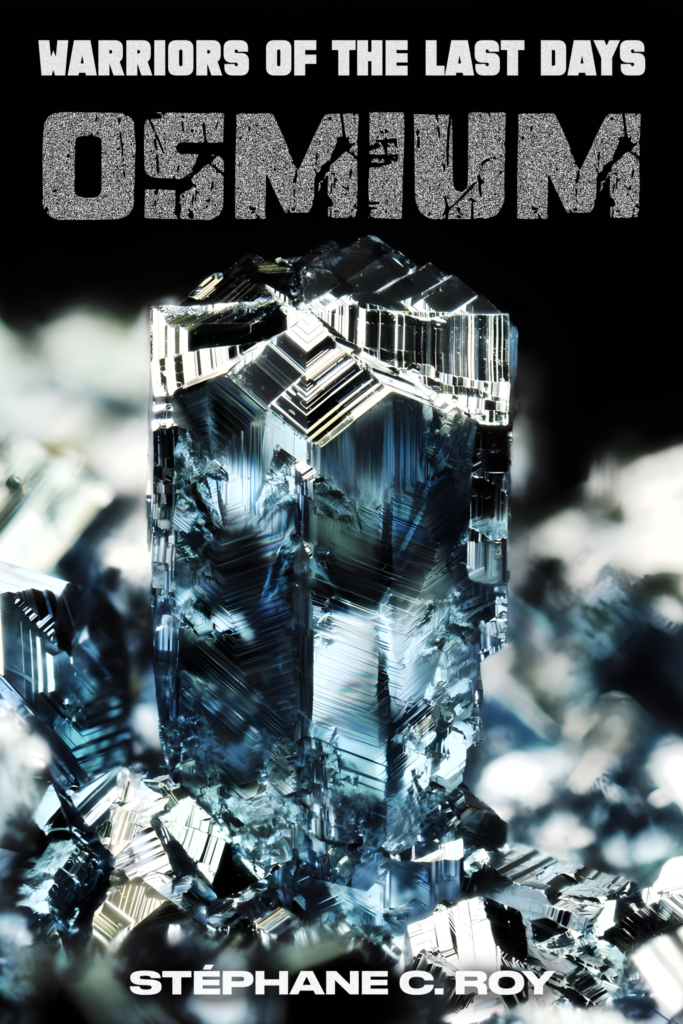
Osmium:
Osmium is one of the densest naturally occurring elements and belongs to the platinum group of metals. Its rarity and unusual physical properties make it an intriguing subject for a story inspired by the extremes of the periodic table.

Molybdenum:
Molybdenum is an important industrial metal, particularly in steel alloys and other applications where its properties improve performance. Its connections to metallurgy and heavy industry provide a link between chemistry and the infrastructure of modern civilization.
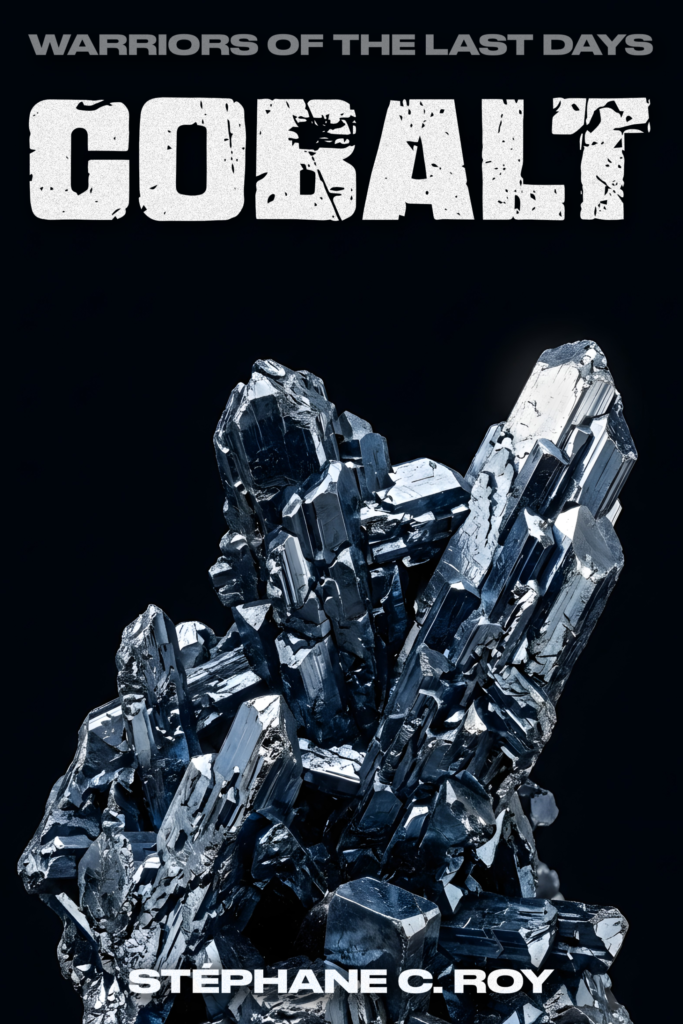
Cobalt:
Cobalt is known for its striking blue compounds and its uses in pigments, alloys, and modern technologies. Its distinctive appearance makes it particularly suited to the visual approach we use for these stories.
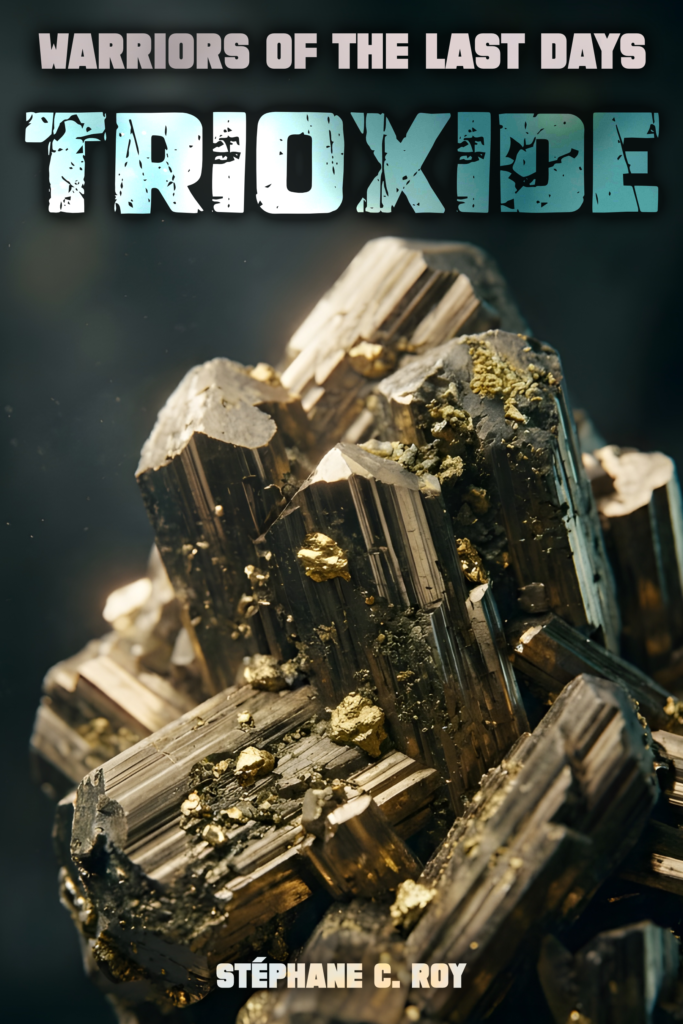
Arsenic trioxide:
Arsenic trioxide is a chemical compound with a long and complicated history. Its toxicity and historical applications make it a subject in which chemistry, human ingenuity, and danger intersect.
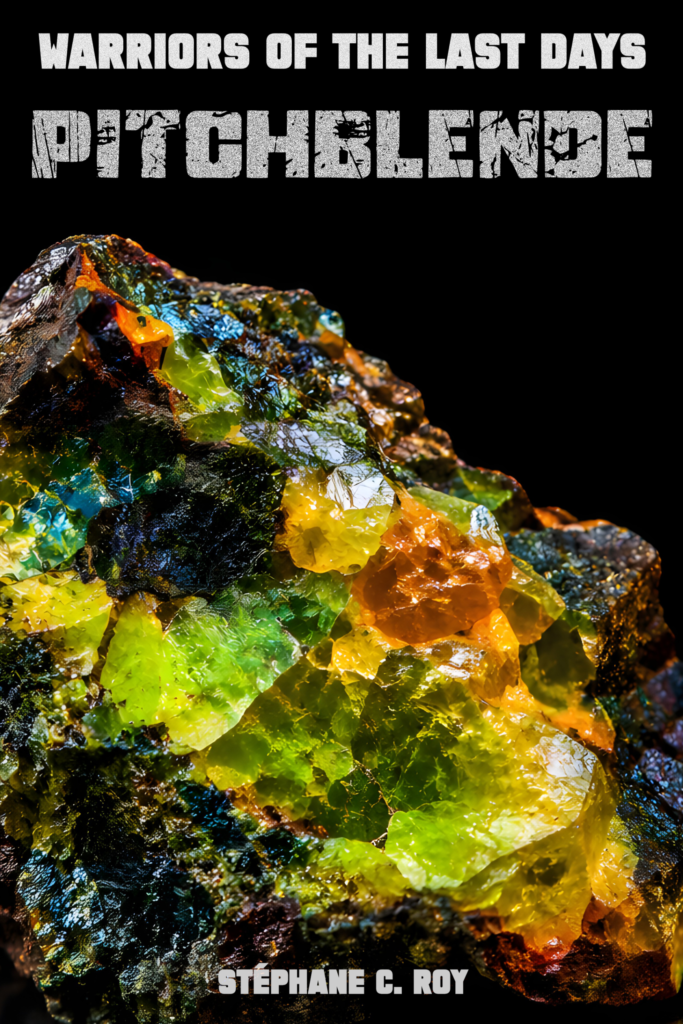
Pitchblende:
Pitchblende is a uranium-rich mineral with an important place in the history of uranium mining and the discovery of radioactivity. In a fictional universe shaped by nuclear catastrophe, its connection to radioactive materials carries particular significance.
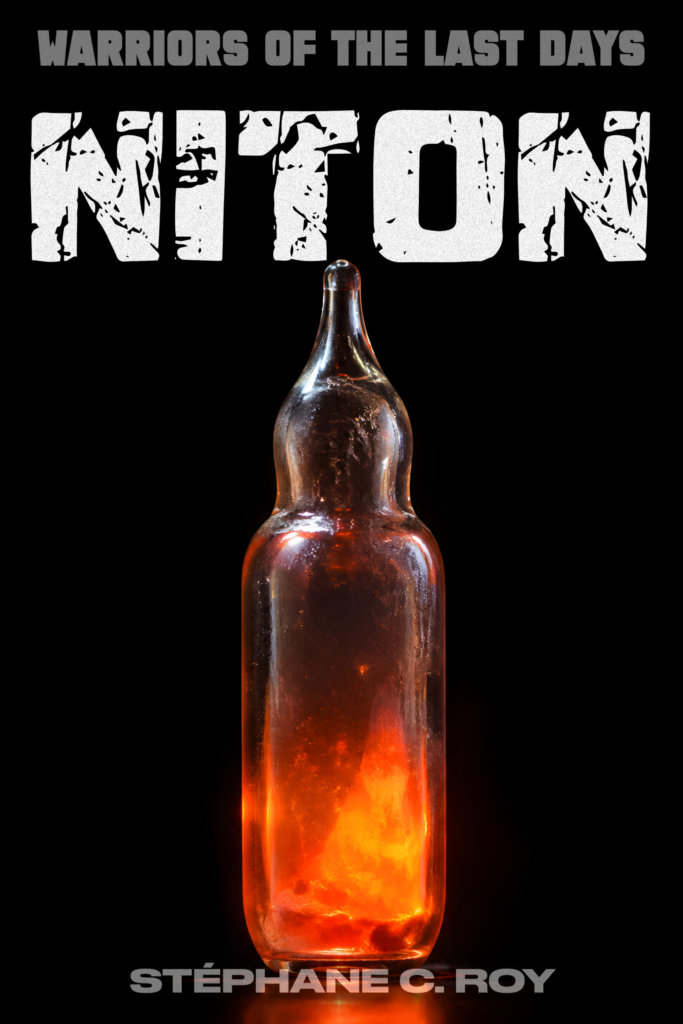
Niton (Radon):
Radon is a naturally occurring radioactive gas produced by the decay of uranium and other radioactive elements in the earth. Because it is colourless and odourless, it can accumulate in enclosed spaces without being detected by human senses. Its relationship to geology, radioactive decay, and environmental health makes it an especially relevant subject for stories set in a world where understanding the invisible hazards of the environment can be essential to survival. Radon was originally called Niton, derived from the Latin nitens, meaning shining. Its name was quite literally inspired by this property. For an element whose greatest danger is that humans cannot see it, that is an extraordinary twist.
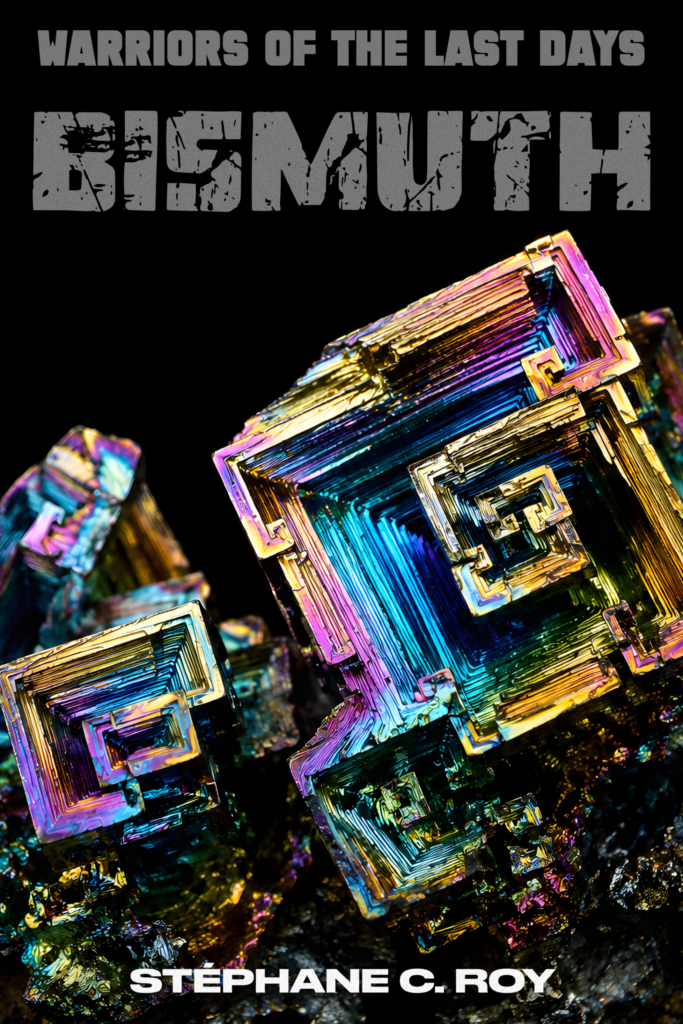
Bismuth:
The element is particularly striking in crystalline form, where stepped structures and iridescent colours can produce extraordinary visual patterns.
Canada does not currently exploit its Bismuth resources even though a few deposits have been found. Which will give this story a different way of telling itself than our usual short stories about metals and minerals.
Bismuth is from an upcoming story. Its appearance makes it a natural fit for our cover and banner concept, continuing the collection’s emphasis on the beauty of real materials.
These subjects differ in their chemistry, appearance, uses, and historical associations. Together, they demonstrate the variety of ways the material world can inspire fiction.
New Additions
Since the original Elements of the Apocalypse article was written, the collection has grown considerably, with seven new entries exploring the strange, dangerous, and sometimes unexpected properties of the elements. These additions include five individual stories and a new two-part series, bringing together chemistry, geology, biology, human obsession, and the peculiar ways in which the post-apocalyptic world has learned to use, or suffer from, the building blocks of matter.
The new stories are:
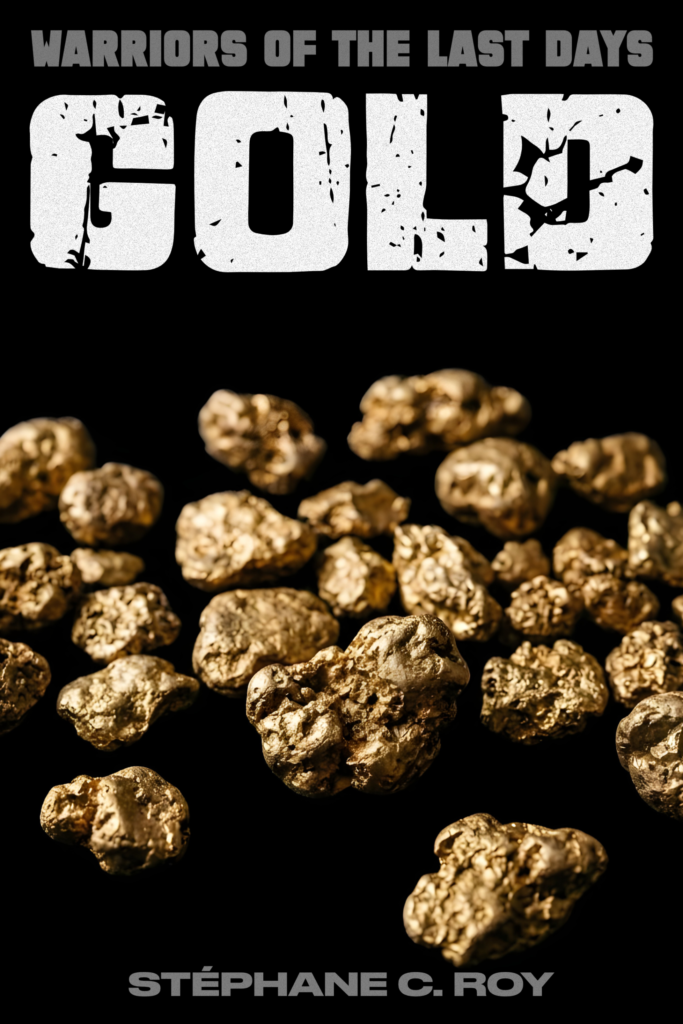
GOLD:
Gold has long been associated with wealth, immortality, and obsession. But in a world where its monetary value has all but disappeared, its biological and environmental consequences can prove considerably more troubling. A journey involving a mysterious plasmoid, a corpse, and an outbreak that threatens waterways explores the unexpected legacy of this supposedly incorruptible metal.
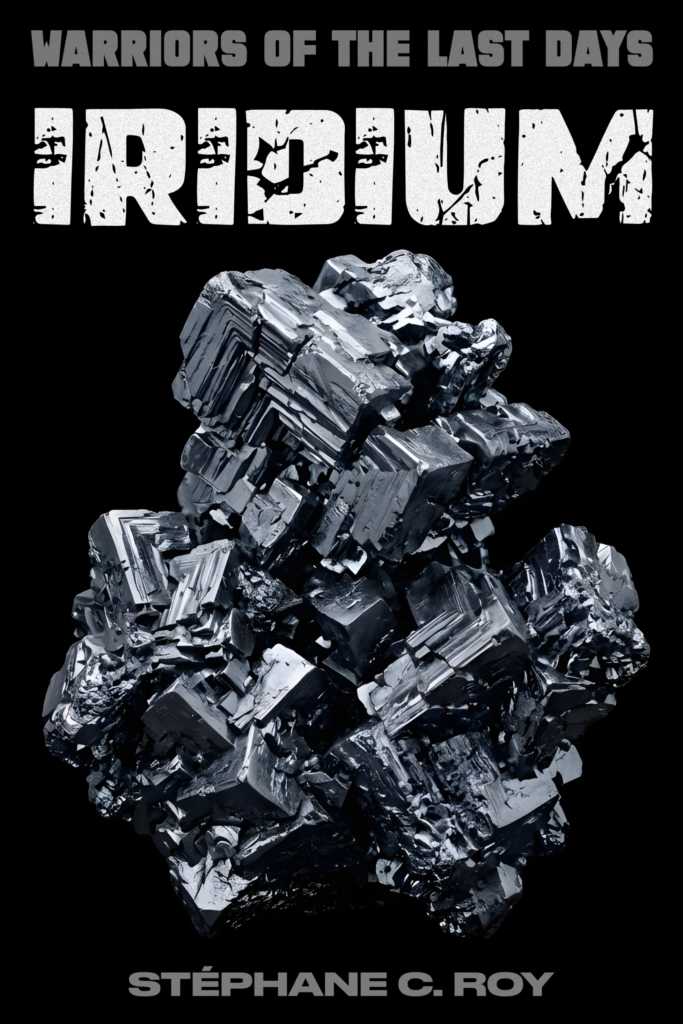
IRIDIUM:
One of the densest and most corrosion-resistant elements, iridium is also notable for its radioactive isotope Iridium-192, used in industrial radiography and cancer treatment. In Deep River, a community’s faith in a mysterious potential cure for the Rot brings competing interests, desperate traders, and an increasingly difficult moral choice into conflict.
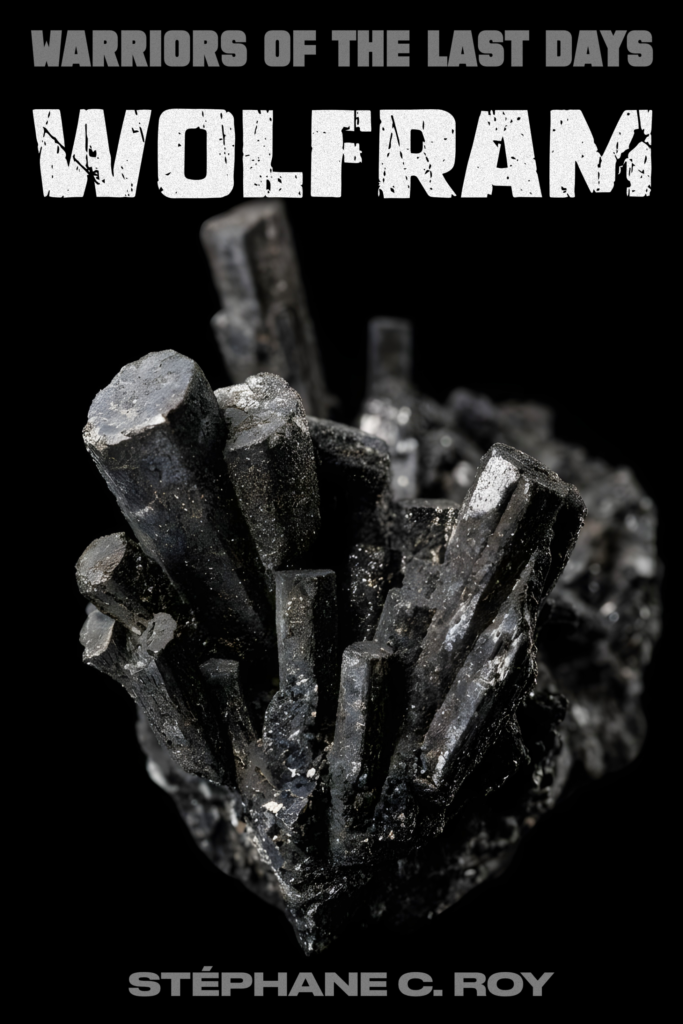
WOLFRAM:
Better known as tungsten, Wolfram takes its name from the mineral wolframite and gives the element its chemical symbol, W. Famous for its exceptional hardness, density, and extremely high melting point, tungsten also has a less obvious weakness: hardness does not necessarily mean toughness.
In a community built around repair and preservation, the distinction becomes a question of survival.
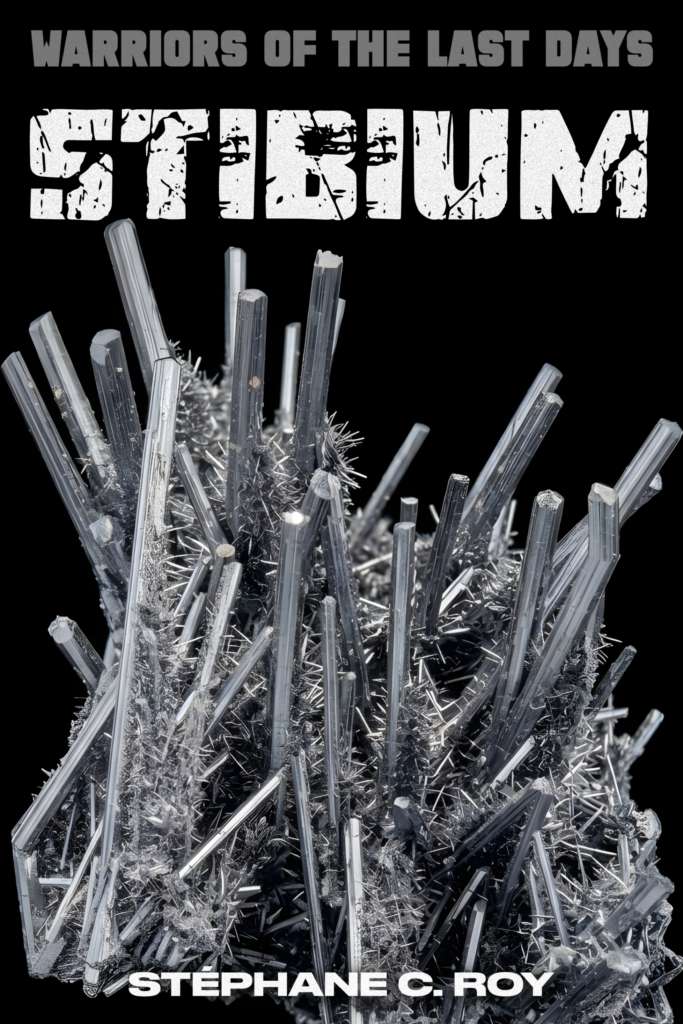
STIBIUM:
The Last Type Foundry – Stibium is the Latin name for antimony, reflected in its chemical symbol, Sb. Historically used in metal alloys to harden lead, antimony played an essential role in traditional printing type.
In St-Boniface, Manitoba, a master printer and his apprentice face a difficult question when a manuscript challenges the history their settlement has spent decades preserving.
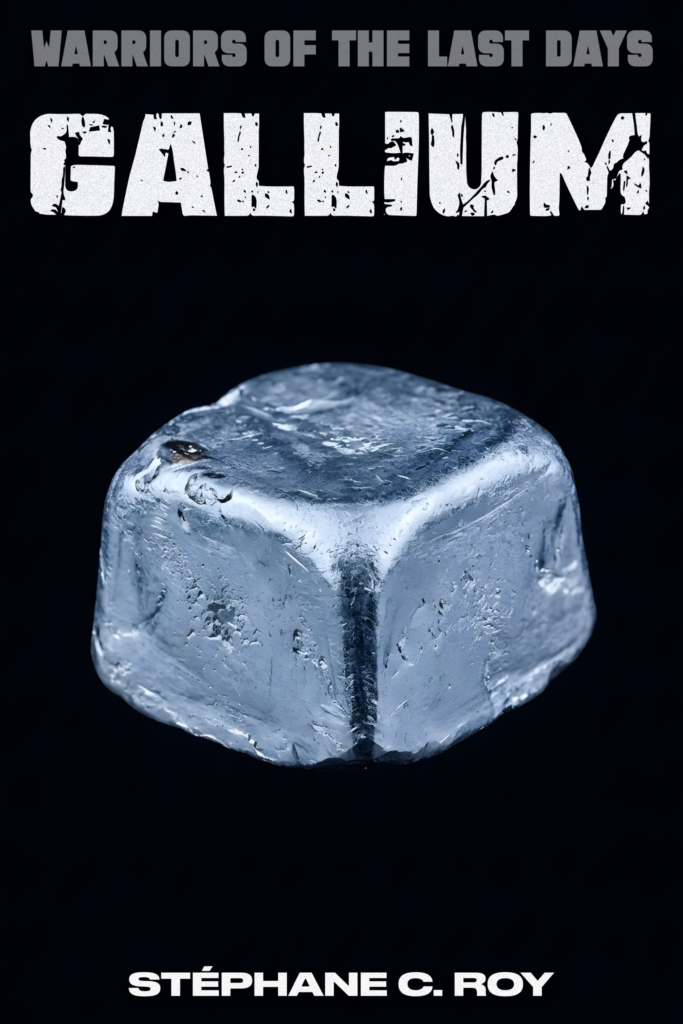
GALLIUM:
A metal that melts at just 29.76°C, gallium can turn from solid to liquid in the warmth of a human hand. Its unusual behaviour, combined with its ability to solidify again as temperatures fall, provides the scientific foundation for a story involving an extraordinary underground setting and a rather unusual encounter with a vat of molten metal.
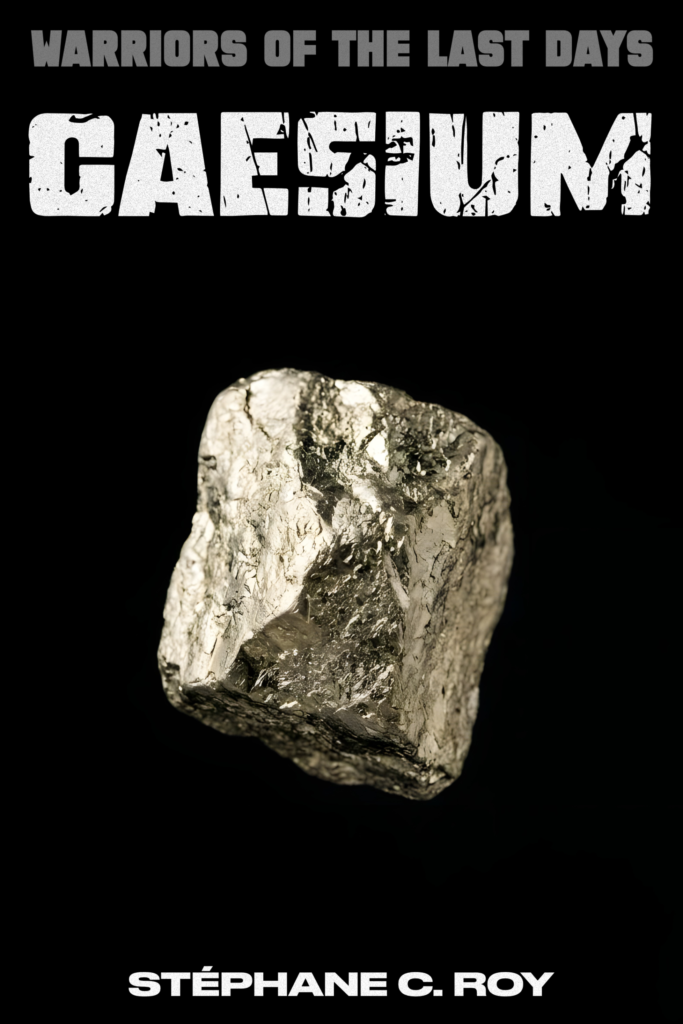
CAESIUM:
One of the most reactive metals known, cesium is also the foundation of atomic timekeeping. Caesium-133 atoms provide the reference for the international definition of the second, allowing atomic clocks to measure time with extraordinary precision. Its radioactive isotope, Caesium-137, is a persistent contaminant associated with nuclear fallout.
In an abandoned scientific facility, a solitary man spends thirty years maintaining an atomic clock, convinced that restoring humanity’s universal measurement of time is essential to rebuilding civilization. Outside, the survivors have already developed their own ways of organizing the world. As the anniversary of the Fallout approaches, he must confront the possibility that civilization has moved on without him.
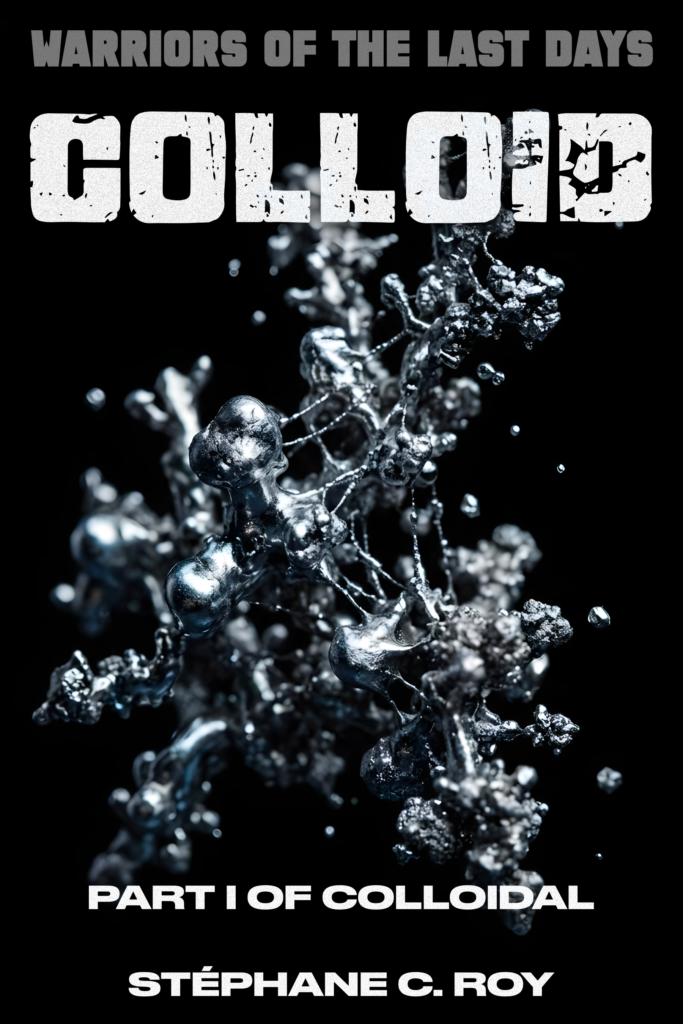
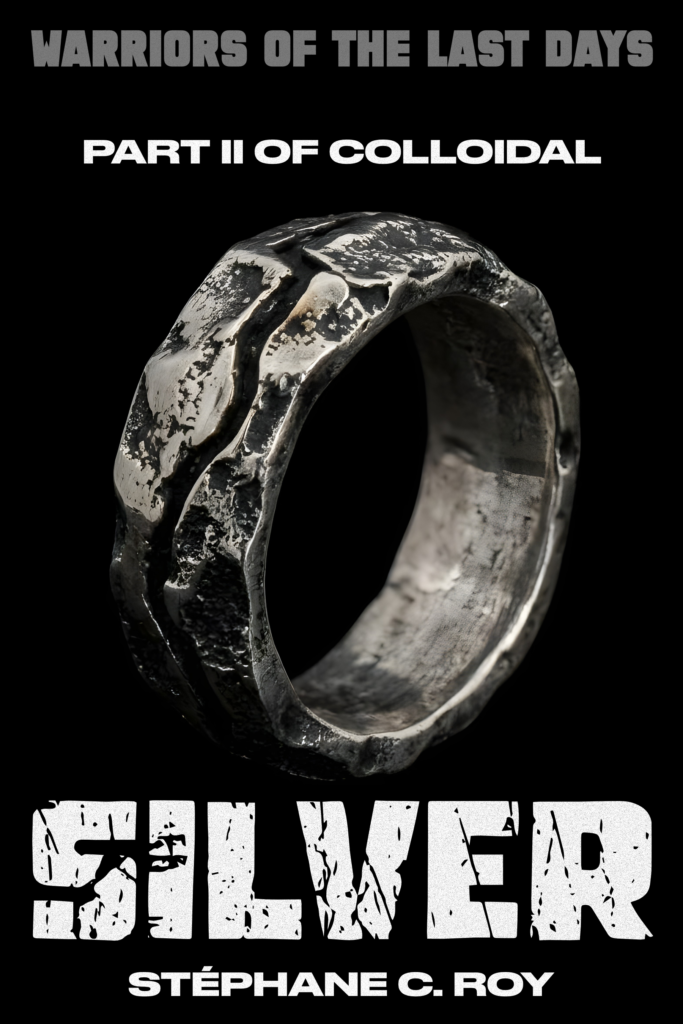
Colloidal: Colloid & Silver
A new diptych exploring silver, not simply as a precious metal but as a substance with a remarkable biological consequence. Colloidal silver has a long history of use as an antimicrobial agent, but excessive exposure can cause argyria, a permanent blue-grey discoloration of the skin. The two stories approach this unusual phenomenon from different perspectives, following a dying stranger’s obsession with silver and a sharp-tongued newcomer navigating life in a remote community of blue-skinned survivors.
Together, these additions continue the original premise of Elements of the Apocalypse: the periodic table is not merely a collection of scientific curiosities. Every element has properties, applications, limitations, and consequences. In the restructured world, those properties can become tools, weapons, sources of wonder, or entirely unexpected problems. Sometimes, the most extraordinary stories begin with the simplest building blocks of matter.
A few more are coming up and they now have their own dedicated section in the short stories list: Minerals & Elements.
We are working on a story involving at least two gases, and we are trying to make stories that cover most of the elements for which Canada is a major producer, so expect at least a dozen or so new stories in the upcoming year.
How We Design the Covers and Website Banners
The covers and banners for these stories follow a simple principle: let the element, compound, or mineral speak for itself.
Rather than using the familiar visual language of post-apocalyptic fiction, with ruined buildings, armed survivors, and dramatic destruction, we focus on the physical material that inspired the story.
The images use dark backgrounds and carefully controlled lighting to emphasize the specimen’s shape, surface, colour, and texture. Depending on the material, the result can feel elegant, ominous, alien, or almost abstract.
The black background serves a practical purpose as well. It isolates the subject, reduces visual distractions, and allows subtle details to become more prominent.
For ebook covers, we use a vertical composition designed around a 6 × 9-inch format, reserving space near the top for the title. The specimen remains the visual focus while the typography has room to breathe.
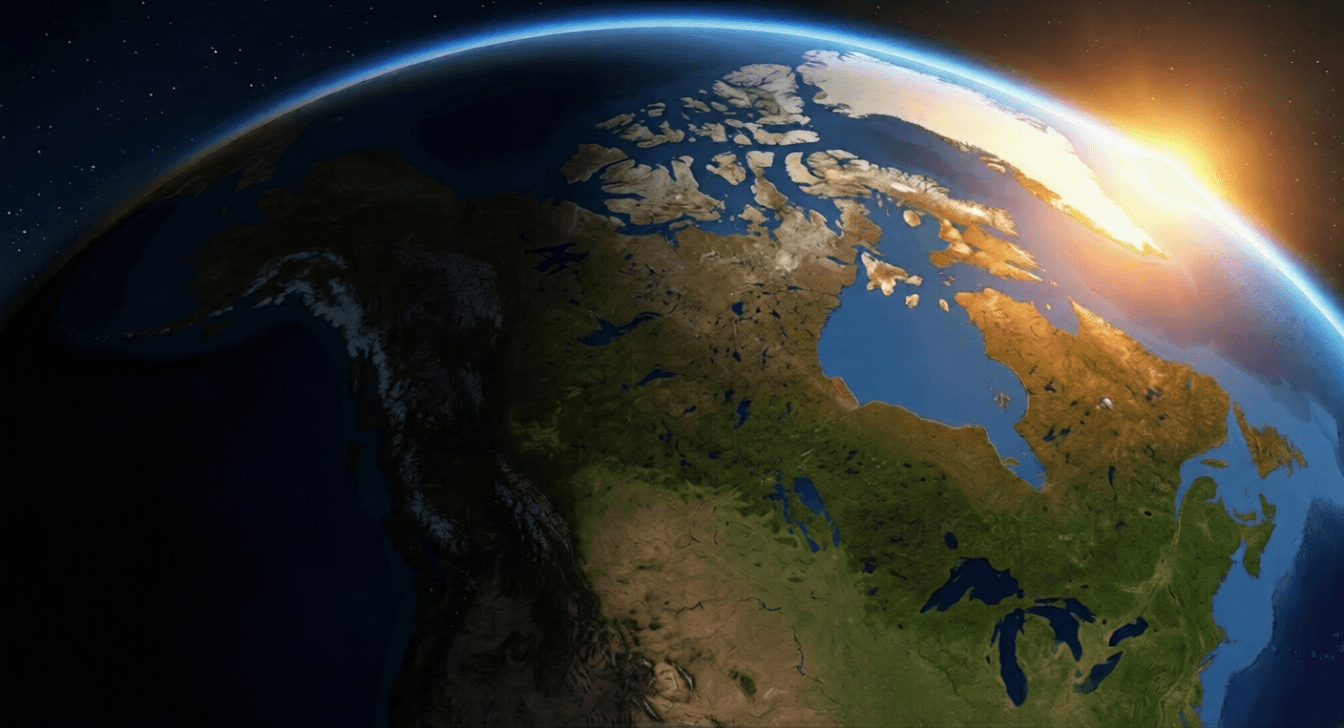
For website banners, we adapt the same approach to a wide 16:9 format. These images provide a consistent visual identity for the stories on our website and can accompany articles introducing their scientific subjects.
The formats differ, but the underlying idea remains the same: a recognizable visual language that connects the stories while allowing each material to retain its individuality.
There is also a pleasing connection between the subject and the presentation. A book cover featuring a mineral specimen can invite readers to look at something they might never have considered examining closely. Its beauty can spark curiosity, and that curiosity can lead toward the science, the history, and ultimately the story itself.
Where Science Meets Storytelling
My fascination with chemistry began in childhood, long before Warriors of the Last Days existed. Becoming a chemist gave me another way to explore that interest, and writing has provided a way to bring it into fiction.
The elements and minerals featured in our short stories are part of that continuing connection.
They offer a way to explore the material world through the lens of a fictional Canada, where the remains of industrial society coexist with the challenges of survival. They also provide a visual identity that celebrates the extraordinary variety of substances found in nature.
The influence of Theodore Gray and Nick Mann’s photography helped us find a way to present these subjects. Their work demonstrated how scientific materials can be visually compelling in their own right. We have taken inspiration from that approach to create covers and banners that reflect our own stories and the world in which they unfold.
For me, this is one of the pleasures of building the Warriors of the Last Days universe: the opportunity to let an enduring interest in science find its way into fiction.
The periodic table is a catalogue of the elements that make up the physical world. Each entry represents a set of properties, relationships, and possibilities. Some of those possibilities are scientific. Others are historical, visual, or imaginative.
And sometimes, one of them becomes a story about surviving the end of civilization in Canada.
Explore the Warriors of the Last Days universe to discover our post-apocalyptic novels, short stories, and the real Canadian locations that help bring this world to life.
HOW TO READ THE STORIES
If you are new to the series, start at the beginning with The Refusal. Every book stands on its own, but the arc lands harder in order.
Never miss a release. Join the Last Days Dispatch.
A new short story opens every month, and a novel closes the quarter. Subscribe to the Last Days dispatch and they arrive on their own.

- How Chemistry Inspires Warriors of the Last Days
- Theodore Gray, Nick Mann, and the Beauty of the Elements
- Why Chemistry Belongs in a Post-Apocalyptic Universe
- Canada’s Mining History: The Landscape Beneath the Stories
- Elements and Minerals in the Warriors of the Last Days Universe
- Cobalt:
- New Additions
- How We Design the Covers and Website Banners
- Where Science Meets Storytelling
- HOW TO READ THE STORIES
Two new post-apocalyptic stories from Canada. Every month.
The earlier you join, the larger your library becomes.
Join now. Start building your library.
 Stéphane Roy is a lifelong reader and writer with a deep love for science fiction, apocalyptic worlds, and tightly constructed mysteries. He lives in the Yukon with his dog and his aquarium, where long winters, silence, and wide, sometimes glowing, skies leave plenty of room for imagining the end of the world, and what might come after it. He is also waiting, with cautious optimism, for the aliens to finally reveal themselves and straighten us all out.