

BOOK VII: THE FRONT CHARACTERS

Jenny Whitfield:
Jenny is the one who keeps the household alive, and the house has never once said so out loud. Water hauled in numbered jugs twice a week. Rations marked with a grease pencil at half past five every morning, sixteen litres for four people, subtracted in her head before anyone else is awake. In the old world she was the gala-and-fundraiser half of a power couple, the second-best fundraiser this city ever produced in Deb’s phrase. Now she has learned to hand her husband his own facts like a dropped glove so he can return them to her as discoveries. The word she uses for herself is managed. The truer words, she knows, are ran, decided, kept alive.
Around her, a marriage running on procedure, a daughter who disappears into the dead garden all day and comes home at dusk with colour in her face, a son whose neatness frightens her a little, and one friendship left where she can say the true thing out loud. When the strange signs begin, Jenny is the one who notices them. That habit is going to matter.
Troy Whitfield:
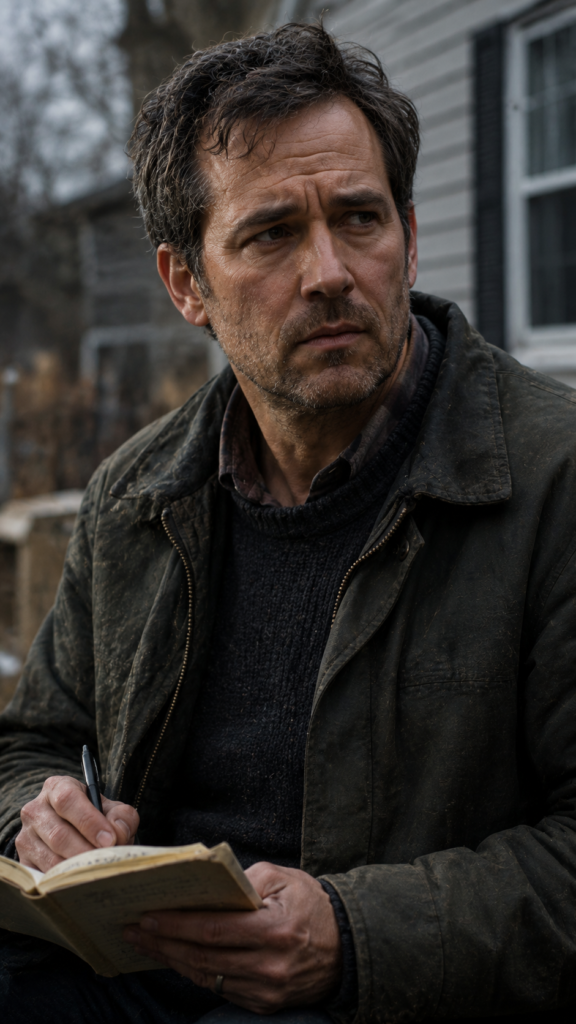
Troy was a managing director once. He ran money for four hundred families from a corner office on the twenty-first floor, and when the world ended the job ended with it, leaving behind a man who still dresses for it: cold-water shave, straight razor, a blue dress shirt with the cuffs trimmed by nail scissors. Every morning he counts the cans in the cold room into a green-cloth ledger, two hundred and twelve of them, and every night the family eats its rations off a ten-foot mahogany table, forks squared, cloth napkins in rings.
He has been counting since he was ten years old, since the summer he caught grasshoppers for a nickel a hundred on his grandfather’s farm near Davidson and kept the columns himself. His grandfather gave him the warning the same summer: the prairie doesn’t keep a permanent ledger, and you can’t out-count the dirt. Troy believed the pencil instead. The Front is the month both lessons come due at once.

Liam Whitfield:
Liam is eleven, and he has kept radio hours since he ever figure out how to build one, haunted by the last station on the dial went off the air mid-sentence since the Light. Four coil-bound volumes now, three columns and a colour code, more than eleven hundred entries of static recorded by hand. He logs so that when a voice comes back, somebody will be on the other end who never once stopped listening.
What he can’t say out loud gets logged too: his parents’ marriage comes through the bedroom wall in registers, and he has a private code for those as well. Lately the static has been gathering itself into a rhythm, everywhere on the dial at once, twenty-six to the minute. His father says static. Liam writes SOURCE UNKNOWN. He is the first person in the house to be right about something, and the last to be believed.

Clara Whitfield:
Six years old Clara owns a country behind the garage. The dead garden, a rectangle of scoured dirt where nothing has grown since the Light, mapped into named places behind a border of raspberry canes, governed by one law: nobody is told. She keeps a worm census in her head because paper makes her mother’s face go carefully nothing. She reads her family like weather and reports what she sees, flat and certain, while the house assumes she is too young to be worth listening to.
Then, in the garden, she finds a dent in the dirt that turns out to be alive. She digs it out, waters it from a beer-bottle cap, and names it Pewter, for the metallic looking sinew in its chitin. It becomes the only creature in her life that doesn’t flinch, argue, or perform. Clara is the only one in her family who looks directly at the thing everyone else is afraid of, and chooses to love it first.
Nate Bergen:
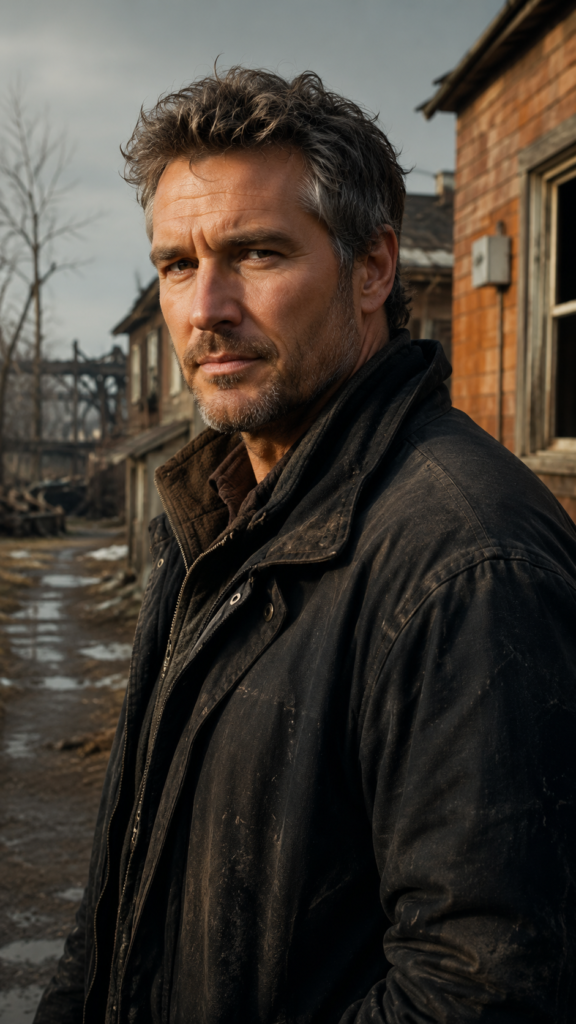
Nate Bergen is the quiet man next door and the most competent person on the street. He re-roofs his bungalow in a gale nobody sane climbs a ladder in, keeps his generator running, planes his own door blanks, and has never once done any of it for an audience. Before the Light he drove out to farms after hail and put numbers on other men’s bad luck. His kitchen smells of linseed oil and stove smoke, and on a shelf in there his late wife Ellen’s preserves sit still labelled in her hand, like a headstone.
He still collects his late wife’s jam debts, four kitchens on the street, because the debts are what there is left of her to tend. With Jenny there is a careful friendship, both of them keeping it deliberately small. He fixes what is his to fix and asks nothing of any living soul.

Deb Callahan:
Deb Callahan is Jenny’s oldest friend, eleven years of auxiliary committees and gala tables since they were seated together by alphabetical accident. Deb used to be the one in a different colour of the same dress. She is blunter than Jenny, unconcerned with appearances, and the only person left who tells Jenny the whole truth, and tells her with love in it. Her verdicts arrive like standing in front of an open oven.
Her place four streets over is a different species of survival: rolled cigarettes stubbed and saved, a rifle on pegs, coveralls, and a brother who welds and keeps bees. Down at the rail yard there is a grain terminal with sixty-odd people, a drilled well and walls of concrete, and Deb has a truck, a plan, and a standing offer with Jenny’s name on it. Her version of a welcome: “Get in before you let the province in with you.”
Walt Higgins:
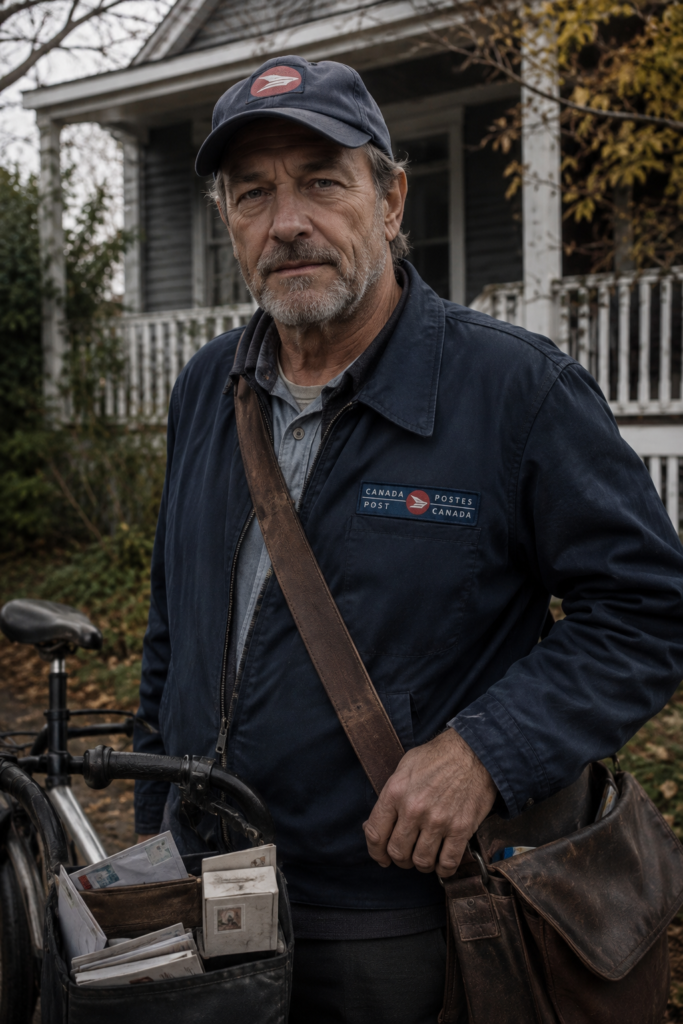
Walt Higgins is the mailman. Decades after the last stamp was cancelled he still runs his route six days a week by bicycle: flyers pulled out of rubble, a hand-press church newsletter, real letters marked and re-dated in pencil. He lives in rooms over the old dry cleaner on Second, the bell on his bicycle polished, the next day’s route sorted at his door in bundles tied with string before he sleeps.
Delivering nothing, most of the street would have said once. Nate Bergen puts it better: people miss regular more than they miss good. What the route actually carries is the whole scattered nervous system of the south side, moving at bicycle speed.
 Stéphane Roy is a lifelong reader and writer with a deep love for science fiction, apocalyptic worlds, and tightly constructed mysteries. This is his first novel. He lives in the Yukon with his dog and his aquarium, where long winters, silence, and wide, sometimes glowing, skies leave plenty of room for imagining the end of the world, and what might come after it. He is also waiting, with cautious optimism, for the aliens to finally reveal themselves and straighten us all out.