
CREATURES FROM THE DRIFT NOVEL
The Drift novel probably features some of the strangest creatures in the entire Warriors of the Lat Days universe. From blue Coyotes to Comsic horror creatures literally so big they disappear into the clouds, for a variation of the infamous Montreal melon that does not take well to being picked to giant dinosaurians roosters and Komodo sized Salmanders, you are in for a treat with the Drift Creatures!
BLUE COYOTES
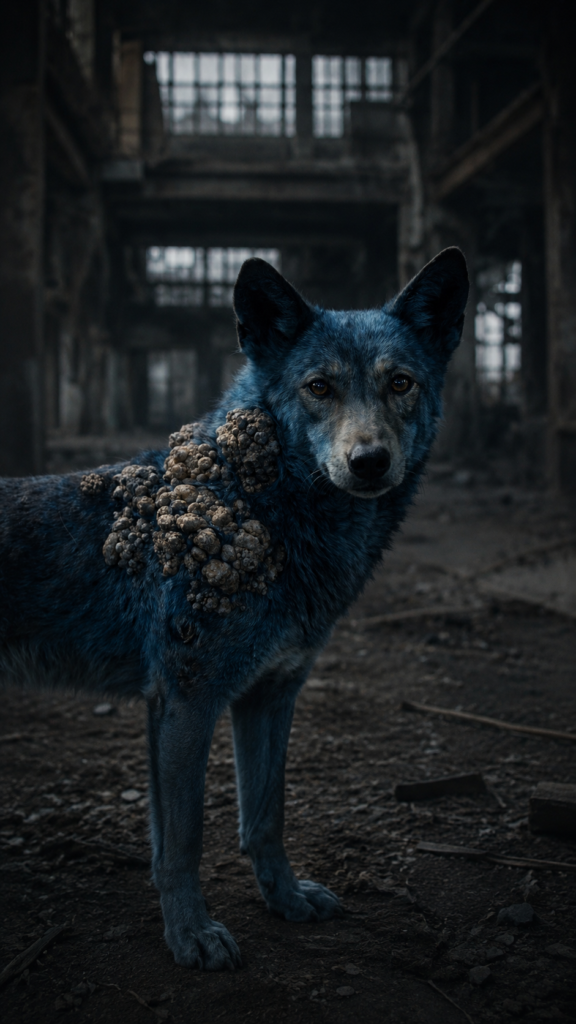
The Blue Coyotes have been transformed by radioactive Fallout and a parasitic fungal infection that blankets their bodies in dense, rock-like tumours. Their unnatural blue coats make stalking prey in the open nearly impossible, so they have adapted in unexpected ways.
Among the shadows of abandoned factories, warehouses, and crumbling homes, they rely on patience, intelligence, and coordinated ambushes rather than speed. They watch silently from dark interiors, learning routines, testing intruders, and striking only when escape has become impossible.
In the Last Days, few predators are as relentlessly cunning, or as disturbingly patient.
DEUX-MONTAGNES EELS
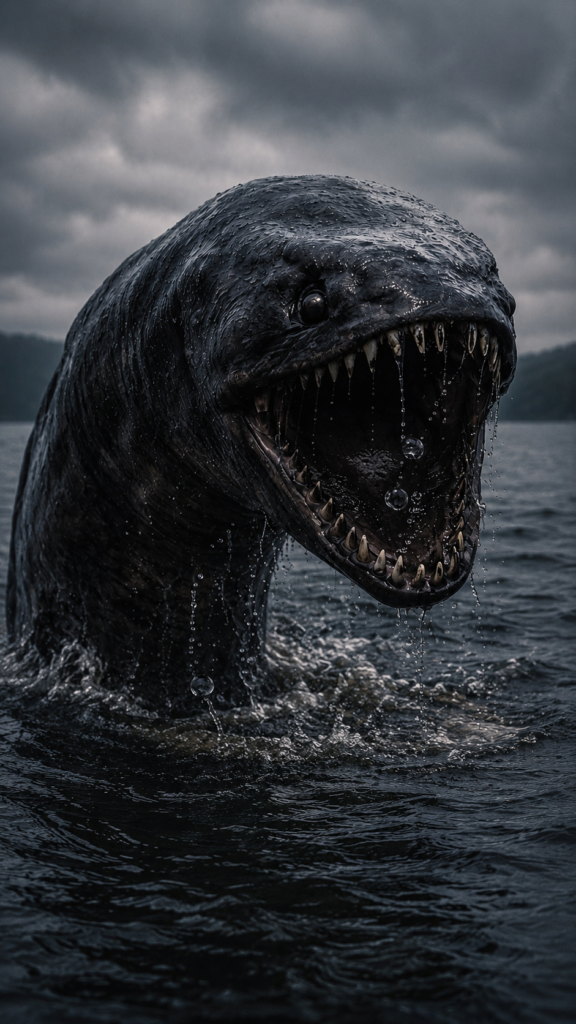
The Deux-Montagnes Eels are among the most feared predators in the waters west of Montréal. Growing well over twelve metres in length, these colossal creatures inhabit the stagnant remains of the former Lakes of Two Mountains and Saint-Louis, where decades of ecological collapse have left the water nearly devoid of oxygen. To survive, they rise slowly to the surface, gulp air into specialised chambers, then release it in long chains of bubbles that eerily disturbs the otherwise still water.
Highly territorial, the eels attack almost anything that enters their domain. Rafts, canoes, ferries, and even larger barges are routinely rammed, overturned, or dragged beneath the surface without warning. Their aggression has made navigation virtually impossible.
With every bridge linking western Montréal destroyed during the collapse, the eel-infested lakes have become an impassable natural barrier. Entire communities on the island’s western edge remain isolated, their only connection to the outside world blocked by the silent giants lurking beneath the dark, bubbling waters.
GLOWERS
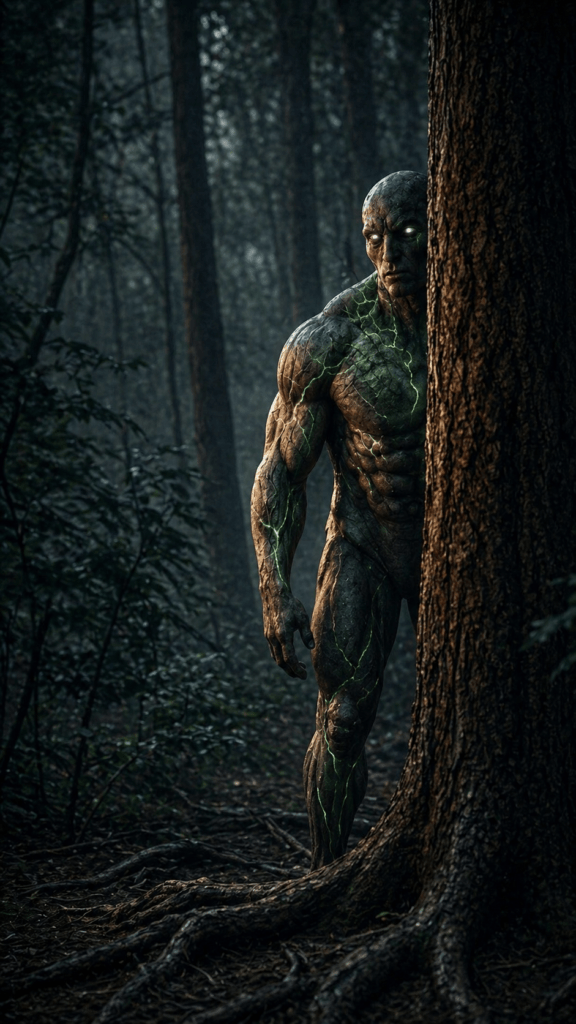
The Glowers are pale, bioluminescent servants of the Hive who move through the Stadium and its tunnels with eerie synchronization, carrying the Pressure that forces thought, breath, and movement into alignment. Their fungal light pulses unevenly beneath translucent skin, and their presence alone can induce paralysis, seizures, panic, or submission in those exposed to the Field they project.
They act less like soldiers than living extensions of the Hive itself: maintaining barricades, controlling prisoners, managing waste, and preserving order through psychic compression rather than open violence. Around them, individuality weakens, breathing synchronizes, and resistance begins to feel physically painful.
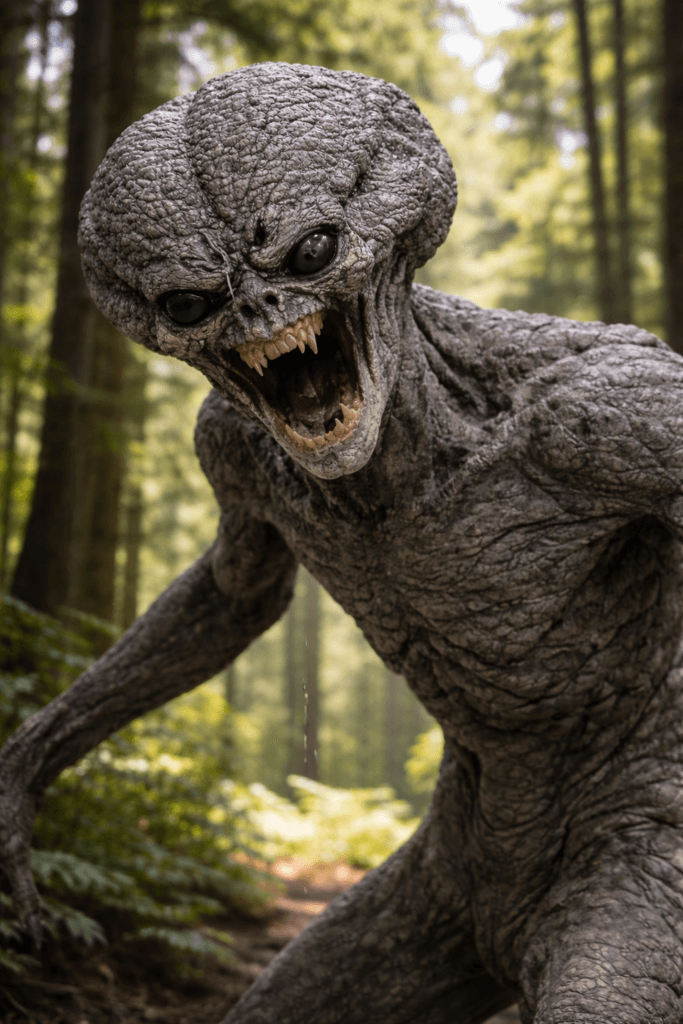
GREY MUTANTS
The Grey Mutants are human beings warped by prolonged exposure to the Hive pressure, industrial runoff, and the poisoned ecosystems spreading through the ruins of Montréal.
Their skin takes on pale grey tones mottled with mineral growths, chemical burns, or fungal lesions, while their bodies adapt unevenly to the hostile environment around them. Some remain recognizably human beneath the damage; others move and behave in ways that feel increasingly detached from ordinary thought or emotion.
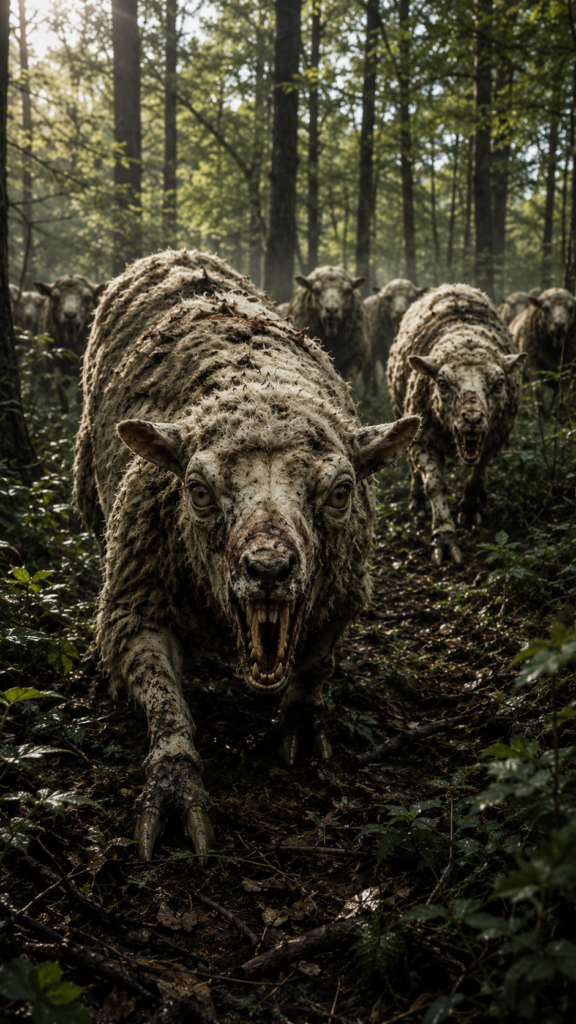
SHEAR-MOUTHS
Once ordinary livestock from the heritage farms of Bois-de-la-Roche, these sheep adapted to a world where predators vanished and survival favored the hunters.
Decades of natural selection transformed them into coordinated pack predators without erasing their unmistakable ovine appearance.
Their powerful jaws, forward-focused vision, and hooked climbing hooves make them relentless pursuers through dense woodland, while their thick, debris-covered fleece allows them to disappear into the forest until they are already charging.
From a distance, they still look like peaceful sheep. Up close, they are among the western forest’s most efficient apex predators.
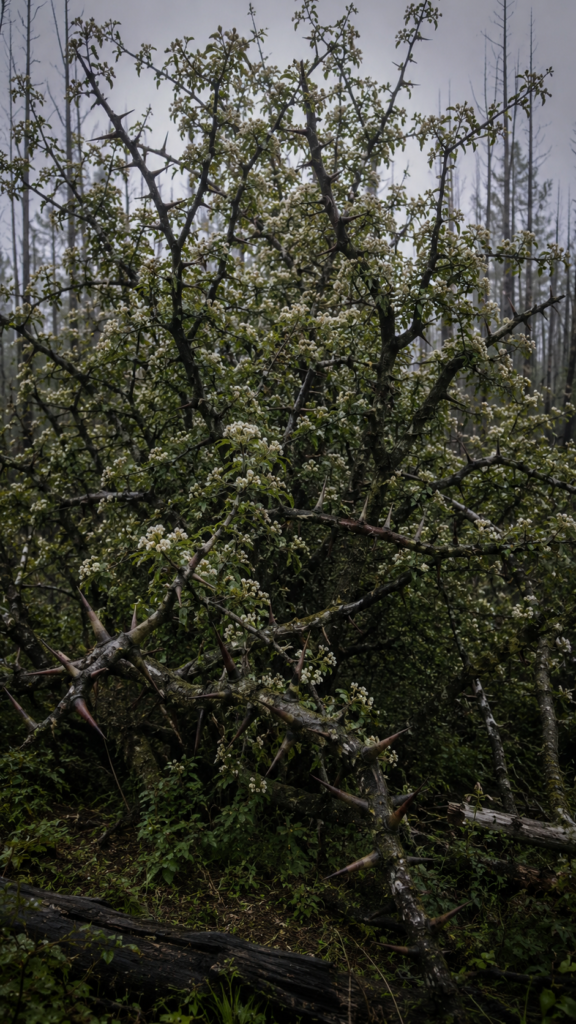
Quebec Hawthorn
(Crataegus submollis)
Also known as the northern downy hawthorn, this large shrub or small tree is native to northeastern North America, featuring stout thorns, white spring blossoms, and heavy crops of edible red fruits.
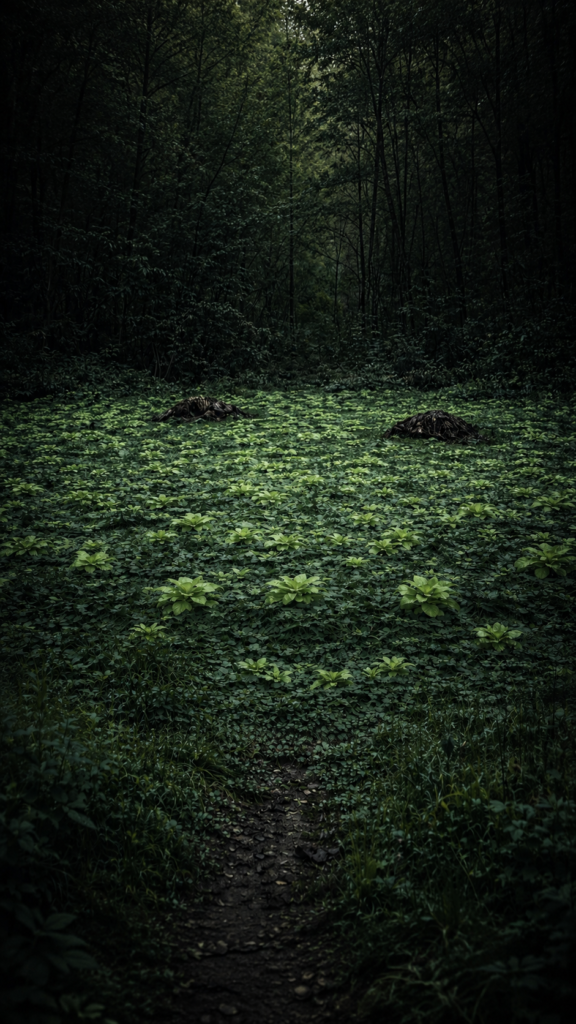
DROSERA CARNIVOROUS PLANT
Mutated sundew Montreal carnivorous plant (Drosera rotundifolia). A ground-covering carnivorous plant trap Una and Dan stumble into inside the Morgan Arboretum, stepping off-path onto “ground that looked no different than anywhere else.”
GALLUSES
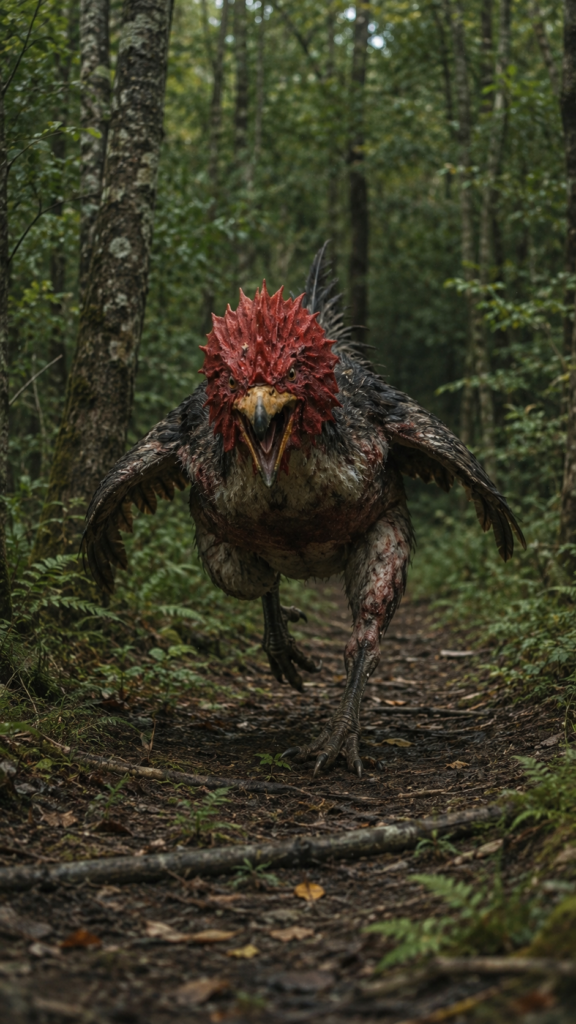
Feral descendants of the roosters and chickens that once roamed the old Cap-Saint-Jacques farm before the Light, Galluses have slowly reverted into something far older than domestic fowl. Standing up to six feet tall, these vicious predators hunt in relentless packs, using speed, powerful talons, and sheer aggression to overwhelm almost anything in their path. Underestimating a Gallus is often a fatal mistake.
The Colossus of Rivière-des-Prairies
No one knows what it is.
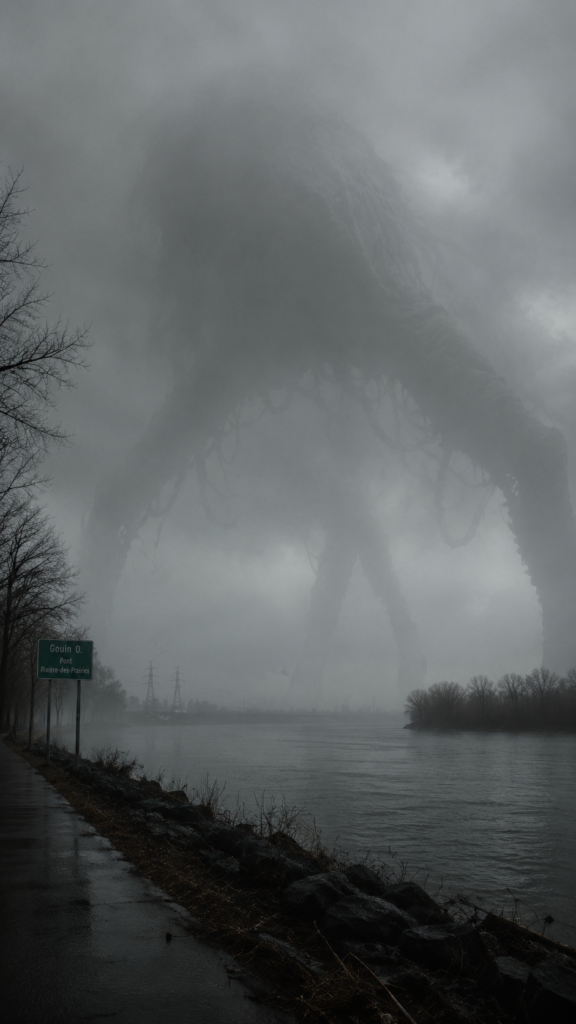
The creature stands astride the Rivière-des-Prairies, one pair of immense legs planted on the shores of Montréal, the other on Île Jésus. Its body rises so high that it disappears into the clouds, leaving only impossible silhouettes shifting within the fog.
It never appears to move. It never descends.
At irregular intervals, it releases a deep, resonant call unlike any known animal: a low, mournful sound that seems less heard than felt, vibrating through the air across the entire island. Those who have stood beneath it describe the sensation as the sky itself taking a breath.
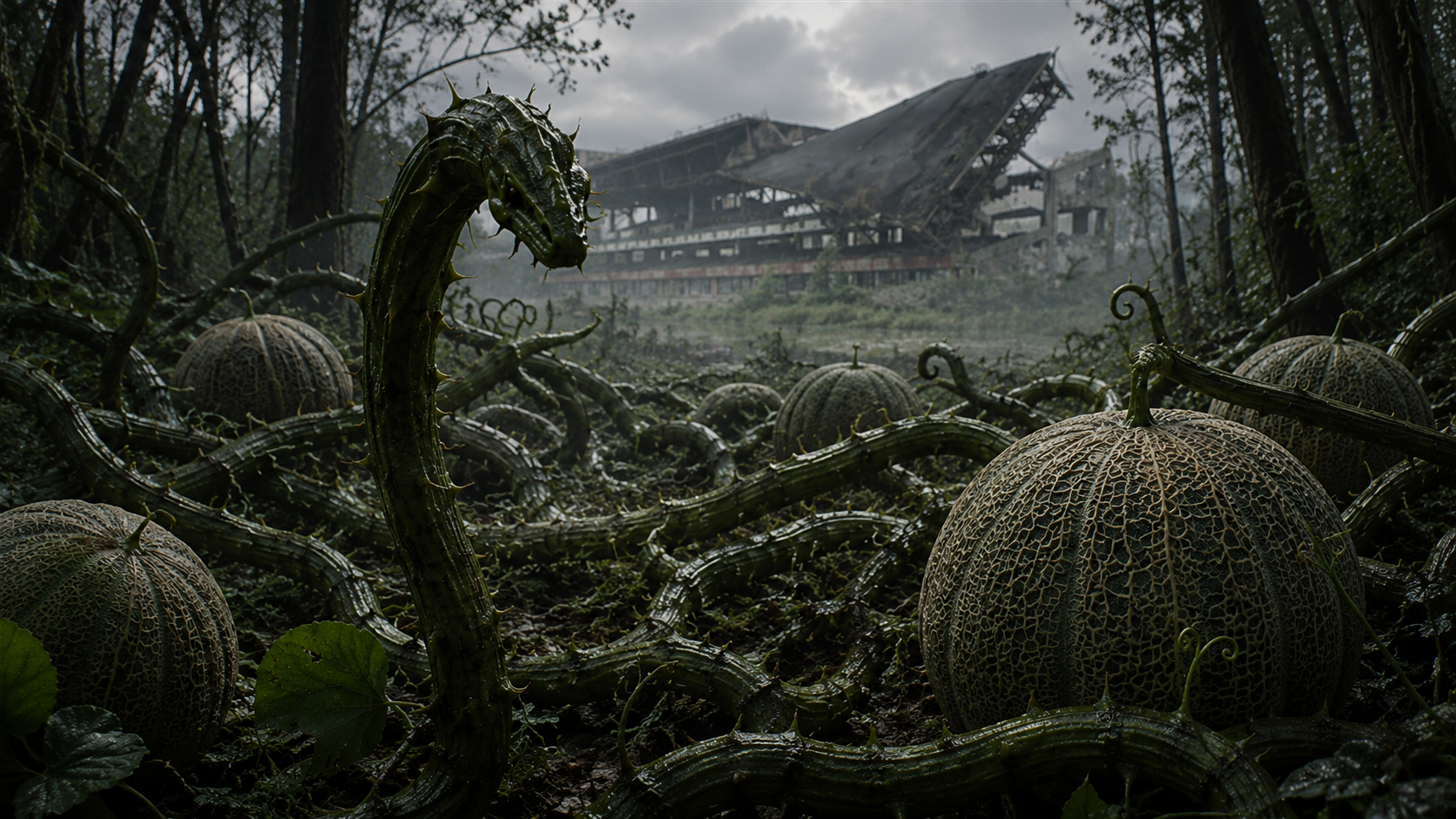
MONTREAL MELONS
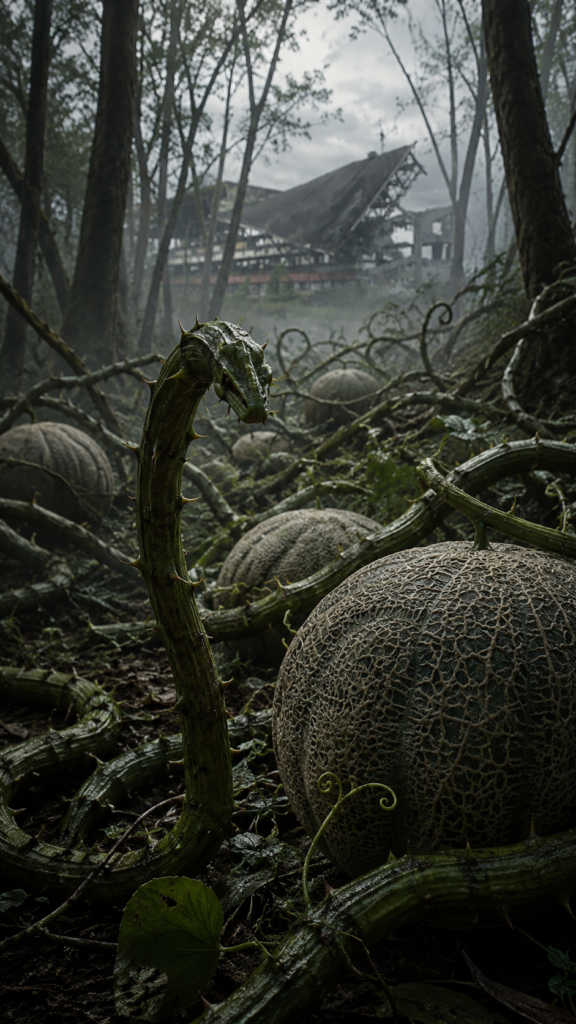
Before the collapse, the Montreal melon was a delicacy grown nowhere else on Earth: hand-pollinated, fed on racetrack manure, and gone by the 1950s. It shouldn’t exist anymore. It does now, in a forgotten field along the 15, bigger than anyone ever grew it and considerably less polite about being picked.
The vines don’t hunt. They wait, coiled flat and patient across an old horse track, until something reaches for the fruit, then they climb, constrict, and strike close enough to a face to feel deliberate. Survivors who make it out with a slice will tell you it’s worth every scratch. The smell alone, sweet and spiced, is reason enough to risk it.
Just don’t forget to spit the seeds. That’s exactly what it’s counting on.
DUNG BEETLE
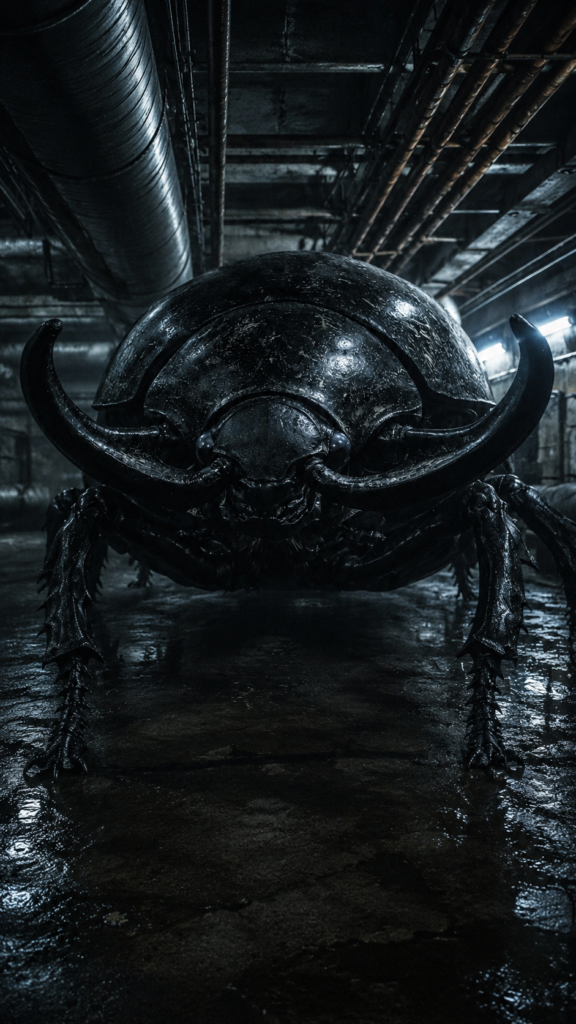
The colossal dung beetles of the old Des Carrières Incinerator have made the cavernous ruins their kingdom. In the years after the Light, the facility became an improvised morgue, its vast stores of human remains sustaining the colony long enough to thrive. While carrion keeps them alive, it is only a substitute. Their true preference remains dung, a resource now far scarcer than death itself.
The darkness of the incinerator, combined with mountains of decaying leaves that have accumulated through collapsed roofs and broken walls, provides everything they need. The leaves serve as both food and the raw material for immense nesting chambers hidden deep within the ruins.
Despite their intimidating size, these beetles are not naturally aggressive. They rely first on intimidation, raising their armored bodies, spreading their massive horns, and producing a deep, resonant hiss that echoes through the concrete halls. Most intruders retreat long before combat becomes necessary. Those that ignore the warning rarely leave the incinerator.
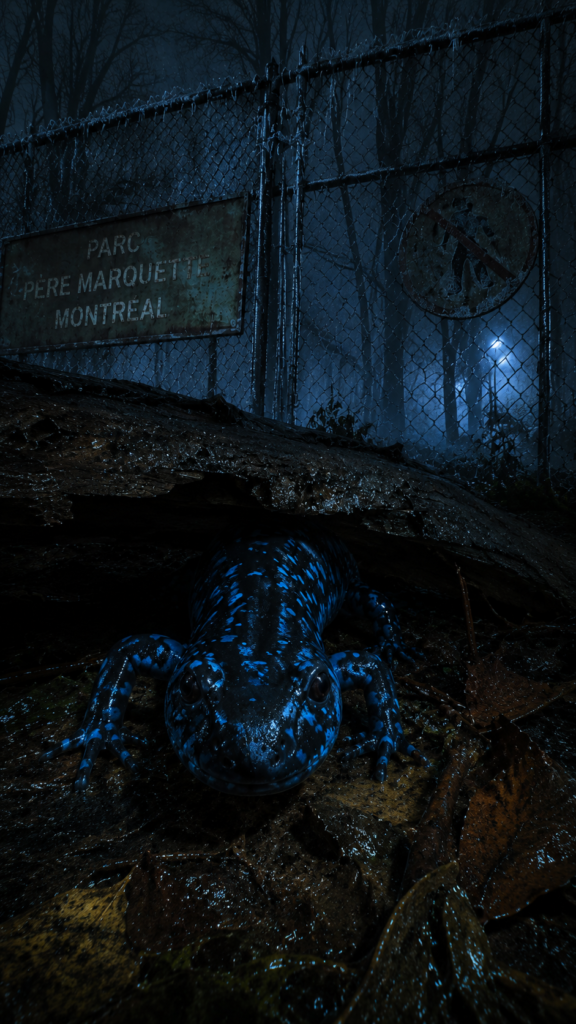
BLUE SPOTS (SALAMANDER)
Nocturnal carnivorous salamanders, mutated descendants of the blue spotted salamanders native to several Montreal parks, the Blue Spots are now about the size of a Komodo Dragon and fierce night time predators.
 Stéphane Roy is a lifelong reader and writer with a deep love for science fiction, apocalyptic worlds, and tightly constructed mysteries. This is his first novel. He lives in the Yukon with his dog and his aquarium, where long winters, silence, and wide, sometimes glowing, skies leave plenty of room for imagining the end of the world, and what might come after it. He is also waiting, with cautious optimism, for the aliens to finally reveal themselves and straighten us all out.