
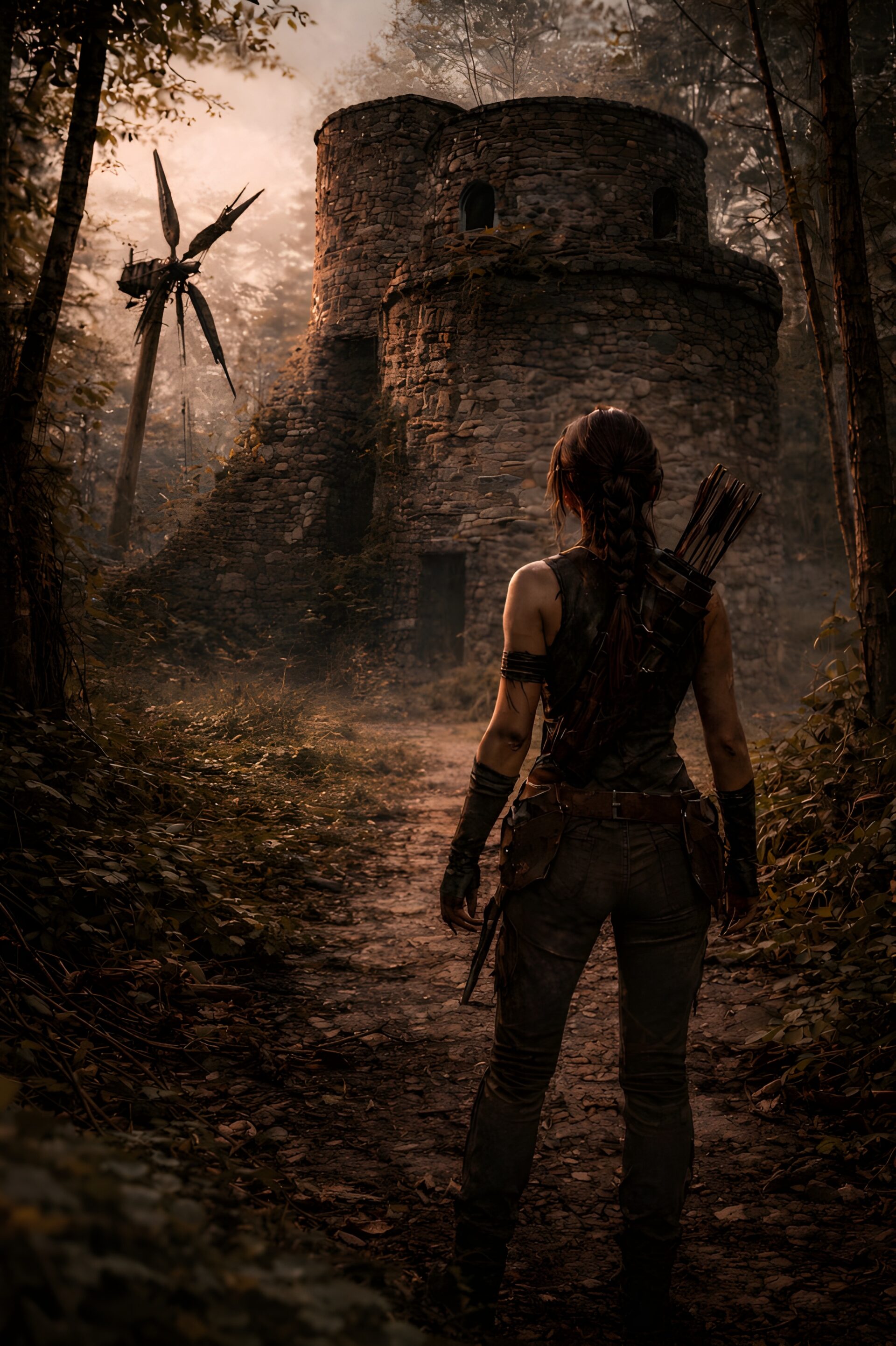
DYSTOPIAN TROPES OF BOOK III: THE DRIFT
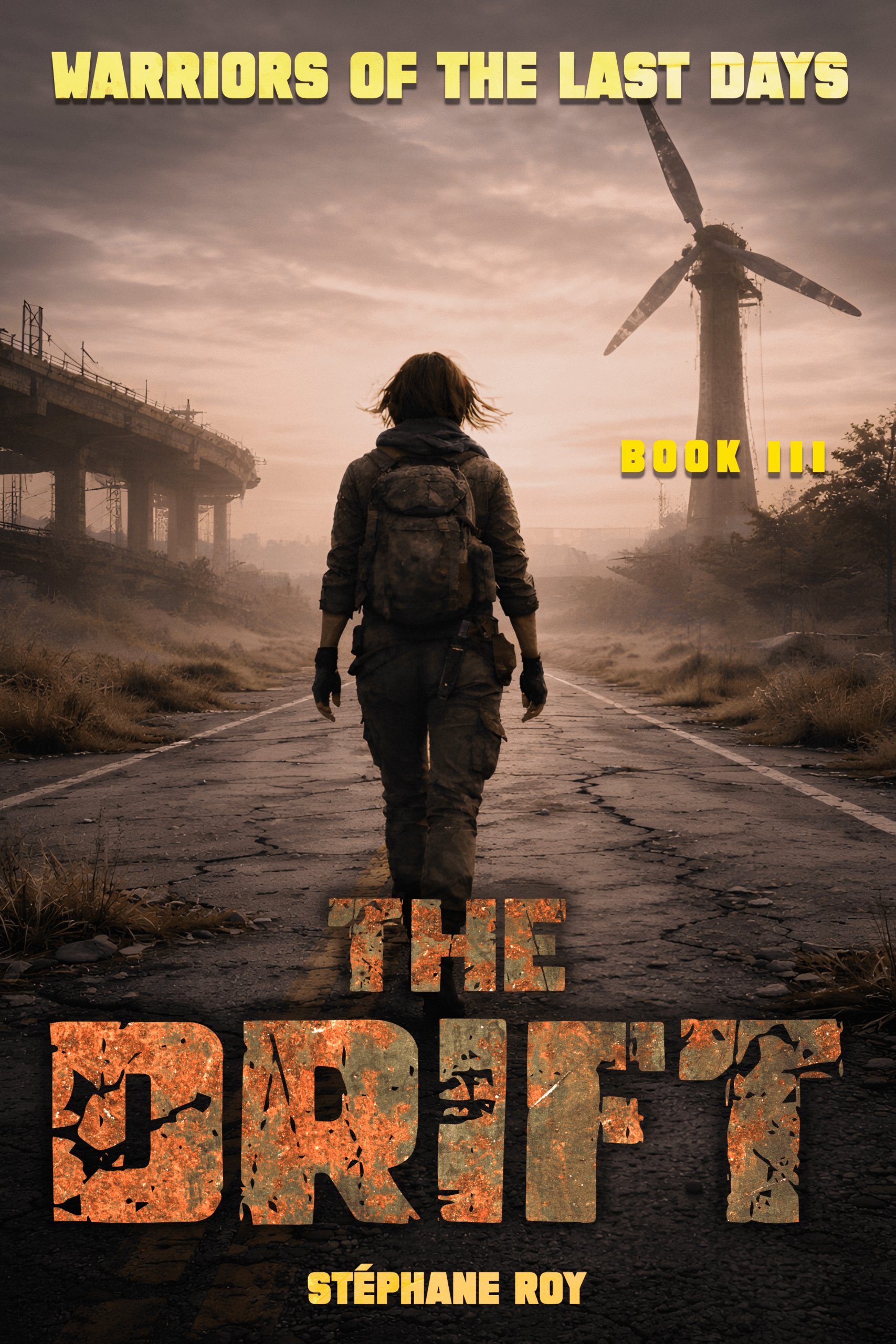
CORE STRUCTURAL TROPES FOR BOOK III
1. After the Escape
The story that happens after the break.
The exodus already occurred. There is no triumphant arrival.
2. Motion Without Destination
Movement continues, but without a promised land.
Travel is maintenance, not progress.
3. The Dissolving Objective
Earlier volumes had clear systemic antagonists.
Here, no single structure dominates. Goals thin out.
4. Attritional Narrative
Conflict accumulates through exhaustion, weather, distance, injury, loss — not confrontation.
5. The Long Middle
The book inhabits what most stories compress:
The time between collapses.
AGENCY & CHARACTER TROPES – BOOK III
6. The Survivor Without Myth
Una is no longer “the refuser” in a dramatic sense.
She becomes someone who continues.
7. Erosion of Heroic Framing
No speeches. No rallying.
Small decisions replace symbolic gestures.
8. Fractured Companionship
Alliances are provisional.
People travel together until they don’t.
9. Deferred Identity
Who someone is becomes unclear without institutions defining them.
10. Carrying the Dead Forward
Loss is cumulative but not cathartic.
Grief becomes texture, not climax.
WORLD & SYSTEM TROPES – BOOK III
11. Dead Infrastructure
Remnants of old systems exist but no longer respond.
12. Residual Logic
Rules from previous regimes still shape behavior, even when authority is gone.
13. Environmental Indifference
Nature is not antagonist or ally. It simply persists.
14. Microclimate Instability
Unpredictable pockets of safety and danger.
15. Scarcity Without Governance
No one allocates. No one records.
Scarcity is raw.
THEMATIC TROPES – BOOK III
16. Entropy Over Evil
No villain. Only decay.
17. Freedom as Exposure
Without systems, survival becomes harder, not easier.
18. Meaning Without Structure
Purpose cannot rely on ritual or ledger anymore.
19. Survival as Habit
Living becomes muscle memory.
20. Continuation as Defiance
Refusal becomes quieter: continuing itself is the act.
EMOTIONAL EXPERIENCE TROPES – BOOK III
21. Sustained Unease
Low-grade tension replaces spikes.
22. No Clear Escalation Curve
Scenes vary but do not build toward a single confrontation.
23. Ambiguous Stakes
Threats emerge and recede without tidy resolution.
24. Emotional Diffusion
Impact spreads over chapters rather than exploding in one.
25. The Cruel Plateau
The book resists dramatic turning points.
Readers must endure alongside characters.
GENRE SUBVERSIONS – BOOK III
26. No Rebellion Arc
No underground movement consolidates.
27. No Replacement Order
No proto-society forms convincingly.
28. No Restoration of Morality
Goodness does not grant advantage.
29. No Villain’s Face
Conflict is ambient.
30. No Victory Frame
The ending is continuation, not triumph.
SUMMARY
THE DRIFT is the volume that removes spectacle and confrontation, leaving only endurance. It explores what happens when systems dissolve but nothing better replaces them. It is structurally quieter, emotionally harsher, and philosophically more austere than the surrounding volumes.
FREQUENTLY ASKED QUESTIONS
What is a trope?
A recurring pattern, character type, or structural device that appears across many stories in a genre. Tropes are not flaws, they are the shared vocabulary of storytelling. What matters is what a writer does with them.
What is a subversion?
When a story uses a familiar trope but deliberately breaks the expectation attached to it. Not to be clever, but because the story’s logic demands it.
Is this series for me?
If you read dystopia for world architecture, systemic logic, and character behavior under pressure: yes. If you need a protagonist who figures it out and wins, probably not, or at least not in the way you’re expecting.
Why list tropes at all — doesn’t that spoil the book?
Knowing a story uses “the system is the villain” doesn’t tell you what happens any more than knowing a film is a tragedy tells you who dies. Tropes describe structure, not plot.
How is this different from other dystopian series?
Most dystopia is about resistance. This series is about what happens before resistance becomes possible and whether it ever does.
© Copyright 2026 WARRIORS OF THE LAST DAYS All rights reserved Privacy Policy
 Stéphane Roy is a lifelong reader and writer with a deep love for science fiction, apocalyptic worlds, and tightly constructed mysteries. This is his first novel. He lives in the Yukon with his dog and his aquarium, where long winters, silence, and wide, sometimes glowing, skies leave plenty of room for imagining the end of the world, and what might come after it. He is also waiting, with cautious optimism, for the aliens to finally reveal themselves and straighten us all out.