
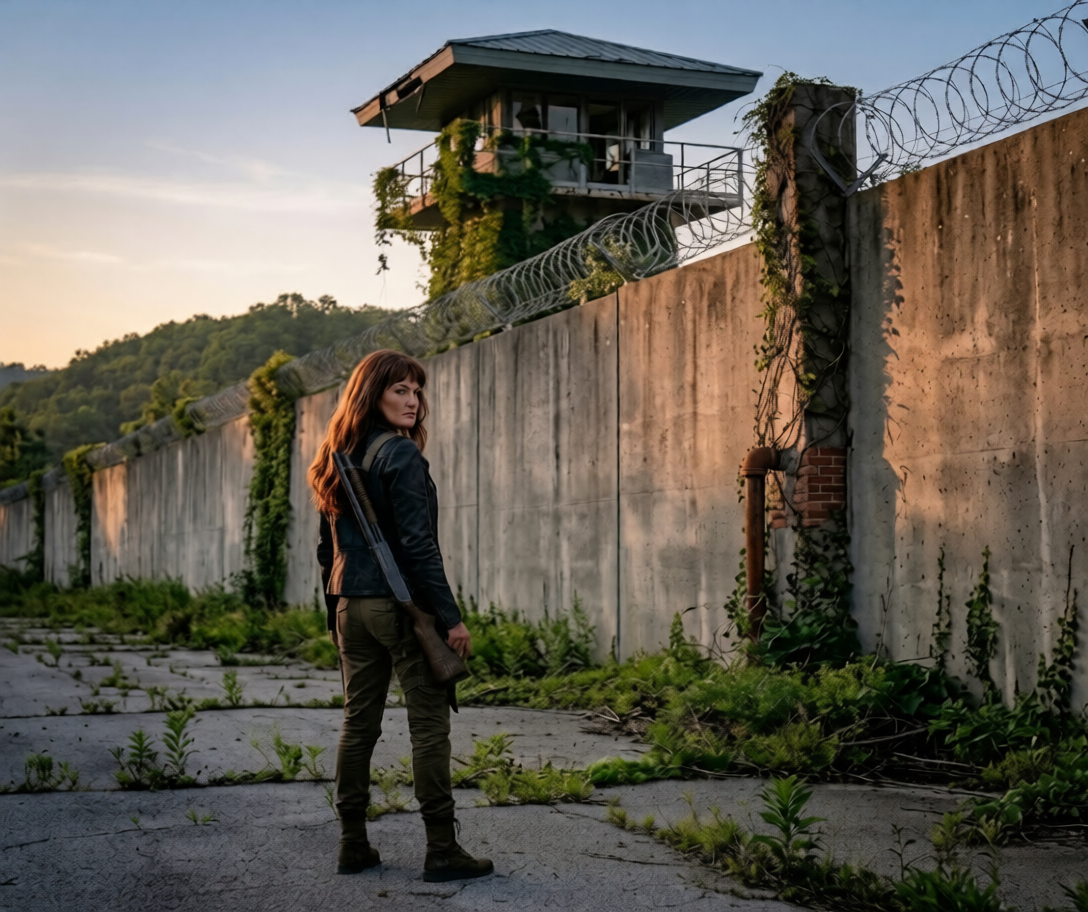
Post-Apocalypse Stories Set in Prisons and Canadian Jails
Prisons are already worlds unto themselves.
They possess their own hierarchies, economies, rules, myths, and systems of power. Walls separate inmates from society, routines govern every aspect of life, and survival often depends as much on social intelligence as physical strength.
Now imagine that society outside those walls suddenly disappears.
The guards stop showing up. The radios fall silent. No food trucks arrive. No court dates are scheduled. No government orders come down the chain of command. The prison remains. Everyone else is gone.
It is remarkable that post-apocalyptic fiction has not explored this premise more often because prisons may be among the most naturally compelling settings in the entire genre.
A correctional institution after the end of civilization is simultaneously fortress, siege castle, refugee camp, dictatorship, and laboratory for human behaviour.
And when that prison happens to be a Canadian maximum-security institution, the possibilities become even more fascinating.
Why Prisons Make Exceptional Post-Apocalyptic Settings
The prison environment already strips away many assumptions of ordinary life.
Inside a correctional institution:
- Freedom is restricted.
- Resources are rationed.
- Violence is always a possibility.
- Authority is centralized.
- Communities become tribal.
- Reputation matters.
- Every object has value.
These conditions closely resemble many post-apocalyptic societies.
In fact, the collapse of civilization simply removes the final external structure. The result is immediate and terrifying.
Questions emerge instantly:
- Who takes control?
- Do inmates cooperate or fracture into factions?
- What happens to staff still trapped inside?
- Should prisoners be released?
- Is the prison safer than the outside world?
- How long can supplies last?
- Does justice still exist after the justice system disappears?
These questions sit at the heart of some of the genre’s most compelling stories.
Existing Post-Apocalyptic Fiction Featuring Prisons
While surprisingly uncommon, several notable works have explored the intersection between apocalypse and incarceration.
The Heart Goes Last by Margaret Atwood
Perhaps the most significant Canadian contribution to prison-centred dystopian fiction is Margaret Atwood’s The Heart Goes Last.
Set after a devastating economic collapse, the novel follows a married couple who join the “Positron Project,” a bizarre social experiment in which participants alternate between living in comfortable suburban homes and serving time as inmates in an associated prison complex. The supposedly utopian system gradually reveals deeply disturbing authoritarian elements, exposing how confinement, surveillance, and social control can become normalised in desperate times.
Although not strictly post-apocalyptic in the traditional sense, Atwood’s novel demonstrates how prisons can become central organising institutions in a collapsing society.
It also asks an uncomfortable question:
How much freedom are people willing to surrender in exchange for safety?
Trapped: A Post-Apocalyptic Survival Thriller by Michael Robertson
Many survival thrillers have recognised the strategic value of correctional institutions.
Prisons possess:
- fortified perimeters,
- controlled entry points,
- existing food storage,
- medical facilities,
- workshops,
- defensive towers.
In Trapped, survivors fortify a prison complex against external threats, using the institution as a defensive stronghold against a collapsing world.
The concept highlights an important truth: prisons designed to keep people in can also keep dangers out.
The Prison as Fortress IN THE END OF THE WORLD
Throughout post-apocalyptic fiction, survivors constantly search for defensible locations.
Correctional facilities offer significant advantages.
High walls. Razor wire. Observation towers. Heavy steel doors. Limited access points. Independent infrastructure.
Many institutions effectively function as medieval castles built with modern materials.
Yet prisons possess a fundamental weakness. They were never designed to operate indefinitely without external support. Food deliveries stop. Fuel reserves run out. Medical supplies disappear. Water systems fail.
Sooner or later, someone must venture outside. And that changes everything.
Canadian Prisons After the Apocalypse
Canadian correctional institutions offer a distinctly different flavour from their American counterparts.
Canadian prisons generally emphasise rehabilitation rather than purely punitive confinement, creating different institutional cultures and relationships between inmates and staff. Maximum-security institutions nevertheless house some of the country’s most violent offenders and escape risks.
Canada also presents unique environmental challenges.
A prison surviving in northern Ontario, Quebec, or the Prairies after societal collapse must contend not only with violence and scarcity, but with winter.
Heating becomes essential. Fuel becomes life. Failure to maintain infrastructure during a Canadian winter could prove fatal long before violence does.
Maximum Security at the End of the World: Millhaven Institution
One of Canada’s most formidable correctional facilities is Millhaven Institution, located near Bath, Ontario.
Construction began in 1969, and the institution officially opened in 1971 as a federal maximum-security facility. Today, it houses hundreds of inmates and operates using a radial design in which living units extend outward from a central control hub, allowing staff to monitor inmate movement from a single secure location.
The institution’s design is particularly intriguing from a post-apocalyptic perspective.
Millhaven features:
- central control architecture,
- multiple secure housing units,
- reinforced steel infrastructure,
- extensive perimeter fencing,
- observation capabilities,
- limited access points.
Every movement within the prison normally passes through a central control post. In a collapse scenario, whoever controls that hub effectively controls the institution itself.
In many ways, a maximum-security prison after the apocalypse becomes a city-state.
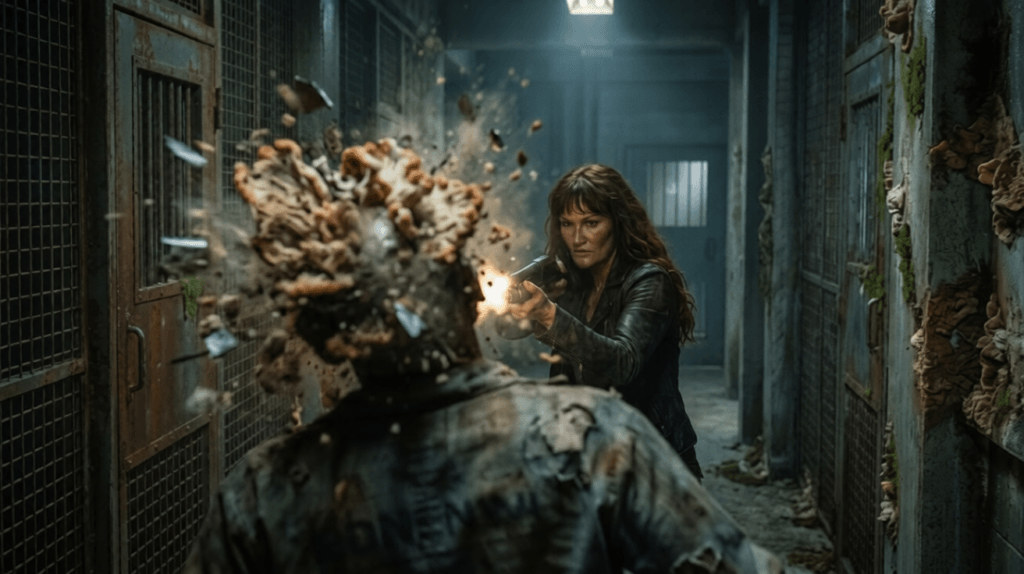
Death Row: The Apocalypse Behind Bars
One upcoming entry into Canadian prison apocalypse fiction is Death Row, set within the Warriors of the Last Days universe.

The novel takes place at Millhaven Institution after a nuclear apocalypse.
The premise is brutally simple. Civilization ends. The prison is abandoned. The inmates remain.
Maximum-security institutions contain individuals already considered too dangerous, violent, or unpredictable for lower-security environments. Remove external authority, and an entirely new social order must emerge almost immediately.
Inside the walls, inmates are left to their own devices. Outside the walls, the world has ceased to function. The prison becomes both sanctuary and nightmare.
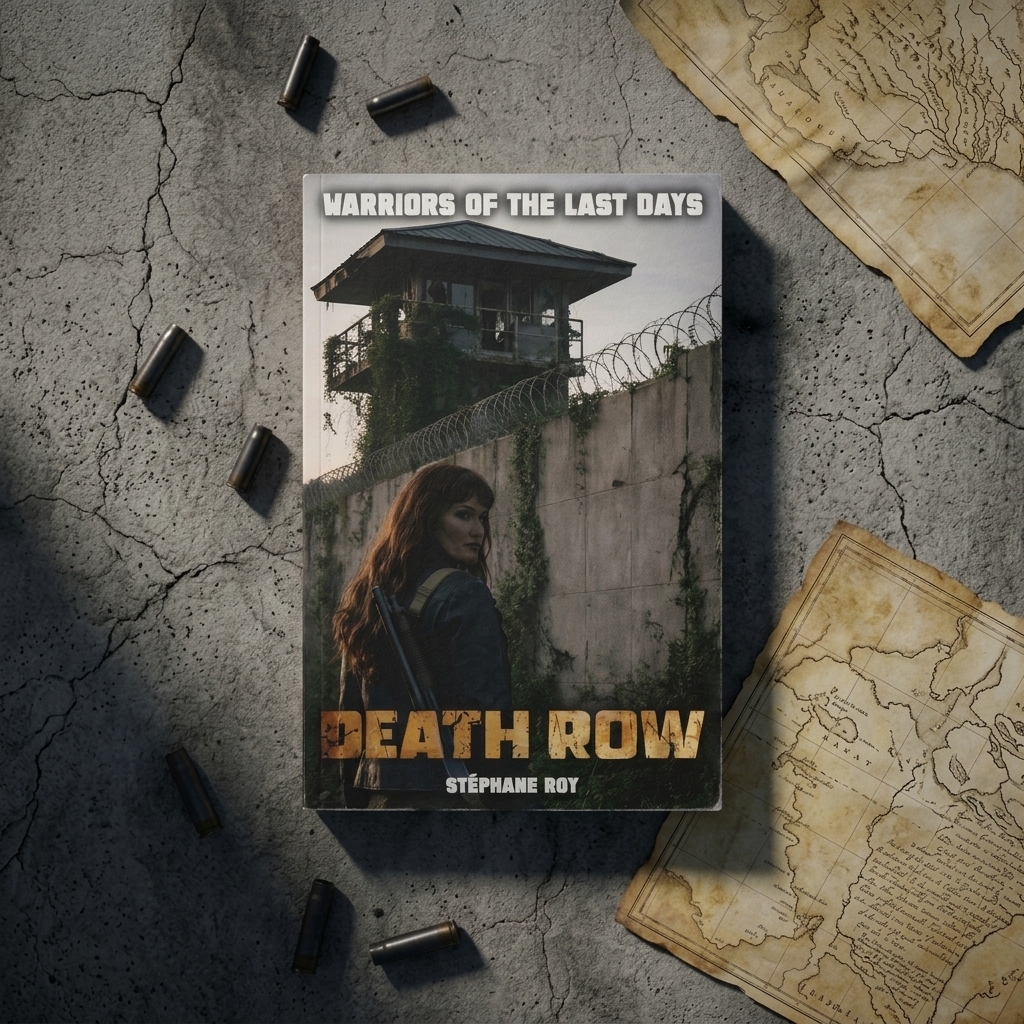
The world ended. HER HUSBAND IS LOCKED IN A PRISON. Now Nomi is going in.
After the Light, Millhaven Institution is sealed. The guards are gone. The inmates remain. Nomi hasn’t heard from her husband Clarence in five months. He went undercover inside for eight weeks. He’s still there.
She’s coming to get him out.
What she finds in the corridors is worse than organised crime. The fungus is spreading. The infected still have their minds, trapped in bodies they can’t control, desperate for blood and iron. They’re not mindless killers. They’re aware the whole time.
To reach Clarence in solitary, Nomi has to move through a population of people who are slowly becoming something else. She has to negotiate with a criminal named Cobb who reads situations the way she does. She has to decide how many people she’s willing to leave behind.
Roy helps her. Roy owes Clarence a debt from three years ago. Roy knows the building better than anyone alive.
Some people come back alive. Some people engineer their own ending.
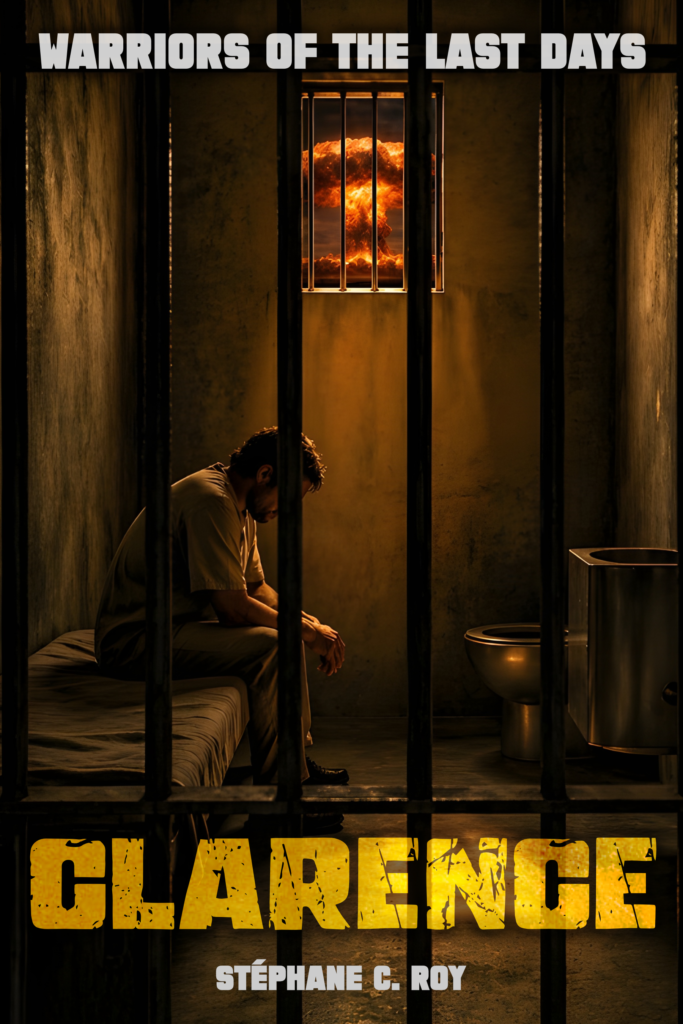
Clarence
The short story Clarence serves as a prequel to Death Row.
The story explores a question common to prison fiction yet rarely examined in post-apocalyptic narratives: Who was the prisoner before imprisonment?
Clarence’s journey examines how a man ultimately found himself incarcerated in a Canadian maximum-security institution before the arrival of the Light. More importantly, it explores why. Understanding the origins of incarceration often reveals as much about society as it does about the inmate.
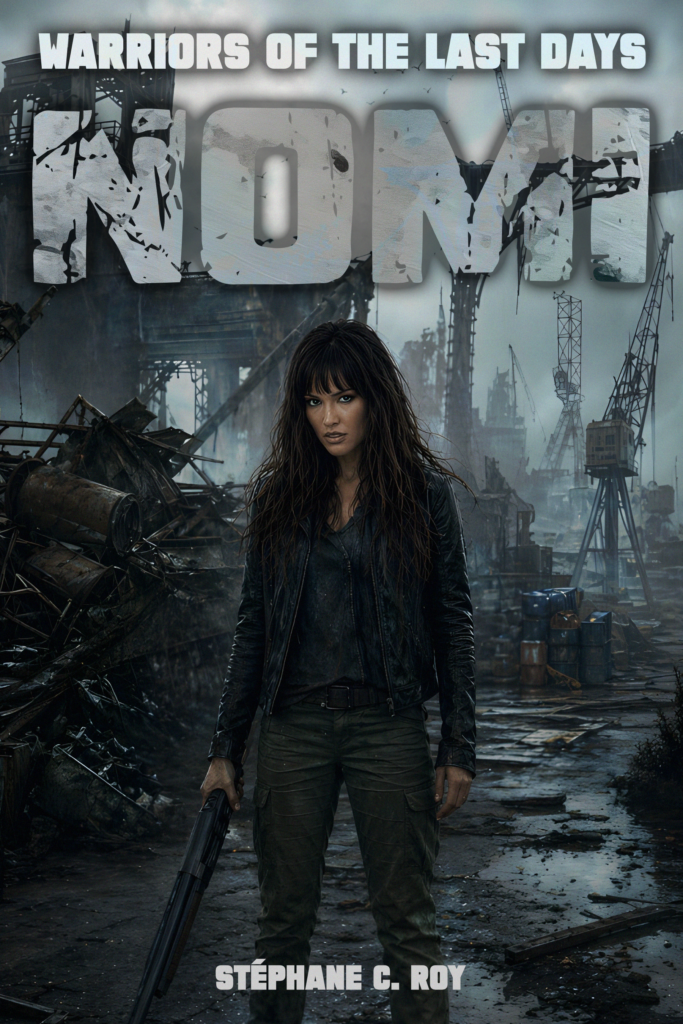
Nomi
The second prequel, Nomi, bridges the period between the apocalypse and the events of the novel itself.
Months after civilization collapses, Nomi arrives outside the walls of a maximum-security prison carrying a shotgun and a singular purpose: to free her husband.
It is a striking reversal of conventional prison narratives. Usually, prison stories begin with confinement. Nomi begins with a voluntary attempt to enter one of the most dangerous places left on Earth.
Outside the walls lies an irradiated, shattered Canada. Inside waits a prison population abandoned for months. The question is not simply whether she can get in. It is whether she can survive what she finds there.

COBB
The leader of the Millhaven jail where Clarence is imprisoned. How he got in jail and what he will do when he gets out.
Why Canadian Prison Apocalypse Fiction Matters
Most post-apocalyptic fiction focuses on cities, suburbs, or wilderness survival.
Prisons remain surprisingly under explored. Yet they naturally concentrate many of the themes the genre seeks to examine:
- authority,
- justice,
- punishment,
- redemption,
- violence,
- scarcity,
- leadership,
- community.
A prison after the end of civilization forces difficult moral questions.
Are inmates still prisoners if no government remains? Do sentences still matter? Who decides guilt? Who deserves freedom? Can a society built on punishment transform itself into a society built on survival? Canadian settings add another layer.
Cold climate, geographic isolation, and distinct correctional philosophies create stories fundamentally different from the better-known American prison apocalypse narratives.
Locked in after the End of the World indeed.
The Future of Prison Apocalypse Fiction
As readers increasingly seek fresh settings and perspectives, prisons represent one of the genre’s richest untapped frontiers. Few locations are better suited to exploring the collapse and reconstruction of society.
After all, prisons already contain many of civilization’s essential ingredients: rules, hierarchies, scarcity, hope, despair, and people trying to survive within systems larger than themselves.
Remove the outside world, and those systems do not disappear. They evolve. Sometimes into something better. Often into something far worse.
And behind reinforced concrete walls topped with razor wire, the end of the world may only be the beginning.
NOTES
Some factual information regarding Millhaven Institution’s history, architecture, capacity, and operational model is derived from official Correctional Service Canada institutional profiles and related institutional documentation.

- Post-Apocalypse Stories Set in Prisons and Canadian Jails
- Why Prisons Make Exceptional Post-Apocalyptic Settings
- Existing Post-Apocalyptic Fiction Featuring Prisons
- The Prison as Fortress IN THE END OF THE WORLD
- Canadian Prisons After the Apocalypse
- Maximum Security at the End of the World: Millhaven Institution
- Death Row: The Apocalypse Behind Bars
- Why Canadian Prison Apocalypse Fiction Matters
- The Future of Prison Apocalypse Fiction
A new post-apocalyptic story from Canada. Every month.
The earlier you join, the larger your library becomes.
Join now. Start building your library before the next hundred.
 Stéphane Roy is a lifelong reader and writer with a deep love for science fiction, apocalyptic worlds, and tightly constructed mysteries. This is his first novel. He lives in the Yukon with his dog and his aquarium, where long winters, silence, and wide, sometimes glowing, skies leave plenty of room for imagining the end of the world, and what might come after it. He is also waiting, with cautious optimism, for the aliens to finally reveal themselves and straighten us all out.