

The Mechanics
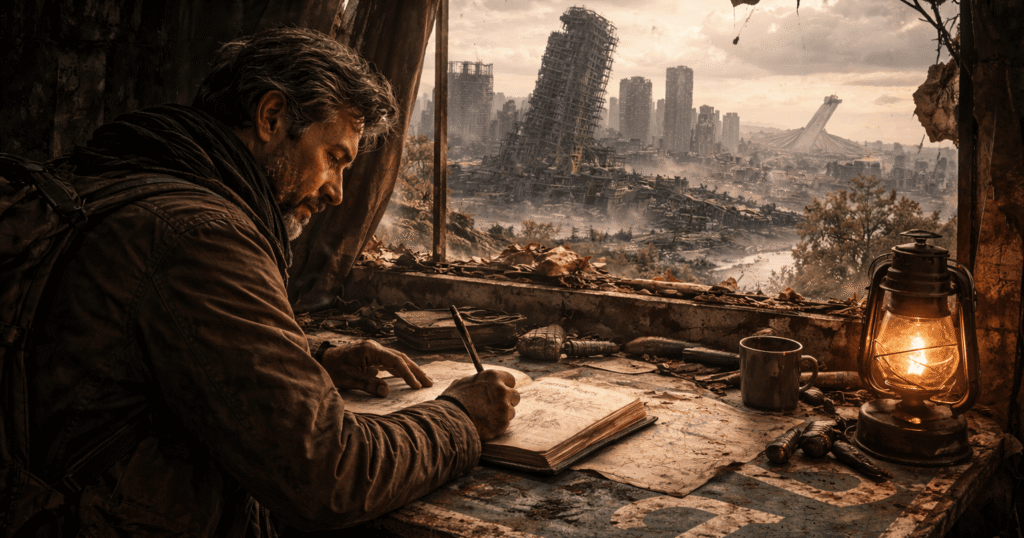
There is a practical problem that comes with writing a series like Warriors of the Last Days. There is always something happening.
A novel takes months to write, revise, proof, and prepare for publication. A short story can be written and released much faster. The series, however, does not stop while one of those things is happening. Characters move. Places change. Events have consequences. A detail introduced in a short story may eventually matter in a novel. A location mentioned almost casually in one story may become the setting for an entire book several years later.
Then there is the geography. Warriors of the Last Days takes place across Canada, and Canada is not a convenient backdrop that can be rearranged whenever a story requires it. A river has to be where the river actually is. A mountain range cannot migrate hundreds of kilometres because it would make a better scene somewhere else. Communities, roads, mines, hydroelectric projects, military installations, coastlines, weather patterns and distances all have to remain consistent.
And the characters have memories. So do the readers.
This is why the series has developed two different rhythms: a short story every month and a novel approximately every quarter. The monthly stories keep the world moving. The novels carry the larger arcs. Keeping those two things connected without allowing one to interfere with the other is one of the less visible parts of writing the series. It is also one of the most difficult.
The calendar is part of the writing
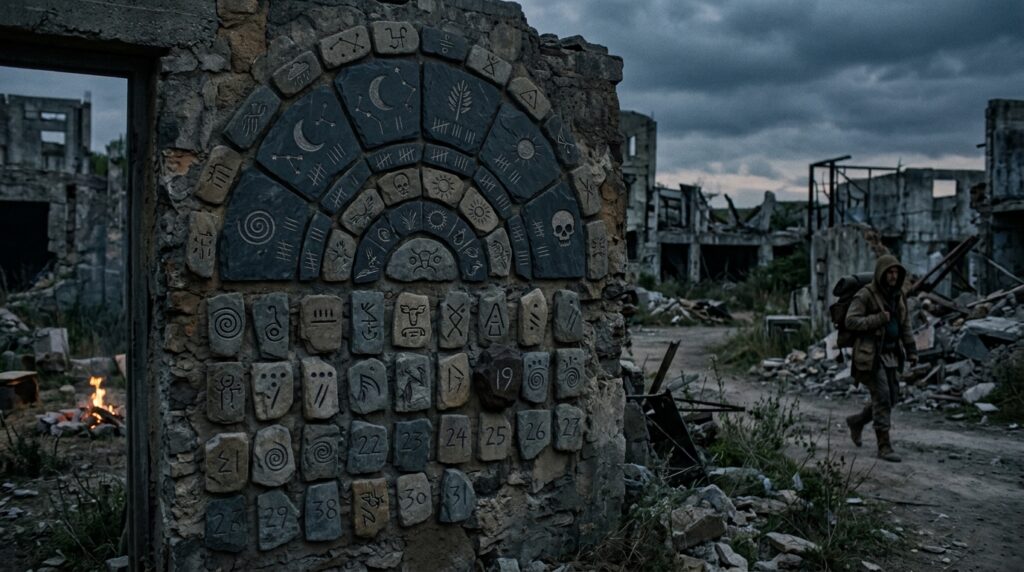
The release calendar is not simply a list of publication dates. It is part of the structure of the series.
The novels provide the major movements. They introduce characters, establish conflicts, change locations and push the larger story forward. The short stories fill in the spaces around those movements.
Sometimes a short story looks backward. Sometimes it moves sideways, following a character or group that the novels only briefly encounter. Sometimes it explores a place that has no room for a full subplot in the current novel. Sometimes it introduces an idea, creature, historical event or local legend that will remain entirely contained within that story. And occasionally, something that looks small turns out to have a longer life. That is deliberate.
The monthly story is not there simply because there needs to be something published that month. It has to have a reason to exist. The easiest way to break a large series is to treat every piece of it as equally important. If every short story introduces a new major character, a new conspiracy, a new threat and another piece of mythology that must eventually be resolved, the series becomes impossible to control. Eventually the side stories become more complicated than the main story.
That is not what I want. The novels have an arc. The short stories expand the world around that arc. That distinction matters.
The vault
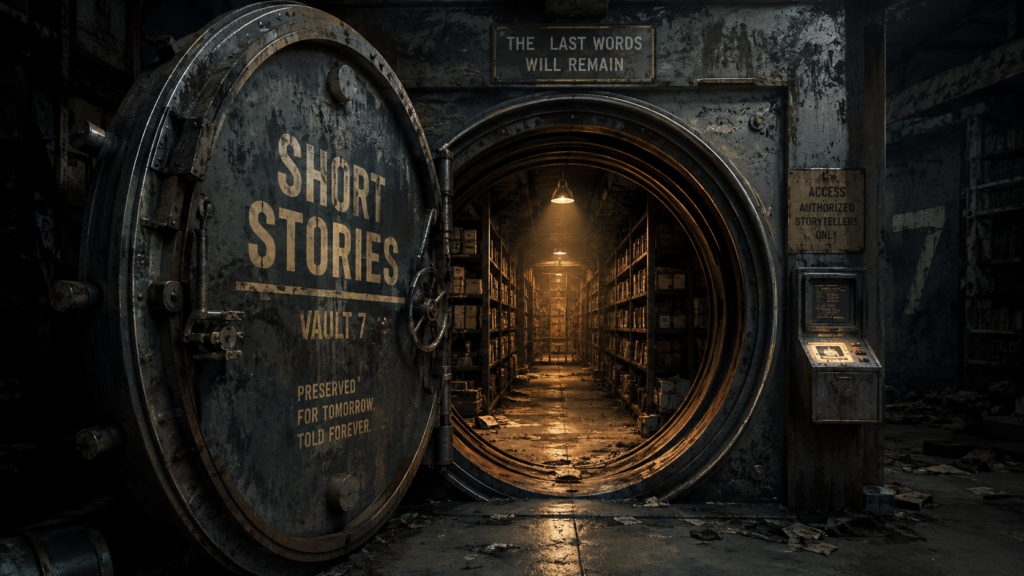
The practical solution is the vault. The vault is where the world exists independently of whichever story is currently being written. It contains the information that has to remain consistent: characters, locations, events, timelines, geography, organizations, terminology, technology, biological changes, historical details and connections between stories.
It is essentially the series bible, although that description makes it sound more static than it actually is. The world changes as the books are written. A character who appears for three pages in one story may become important later. A location that was originally just a name on a map may eventually acquire a history. A scientific idea may need to be revised as its implications become clearer.
When that happens, the change has to propagate through the rest of the world. That is one reason a series bible becomes increasingly important as a series grows.
At the beginning, you can remember almost everything. After enough stories, you cannot. There are too many names. Too many dates. Too many places. Too many relationships between events.
The vault is there so that I do not have to rely on memory. It also provides a useful second function: it shows me what I have already established before I decide what happens next.
That sounds obvious, but it prevents a surprisingly large number of problems.
Before writing a story set in a particular region, I can check what has already happened there. Before bringing back a character, I can check where that character was last seen. Before introducing a new settlement, I can check what is already known about the surrounding area.
The question is not simply, “Would this be a good story?” It is also, “Can this story exist here, at this point in the world, without breaking something that already exists?”
Canada makes consistency harder
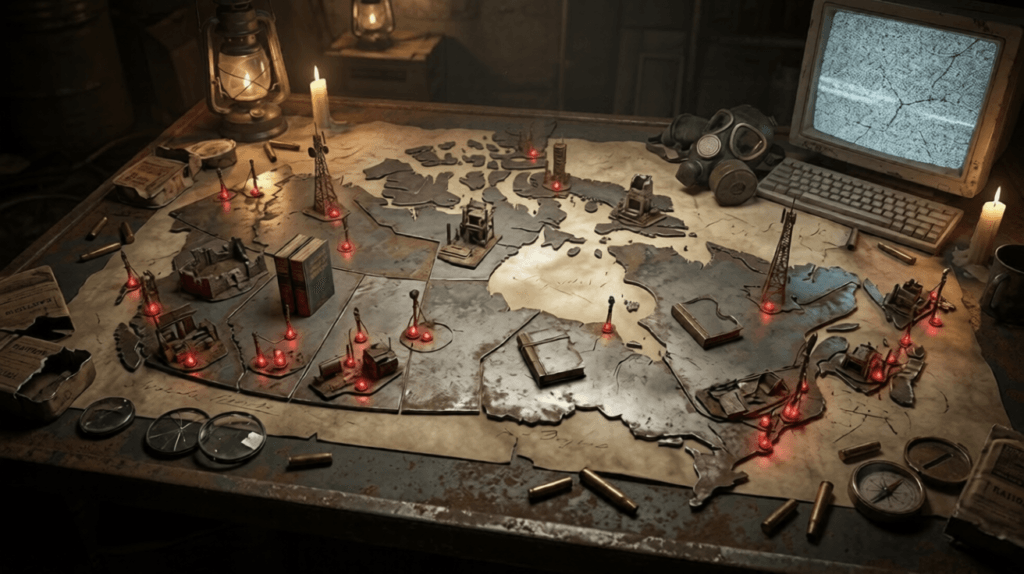
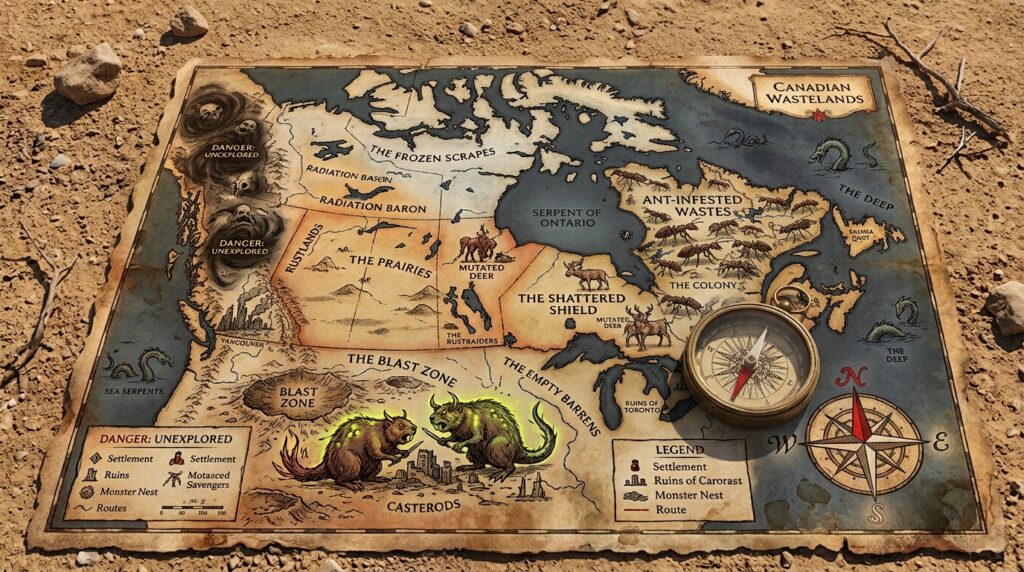
The geography is particularly important because the series is built around Canada. The map is not a decoration: it is an intricate part of the world. The physical distance between places affects the stories.
A character cannot simply decide to cross the country and arrive somewhere convenient in the next chapter. A group travelling through northern Canada has to deal with the actual scale of the territory. Weather matters. Terrain matters. Rivers matter. Roads matter. The existence or destruction of infrastructure matters. The entire ecology and biology matters.
The same applies to communities. The post-apocalyptic landscape is not a blank canvas. What existed before the catastrophe influences what remains afterward.
A mine can become a refuge. A hydroelectric facility can become strategically important. A quarry can provide shelter or resources. An abandoned military installation can have consequences long after the people who built it are gone.
The original geography remains underneath the fictional one. That gives the world a kind of resistance. The story has to work with the country rather than simply using its name. This becomes even more important when short stories are being written alongside novels. A short story can tempt you into thinking locally because it is a small piece of fiction. But it still belongs to the same Canada. The world does not reset at the end of each story.
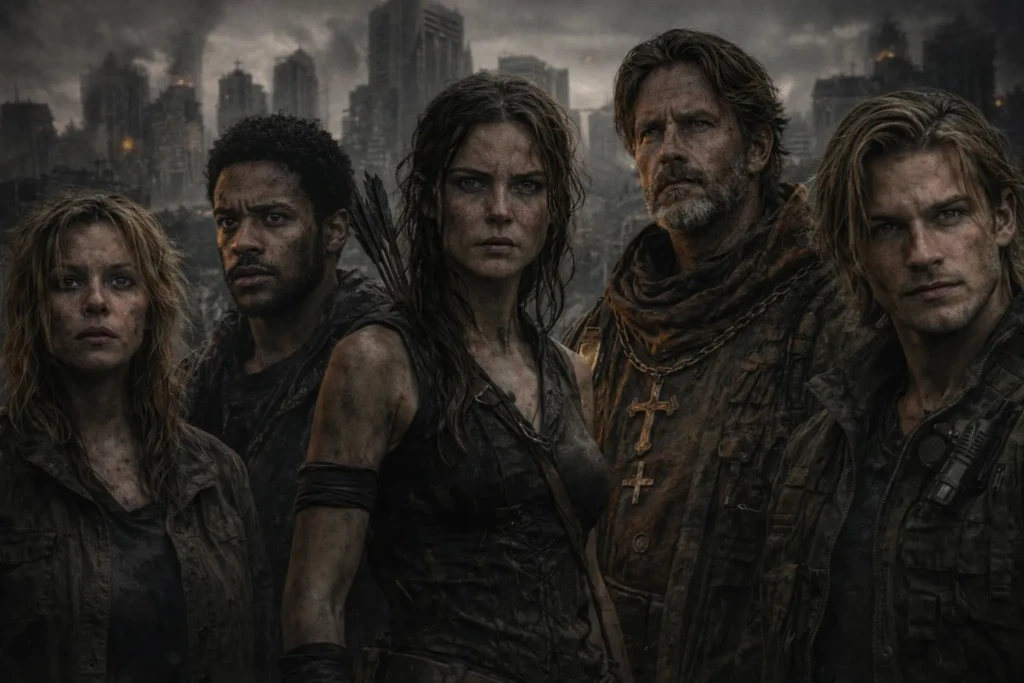
Characters have to survive the calendar too
There is another problem with releasing stories regularly: characters can become inconsistent without anyone noticing immediately.
A character might behave one way because of something that happened six months earlier in the fictional timeline. If I forget that event, the later story can quietly become wrong. That means the character record is more than a description. It needs to contain history.
Where did this person come from? Who have they met? What do they know? What do they not know? What has happened to them? What physical changes have occurred? What relationships have been established? Most importantly, what has the reader been told about them? That last question matters because the author knows more than the reader.
I may know that two apparently unrelated events are connected. The characters may not. The reader certainly should not be expected to know something simply because it exists in the author’s notes.
The vault helps maintain that distinction. It keeps track of what exists in the world and what has actually been revealed.

Short stories are not miniature novels
One of the things I have had to learn with this series is that a short story does not need to behave like a small novel. The novels have room to develop large movements. A short story often works better when it does one thing.
One place. One event. One character. One strange discovery. One problem that has to be survived. That limitation is more than useful.
It means a story can take the reader somewhere the novels cannot spend fifty pages exploring.
A story can visit an isolated community, follow an animal that has adapted to the changed environment, document an event from an unusual perspective, or reveal what happened somewhere far from the current novel’s protagonists.
This is where the idea behind “Building a Living World: One Story at a Time” comes from.
The world does not have to be explained all at once. It can accumulate. Aggregate. Liek the minerals in the quarries we are so fond of…
A detail in one story becomes context for another. A place appears on the map, then eventually gets its own history. A name that seems insignificant may become familiar. A character disappears and reappears much later. The individual stories remain complete, but they contribute to something larger. That is the balance I am trying to maintain.
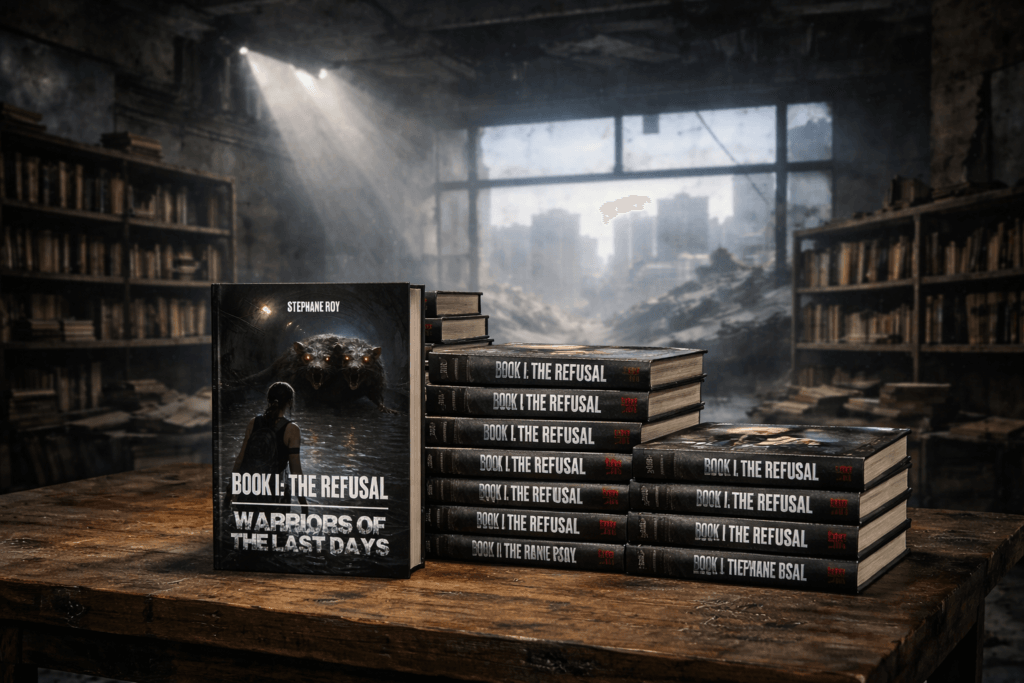
One story at a time does not mean one story at a time
There is an apparent contradiction here: the series is built one story at a time. I am also usually working on several stories at once. Writing, revising and publishing are different stages.
While one story is being prepared for publication, another may be in revision and another may exist as notes. A novel can be moving through editing while the next short story is being written. Future novels may already have substantial material in the vault even though they are years away from publication. The reader sees a monthly story and, roughly every three months, a novel. Behind that schedule is a much less tidy collection of drafts, outlines, maps, notes, revisions and cross-references. The important thing is that the publication sequence remains tidy even when the writing process is not. That is where the calendar and the vault meet.
The calendar tells me what needs to be ready and when. The vault tells me what that story is allowed to do at that specific time in the story.

The danger of planning everything
There is also a limit to how much can be planned. A series can be over-planned just as easily as it can be under-planned. If every detail is fixed years in advance, there is no room for a story to discover something unexpected. Characters become pieces being moved toward predetermined positions rather than people reacting to what has happened to them.
The solution is to establish boundaries rather than dictate every movement. Some things are fixed. The geography is fixed. Major historical events are fixed. Certain character histories are fixed. The major novel arcs are fixed. Other things remain flexible.
A short story can reveal something that was not originally planned. A minor character can become more interesting than expected. A location can acquire significance because of what happens there. When that happens, the new material gets added to the world. The vault changes. It is a very organic, often surprising process. The future stories then have to account for that change. That is one of the reasons I like the idea of a living world. A living world is not one where everything has been predetermined. It is one where things that happen matter.
For example, today, we created a new scene just listening to a Youtube video talking about Grolar bears: hybrid animals born from the natural interaction between a grizzly bear and a polar bear. Global warming is pushing them into each other’s territories, they bred, and the outcome was not only viable but also able to reproduce as well. Their numbers is steadily climbing. Great creatures for our Nunavut stories – so one was created about it.
Why the monthly stories matter
The monthly schedule also changes the way the series is experienced. A reader who only follows the novels sees the major story. A reader who follows the short stories sees more of the country. This will become increasingly important as the series expands across different regions and time periods.
Some stories will connect directly to the novels. Others will barely touch them. Some will answer questions. Others will create questions that may never receive an answer. That is intentional. The world is supposed to feel larger than the particular group of characters currently being followed. When the novels move somewhere else, the previous places do not cease to exist. Something is still happening there. That is what the short stories allow me to show.
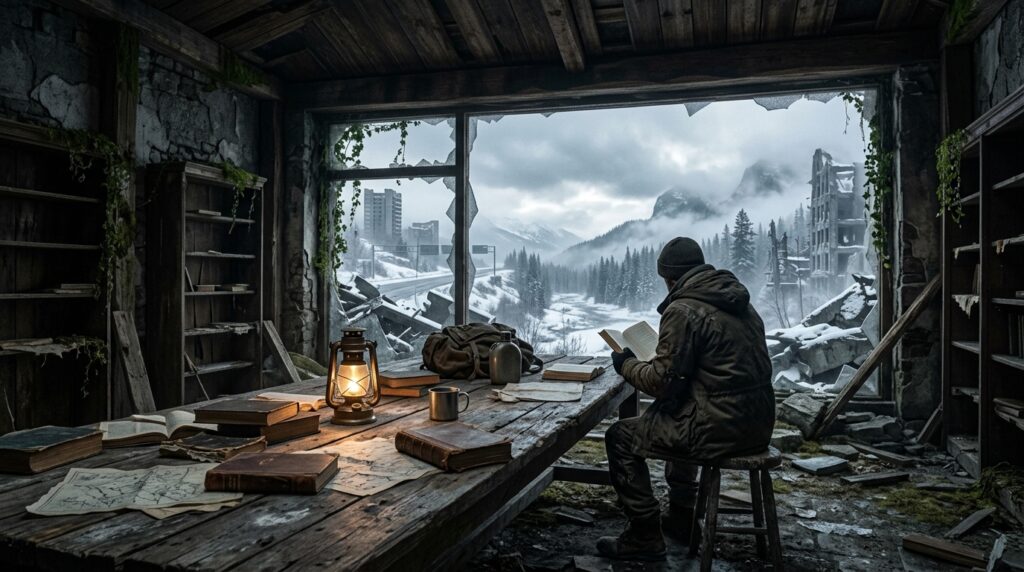
The schedule is therefore part of the world-building
One story a month. One novel approximately every quarter. It sounds like a publishing schedule. In practice, it is also a way of controlling the scale of the project. The novels provide the spine. The short stories provide the connective tissue. The vault keeps the anatomy from becoming contradictory. The map keeps the geography honest. The calendar keeps the whole thing moving. And writing one story at a time keeps the process manageable.
There are already far more stories in the world than can be written simultaneously. There are places I know I will eventually visit, characters who have not yet reached the point where their stories can be told, and events that exist only as notes waiting for the right place in the chronology. That is fine. They do not all need to happen now. The current story needs to happen now. Then the next one. Then the next novel.
One story at a time.
That is how Warriors of the Last Days keeps expanding from one end of Canada to the other without requiring the entire world to arrive on the page at once.
If you want to follow that process as it happens, the best way is simply to follow the series and subscribe to the newsletter. The monthly stories are where the world keeps opening up, while the novels continue carrying the larger journey forward.
A new post-apocalyptic story from Canada. Every month.
The earlier you join, the larger your library becomes.
Join now. Start building your library before the next hundred.
 Stéphane Roy is a lifelong reader and writer with a deep love for science fiction, apocalyptic worlds, and tightly constructed mysteries. This is his first novel. He lives in the Yukon with his dog and his aquarium, where long winters, silence, and wide, sometimes glowing, skies leave plenty of room for imagining the end of the world, and what might come after it. He is also waiting, with cautious optimism, for the aliens to finally reveal themselves and straighten us all out.