
CHARACTERS BOOK IV: THE SPARK

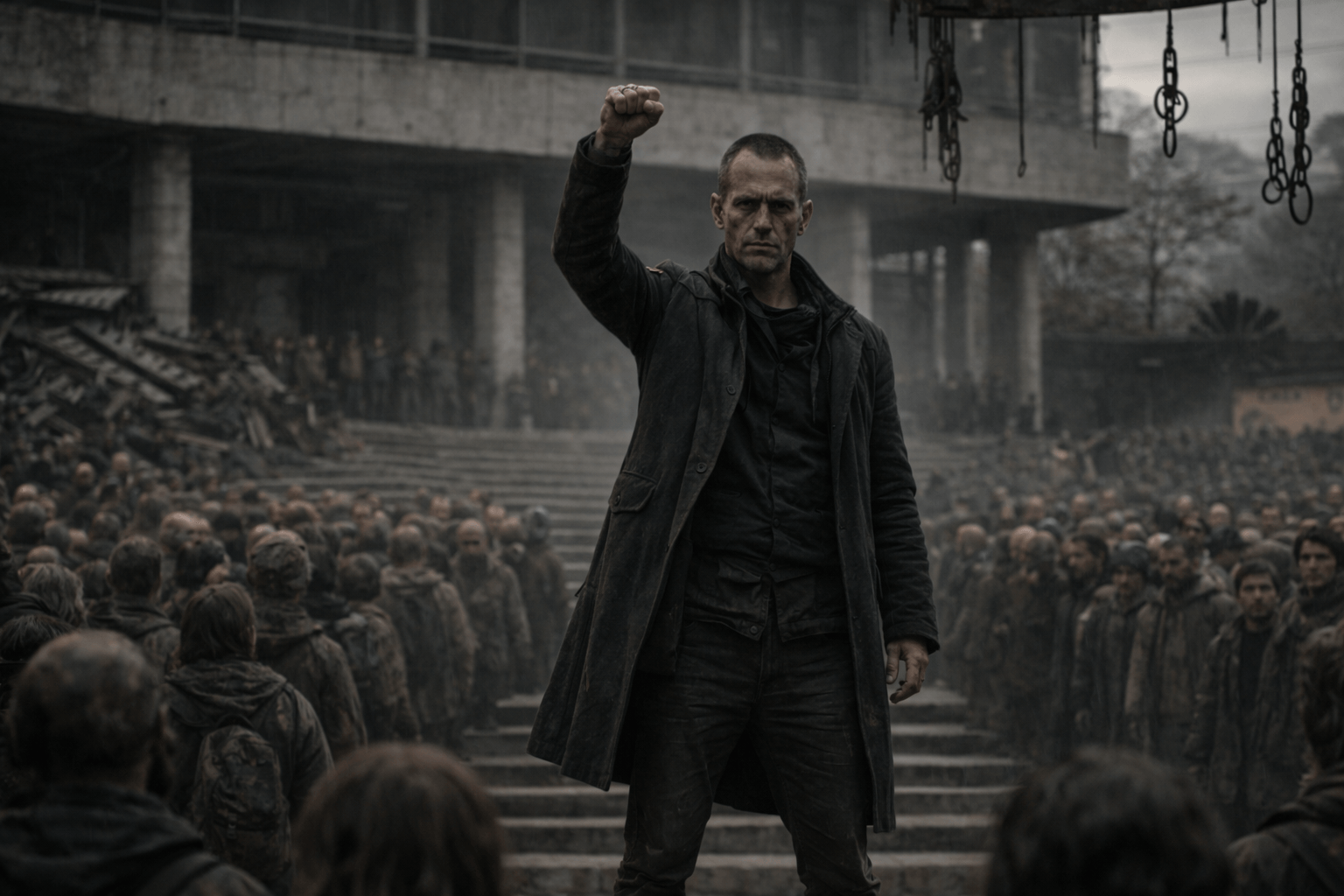
UNA
In The Spark, Una stands at the edge of something irreversible.
She is no longer the girl who endured systems built to contain her, nor the wanderer simply learning how to survive their collapse. The years have stripped illusion from her. What remains is clarity. Hard-earned. Dangerous.
Una understands now that power does not only reside in institutions, weapons, or crowds. It resides in narrative. In who defines the moment. In who refuses to.
She moves through fractured territories with a steadiness that unsettles allies and enemies alike. She listens more than she speaks. When she acts, it is deliberate. Nothing wasted. Nothing theatrical.
There is fire in this volume, but not the reckless kind. The Spark is about ignition under control. About choosing when and where heat becomes light.
Una is no longer reacting to the world’s design.
She is beginning to redraw it.
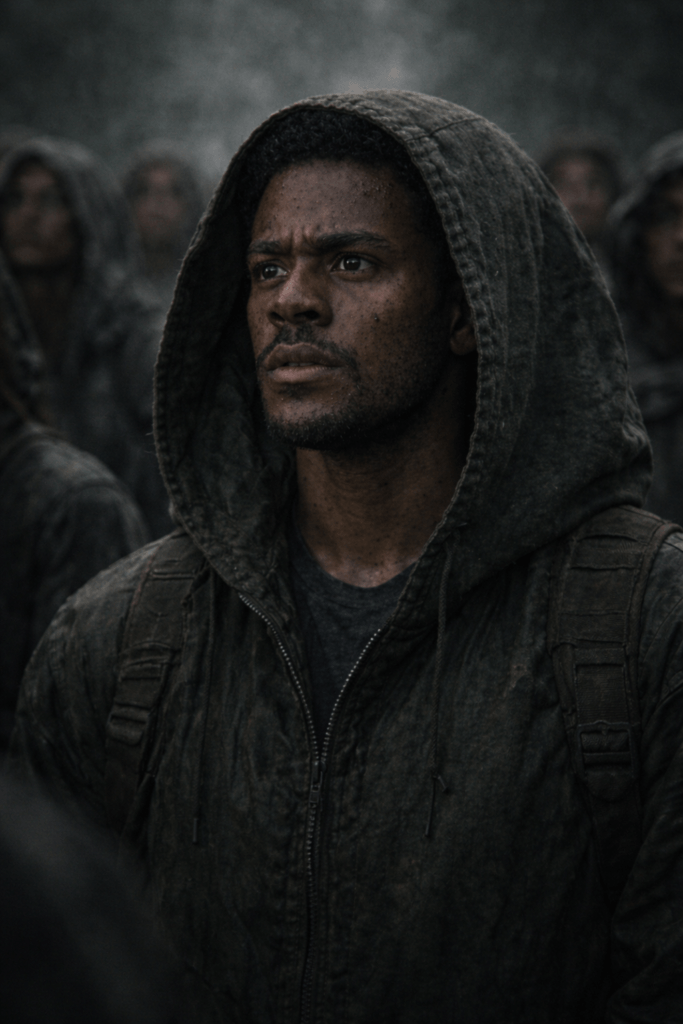
ANDY
In The Spark, Andy becomes something harder to categorize.
He has always understood systems from the inside: how they stabilize, how they fracture, how they quietly demand obedience. But knowledge alone is no longer enough. The landscape has shifted. Control is no longer centralized. It flickers, migrates, hides in small decisions.
Andy is forced into proximity with uncertainty. That unsettles him more than open threat ever could.
He remains precise. Observant. Disciplined in speech and movement. Yet beneath that restraint, something lurks. Loyalty is no longer a static equation. Neither is responsibility.
Where others see only fire spreading, Aris studies ignition points. He asks who benefits, who adapts, who burns quietly.
In The Spark, Andy is not chasing power.
He is interrogating it.
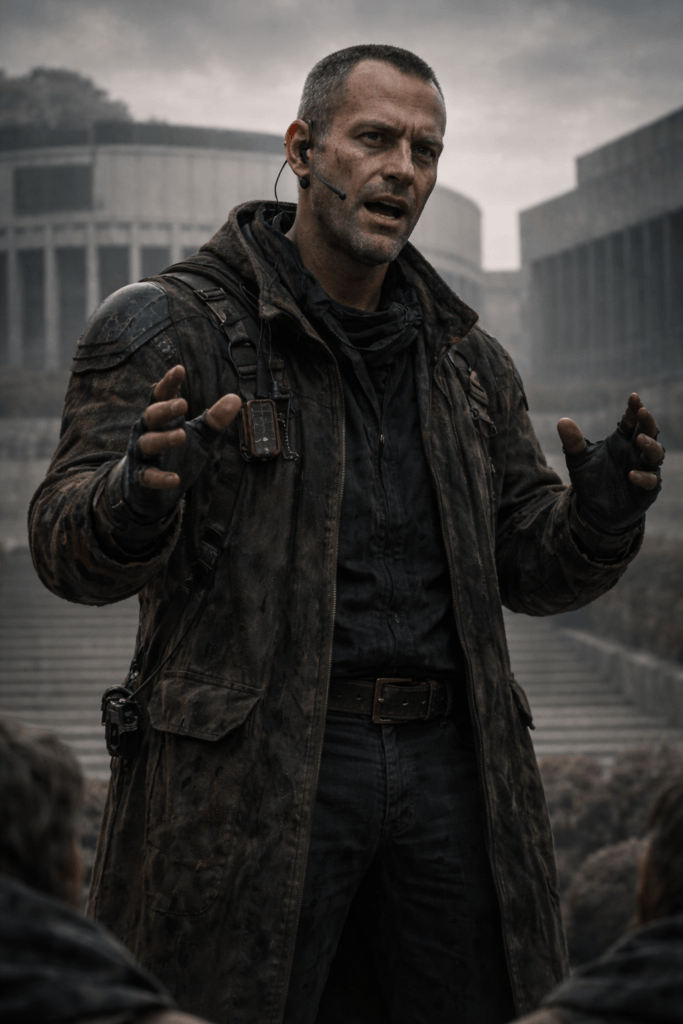
VANCE
In The Spark, Vance steps out of the RESO collapse.
He has always operated best in shadows and between factions, between truths, between what is said and what is meant. He survives by reading rooms before others realize they are in one. But the world tightening around him leaves less space for neutrality.
Vance is pragmatic, almost to a fault. He does not romanticize collapse or resistance. He counts costs. He measures risk. He notices who hesitates and who commits too quickly. That makes him valuable. It also makes him dangerous.
In this volume, pressure sharpens him. The lines he once treated as flexible begin to harden. Every decision carries weight, and delay becomes its own form of action.
He does not seek the spotlight. He understands leverage better than visibility.
In The Spark, Vance is forced to decide whether influence is enough, or whether there comes a moment when even the careful must step fully into the fire.
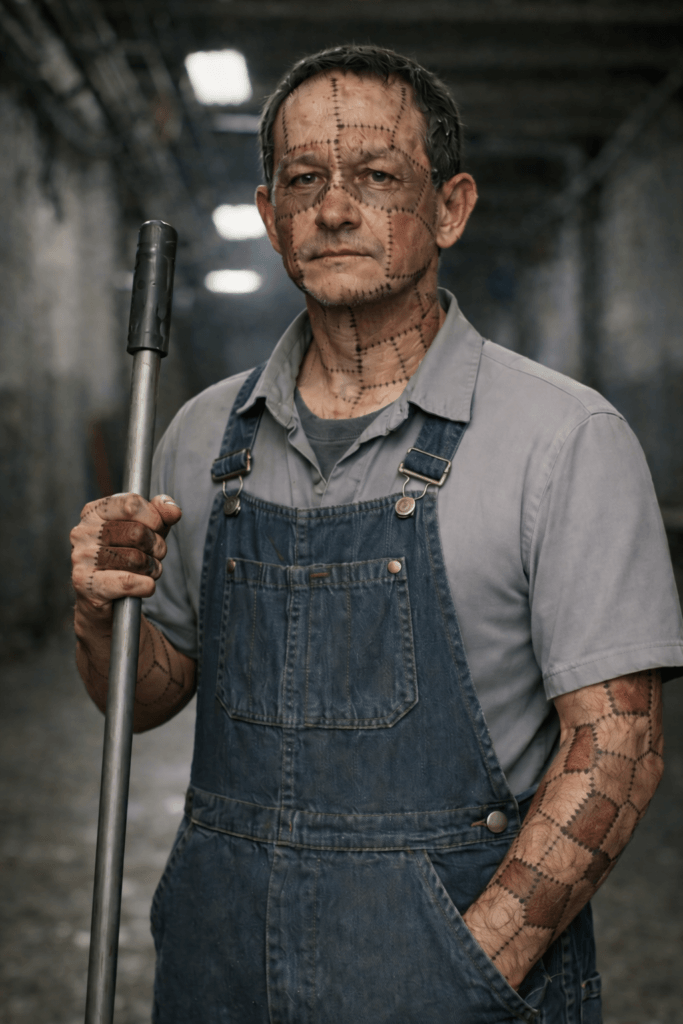
PATCH
In The Spark, Patch enters the story without announcement.
He is easy to misread at first glance: short, slight, visibly stitched together in ways that feel almost deliberate. But the longer you look, the harder he is to dismiss. His stillness is not passivity. It is quiet attention.
Patch does not introduce himself with history or allegiance. He observes. He measures tone, posture, breaking points in conversation. Where others rush to declare intent, he waits for patterns to surface. It gives him an edge few recognize until it is too late.
There is something disarming about him, an openness that invites underestimation. He allows it. Underneath, his thinking is precise and quietly strategic.
In a world where identity is policed and difference is exploited, Patch embodies contradiction. He appears assembled, fragile even. Yet his cohesion feels intentional, chosen.
In The Spark, Patch is not an echo of anyone we’ve met before. And once introduced, he is impossible to ignore.
PRESTER JOHN
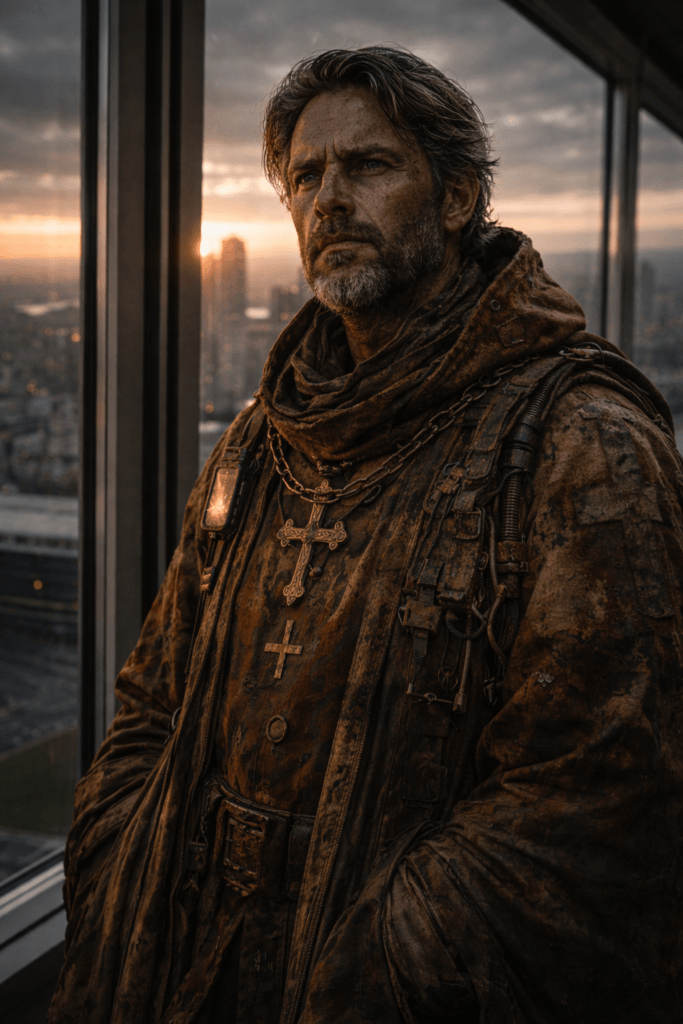
In The Spark, Prester John stands at the intersection of myth and machinery.
He has always understood the value of belief. Not faith as comfort, but as infrastructure. Narratives move people faster than force ever could. In a landscape destabilized by fire and collapse, he works not to extinguish chaos, but to shape its meaning.
Prester John speaks with measured calm. He rarely raises his voice. He does not need to. His authority rests in certainty; the kind that feels inherited rather than claimed. Yet beneath the composed exterior, there is constant calculation. He reads the temperature of a room the way others read weather.
He does not see himself as a villain or a savior. He sees himself as necessary.
As structures falter and loyalties blur, Prester John tightens his hold not through spectacle, but through interpretation. He offers comfort where others offer noise.
The question is not whether people will follow him. It is what they will become by doing so.

RENÉE
In The Spark, Renée is present but not as she once was.
There was a time when she moved with velocity, sharp in instinct and quick in speech. Now something fundamental has been altered. She occupies space with a fragile stillness, as if parts of her no longer connect the way they should. Conversations pass through her indifferently. Light hits her eyes without finding depth behind them.
The space she occupies is the same, yet the gravity of her is gone.
Yet even in this diminished state, Renée matters. Her condition is not decorative tragedy. It is consequence made visible. A reminder that the forces at play in The Stadium do not only scar landscapes, they rewrite minds. She stands as living evidence of a threshold crossed.
And in a story about ignition, she embodies what it costs when power reaches too far.

NUKILIK
In The Spark, Nukilik stands composed, visibly carrying new life but still early enough in her pregnancy that the change feels emerging rather than imminent. Four, perhaps five months in, the future she believes in is already shaping her posture, her speech, her certainty.
She has embraced the system fully. Beatification. Canonization. The hierarchy, the ritual, the language of elevation. Where others hesitated, she committed. Not out of fear, but conviction. She believes in the structure. She believes in what it builds.
Pregnancy has not softened her stance. If anything, it has clarified it. She speaks now with the calm assurance of someone who feels aligned with history, with purpose.
When Una returns to the Stadium, Nukilik does not approach her as a former equal. She approaches as someone transformed: by faith, by status, by expectation.
Their confrontation carries more than old tension. It carries opposing futures.
In The Spark, Nukilik embodies devotion fulfilled and the power that comes from believing you were chosen.
THE FENCE-SITTERS
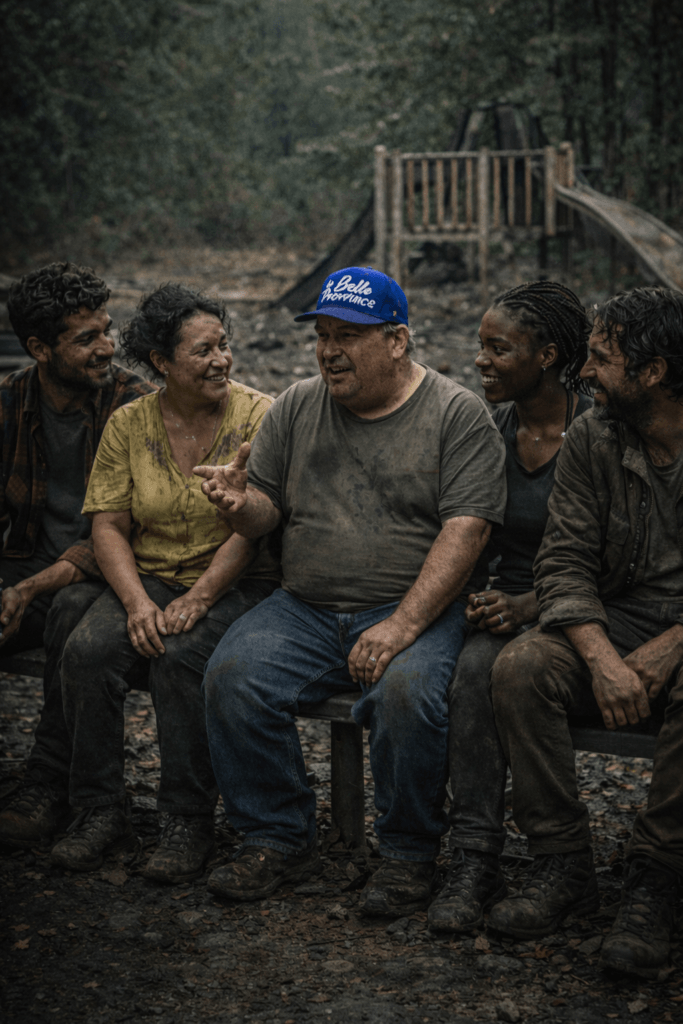
In The Spark, the Fence Sitters occupy the most volatile position of all: the middle.
They are not militants. Not believers. Not rebels. They are listeners. Watchers. The ones who withhold commitment until patterns stabilize. In times of upheaval, their restraint reads as weakness. In reality, it is leverage.
Vance understands this. He does not preach to them; he calibrates through them. The Fence Sitters are his sounding board, his stress test. If an idea survives their skepticism, it can survive wider scrutiny. If it fractures under their questions, it was never strong enough to begin with.
They value coherence over passion. Evidence over spectacle. They are wary of fire, passion, of anything that demands immediate allegiance.
In The Spark, the Fence Sitters are the quiet fulcrum on which momentum turns. They do not shout. They do not march first. But when they move, others follow.
Convincing them is not about winning an argument. It is about earning the right to be believed.
THE CARVERS
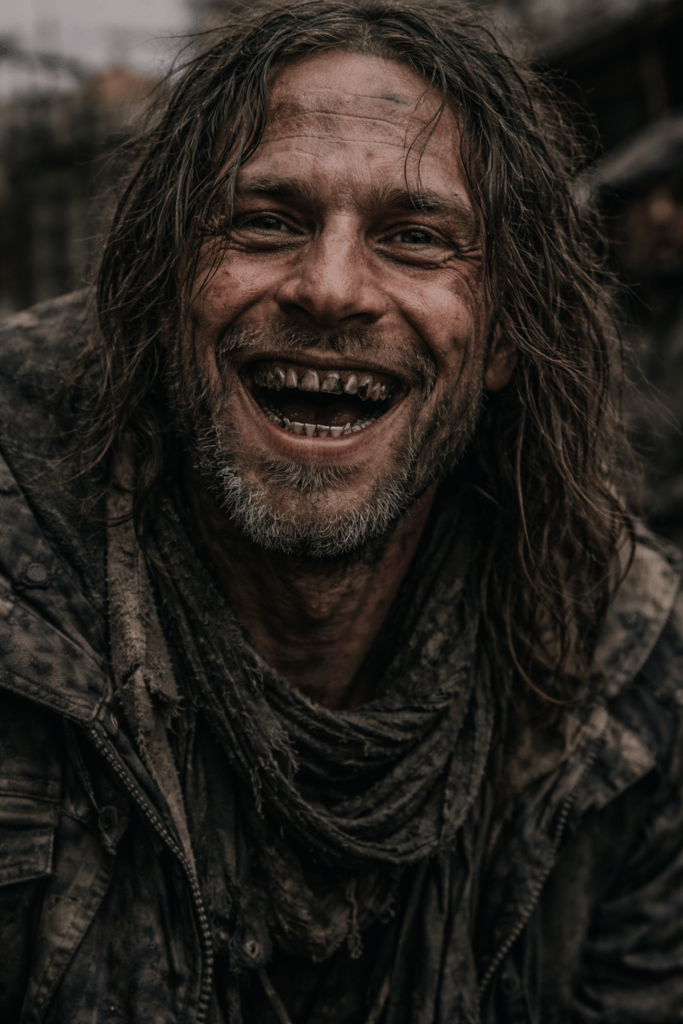
In The Spark, the Carvers are less a faction than a function.
They move after the noise fades. After the fire settles. After speeches and denials have burned themselves out. Where others claim territory or ideology, the Carvers claim responsibility. They collect what remains: bodies, flesh, unfinished reckonings… They make sure nothing is allowed to disappear conveniently.
They are disciplined, quiet, and unnervingly methodical. There is no cruelty in their work, but there is no softness either. Each member understands that memory is a form of power, and that forgetting is often the first step toward repetition.
The Carvers do not posture. They do not recruit loudly. They simply endure, expanding their influence not through conquest, but through inevitability. When they arrive, it means something has ended.
In The Spark, they are the counterweight to chaos.
Fire may ignite change. The Carvers ensure iwhat is left is theirs.

THE DEBT COLLECTOR
In The Spark, the Debt Collector, known to most as old Lady Carver, moves with the patience of someone who believes time is on her side.
She leads without spectacle. No banners. No sermons. Just accounting. In her world, nothing vanishes. Every action weights. Every loss is recorded somewhere, even if no ledger is visible. People follow her because she remembers what others prefer to forget.
Age has not softened her. It has refined her. She speaks plainly, negotiates without flinching, and understands leverage better than men half her years. Her agreement with Vance is not sentimental, nor cruel. It is practical. The dead must be accounted for. The living must understand the cost.
There is an unsettling calm to her presence. She does not chase power; she defines obligation.
In The Spark, Lady Carver embodies consequence.
Where fire consumes and rhetoric inspires, she tallies.
And her reckoning is never abstract.
THE EMBERS
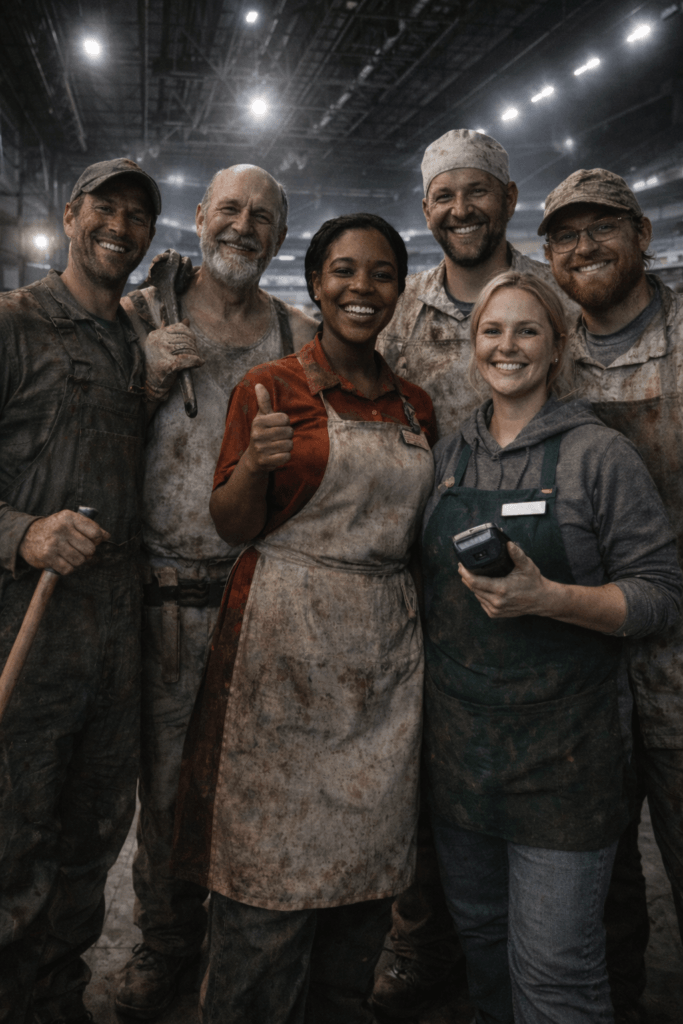
In The Spark, the Embers are the ones who kept the Stadium alive when no one was watching.
Maintenance crews. Loaders. Technicians. Shift workers who understand the building not as symbol, but as infrastructure—its vents, its corridors, its failure points. They are blue-collar, practical, and underestimated. For years, they powered the system without ever being invited to define it.
Vance sees what others overlook. The Embers know how things actually function. They know where heat gathers, where pressure builds, where a single adjustment can ripple outward.
They are not revolutionaries by temperament. They are steady, disciplined, used to hard schedules and harder truths. But once they commit, they commit quietly and completely.
The Embers form a hidden current beneath the visible conflict. A “fifth column”, if you will…
They do not shout. They prepare. And when they move, the structure feels it.
© Copyright 2026 WARRIORS OF THE LAST DAYS All rights reserved Privacy Policy
 Stéphane Roy is a lifelong reader and writer with a deep love for science fiction, apocalyptic worlds, and tightly constructed mysteries. This is his first novel. He lives in the Yukon with his dog and his aquarium, where long winters, silence, and wide, sometimes glowing, skies leave plenty of room for imagining the end of the world, and what might come after it. He is also waiting, with cautious optimism, for the aliens to finally reveal themselves and straighten us all out.