
CHARACTERS BOOK III: THE DRIFT

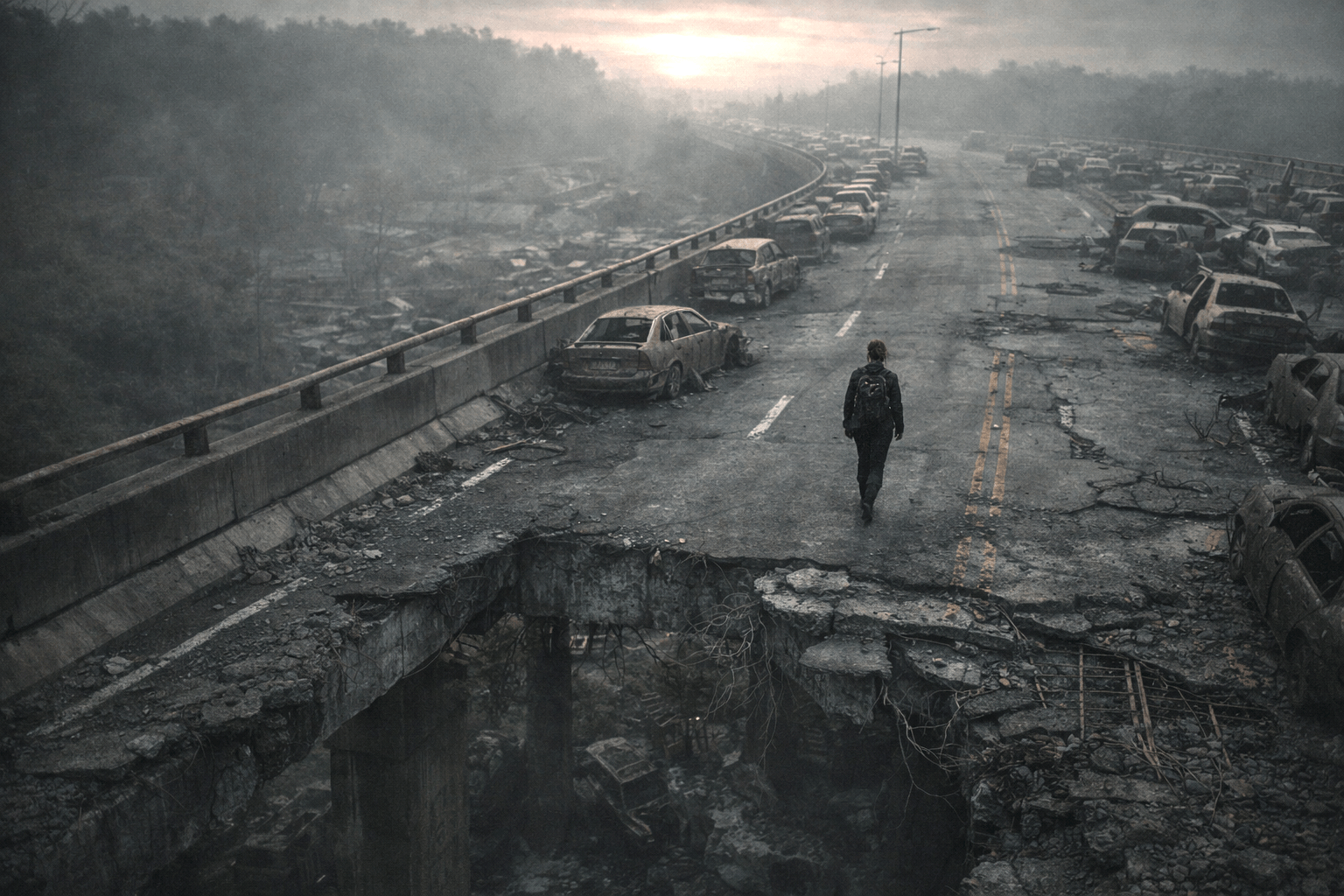
UNA
In The Drift, Una is no longer the child who watched systems close in around her. She is a woman shaped by movement: by roads that never end, by wind that never settles, by structures that adapt faster than the people trying to escape them.
The Stadium taught her how control looks when it is ritualized. The wilderness taught her how it feels when control becomes invisible.
Now she walks the fractured highways of a collapsed Montreal where survival is no longer about hiding: it is about choosing. Every alliance is temporary. Every shelter is conditional. Every horizon carries risk.
Una does not posture. She observes. Calculates. Endures. The wind strips away illusion, and what remains is will.
In The Drift, she becomes something more dangerous than a survivor: she becomes deliberate.
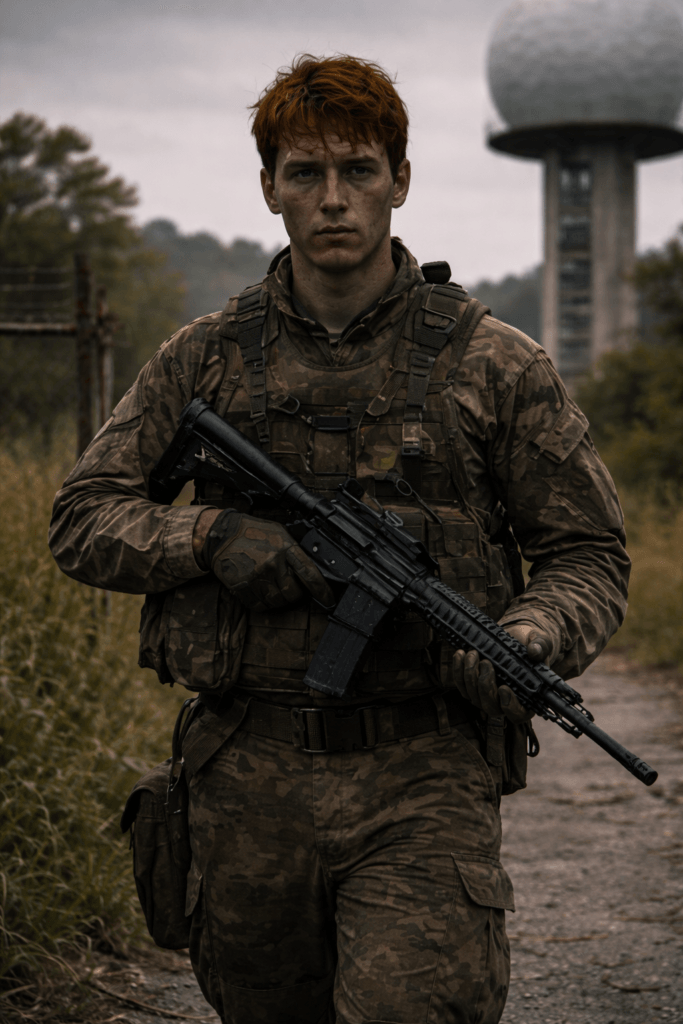
DAN
Dan is too young for the uniform he wears and too sincere for the system that issued it.
Posted at the radar station long after the sky stopped answering, he has learned procedure, perimeter, and patience. What he has not learned is what to do when certainty erodes. When Una arrives, she does not challenge his training: she exposes its limits.
He notices her before he understands her. Her resolve unsettles him. Her refusal to defer to structure draws him in. What begins as caution becomes collaboration; what begins as duty becomes something quieter, more personal.
Helping her build the raft is the first choice he makes that isn’t assigned.
Dan is not hardened. He is hopeful in a way that feels almost anachronistic. He believes the right act, performed at the right time, still matters. That belief binds him to Una more than any command ever could.
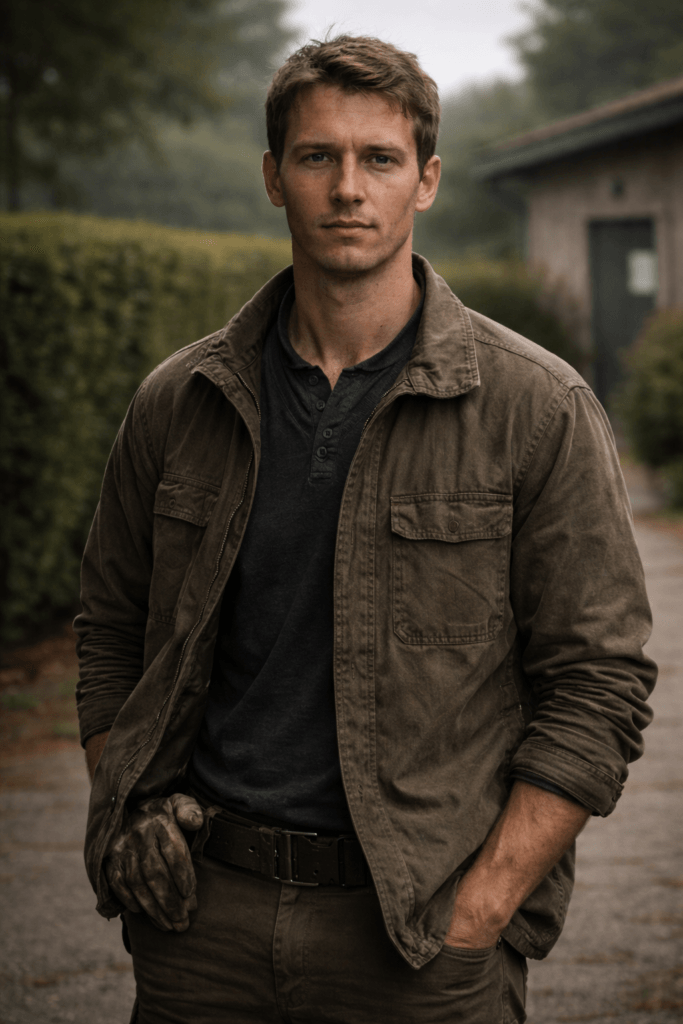
CAL
Cal belongs to the western edge of the island, to Senneville, where the land narrows and the water presses close enough to remind you that escape is an illusion.
He is not military. Not ideological. Not theatrical.
Cal survives through leverage.
In a territory shaped by quiet scarcity and shifting alliances, he has learned how to read people the way others read maps. He understands currents, social and tidal, and knows when to let them carry him and when to anchor hard. Senneville did not collapse spectacularly. It thinned. It hardened. It adapted. So did he.
When Una crosses into his perimeter, Cal sees both risk and opportunity. She does not move like the others. She does not bargain the way he expects. That unsettles him more than open defiance would.
In The Drift, Cal represents the edge of the map: the place where protection becomes isolation, and isolation becomes its own kind of prison.
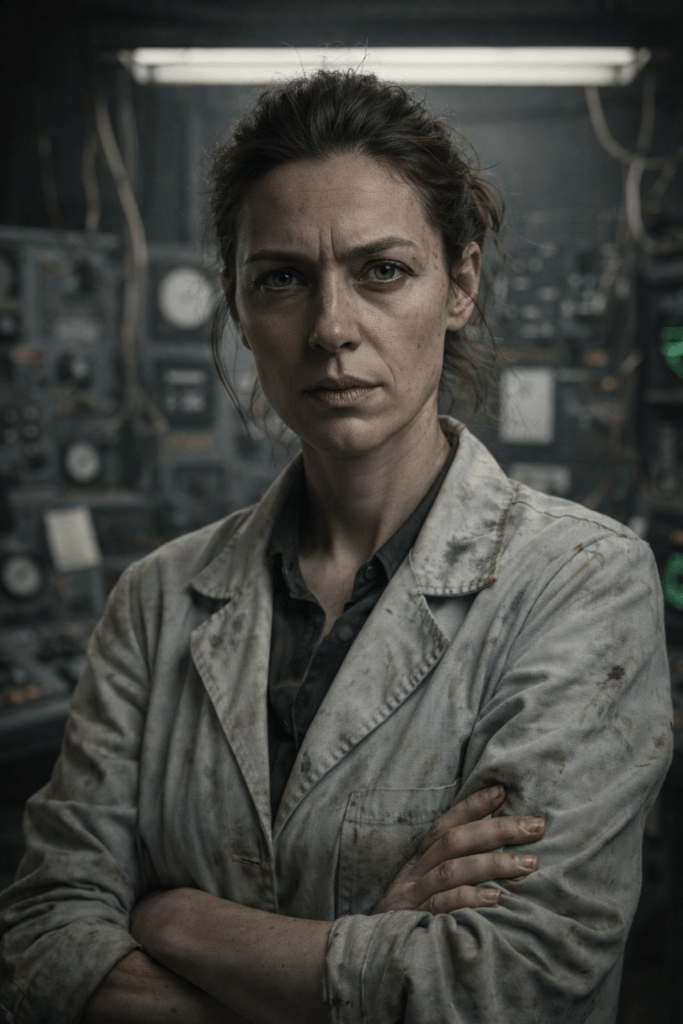
HELEN
Helen does not command territory. She commands atmosphere.
Where others survive by force or calculation, she survives by reading the emotional temperature of a room before anyone else feels it shift. She has lived through enough collapses, personal and structural, to understand that endurance is rarely loud.
In the Drift, where communities thin out and loyalties become provisional, Helen becomes a stabilizing presence without ever claiming authority. She listens more than she speaks. When she does speak, it is deliberate. Measured. Difficult to dismiss.
She sees Una clearly, not as symbol, not as threat, not as projection, but as a young woman carrying too much forward motion. That clarity creates tension. It also creates trust.
Helen understands something the others are still learning: systems do not only control from above. They replicate inside people. Fear spreads faster than ideology. So does hope, if someone tends it carefully.
In The Drift, Helen represents the quiet architecture of resilience: the unseen beams that keep fragile structures standing just long enough for something better to form.
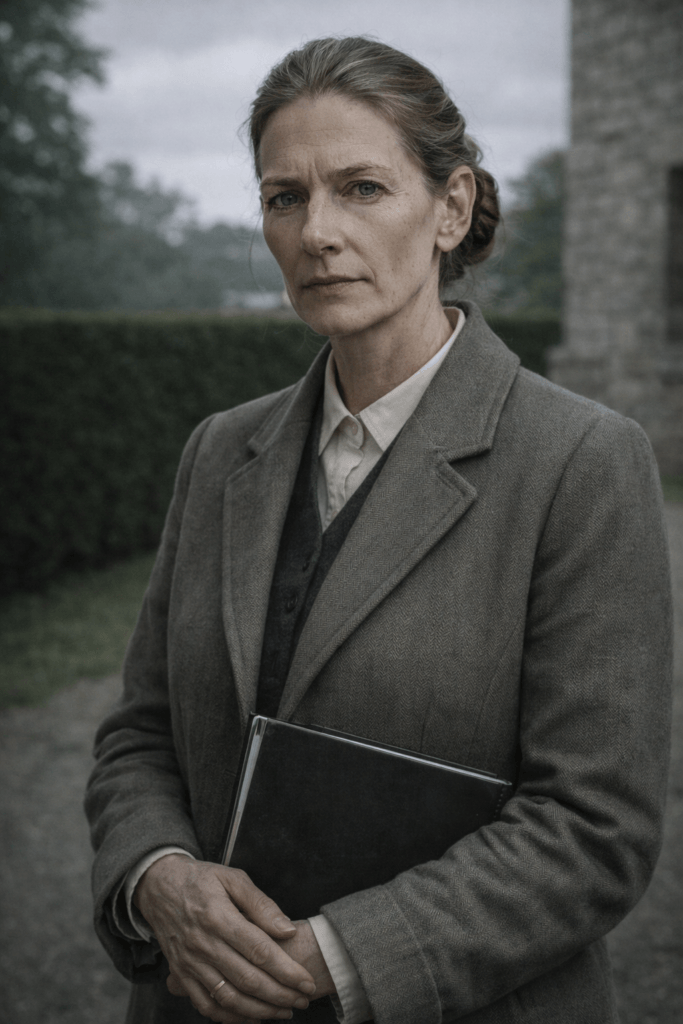
MARGARET
Margaret does not move quickly, but nothing around her moves without her noticing.
She comes from a world that prized order: routines, hierarchies, the quiet comfort of predictability. The collapse stripped most of that away, but it did not strip her discipline. If anything, it refined it. Where others react, Margaret assesses. Where others speak, she waits.
There is steel in her restraint.
She has seen enough improvisation fail to distrust charisma. Enough promises collapse to value proof over intention. In a landscape where communities fracture under pressure, Margaret becomes the keeper of continuity: memory, precedent, consequence.
Una unsettles her.
Not because she is reckless, but because she acts without asking permission from structures Margaret still instinctively consults. Their tension is not hostility. It is generational friction, the difference between those who adapted and those who rebuilt themselves entirely.
Margareth represents the last thread of the old social fabric: worn, practical, unglamorous; but still capable of holding weight when everything else tears.
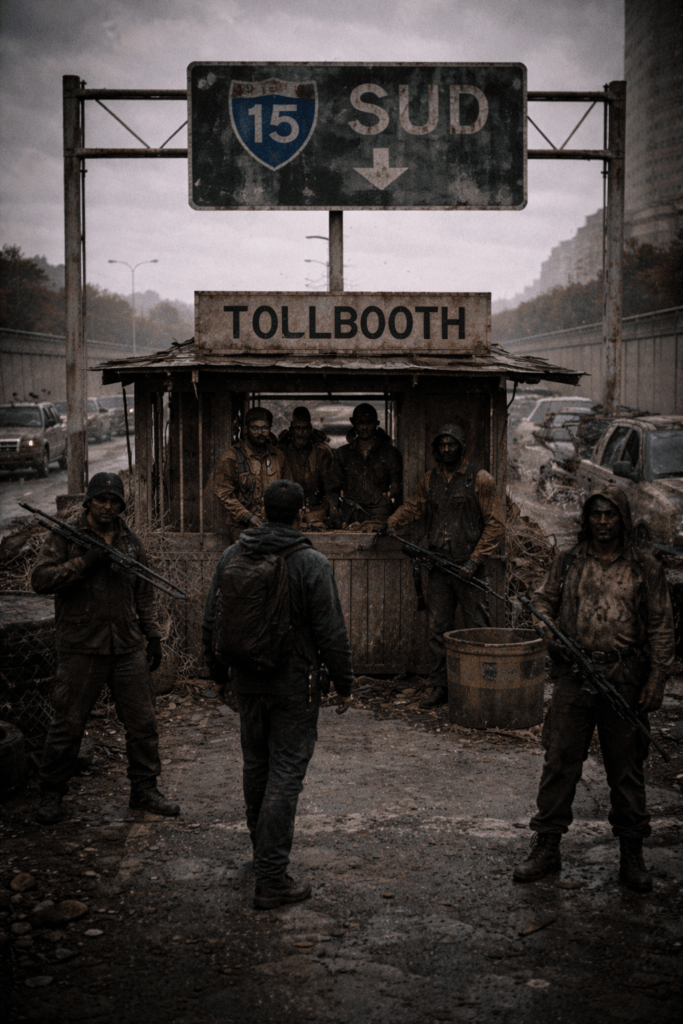
TOLLERS
The Tollers do not claim territory.
They claim passage.
They position themselves where movement narrows: bridges, checkpoints, fractured highways where detours are impossible and retreat is expensive. They do not conquer. They regulate. If you want to cross, you pay. If you hesitate, you wait. If you resist, the cost changes.
They are not an army. They are an adaptation.
Born from the logic of collapse, the Tollers understand something fundamental about the Drift: mobility is currency. Control the crossings and you control the future. Their authority is transactional, stripped of ideology. They do not preach. They calculate.
To them, people are weight, risk, and potential leverage.
Yet beneath the surface efficiency lies a fragile equilibrium. The Tollers survive on reputation as much as force. The illusion of inevitability keeps violence minimal, most of the time.
When Una enters their sphere, she does not merely challenge a rule. She challenges the premise that all movement must be taxed.
The Tollers embody a world where freedom has a fee: and where the act of crossing becomes a moral decision as much as a physical one.
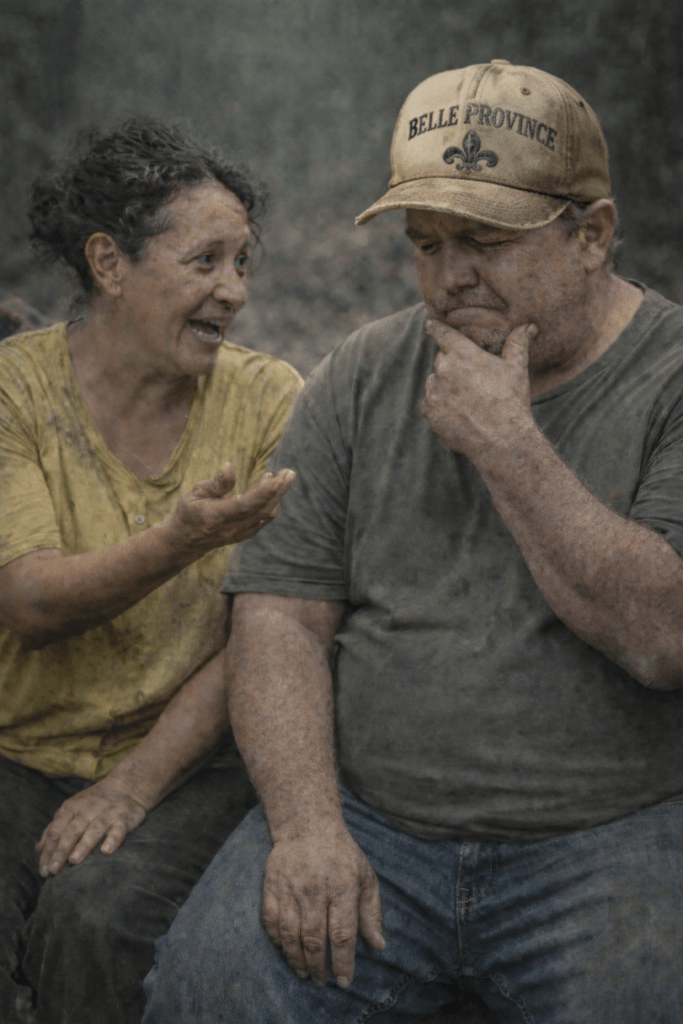
THE FENCE-SITTERS
They do not build walls. They sit on them.
The Fence-Sitters occupy burned parks, abandoned lots, the edges of territories claimed by louder factions. They have mastered the art of not choosing. Not aligning. Not committing long enough to be claimed or crushed.
They watch.
Where the Tollers monetize passage and militias defend perimeters, the Fence-Sitters preserve ambiguity. They trade information in fragments. They offer help without allegiance. They survive by staying just useful enough to everyone and essential to no one.
To outsiders, they look apathetic. Detached. Even cowardly.
But neutrality in a collapsed world is labor. It requires constant adaptation: knowing when to laugh with one side and when to fall silent with another. Their greatest asset is perception. Their greatest fear is being forced to declare.
Una disturbs that balance. She does not treat them as background. She recognizes the weight of their inaction. In a world where every structure demands participation, the Fence-Sitters represent a different survival strategy: endurance through suspension.
They embody the uneasy middle ground, proof that in times of collapse, refusing to choose is itself a choice with consequences.
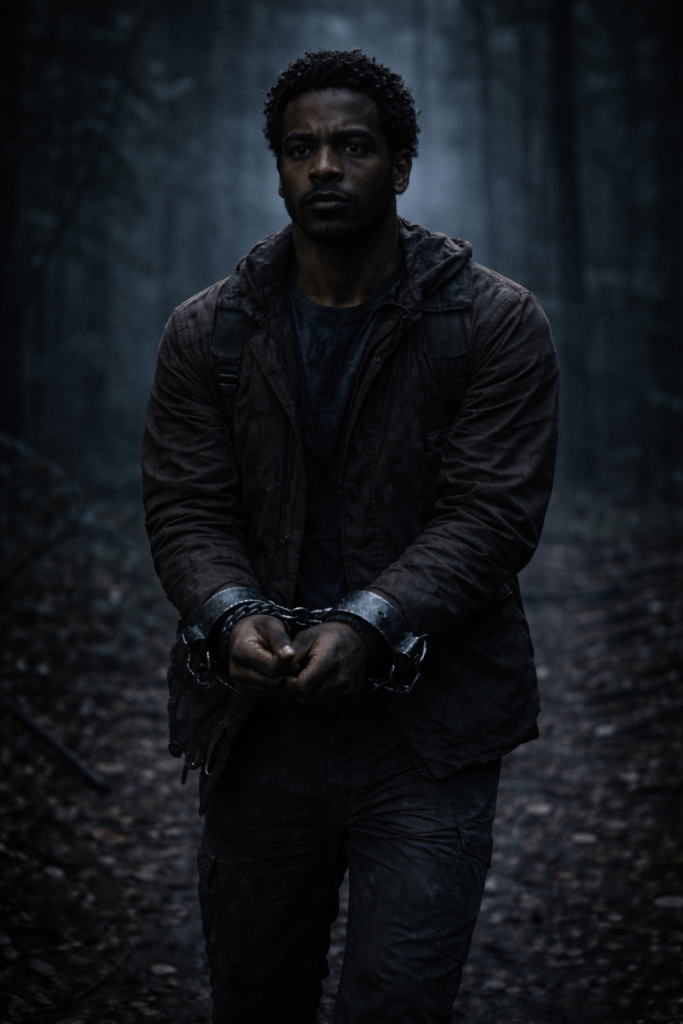
ANDY
Andy does not drift. He ricochets.
Where others adapt to the wind, he fights it. Restless, volatile, incapable of settling into the fragile truces that keep communities intact. The Stadium is supposed to thin people out, soften them into compromise. It sharpens him instead.
He has learned to move fast, speak faster, and trust last.
Andy understands cages: the obvious ones and the invisible ones. He has felt restraint in his wrists and expectation in his lungs. Freedom, to him, is not an abstract ideal. It is physical. Immediate. Urgent.
That urgency makes him dangerous.
He is drawn to Una not because she promises safety, but because she refuses stasis. She moves with purpose, and Andy recognizes the difference between wandering and trajectory. Where she calculates, he reacts. Where she endures, he detonates.
Andy is not stable ground in this book.
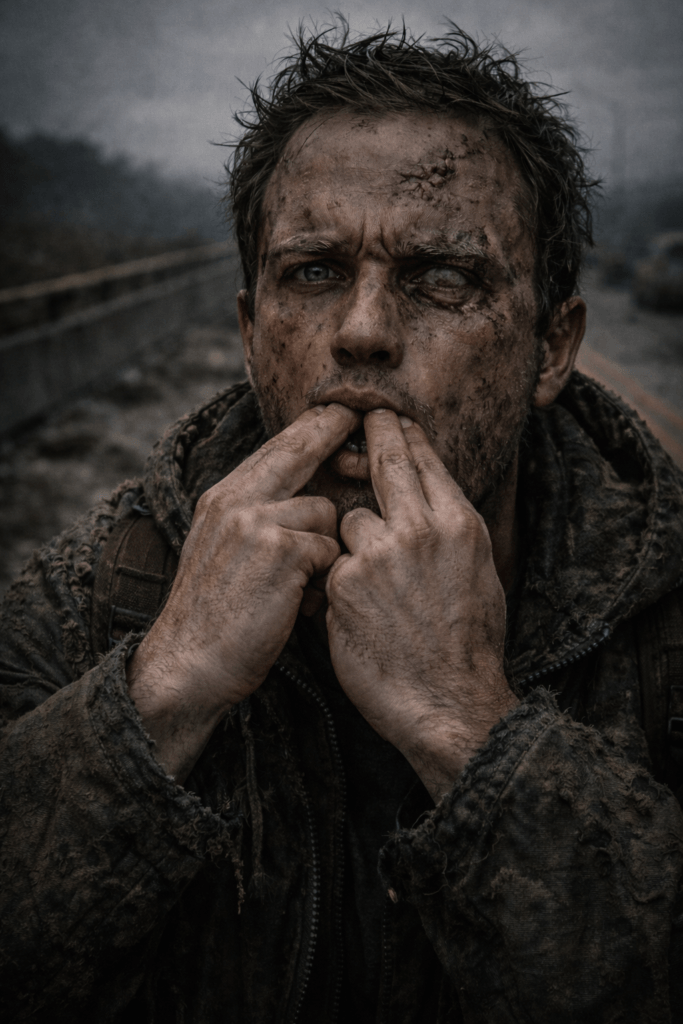
THE WHISTLERS
You hear them before you see them.
A thin, rising note carried by the wind, not quite a call, not quite a warning. The Whistlers move along the open corridors of the Drift: highways stripped to bone, coastal edges, exposed ridgelines where sound travels farther than sight.
They do not anchor. They circulate.
Some call them Drifters. The name fits only partially. They are not lost. Their movement is deliberate, patterned, almost ritualized. They follow currents, of weather, of rumor, of shifting power. They map instability the way others map territory.
The whistle is language and signal. Presence and perimeter.
Communities tolerate them cautiously. The Whistlers bring news before it becomes catastrophe. They also bring attention. Their arrival means something has shifted somewhere else.
To Una, they are both mirror and warning: proof that constant motion can become identity. To remain unclaimed is freedom. To remain unclaimed is also exposure.
The Whistlers embody the logic of transience: survival through movement, allegiance to no fixed structure, and the haunting reminder that the wind never settles for long.
© Copyright 2026 WARRIORS OF THE LAST DAYS All rights reserved Privacy Policy
 Stéphane Roy is a lifelong reader and writer with a deep love for science fiction, apocalyptic worlds, and tightly constructed mysteries. This is his first novel. He lives in the Yukon with his dog and his aquarium, where long winters, silence, and wide, sometimes glowing, skies leave plenty of room for imagining the end of the world, and what might come after it. He is also waiting, with cautious optimism, for the aliens to finally reveal themselves and straighten us all out.