Post-Apocalypse Stories in Saint-Pierre and Miquelon:
France’s Last Islands at the End of the World
When readers imagine post-apocalyptic fiction, they usually picture sprawling American ruins, abandoned highways, or shattered megacities. Rarely do they think about a tiny French archipelago sitting in the North Atlantic, just off the coast of Newfoundland.
They should. But as far as we know and could research, there is no Post-Apocalypse stories in the islands and very little fiction has explored this remarkable setting.
Saint-Pierre and Miquelon may be one of the most compelling and underused settings in all of post-apocalyptic fiction.
Located only about 25 kilometres south of Newfoundland, this small French territory consists of windswept islands, rocky coastlines, isolated communities, and centuries of maritime history. It is also France’s last remaining territorial presence in North America, a cultural anomaly that feels simultaneously European and Canadian. The archipelago’s population numbers only a few thousand people, most concentrated on the island of Saint-Pierre itself. Nearly everything arrives by ship or air, and the islands remain heavily dependent on outside supplies and connections.
In other words, if the world ended tomorrow, Saint-Pierre and Miquelon would instantly become one of the most fascinating places on Earth.
A Forgotten Corner of the Apocalypse
Unlike locations such as New York, London, or even Iceland, St-Pierre and Miquelon has rarely appeared in mainstream post-apocalyptic novels, films, or television series.
There are currently no widely known post-apocalyptic novels explicitly set on the islands themselves.
That absence is surprising because the archipelago already possesses many of the characteristics authors actively seek when creating end-of-the-world fiction:
- Extreme geographic isolation.
- Harsh weather.
- Strong local identity.
- Limited resources.
- Dependence on outside trade.
- A rich maritime history.
- Small, tightly knit communities.
Few places are better suited to stories about survival, governance, scarcity, and moral compromise.
Why THE ISLANDS ARE Perfect for Post-Apocalyptic Fiction
Total Isolation
Saint-Pierre and Miquelon sits only a short distance from Newfoundland, yet psychologically it feels much farther away.
The islands occupy a unique space between Europe and North America. Most supplies are imported, and the population remains heavily concentrated in a handful of settlements. Historically, fishing has dominated the local economy, although tourism and French government support now play important roles as well.
In a collapse scenario, this isolation becomes both an advantage and a threat.
On one hand, remoteness may protect the islands from pandemics, wars, mass migration, or urban violence.
On the other hand, remoteness also means:
- No replacement parts.
- No regular fuel deliveries.
- No outside rescue.
- No large agricultural base.
- No guarantee that anyone is coming.
An isolated island can quickly become either a sanctuary or a prison.
Often, it becomes both.
The Last Piece of France in North America
One of the most distinctive aspects of the islands are its political and cultural identity.
The islands remain a French overseas collectivity and represent the last remnant of France’s once extensive North American holdings. Residents are French citizens, French is the dominant language, and French administrative structures remain firmly in place.
This creates extraordinary storytelling possibilities.
Imagine:
- A world where Paris has fallen silent.
- A préfet still issuing official decrees months after France itself has collapsed.
- Island residents debating whether they remain part of a nation that may no longer exist.
- Refugees arriving from Newfoundland, Europe, or the mainland.
- Questions about sovereignty, legitimacy, and authority.
When governments disappear, symbols matter. Flags matter. Paperwork matters. People cling to institutions long after institutions cease functioning.
Saint-Pierre and Miquelon offers writers an opportunity to explore what happens when an entire society attempts to preserve not merely civilization, but Frenchness itself, at the very edge of the Atlantic.
The North Atlantic as an Antagonist
Weather is one of the great unappreciated villains of post-apocalyptic fiction. Saint-Pierre and Miquelon possesses weather in abundance.
The islands of St-Pierre and Miquelon are characterized by cool temperatures, frequent fog, strong winds, rough seas, and long winters. The landscape itself is stark and rugged, shaped by centuries of Atlantic storms. Forest cover is limited, with peat bogs, rocky hills, and exposed coastlines dominating much of the terrain.
After the collapse of modern infrastructure, these environmental conditions become deadly.
Without:
- dependable fuel,
- functioning ports,
- emergency medical care,
- imported food,
- modern communications,
winter becomes an existential threat.
Every storm carries consequences. Every failed fishing expedition matters. Every litre of diesel matters.
Unlike urban apocalypse stories filled with explosions and constant action, North Atlantic apocalypse fiction often derives its tension from endurance. Can the community survive until spring?
Ghost Villages and Ruins
Post-apocalyptic fiction thrives on ruins.
Saint-Pierre and Miquelon already possesses them.
One of the most atmospheric locations in the archipelago is Île aux Marins, a former fishing community located just offshore from Saint-Pierre. Once home to hundreds of residents, the settlement gradually declined and eventually became uninhabited during the twentieth century. Many historic buildings still remain, preserving the appearance of a community suspended in time.
For apocalypse writers, places like Île aux Marins practically write themselves.
Imagine survivors scavenging abandoned homes. Imagine old churches becoming shelters. Imagine ghost villages repopulated by desperate refugees.
Or imagine the opposite: communities deliberately abandoning settlements because something arrived from the sea.
The islands of St-Pierre and Miquelon already possess the visual language of post-apocalyptic fiction. The world merely needs to end around them.
Comparable Works: Similar Atmospheres
Although Saint-Pierre and Miquelon itself remains largely unexplored in speculative fiction, several novels capture moods and themes that resonate strongly with the archipelago.
Moon of the Crusted Snow by Waubgeshig Rice
Set in an isolated northern Indigenous community, Moon of the Crusted Snow explores what happens when communications fail and the modern world abruptly disappears. As power, supplies, and information vanish, the community must decide who they are and what traditions will carry them forward.
The novel demonstrates how isolation can transform from vulnerability into resilience.
Readers interested in a Saint-Pierre apocalypse would likely recognize many of the same concerns:
- food security,
- leadership,
- outsiders,
- cultural continuity,
- winter survival.
Malevil by Robert Merle
French readers have long regarded Malevil as one of the classics of post-apocalyptic literature.
Following a nuclear catastrophe, survivors shelter in an isolated rural stronghold and attempt to rebuild society. The novel focuses less on destruction itself and more on governance, morality, and the difficult process of creating institutions after civilization collapses.
Its themes align remarkably well with Saint-Pierre and Miquelon, where rebuilding would necessarily occur on a small, intimate scale.
Related Dystopian/Mystery References
Six for Saint-Pierre by Kevin Major
A mystery novel set in the rugged environment of the islands of St-Pierre and Miquelon, offering a similar atmospheric feel to a remote, survival-based scenario.
The Saint-Pierre TV Series
If you enjoy the moody, isolated island atmosphere, the CBC Television police procedural Saint-Pierre (filmed directly in the territory) captures the stark, remote beauty of the islands.
The apocalypse would not be fought with armies. It would be negotiated in kitchens, churches, council chambers, and harbour offices.
The Warriors of the Last Days Universe: The Last Islands
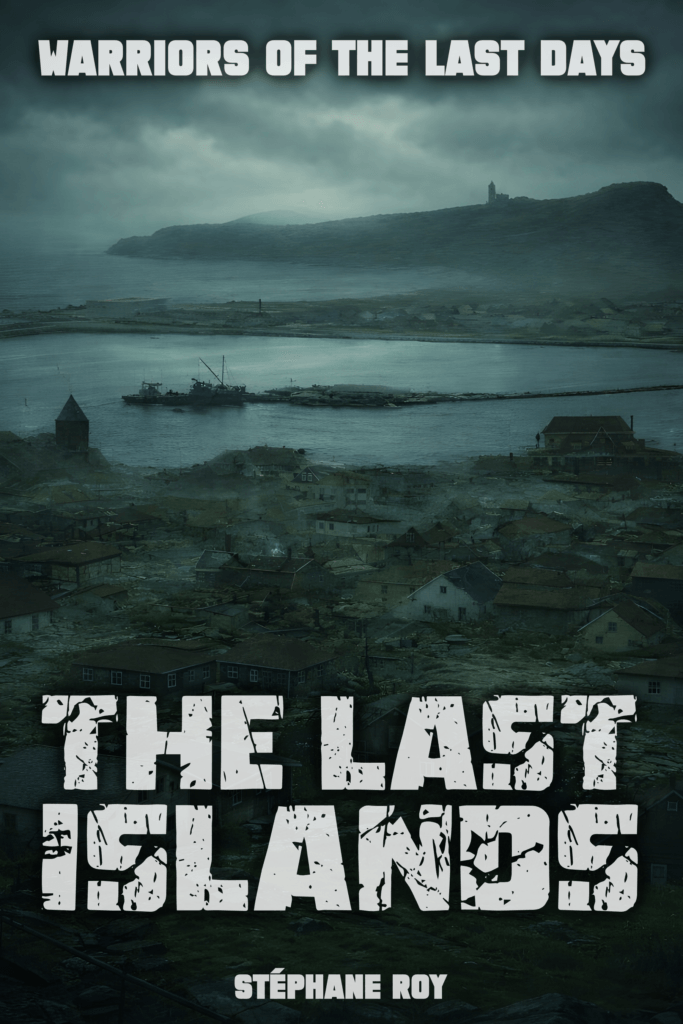
Among the few fictional works to place Saint-Pierre and Miquelon at the centre of an end-of-the-world narrative is The Last Islands, an upcoming novel set within the Warriors of the Last Days universe (coming in June 2027).
The premise embraces exactly what makes the archipelago unique and as far as we know, is the first of its kind, entirely set in St-Pierre and Miquelon.
Why More Authors Should Explore Saint-Pierre and Miquelon
Saint-Pierre and Miquelon remains almost untouched territory for speculative fiction.
That should change.
Modern readers increasingly seek stories grounded in real places rather than generic settings. They want landscapes with history, culture, and identity.
The islands offer all three.
They provide:
- maritime heritage,
- political complexity,
- natural isolation,
- dramatic weather,
- abandoned settlements,
- cultural uniqueness,
- immediate survival challenges.
Most importantly, they offer scale.
The scale of communities. The scale of harbours. The scale of neighbours who have known one another their entire lives. At the end of the world, those may be the only scales that truly matter. Because on Saint-Pierre and Miquelon, when the ships stop coming and the radios fall silent, there is nowhere else to go.
There are only the islands.
© Copyright 2026 WARRIORS OF THE LAST DAYS All rights reserved Privacy Policy
- Post-Apocalypse Stories in Saint-Pierre and Miquelon:France’s Last Islands at the End of the World
- A Forgotten Corner of the Apocalypse
- Why THE ISLANDS ARE Perfect for Post-Apocalyptic Fiction
- The Last Piece of France in North America
- The North Atlantic as an Antagonist
- Ghost Villages and Ruins
- Comparable Works: Similar Atmospheres
- Related Dystopian/Mystery References
- The Saint-Pierre TV Series
- The Warriors of the Last Days Universe: The Last Islands
- Why More Authors Should Explore Saint-Pierre and Miquelon
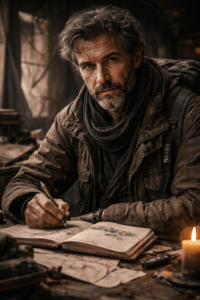 Stéphane Roy is a lifelong reader and writer with a deep love for science fiction, apocalyptic worlds, and tightly constructed mysteries. This is his first novel. He lives in the Yukon with his dog and his aquarium, where long winters, silence, and wide, sometimes glowing, skies leave plenty of room for imagining the end of the world, and what might come after it. He is also waiting, with cautious optimism, for the aliens to finally reveal themselves and straighten us all out.