
Why Our ISBN Delay Matters for the Launch of Our First Book
Launching a first book is supposed to be about final edits, cover files, print proofs, metadata, retailer setup, and building excitement.
Right now, one of the most basic pieces of that process is still missing: our ISBNs.
We submitted our request, followed the published timeline, and then followed up after that timeline had already passed. The response we received explained that, because of a very high volume of requests and staff holidays, processing times can extend byond the announced 30 business days announced on the government website, and that this delay cannot be guaranteed in every case.
That may sound administrative. In practice, it has real consequences for an independent publisher preparing a launch.
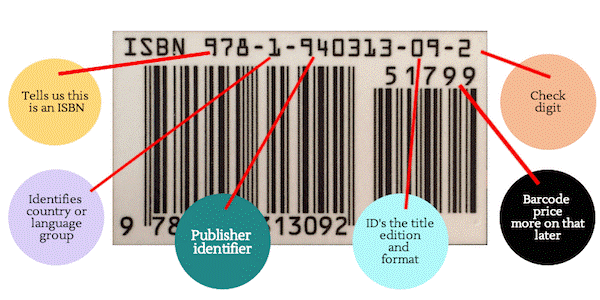
What is an ISBN?
An ISBN, or International Standard Book Number, is a 13-digit identifier used to identify a specific book edition from a specific publisher. It is used across the book supply chain by publishers, bookstores, libraries, distributors, and online retailers for ordering, cataloguing, listing, sales records, and stock control. It identifies not just the title, but the specific format and edition.
That last point matters. A paperback edition, hardcover edition, EPUB edition, PDF edition, and audiobook edition are not all covered by one ISBN. Each distinct format generally needs its own ISBN.
An ISBN is also not the same thing as copyright protection. It does not create legal ownership of the work. It is a standardized identifier used for the business and distribution side of publishing.
How ISBNs work in Canada
In Canada, ISBNs are handled through ISBN Canada, which is part of Library and Archives Canada. The federal government states that ISBN Canada provides free ISBNs to eligible publishers and publications.
Library and Archives Canada also states that publishers who register for an ISBN Canada account are entered into the Canadian ISBN Publishers’ Directory and the Global Register of Publishers.
For Canadian publishers, this means ISBN assignment is not typically a private commercial transaction the way it is in some other countries. Instead, it is administered through the national system. That is beneficial in principle because it removes a direct cost barrier, especially for small presses and independent publishers. But it also means the timing of a launch can be affected by a centralized processing queue.
Where things stand right now
Here is the practical situation.
We have already submitted our request. We waited beyond the timeline published on their site. When we asked why nothing had arrived yet, we were told that a very high volume of requests, especially from publishers preparing holiday releases, combined with staff holidays, has created longer processing times. We were also told that the stated processing window may not always be met.
So the issue is not that the process does not exist. The issue is that the delay is now material enough to affect planning.
Why this affects a book launch
For readers, ISBNs are invisible. For publishers, they are infrastructure.
A missing ISBN can affect several parts of launch preparation:
1. Retail and distributor setup
Booksellers, online retailers, libraries, and distribution systems rely on ISBNs as core identifiers for listing and inventory. Without them, metadata setup becomes incomplete or impossible in some channels.
2. Format planning
Because each format needs its own identifier, a delay does not just hold up one version of a book. It can hold up the paperback, hardcover, EPUB, PDF, or audiobook individually, depending on how a publisher intends to release them.
3. Marketing coordination
Launch campaigns depend on stable product data. Cover reveals, preorder pages, sales copy, retailer listings, press materials, and outreach all work better when the book’s formal identifiers are locked in.
4. Production scheduling
Even when editing and design are complete, publishing is not only creative work. It is operational work. ISBN delays can force publishers to postpone uploads, revise launch calendars, or hold back announcement timing until the underlying metadata is in place.
What this means for our launch
At this stage, the delay may affect timing, rollout, and how quickly we can move from announcement to fully operational release.
That does not mean the book is cancelled.
It does not mean the work has stopped.
It does mean that one piece of publishing infrastructure, outside our direct control, is moving slower than expected.
As an independent publisher, that matters. Large publishers can absorb administrative drag more easily. Smaller presses and first-time launches often run on narrow windows where a delay in one area has ripple effects across production, promotion, and release planning.
A note on legal deposit
In Canada, publishers are also subject to legal deposit through Library and Archives Canada, which is a separate process from ISBN assignment. Legal deposit is how Canada collects and preserves published heritage, and official forms for monographs include ISBN information among the publication details.
That does not mean an ISBN delay prevents every publishing action in the abstract, but it does show how closely identifiers and publication records are tied into the broader Canadian publishing system.
Why we are sharing this
We are sharing this because publishing often looks simple from the outside.
Write the book. Design the cover. Print it. Launch it.
In reality, there is a long chain of invisible systems behind every release. When one of those systems slows down, it affects everything downstream.
We believe readers deserve transparency. If our release timeline shifts, this is one of the reasons why.
What happens next?
We are continuing to prepare everything that can be prepared while we wait. That includes production, launch planning, and the other pieces of the release that do not depend on final ISBN assignment.
As soon as the numbers are issued, we will move quickly on the remaining steps. Our first book is still coming. The delay is real. So is the work behind it.
A new post-apocalyptic story from Canada. Every month.
The earlier you join, the larger your library becomes.
Join now. Start building your library before the next hundred.
 Stéphane Roy is a lifelong reader and writer with a deep love for science fiction, apocalyptic worlds, and tightly constructed mysteries. This is his first novel. He lives in the Yukon with his dog and his aquarium, where long winters, silence, and wide, sometimes glowing, skies leave plenty of room for imagining the end of the world, and what might come after it. He is also waiting, with cautious optimism, for the aliens to finally reveal themselves and straighten us all out.