The Discoverability Problem: What Are New Authors Supposed to Do?
I have been thinking about this a lot lately.
I released my first novel a few of months ago. My fourth book is currently being edited and should be released by mid-December. Book Five is scheduled for March 2027, Book Six for June 2027. All first 12 books are already written, although they are at different stages of editing.
I also have plans for four more books in the same series in 2029 and later. The story will be told through 33 novels in total. Ambitious, I know, but so far we are keeping more or less the pace.
So this is not a case of someone publishing one book and wondering why they are not suddenly selling thousands of copies.
I am building a series. I am committed to it. I have a considerable amount of material already written.
And yet I keep running into the same question:
How does an unknown author actually become discoverable?
I understand the need for marketing. I understand that nobody can buy a book they do not know exists.
I understand social media, at least in principle. Although the algorithms increasingly seem designed to encourage you to pay for reach, which would be easier to accept if the reach actually consisted of people. Looking at my own traffic, roughly half of the clicks I am seeing appear to come from bot IPs.
But fine. That is the environment. So I tried doing what everyone tells new authors to do.
I requested ARCs. Several times so far. Nothing.
I agonized over my blurbs for weeks and tried several versions. I spent days researching and optimising keywords for the various platforms. I think I got that part reasonably right.
I looked into specialised book-promotion sites.
And then you run into another problem.
Many of them will not consider a book without ratings or reviews.
Which means you need readers to get reviews. So you need an audience to get readers, and readers to build an audience.
The chicken and the egg.
Apparently nobody wants to read your book as an ARC because you are an unknown author. And frankly, it is a lot of work regardless and, for some people, it is not worth the bad blood some authors cause when they do not like the “honest review” they asked for… So I am not blaming the ARC readers.
I do blame the fact that we decided to predicate an entire business on if someone, most people do notlike to “review” things, are willing to put their neck on the line for something they might or might not like and that requires a big commitment of time for nothing but the satisfaction of helping out or not. That is literally insane to me yet everyone cruises along on those assumptions.
The Audience You Are Supposed to Already Have
I am not trying to become rich or famous.
At this point, I would be happy with a handful of readers who genuinely like what I am doing. A few honest reviews would be great. A few sales would be event greater.
Some form of validation, even negative validation. Negative criticisms do not bother me. I used to make movies. We got lots of those. The audience does not know what you went through to create the piece. If it falls short, it is on you, not them. I am fine with that. Tell me the book sucks. Fine. At least someone read it.
What is difficult is the silence.
It sometimes feels like screaming into a void unless you either have an established audience already or are willing to spend what amounts to a small mortgage every month buying advertising.
And there is something fundamentally circular about that.
The platforms are designed to maximise what already works. That makes perfect commercial sense. If something is selling, show it to more people.
But what happens to something that has not had the opportunity to prove itself yet?
If you are an established author, you have an audience.
If you are new, you do not.
And if the algorithm primarily rewards established audiences, how exactly are you supposed to become established?
I Chose the Genre. I Own That.
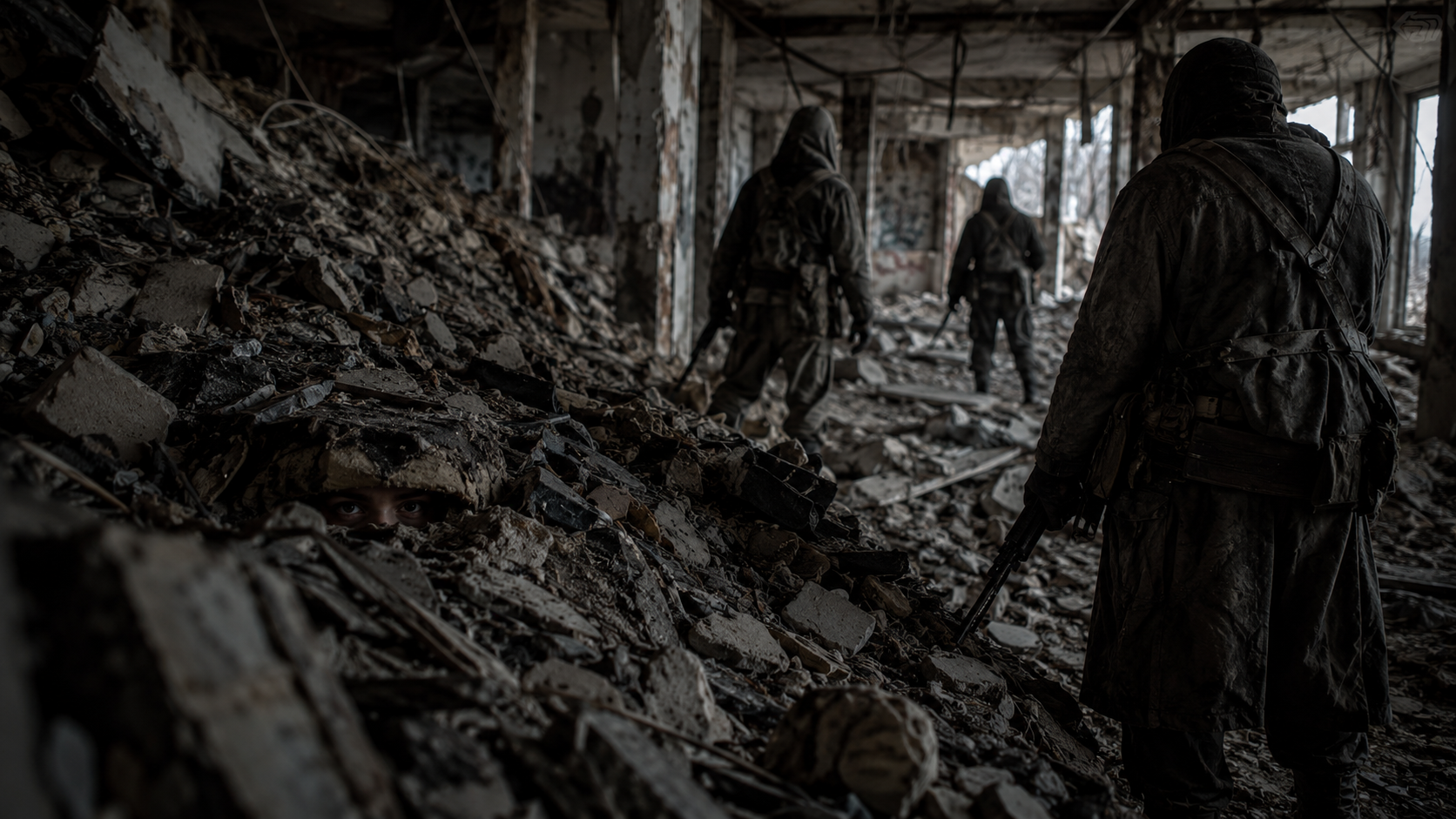
My books are dystopian and post-apocalyptic fiction.
I am perfectly aware that I did not choose the easiest possible genre.
I did not write to market. I wrote the story I wanted to tell.
That is my choice, and I own it.
The beta readers who have read the material have been encouraging. They tell me the story works. They tell me the world-building is strong. They tell me there is an audience for it.
Great.
Where is that audience?
People say you need to find them, your audience members. OK. Where do I find them? That is the part nobody seems able to answer.
I started compiling lists of blogs, forums, communities and websites that focus on my genre and adjacent interests. Two-thirds of what I found are effectively dead.
Some have been on hiatus for months or years. Some have stopped accepting submissions. Some barely appear to be maintained anymore.
And the communities that are active often understandably do not want authors showing up simply to promote their books.
I actually agree with that. People are tired of being sold to. So I understand the rules.
But it leaves an uncomfortable question:
What exactly are new authors supposed to do?
The Blurb Problem
The standard advice is to get your keywords right, write a compelling blurb and create a good cover.
I agree.
The blurb, however, may be one of the strangest things writers are expected to do. You have to tell the reader what the book is about without really telling them what the book is about.
You need to communicate what they should feel. You need to establish expectations. You need to indicate genre. You need to make the story sound compelling. But you cannot rely too heavily on terminology the reader does not understand yet, because your world is new to them. And you cannot simply summarise the plot because that is not necessarily a good sales pitch.
I have spent an absurd amount of time thinking about blurbs. Part of me still thinks writers should not be responsible for writing them. But I understand why we are.
Then There Are Covers
A cover has one primary job before anything else happens:
Get someone to stop scrolling.
I understand that.
It also has to communicate genre quickly. It has to work as a thumbnail. The typography has to remain readable at a tiny size.
Again, I understand the theory.
But there is a problem with affordable covers.
A lot of the covers available to an independent author on a limited budget amount to stock photography, another stock photograph of the location, some Photoshop work and royalty-free typography.
I can do that myself.
And if I can do it myself, it does not necessarily make much sense to pay someone else to do it. All I know is that it will look as cheap and as ugly as what is on countless covers websites shovelling the same crap.
I used to hire artists for comic-book covers and graphic novels in another life. Most of those experiences were good. Some of the results were not exactly what I wanted, but they were serviceable.
Then there was the other 25%.
Ghosting. Missed deadlines. Disappearing acts. People asking for advances and never delivering.
Endless arguments because the artist decided that what I had asked for in the brief was not actually what I needed.
If I am wrong, I will own it. But if you hate what I am asking you to create, do not take the job.
That seems fairly straightforward.
And then there is AI.
AI as a Tool
This is where I know I will lose some people.
If you take whatever comes out of your first AI prompt, slap it onto a cover and call the job finished, then yes, I understand the criticism.
But that is not how I use it. I treat AI as a tool. Same as Photoshop.
Sometimes I generate dozens of versions before getting something remotely close to what I see in my head. Sometimes I take pieces from different generations and bring them into Affinity. I cut things apart. I recombine them. I alter compositions. I correct details. I work on lighting, colour, contrast, texture and noise.
Eventually, I am modifying the image into something much closer to the image I actually want.
I am not claiming to be the artist.
I am directing the image. Like I used to direct movies. And that distinction matters to me.
AI is the closest tool I have ever found for translating something that exists very clearly in my head into an image that can actually be used. It does not always work and we had epic fights, especially since they seem to neuter these things more and more and the slightest hint of even fictional romance or violence triggers filters and sermons about safety. We got one about a story about a potato gun… I kid you not. Got a lecture about taking care of wildlife when I ask for an illustration of a zombie whale… This has become a problem on its own, for another rant.
So yes, I use AI for my covers.
I do my own typography. I choose my fonts. I make sure the genre is immediately apparent. I make sure the title remains legible when the cover is reduced to a tiny thumbnail.
Will some people dislike that I use AI?
Absolutely. That is their right.
But I do not subscribe to the idea that everyone who uses an AI tool is somehow going to be universally rejected by readers.
Like every other tool, using it badly produces bad results.
One prompt and “go” is not a creative process.
There is still work involved.
“Build Your Audience”
This is probably the advice that frustrates me the most.
“Build your audience.”
Okay. How?
“Create an avatar of your ideal reader.”
Okay. Who is my ideal reader? I never sold a book before. I have no idea who or why anyone would like what I wrote.
What do they do these people?
How old are they?
Where do they live?
What websites do they visit?
What communities do they belong to?
What other books do they read?
How do I know?
I am sure there are sophisticated ways of researching this. I am sure there are people who have built entire businesses around doing exactly that.
But at the level of an unknown author starting from zero, it can feel like theatre.
Create a fictional person representing the person who might like your book.
Then go find that fictional person. It feels like putting lipstick on the same problem. And no amount of writing ads for a fictional character is going to help it, no matter how much the gurus tell you it will.
The problem is still discoverability.
So How Do You Find the Readers?
This is where I am currently stuck. I have done the obvious things:
The books are written.
They are being edited.
Keywords have been researched.
Blurbs have been rewritten until I am blue in the face.
Covers have been developed.
ARC requests have gone out (and drowned in the same void).
Promotion sites have been investigated.
Communities have been researched.
Potential blogs have been researched.
Social media has been explored.
And yet I still have the same fundamental problem:
How do I put this book in front of the small number of people who might actually love it?
Not millions of people. Not even thousands.
I would settle for a dozen at this point.
The irony is that I cannot simply go into many communities and ask them to read my book because promotion is frowned upon. Again, I understand why.
I have also tried ARC communities, only to find myself buried beneath an ocean of romance titles.
Those books deserve their readers. But my readers probably are not necessarily hanging out in exactly the same places.
So I end up in a strange position where I am encouraged to “find my audience” while simultaneously being told not to promote to people who might actually constitute that audience.
I STILL Don’t Have an Answer Yet
I am not writing this as someone who has figured it out. Quite the opposite.
I am writing it because I have not.
I am exhausted by the amount of research involved in trying to understand this ecosystem, particularly when so much of the advice eventually collapses into the same handful of platitudes:
Build your audience. Use social media. Run ads. Get reviews. Optimise your keywords. Write a great blurb. Have a great cover. Find your ideal reader.
All of those things may be true. But none of them answers the first question:
How does an unknown author get discovered in the first place?
Perhaps there is no answer.
Perhaps it is simply a matter of persistence and probability. Publish enough books, keep improving, keep experimenting, and eventually some of them find their way to the right readers.
I hope so. Because I am not looking for fame.I am not looking for a bestseller.
I am not even particularly interested in becoming some kind of publishing success story.
I just want to find the people who might enjoy the stories I spent years writing.
Right now, discoverability is the biggest problem I have encountered as an independent author.
And I have not solved it yet. And solving problems creatively was something I used to enjoyed in my past projects. But it feels more and more like things are gatekeeped into oblivion.
It looks like the answers will be for another time.
A new post-apocalyptic story from Canada. Every month.
The earlier you join, the larger your library becomes.
Join now. Start building your library before the next hundred.
 Stéphane Roy is a lifelong reader and writer with a deep love for science fiction, apocalyptic worlds, and tightly constructed mysteries. This is his first novel. He lives in the Yukon with his dog and his aquarium, where long winters, silence, and wide, sometimes glowing, skies leave plenty of room for imagining the end of the world, and what might come after it. He is also waiting, with cautious optimism, for the aliens to finally reveal themselves and straighten us all out.