
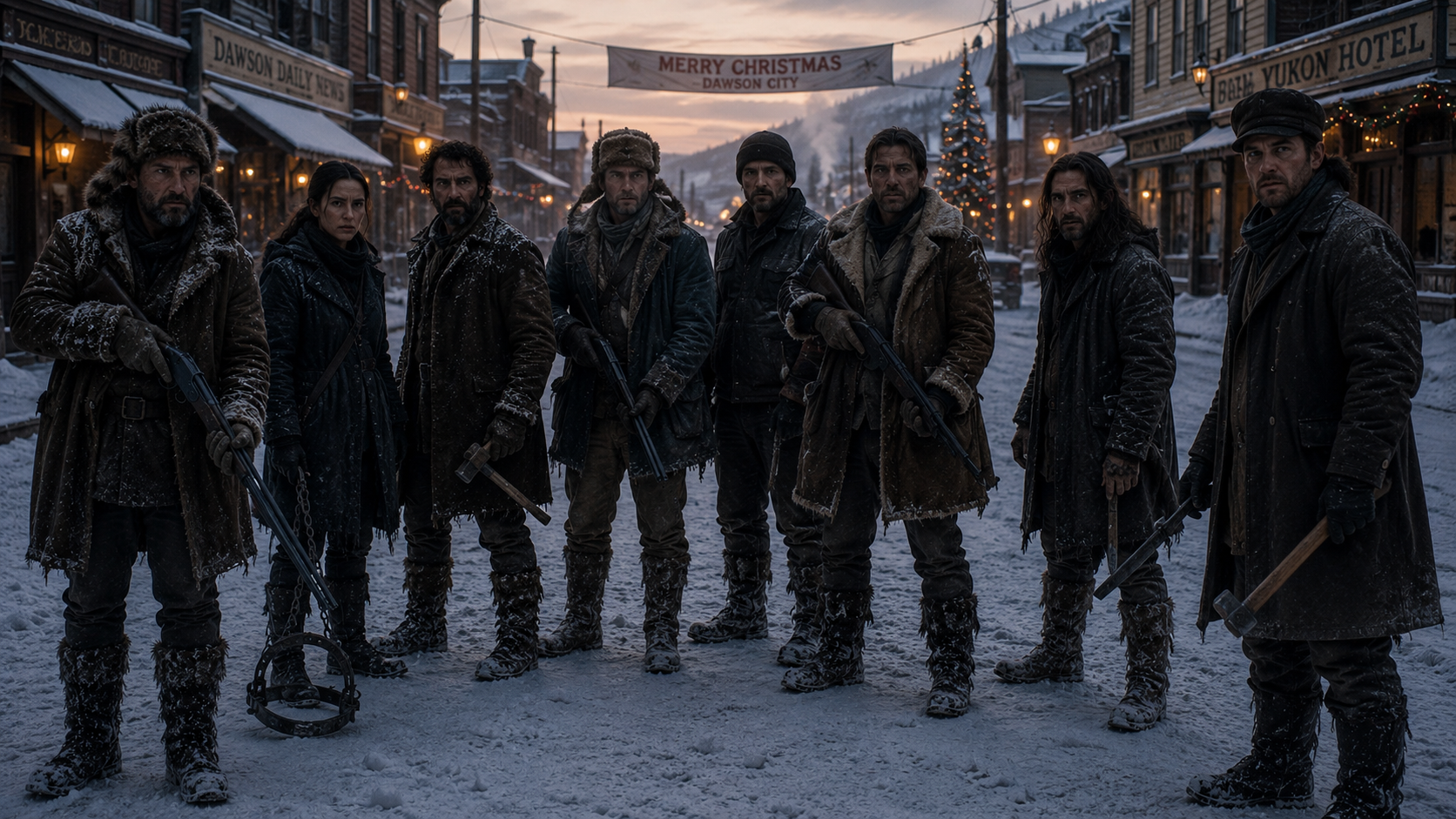
BOOK VIII: COLD STORAGE CHARACTERS
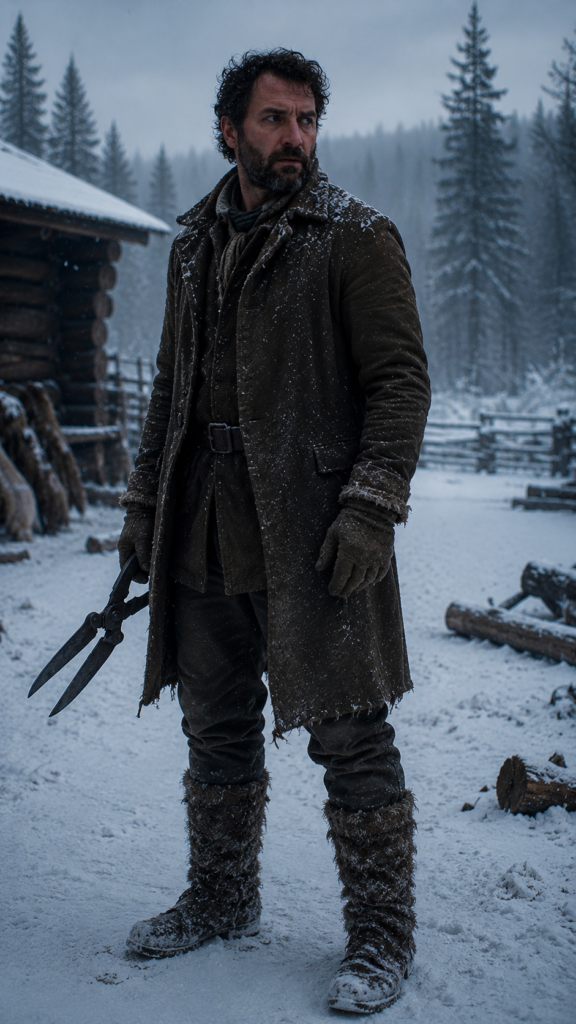
EDOUARD MARSH:
Edouard Marsh traps the north line above Dawson City and keeps the kind of records nobody asks for anymore: a hardware-store calendar repurposed years past its grid, a trap log with every reset noted, a pocket watch, and a Sourtoe Cocktail certificate in his breast pocket for the toe a wolverine took. Everything he meets gets the same treatment, weather, ravens and bad news alike: it goes into the log, gets priced, and gets acted on or filed. The Yukon in winter is mostly nothing for him. He stopped hearing the nothing as silence a long time ago. To him it is all information.
His missing toe has been an instrument for a year and a half, aching ahead of weather changes, and it has never been wrong. What it reports on the twenty-fourth of December matches no weather he knows. He files it, and walks into town anyway. Dawson has four hundred people, one generator, and a tradition to maintain, and the aurora overhead is doing something auroras normally do not.
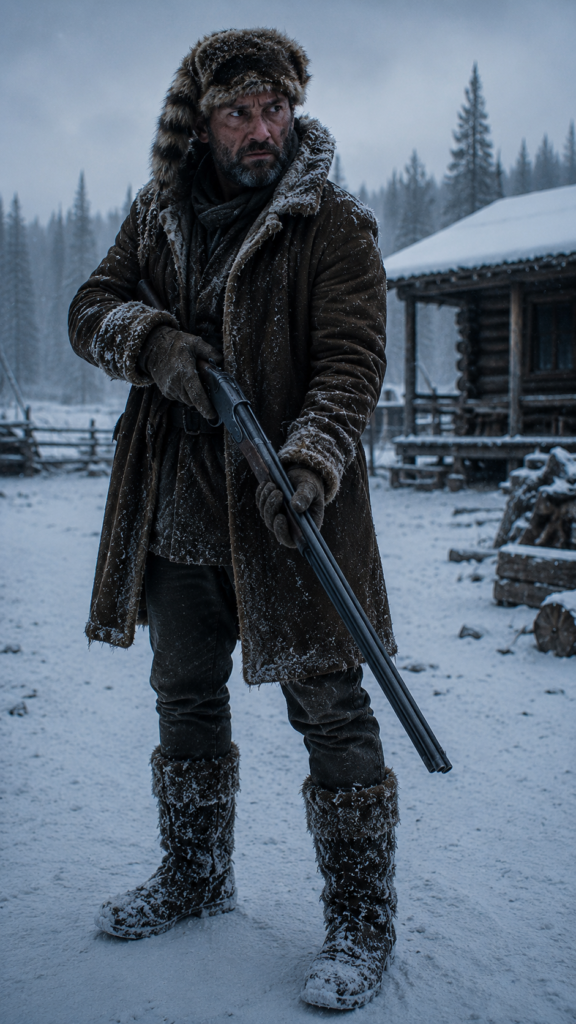
LANCE:
Lance is a competent trapper, a good friend and a pillar of the small community the collapse left standing, and he is a ladies’ man who has somehow stayed single. Desiree, his current friend with benefits, is the reason those two facts have started arguing with each other: he has been thinking hard about asking her to marry him, and having a hard time deciding.
He decides that if he was going to do anything about it, it would be on Christmas, and he is resolute in his intention of locking his decision on the walk home. It is the twenty-third of December, and a faint purple aurora has risen over the Yukon, strange against the stars, while the pioneers under the cemetery snow stop sleeping. Lance takes the shortcut home through their graves.
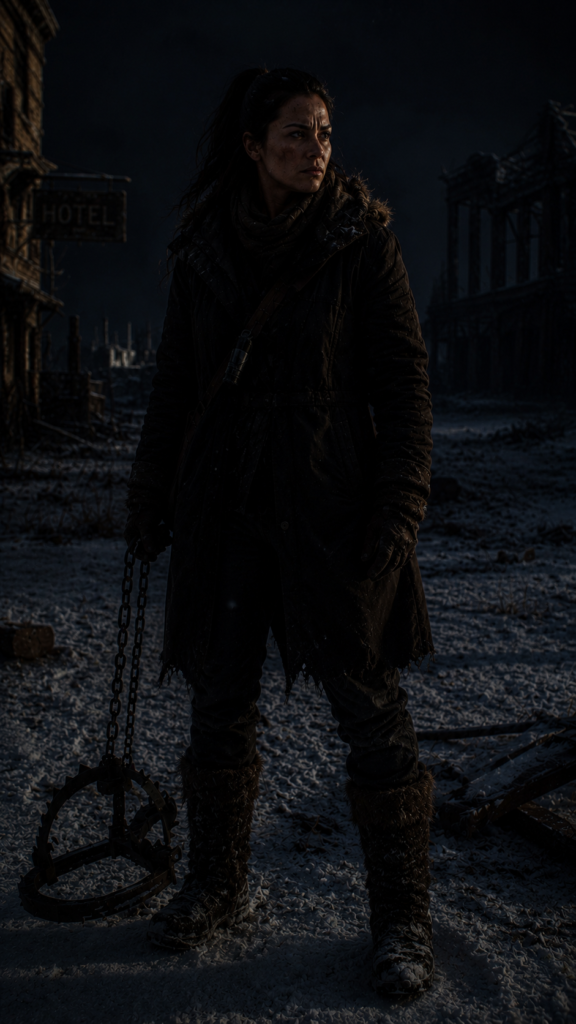
MARCIA:
Marcia opens her door before the second knock lands, parka already on, crowbar already in hand, her face wearing the settled look of a person whose night has already been explained to her. She listens with her chair tipped back and her eyes half shut, which is her full attention. She is the best tactical mind on the defence: reads a situation before it finishes forming, wastes no motion, and keeps the night’s minutes in the saloon’s credit ledger, turned to the first blank page.
Her one standing order, offered sideways to whoever can use it, is still keeping men on their feet hours later: don’t stand still near them, keep moving. She owns one of the four crowbars in town, and the sentence that goes with it: “Mine stays with me.” When the direction question comes up, it is hers by right.
Jeb McCallum:
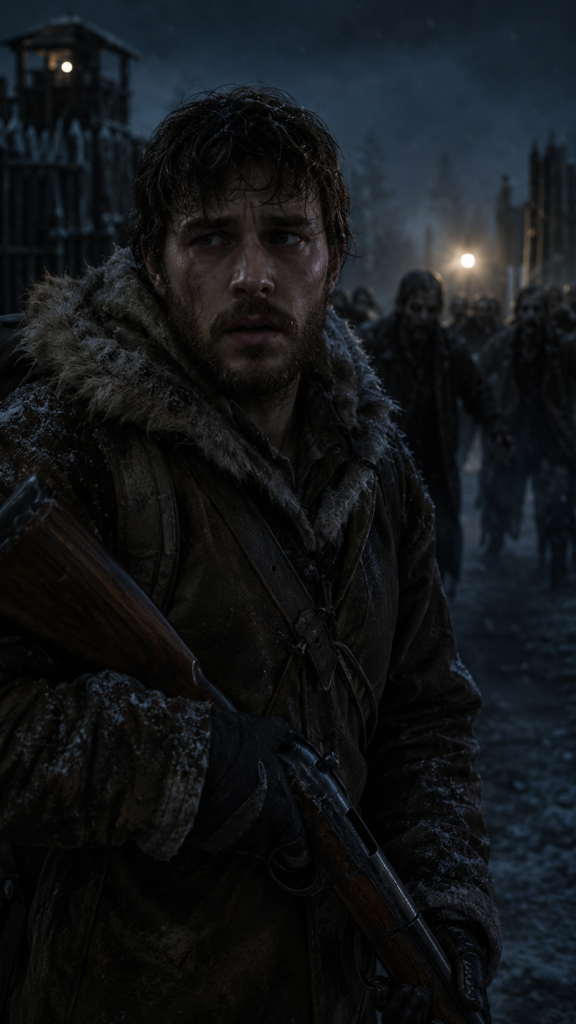
Jeb McCallum is the reason the jar is empty. Three nights before the book opens, on a bet he could not cover, he swallowed the last Sourtoe toe in the Yukon, and the town has been not-looking-at-him with great precision ever since: empty stools on both sides, a drink poured flat, and a fine of twenty-five hundred (now worthless and no longer in exisence) dollars or a toe of his own, and he can pay neither. A man of forty, built along the lines of the loads he has carried, in hard places before the collapse and since.
When the graves open, he volunteers. “I’ll come.” It is the first thing anyone has accepted from Jeb in three days. It is also the last thing he says out loud in the whole book: everything after that he says by showing up, taking the position with the most work in it and the least margin, a man who has decided the price is the point.
THE CAPTAIN:
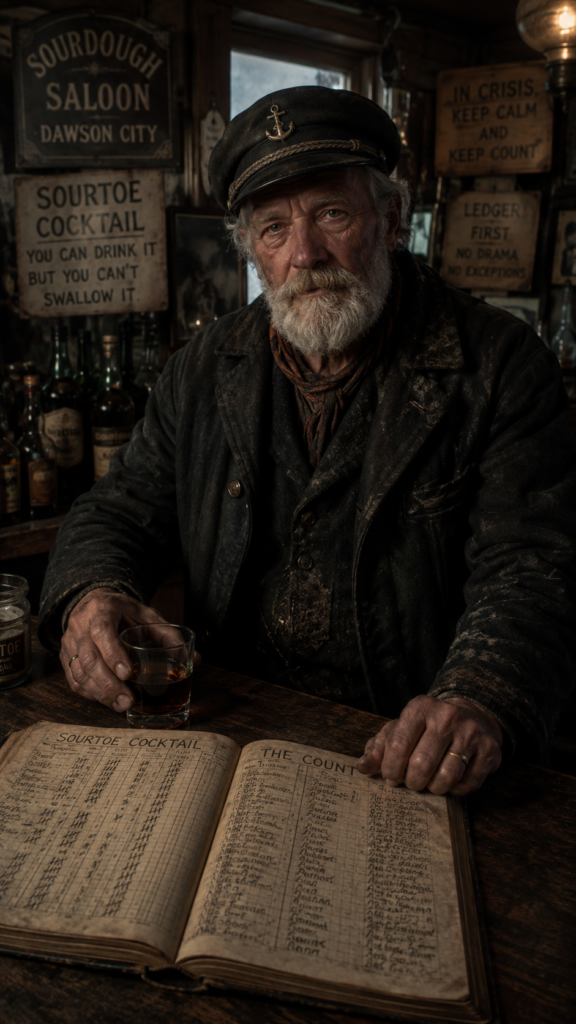
The Captain runs the Sourdough Saloon in the Downtown Hotel, and the saloon is the one room in Dawson that stays awake: warm, lit all night, coffee always on, the watch kept from behind the bar. The Sourtoe tradition has passed through six consecutive Captains in its eighty three years, and his is the current hand on the ledger, the jar and the poker-burned rule board.
He treats everything, including the current emergency, as a logistics problem to be managed without drama. He does not leave his post. The watch post does not walk. Whatever the night brings to the door of the Downtown Hotel, the door opens on its weighted hinge with the sound it always makes, and the coffee is on before anyone reaches it. “We’re in the Yukon,” he says, when it is observed that nothing is behaving. “Of course they’re different.”
Hank Devereux:
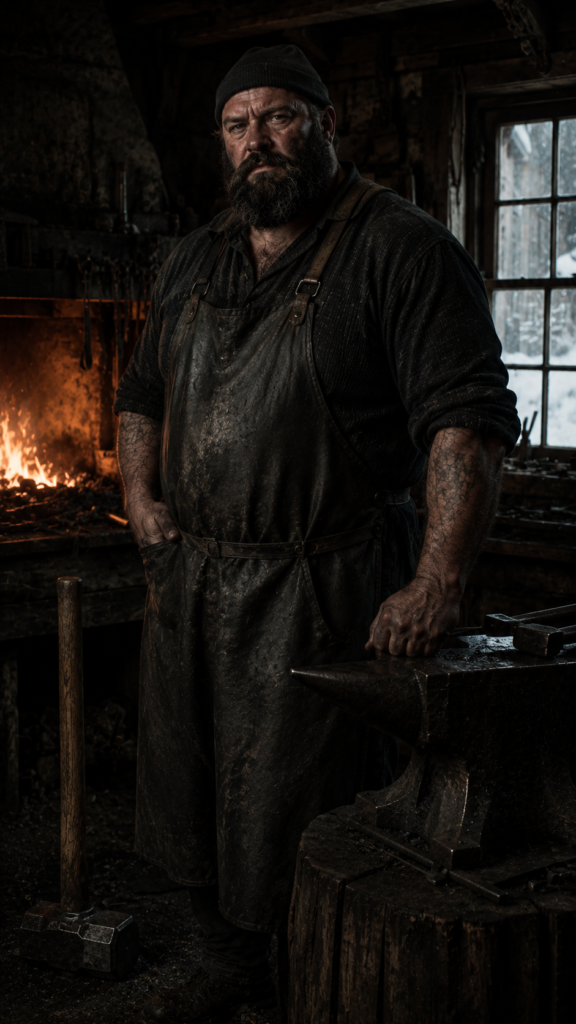
Hank Devereux is the closest thing Dawson has had to a blacksmith since the collapse, which means the man who fixes things with metal and heat: the generator, the water pump, and the thermal pipeline he welded himself out of salvaged well casing, aircraft insulation and a quantity of profanity the town still speaks of with respect. He lives four houses from the cemetery fence, which made his the best or the worst address in town depending on information he did not have yet.
He thinks in forge rules, one variable at a time, nothing swung in anger, and he does not trust a result he has produced only once. He is the most reliably awake man in Dawson, and when the town needs hands, his are the ones asked for first.
DALTON:
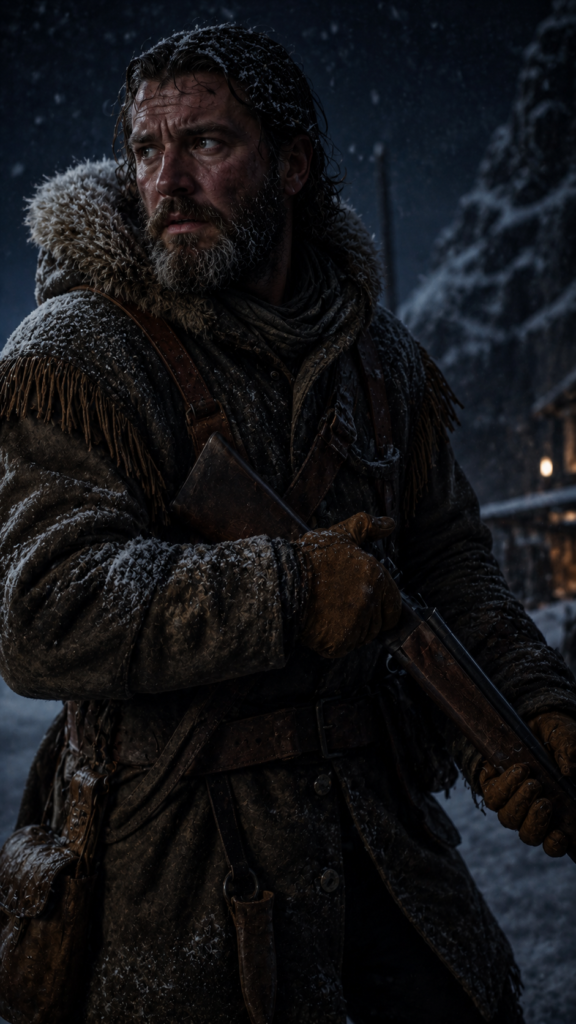
Dalton is twenty-six, up from somewhere south three years back, and he never told anyone exactly where, so there was nowhere to send the news. He traps for a living and carries the confidence of a man whose experience has so far always been sufficient to his situations, and his experience is the rifle.
When the dead come up out of the ground at the Yukon Order of Pioneers cemetery, Dalton is the first to open fire, not out of recklessness, only working from the one playbook he has: things coming out of the ground, you shoot them. When the shooting does nothing, he says so flatly, “What the hell?” a statement about the world, in a tone that says the world has some explaining to do.
BOWIE:
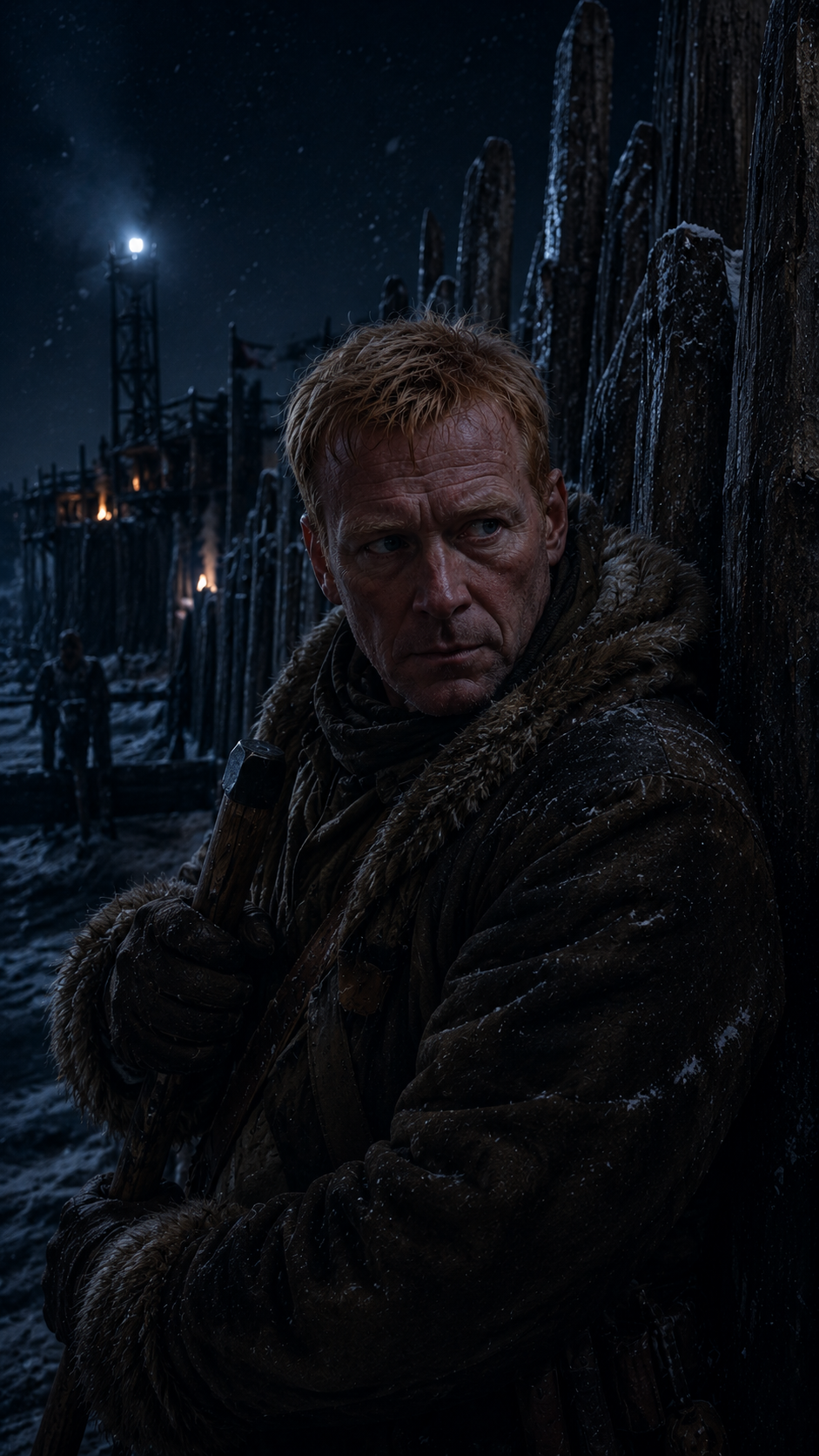
Bowie’s trapline runs far east, and he walks it alone, which has been legal tender for character out here since long before the gold. He speaks maybe nine words a night and the book quotes none of them. His are silences the town knows how to read.
When the two mauls come back through the saloon door, Bowie picks one up and does not put it down again, sitting by the stove with it across his knees like a dog that has chosen its owner. He has taken a whetstone to the face of it, which does nothing for a blunt tool, and everybody understands anyway. When the work starts, he takes the near edge of the rank, unassigned, as water goes downhill.
RIEL:
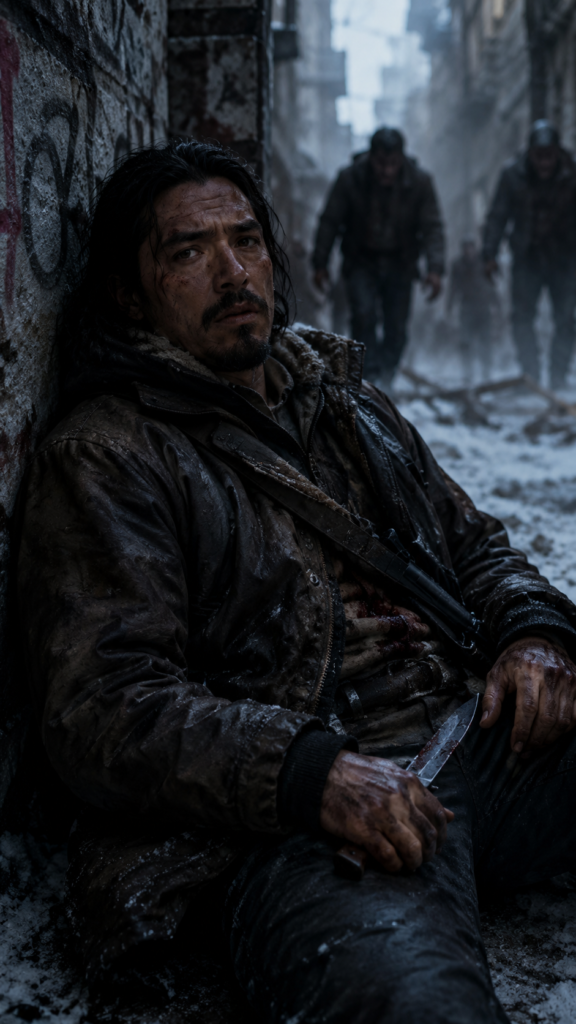
Riel has been in the country fifty years, and in fifty years it has never once caught him exaggerating. He is the town’s steadiness made audible: reports traffic in the flat voice of a man reporting weather, reads distances off his own pulse, and treats sleep as a formality he observes for form’s sake. Father of two. A steady man reporting the steadiness of the world.
It is Riel who settles the room’s first question about the graves: they have been in the ground since 1898, a hundred and sixty years, and that ground doesn’t move. And it is Riel who watches the things long enough, four metres off, to file the night’s most useful fact: they don’t breathe in. Only out.
 Stéphane Roy is a lifelong reader and writer with a deep love for science fiction, apocalyptic worlds, and tightly constructed mysteries. This is his first novel. He lives in the Yukon with his dog and his aquarium, where long winters, silence, and wide, sometimes glowing, skies leave plenty of room for imagining the end of the world, and what might come after it. He is also waiting, with cautious optimism, for the aliens to finally reveal themselves and straighten us all out.