
LOCATIONS BOOK I: THE REFUSAL
Book I: The Refusal locations unfold across a landscape shaped by collapse, ritual, and systems that survived humanity better than people did.
THE CAVE
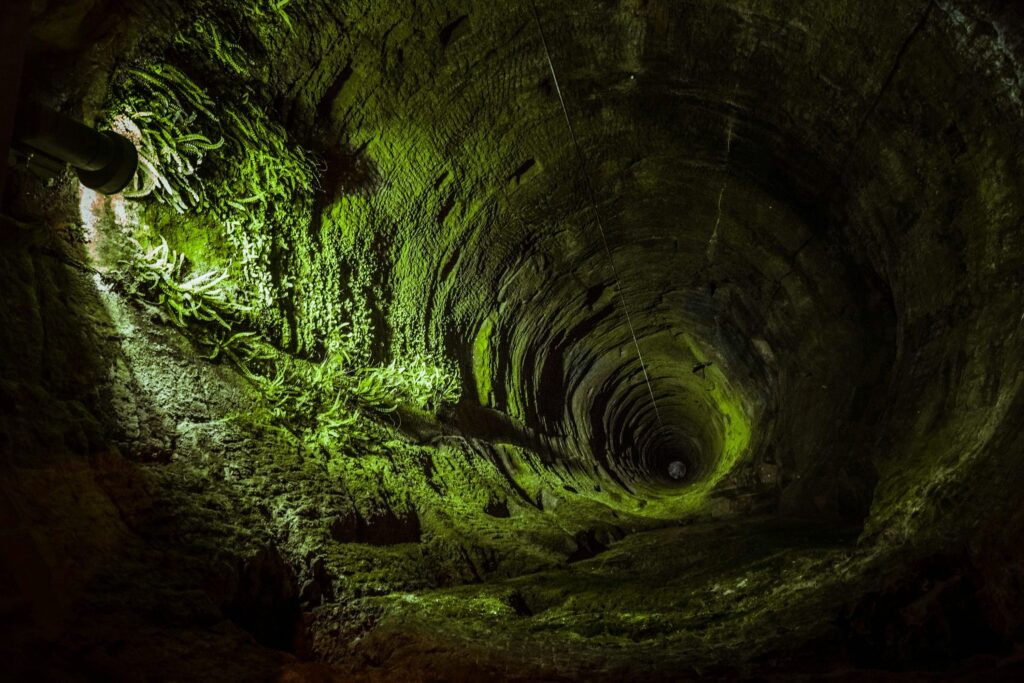
The Cave is a hidden limestone refuge buried beneath Pius-XII Park, sealed behind an iron gate and reinforced concrete door deep within Montréal’s ancient stone bedrock. Cold, stable, and isolated from the poisoned surface, it sheltered Una and her family for years after the fall, its underground rivers and narrow passages protecting them from radiation, storms, and the growing corruption above. The Cave breathes with its own silence: dripping water, mineral air, and distant tremors moving through the stone. To outsiders it would feel claustrophobic and primitive. To Una, it was the closest thing the world still had to safety.
THE STADIUM
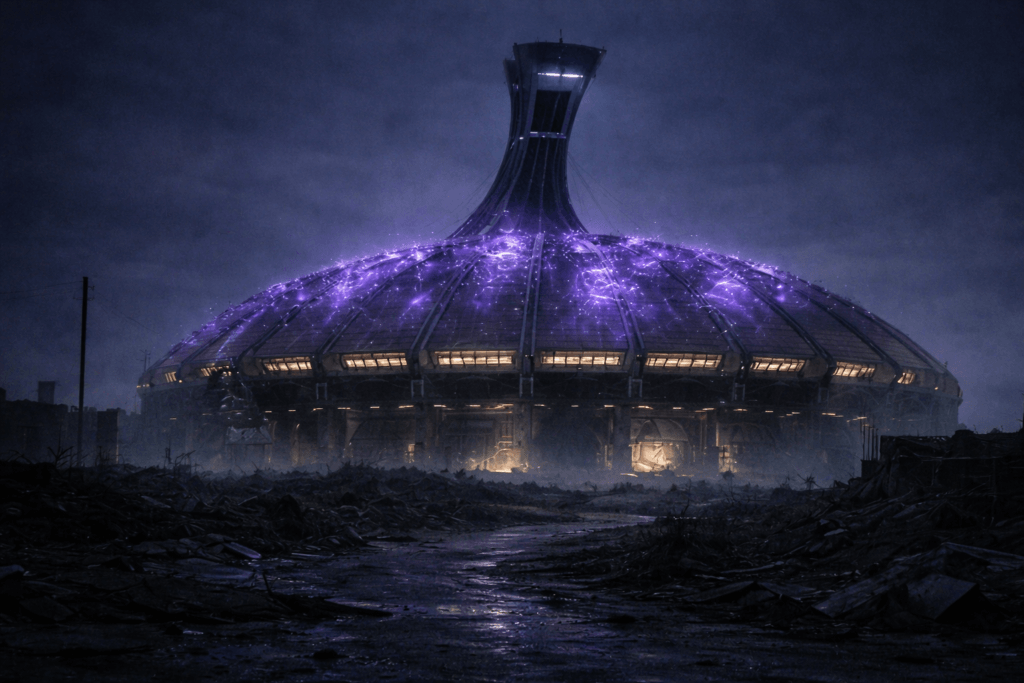
The Stadium, once Montréal’s Olympic Stadium, aka the Big O, is the rotting heart of the Hive’s territory and the seat of Prester John’s power. Its cracked concrete shell towers above the ruined city like a diseased cathedral, draped in bone totems, hanging cages, and strips of stitched skin that rattle in the wind beneath the leaning tower. Inside, thousands live under the crushing psychic pressure of the Hive, moving through dark concourses and gutted tunnels where obedience has replaced identity. The Stadium no longer feels like a structure built for human beings. It feels alive, vast and parasitic, feeding on fear, ritual, and the minds trapped within it.
THE TUNNELS
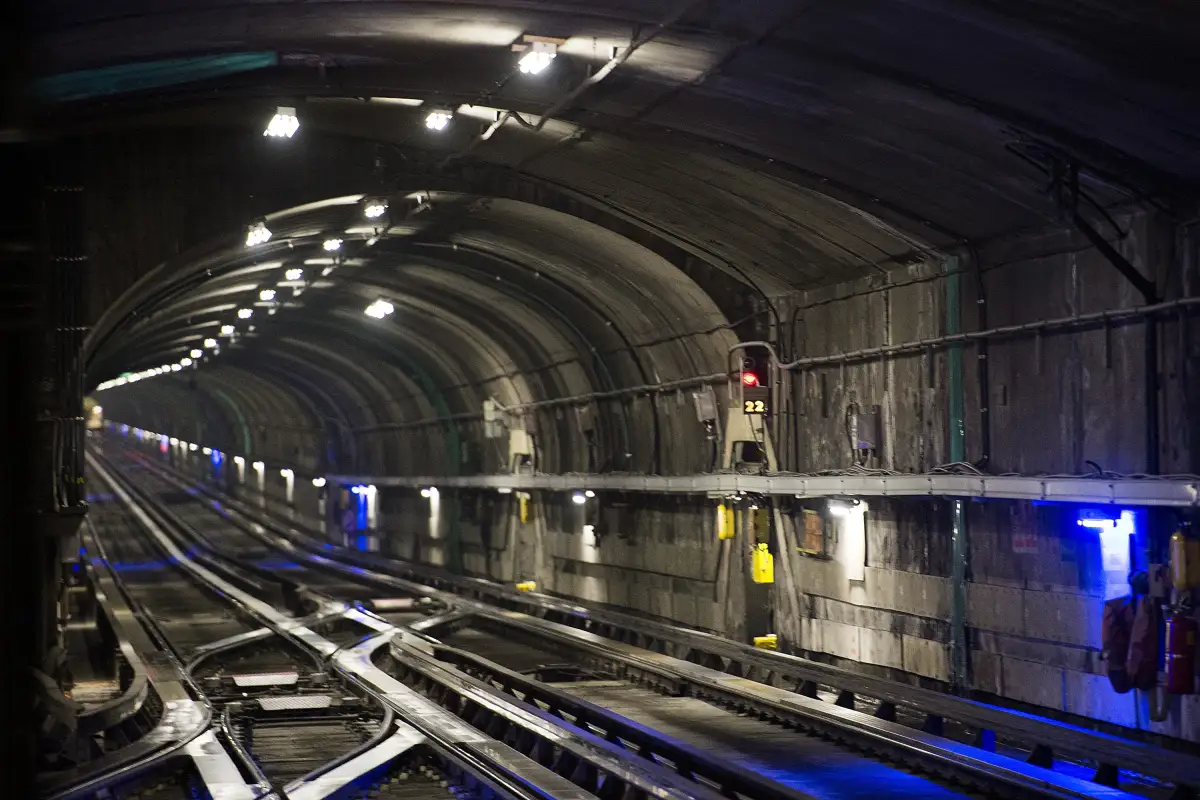
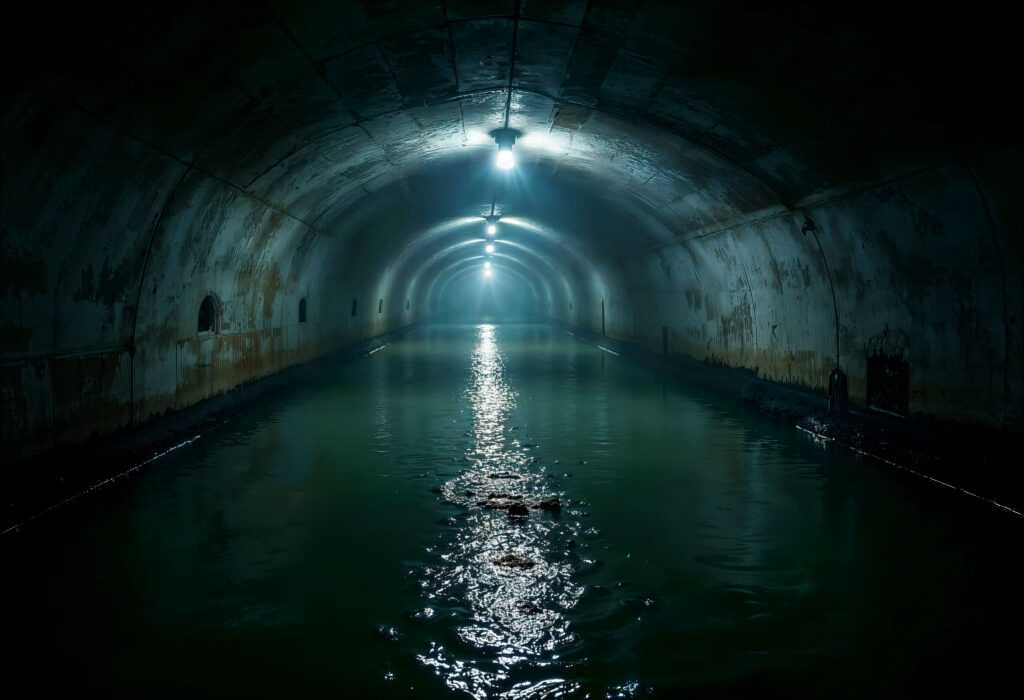
The Subway Tunnels form a vast underground labyrinth beneath Montreal, where flooded stations, collapsed platforms, and lightless rail corridors stretch for kilometers beneath the ruins of the city. Entire sections have become isolated ecosystems shaped by radiation, chemical runoff, and decades without maintenance, while others remain eerily intact, frozen in the final moments before the fall. Sound travels unpredictably through the tunnels, carrying distant footsteps, metallic groans, and voices no one can trace. Deep below the surface, the tunnels connect to things older than the city itself.
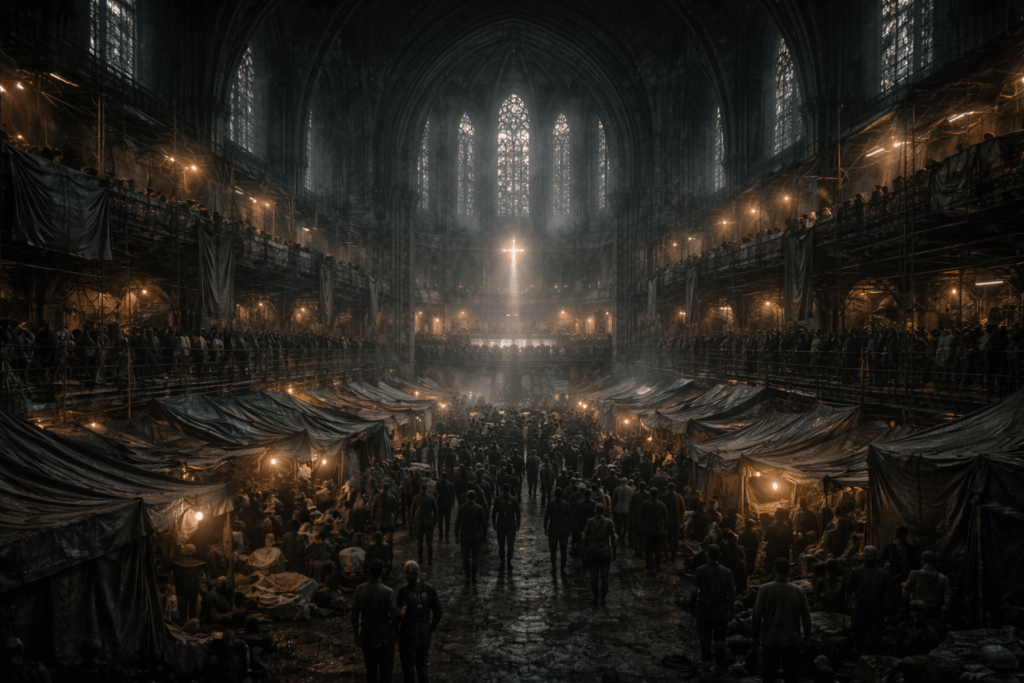
THE CATHEDRAL OF LOGIC
It is the underground core of RESO, built beneath the suspended ruins of Christ Church Cathedral and the buried commercial arteries of downtown Montreal. Vast concrete pillars, filtration arrays, organized scrap depots, and endless maintenance corridors stretch beneath the hanging gothic structure, transforming the old underground city into a machine built entirely around efficiency, flow, and survival through calculation.
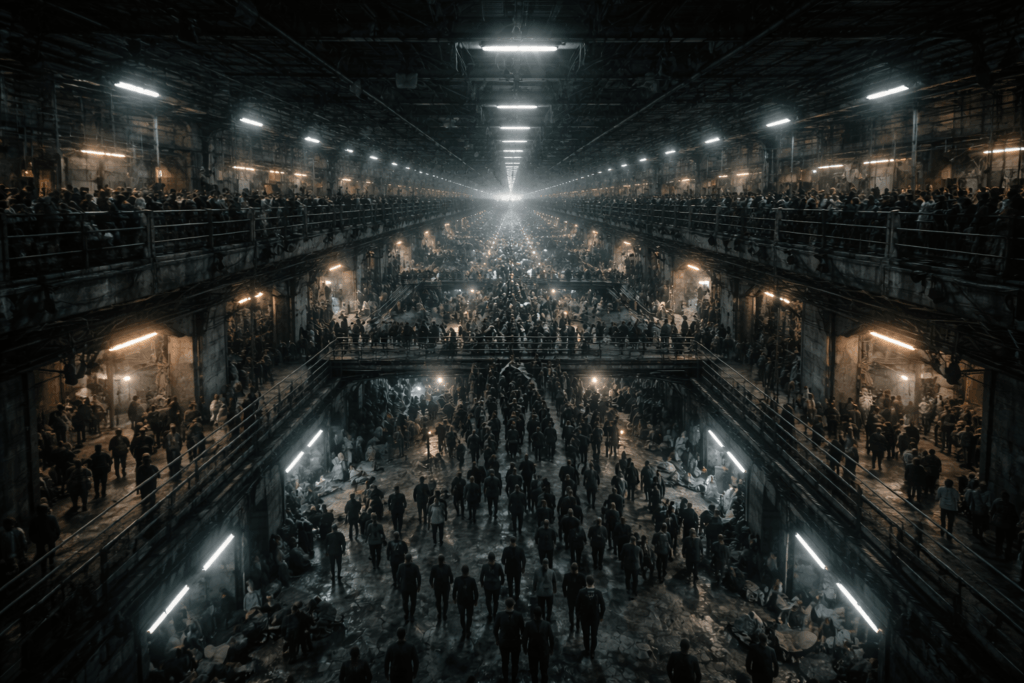
RESO
RESO is the vast underground system that evolved from Montréal’s old RÉSO network after the collapse, transforming heated pedestrian tunnels, transit corridors, malls, and service infrastructure into a self-regulating machine for human survival. What began as shelter became an architecture of optimization: routes controlled by population flow, access determined by usefulness, and entire sectors managed through predictive efficiency rather than morality or ideology. RESO does not behave like a government so much as a living logistical system, constantly rerouting people, resources, heat, air, and labour to preserve its own stability beneath the dead city above.
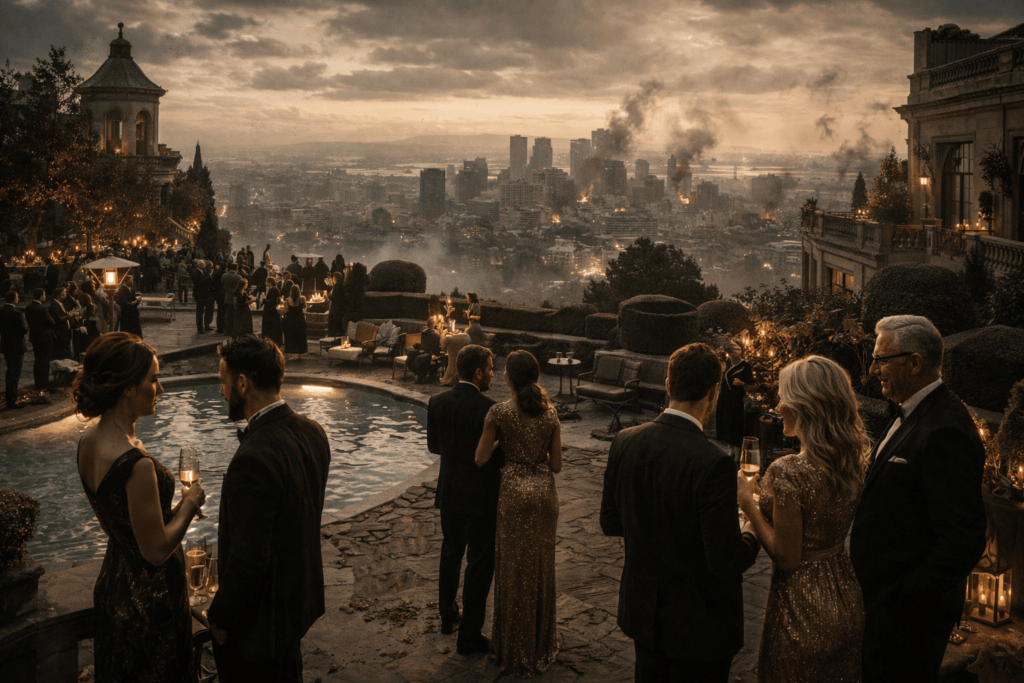
THE UPHILLS
The Uphills are RESO perfected: a climate-controlled extension of procedural governance reserved for those who benefit from optimization rather than endure it. Elevated above the city’s drift and ration lines, they inhabit curated stability while the machinery below recalibrates the rest.
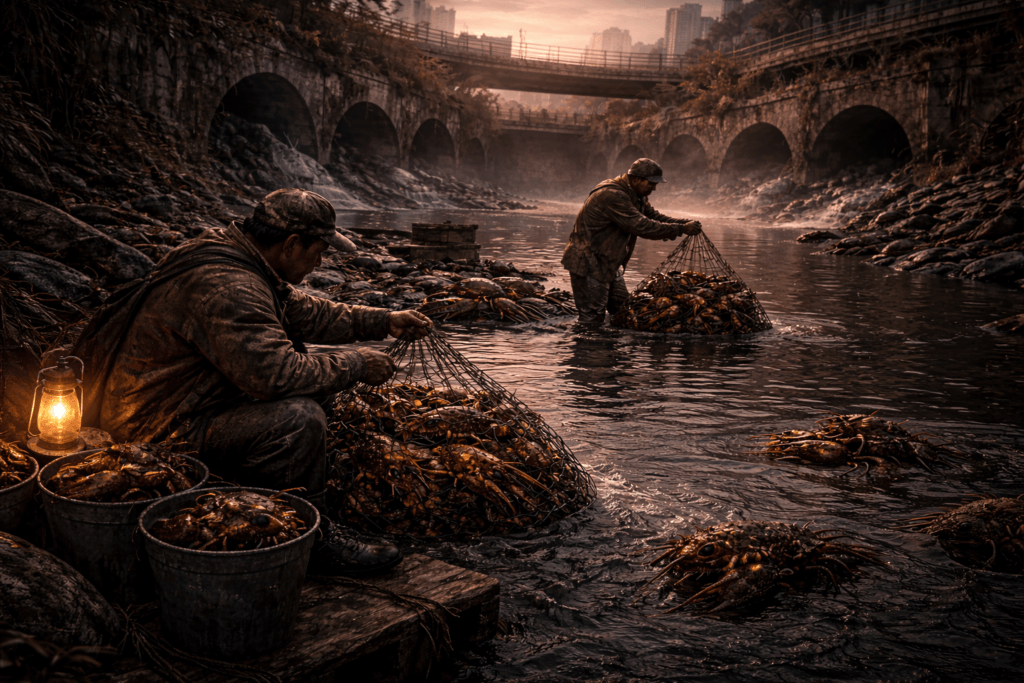
THE SUMP
The Sump is the sprawling flooded settlement that formed after RESO redirected excess water into the Lowlands, transforming the Décarie Trench into a permanent river cutting through the ruins of Montreal. What began as catastrophe slowly became one of the first true communities outside the control of the Cathedral and the Stadium, where survivors built docks, trap lines, markets, and shelters along the muddy banks of the new waterway. Massive mutated crawfish crawl through the shallows, engineers reroute old drainage systems by hand, and the smell of wet concrete, soot, and stagnant water hangs permanently in the air. Dirty, unstable, and improvised, the Sump represents something rare in the wasteland: people building a future instead of merely enduring the present.
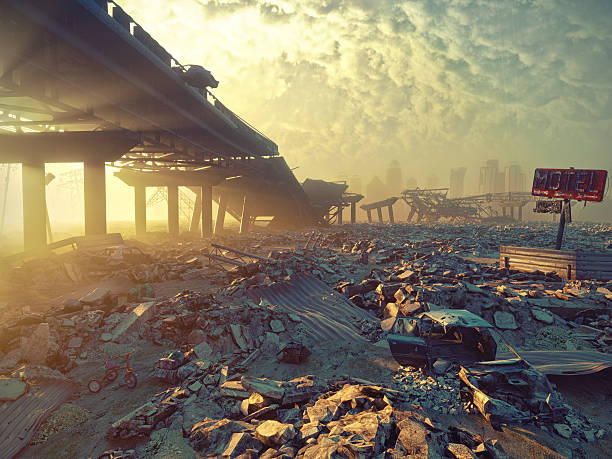
THE HIGHWAYS
The Highways are the shattered elevated arteries surrounding Montréal, their collapsed overpasses and fractured concrete spans forming a maze of wind-scoured ruins above the flooded districts below. Once built for movement and efficiency, they now serve as unstable pathways, shelters, lookout points, and territorial borders between scattered survivor groups. Rusted vehicles remain frozen in endless traffic patterns while entire sections hang broken over empty voids or disappear into floodwater and fog. From the heights, the ruined city unfolds like a dead machine beneath the open sky.
© Copyright 2026 WARRIORS OF THE LAST DAYS All rights reserved Privacy Policy
 Stéphane Roy is a lifelong reader and writer with a deep love for science fiction, apocalyptic worlds, and tightly constructed mysteries. This is his first novel. He lives in the Yukon with his dog and his aquarium, where long winters, silence, and wide, sometimes glowing, skies leave plenty of room for imagining the end of the world, and what might come after it. He is also waiting, with cautious optimism, for the aliens to finally reveal themselves and straighten us all out.