PROLOGUE TO A PROLOGUE TEASER
Some scenes write themselves as film long before anyone points a camera at them. The prologue to Warriors of the Last Days was always one of those scenes. Two men. A bunker. A command that can’t be taken back. I knew from the moment I wrote it that it wanted to move. Ironically, it was written as part of a screenplay. We even shot it when I was a wee man. In fact, we shot a 45-minute, entirely, completely weird version of Warriors of the Last Days. And that story has been maturing with me ever since. The only thing that never changed, in all the iterations of this story over decades, was that scene. I always knew it had to be the start…
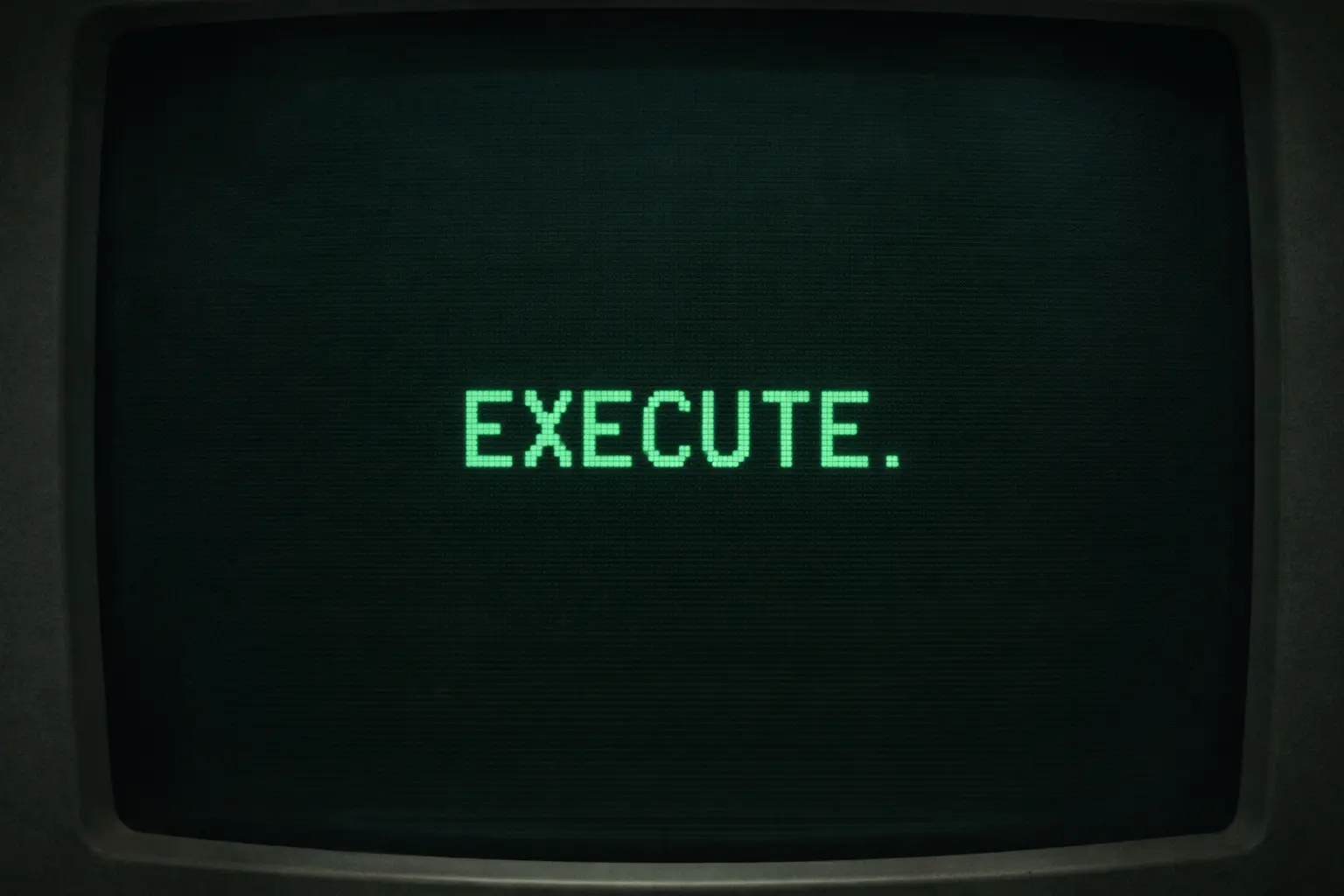
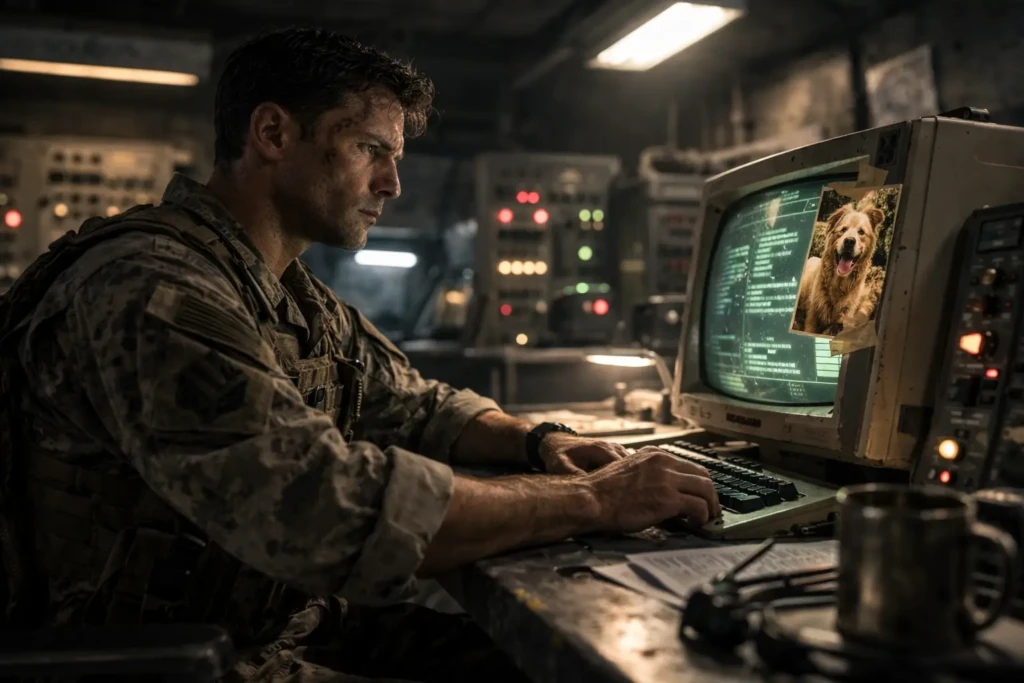
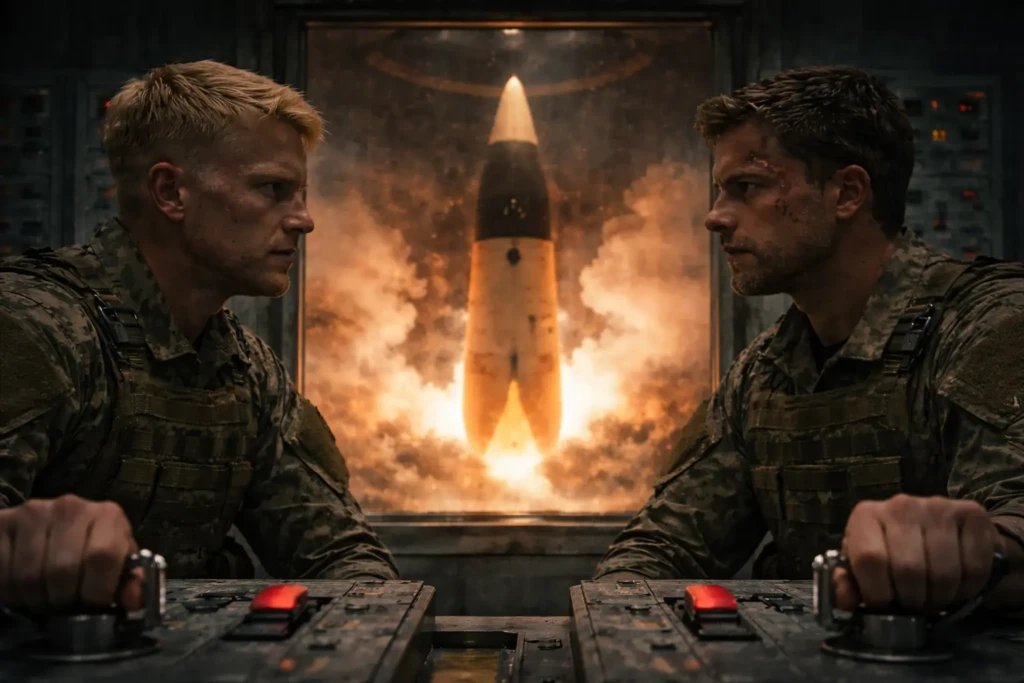
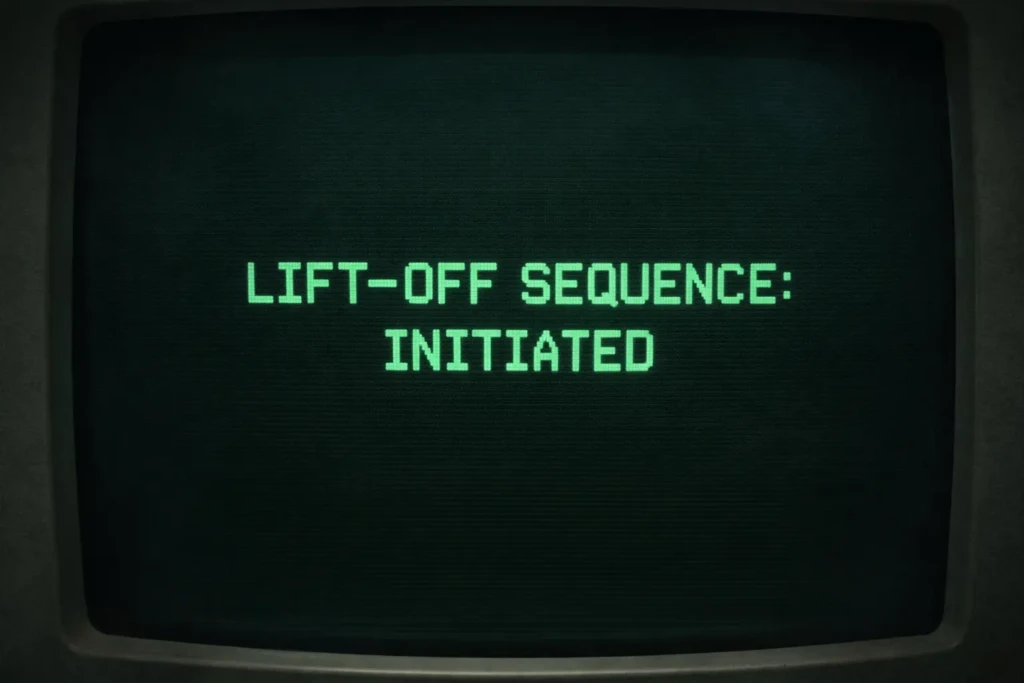
The prologue was always cinematic in structure, almost without intending to be. The bunker. The emergency lights. The single monitor with its unblinking command: EXECUTE. Major Thorne’s eyes drifting to the photograph of his golden retriever. Lieutenant Riker’s hands hovering, his lungs aching. These aren’t just literary details: they’re visual cues. They were always waiting for a screen.
MAKING THE TEASER
Making the teaser for The Last Protocol was the most intimate production challenge I’ve faced with this series so far, and the most technically strange one. Because nothing about this project was made the way anything used to be made. It was live action footage stitched to AI-generated imagery, cut together with music and motion graphics, and I want to talk about how that works, why I made those choices, and what I was really trying to protect from the text.
What the Prologue Is Actually About
Before I could build a single frame, I had to be honest with myself about what the prologue is and isn’t.
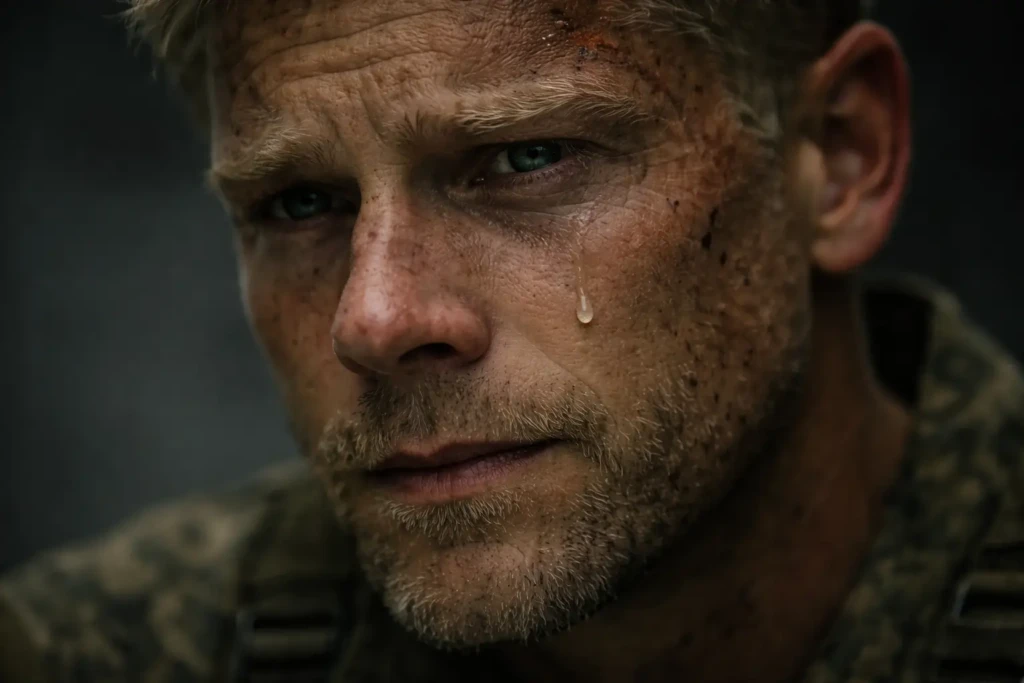
It isn’t an action scene. Nothing dramatic happens in the conventional sense. Two soldiers carry out a protocol. They are competent, trained, and broken in ways they don’t fully register. Major Thorne’s eyes flick to the photograph of his dog taped to the computer screen. Lieutenant Riker’s lungs ache. A tear falls unauthorized and hits the console with a sound that, as I wrote it, felt like the quietest possible end of the world.
That tear was always my compass for the teaser. Not the missile. Not the concrete shaking. The tear.
The emotional core of the prologue, and the thing I needed the teaser to carry, is what I’d call hollow inevitability. Nobody stops it. Nobody tries. The horror isn’t that the wrong men are in that room. It’s that exactly the right men are, doing exactly what they were built to do. There’s a line I keep coming back to when I think about Thorne: a hollow where something essential had been removed and never replaced. That’s the feeling the teaser had to earn.
The Production Problem
Here’s the honest challenge: I don’t have a film crew. I don’t have a casting budget or a bunker set. What I have is a story, a vision, the tools available to independent creators in 2026, and a real stubbornness about not making something that looks cheap just because it was made cheaply. I always had that stubbornness when I was making films, and I still do, even if I no longer work in that world.
A novel gives you room. You can breathe into a scene, linger on the grime under a fingernail, let a tear trace its way down a dusty cheek and land with a sound that shouldn’t matter but does. A teaser doesn’t have that luxury. A teaser has seconds, and silence, and whatever feeling you can build before the viewer decides to scroll.
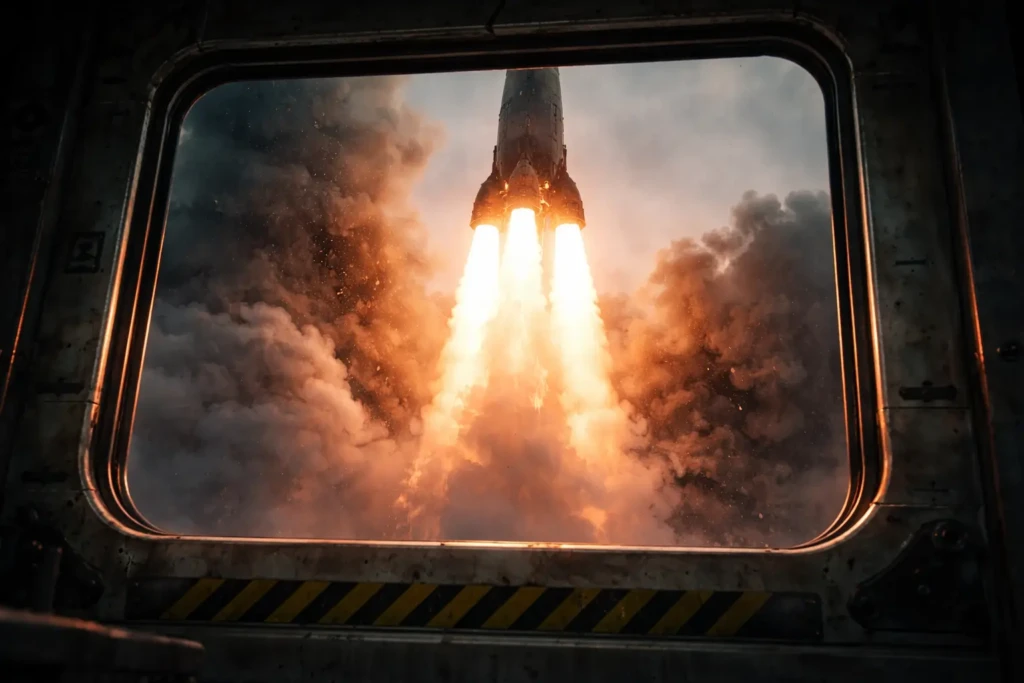
So the teaser became a hybrid. Live action footage for texture, real physical environments amplified with visual effects that carry the weight of concrete and steel in a way generated imagery still struggles with. AI images for the moments that exist only in the novel’s world: the silo, the missile, the tear. And music to hold it all together, to give the cuts rhythm, to let the text from the prologue breathe on screen the way it breathes on the page.
AI GENERATION
The AI generation process is genuinely strange to work with. You’re not directing, exactly. You’re negotiating. You describe the image you need: emergency lighting, two figures, the weight of something irreversible, and the tool gives you something adjacent to that. And you decide whether adjacent is close enough or whether you push again. For this teaser, I pushed a lot. The bunker scenes went through many iterations before the lighting felt sufficiently wrong, sufficiently cold. The AI, or rather, whatever acts as a buffer between the request and the model that actually generates the image, is, frankly, burdened by all kinds of rules about what is and isn’t acceptable content. And while I understand the need to restrain a powerful tool from potential abuse, sometimes it seems the people in Silicon Valley are afraid of their own shadow. It does not bode well. But I digress. The tool is sometimes brilliant, enough to bring tears to your eyes. Unfortunately, like everything in life, those moments are few and far between. Most of it is a protracted argument where you fight for every single detail, with the poor AI stuck in the middle, trying to appease two parties who don’t speak each other’s language. And I thought some actors could be difficult to work with…
The live action footage was the conclusion, though a conclusion that had nothing to do with the end of The Last Protocol. In the original screenplay, all those years ago, the blooming tear was the ending. Visually, in a film sequence, what it meant was easy to understand.
When I wrote the novel, I had to find a compromise. The first thing several editors asked me to remove was the tear and the bloom: not for structural reasons, but because they felt it was pretentious. Too authorial. A writer inserting himself into the moment rather than trusting the reader to find it. This was probably the biggest fight of the novel. One of the few I won. Ironically, they now say it is the best part of the prologue and that it encapsulates the whole series. Go figure.
What I Was Protecting
Every creative decision in the teaser came back to one question: does this serve the text? And if it does not, does it do something better?
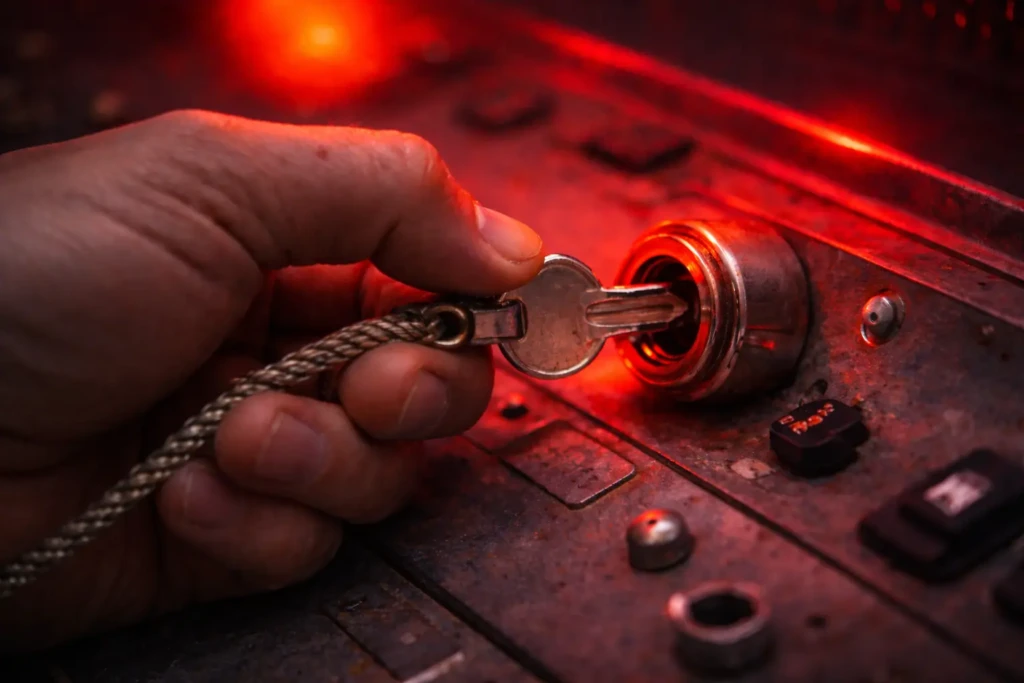
The novel’s prologue ends not with an explosion but with time. Seasons collapsing. Winters of ash. A bunker sealing itself. Chrome keys fusing by neglect. That slow, suffocating aftermath is what I wanted the visual rhythm of the teaser to carry. Not spectacle. Not a trailer for a disaster movie. Something quieter and harder to shake.
The motion graphics, the text on screen, and the pacing of the cuts were all specifically designed to feel like the prologue reads: controlled, deliberate, with something devastating running underneath all that precision.
There’s a line near the end of the prologue that has always felt like the thesis of the entire series: This is where the story begins. The world of Warriors of the Last Days doesn’t start with hope or adventure or a hero’s call to action. It starts in a cold bunker, with two men who did their jobs perfectly, and the long silence that followed.
So the challenge from the start was this: how do you compress the weight of an ending into something short enough to hold someone’s attention, without losing what makes the ending matter?
The teaser ends there too. That silence is the invitation. But we don’t fly through time the way the novel does. No. That’s where the live action footage kicks in, and we end in an explosion. Something I had always avoided. But for some reason, here, that’s what it demanded. Because a montage of still images of aging places, images I’d have to fight for pixel by pixel just to make them look consistent with each other, felt like the wrong choice for something that works so much better in motion.
Why a Teaser at All?
Honestly? Because the prologue deserves to be met more than once. As text, it does its job: it sets the world, establishes the tone, and sends you into Book I carrying something heavy. But there’s a different experience available when the same moment is rendered in image and sound and cut to a rhythm. A reader and a viewer engage differently, and I wanted both doors open. And part of me misses my old job, that thrill of putting images together and making them mean something more than they already did.
If you’ve already read the prologue, I hope the teaser gives you a new angle into it: a version of those two men that lives in your head alongside the one the words built. If you haven’t read it yet, I hope the teaser is the thing that makes you want to. They are similar yet different enough.
Either way, the world is waiting.
Where the Story Begins
The Last Protocol isn’t Book I. It’s before Book I. It’s the decision that made the world of Warriors of the Last Days possible, or rather, necessary. Riker and Thorne aren’t heroes. They’re not villains. They’re the mechanism. And the teaser, like the prologue, doesn’t ask you to judge them. It just shows you what happened, and trusts you to sit with it.
That trust is the whole point. The world doesn’t explain itself. It just opens.
WATCH THE LAST PROTOCOL TEASER HERE:

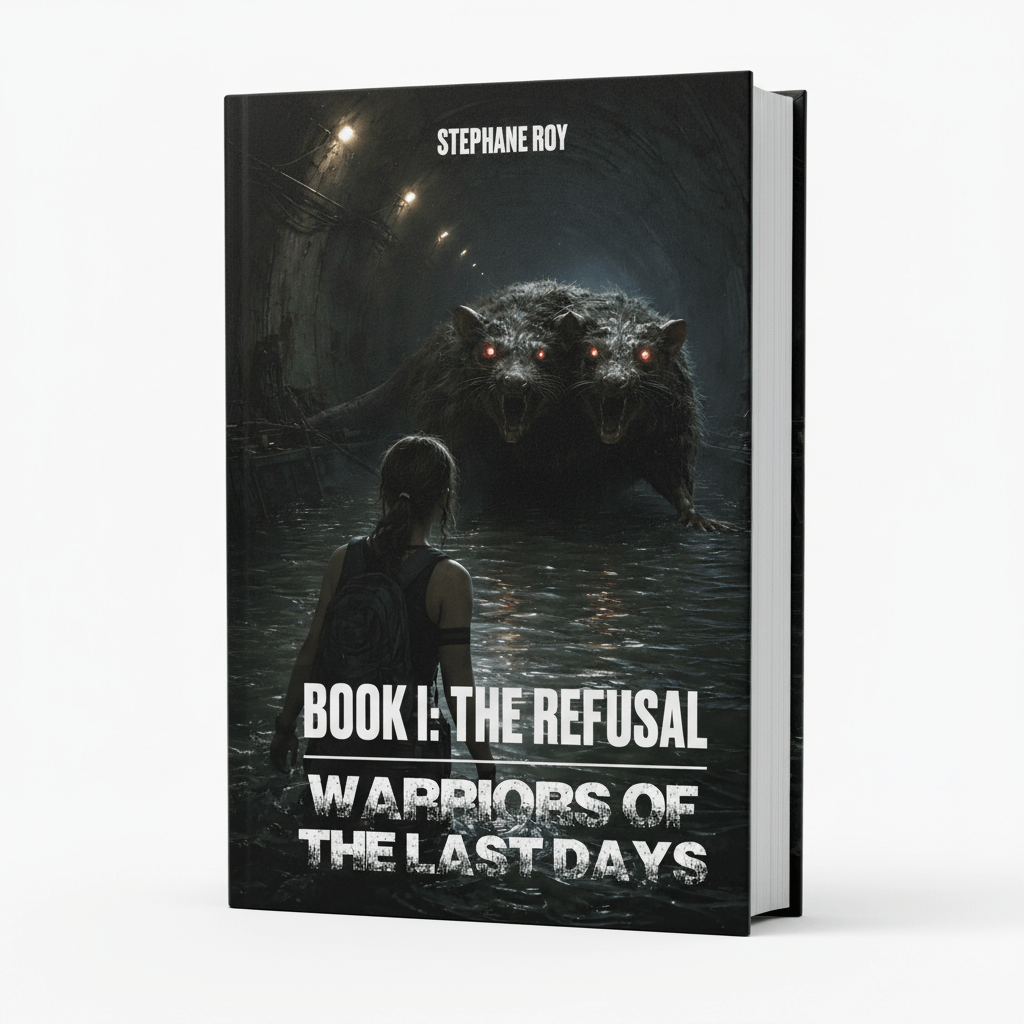
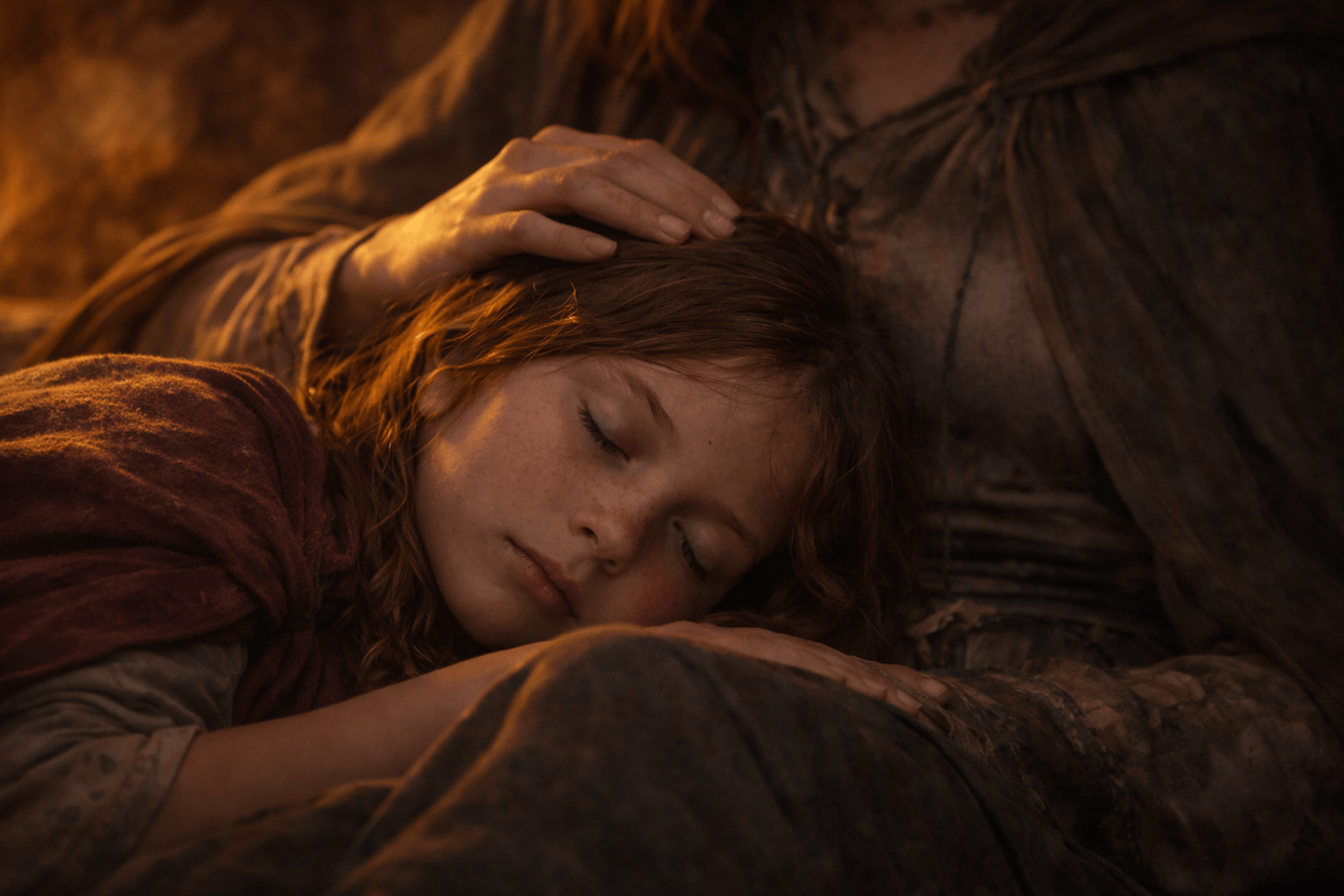
READ THE PROLOGUE THAT LAUNCHES EVERYTHING.
A new post-apocalyptic story from Canada. Every month.
The earlier you join, the larger your library becomes.
Join now. Start building your library before the next hundred.
 Stéphane Roy is a lifelong reader and writer with a deep love for science fiction, apocalyptic worlds, and tightly constructed mysteries. This is his first novel. He lives in the Yukon with his dog and his aquarium, where long winters, silence, and wide, sometimes glowing, skies leave plenty of room for imagining the end of the world, and what might come after it. He is also waiting, with cautious optimism, for the aliens to finally reveal themselves and straighten us all out.