
(COMPS) TITLES
Click on the title that interests you to see comparable titles to the tone and/or content of the novel. The content related to each books will be added about a month before the actual release dates of each books.
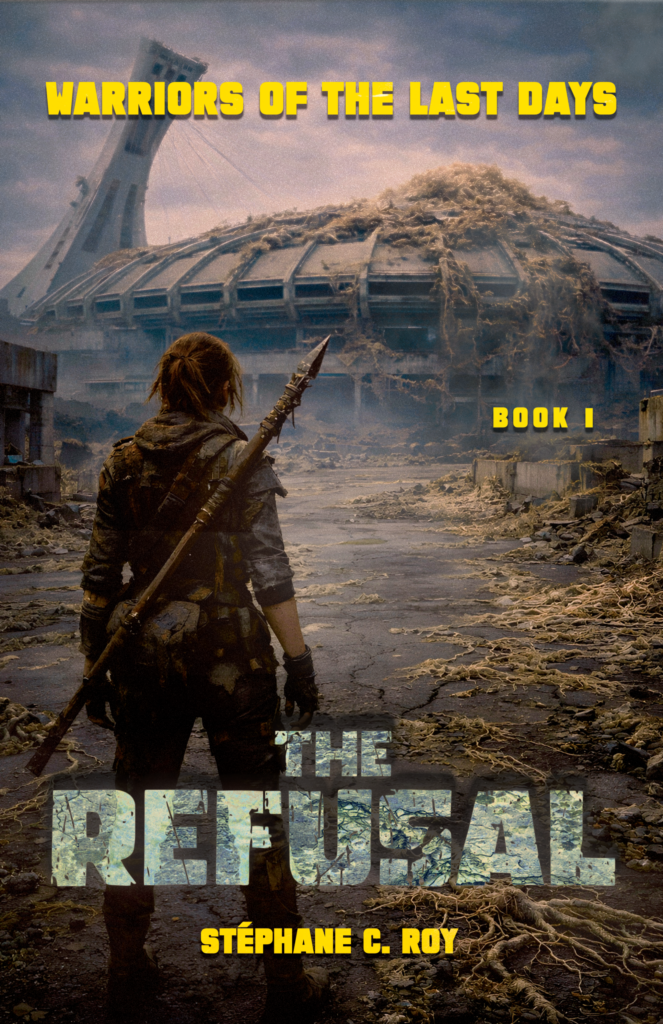
The Refusal is a post-apocalyptic survival novel set in a ruined Montreal, blending systemic collapse, underground endurance, mutant pressure, and coercive hive-like control. The titles below help situate it for booksellers, reviewers, journalists, and festival programmers.
1) The Future — Catherine Leroux
A literary Canadian dystopia concerned with environmental collapse, fractured communities, and the long social afterlife of broken systems. This is a strong comp for The Refusal’s Canadian setting, meditative tone, and attention to how collapse reshapes people as much as landscapes.
2) The Book Eaters — Sunyi Dean
A dark speculative novel about hidden societies, bodily otherness, and survival under oppressive inherited systems. It connects well to The Refusal through its mutant-horror edge, social estrangement, and its sense that survival often means resisting assimilation into something monstrous.
3) The Luminous Dead — Caitlin Starling
A claustrophobic survival novel built around confinement, endurance, bodily limits, and pressure. It is one of the clearest tonal comps for The Refusal’s underground sequences, ordeal structure, and atmosphere of isolation under constant threat.
4) The Silence — Don DeLillo
A spare, literary apocalypse novel focused on systems failure, disconnection, and the psychological texture of breakdown. It is a useful comp for The Refusal’s colder, more reflective register and its interest in collapse as something infrastructural and existential, not just spectacular.
5) The End of the World: Rise of the After Lord — H.S. Gilchrist
A post-apocalyptic novel with cult structures, systemic domination, and survival in a shattered future. It is the closest of these comps to The Refusal’s hive-pressure, oppressive collective systems, and the violent logic of surviving inside worlds bent around control.
Taken together, these titles place The Refusal at the intersection of literary Canadian dystopia, survival horror, mutant pressure, and underground endurance. It should appeal to readers who want collapse fiction with atmosphere, material realism, and psychological cost rather than triumphalist heroics.
In a drowned, shaking city where the earth itself devours the weak, a quiet ground-reader named Andy must choose between the brutal safety of a stone quarry and the inhuman order of a marching empire that never wastes a body.
The Last One by Will Dean (2023)
In a deadly reality TV survival game during a deadly contagion apocalypse, contestants navigate isolation, alliances, and moral choices in a locked bunker-like setting, with tense group dynamics driving the plot.
Black River Orchard by Chuck Wendig (2023)
A small-town apple harvest turns apocalyptic when a mysterious fungal blight corrupts fruit and people, forcing survivors to confront body horror, community collapse, and desperate moral choices.
The Road by Cormac McCarthy (2006)
Father and son trek ash-covered ruins, facing cannibalism threats and moral erosion in sparse, sensory prose.
Station Eleven by Emily St. John Mandel (2014)
Pre/post-flu survivors form troupes amid ruins, exploring art/survival, loss, community fragility.
Parable of the Sower by Octavia E. Butler (1993/2020 reissue)
Teen prophet treks dystopian California amid collapse, building followers through ethical vision amid horrors.
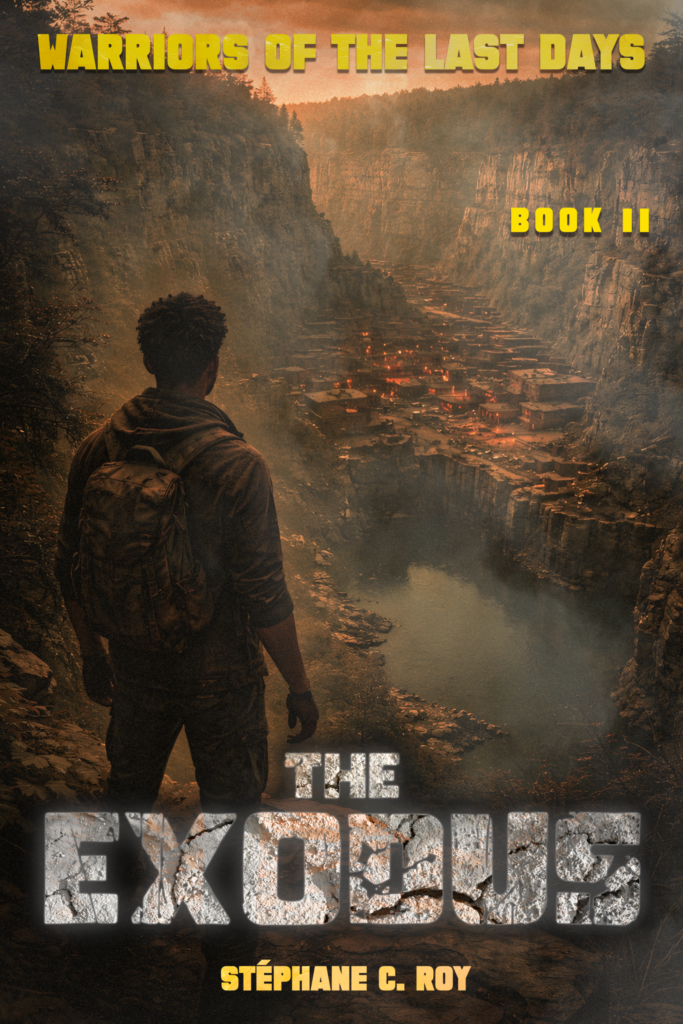
In this powerful dystopian sci fi novel, survival is a system. Every system demands input. And The Exodus might not mean escape. It might just mean being processed elsewhere.

In a fractured, wind-scoured future ruled by invisible systems of pressure and control, a solitary walker named Una becomes the anomaly the world cannot absorb as she drifts west into a storm of quarries, corridors, and quiet settlements that would rather erase her than let her pass.
Sea of Tranquility by Emily St. John Mandel (2022)
Interconnected literary narrative spanning centuries, including a post-pandemic collapsed world, exploring time, isolation, and human persistence through a travelling violinist and survivors.
The Last Beekeeper by Julie Carrick Dalton (2023)
In a near post-apocalyptic world where bees are extinct due to pesticides/climate collapse, a mother protects her daughter while navigating survivalist communities and government control.
The Book of the Unnamed Midwife by Meg Elison (2014)
Trans nurse wanders plague-ravaged America disguising as male, building fragile alliances amid gender collapse and survival horror.
The Girl with All the Gifts by M.R. Carey (2014)
Zombie apocalypse from hybrid girl’s point of view, journey through ruined UK with small group evading hordes, exploring humanity’s remnants.
The Drift is Book III in the Warriors of the Last Days cycle, but it reads powerfully on its own as a complete journey across a world that thinks it has already decided your place.
If you are ready for dystopian science fiction that feels uncomfortably possible, that lingers long after the last page, and that turns air, stone, and silence into characters as vivid as any survivor, the Drift is for you.
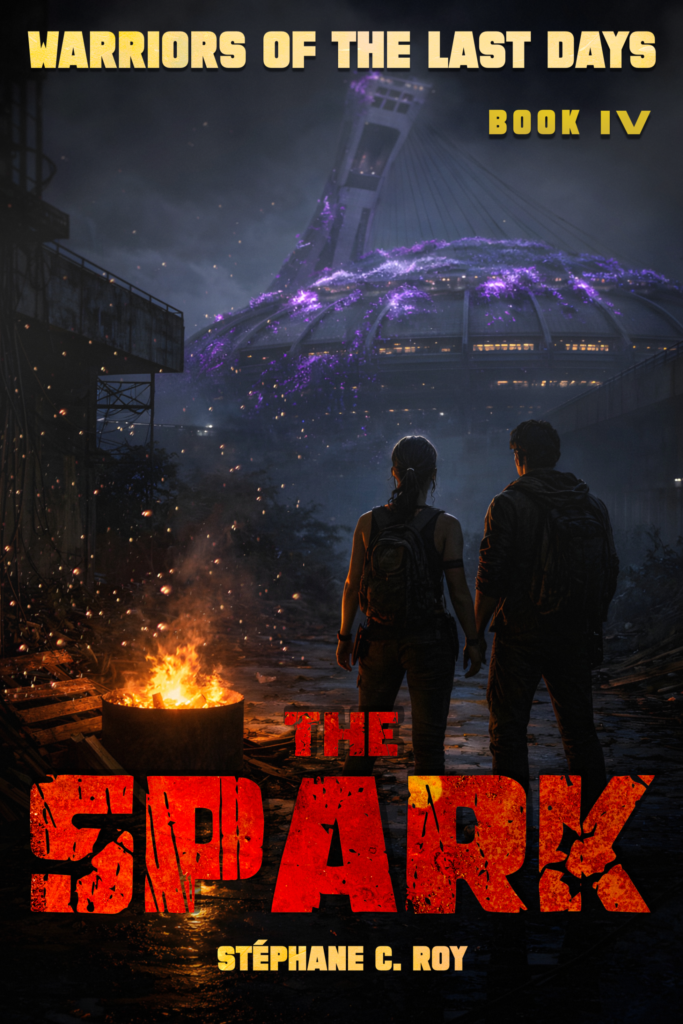
In a ruined Montreal ruled by a living Stadium and its invisible Pressure, three broken survivors become the spark that severs the city from its monstrous hive-mind god, knowing they might free everyone or collapse what is left of the world.
Some Desperate Glory by Emily Tesh (2023)
Kyr, a fierce young soldier raised in a militaristic enclave, rebels against her dystopian society’s genocidal war after discovering its brainwashing secrets, navigating betrayal, identity crises, and systemic indoctrination in a multi-POV tale of defiance.
Service Model by Adrian Tchaikovsky (2024)
Uncharismatic robot Charles serves in a crumbling corporate dystopia until a murder mystery forces him to navigate human society’s absurdities, questioning AI autonomy amid systemic exploitation and body-mod horror.
The Saint of Bright Doors by Vajra Chandrasekera (2024)
Feral assassin-child raised to kill a god-like figure arrives in a surveilled city of assassins and cults, unraveling identity, systemic divine oppression, and body-mutating magic in a surreal literary dystopia.
These Burning Stars by Bethany Jacobs (2023)
A disgraced soldier pursues a terrorist across a galaxy-spanning empire built on child slavery and AI control, confronting complicity in oppressive systems amid chases, betrayals, and identity fractures.
The Mercy of Gods by James S.A. Corey (2024)
Human scientists are captured by god-like aliens in a vast empire, enduring brutal experiments and psychological control while plotting survival amid biotech horrors and systemic cruelty.
Comparable Titles: What They Are and Why They Matter
Comparable titles, often called “comp titles”, are existing books that share meaningful similarities with a new work. These similarities can come from genre, tone, themes, audience, narrative structure, or even the emotional experience the book delivers. They are not exact matches or copies. Instead, they act as reference points that help position a book within a recognizable landscape.
For readers, comp titles answer a simple question: “What does this feel like?” If a book is described as blending the tension of one title with the world-building of another, it gives an immediate sense of what to expect. This reduces uncertainty and makes discovery easier, especially in a crowded market where attention is limited.
For publishers, booksellers, and media, comparable titles are a practical tool. They help determine where a book belongs on shelves (physical or digital), how it should be marketed, and which audience is most likely to respond. A strong set of comp titles can clarify whether a book leans more literary or commercial, niche or mainstream, experimental or accessible.
For authors, comp titles are a way to communicate intent without over explaining. Instead of describing every aspect of a story, they can point to existing works that capture key elements of style, pacing, or scope. This is especially important when presenting a project to agents, publishers, or collaborators.
The value of comparable titles lies in precision. Effective comps are specific, relevant, and current enough to reflect today’s readership. They highlight overlap without suggesting imitation. When chosen well, they create a bridge between the familiar and the new, helping readers understand where a story fits, and why it’s worth their time.
 Stéphane Roy is a lifelong reader and writer with a deep love for science fiction, apocalyptic worlds, and tightly constructed mysteries. This is his first novel. He lives in the Yukon with his dog and his aquarium, where long winters, silence, and wide, sometimes glowing, skies leave plenty of room for imagining the end of the world, and what might come after it. He is also waiting, with cautious optimism, for the aliens to finally reveal themselves and straighten us all out.