
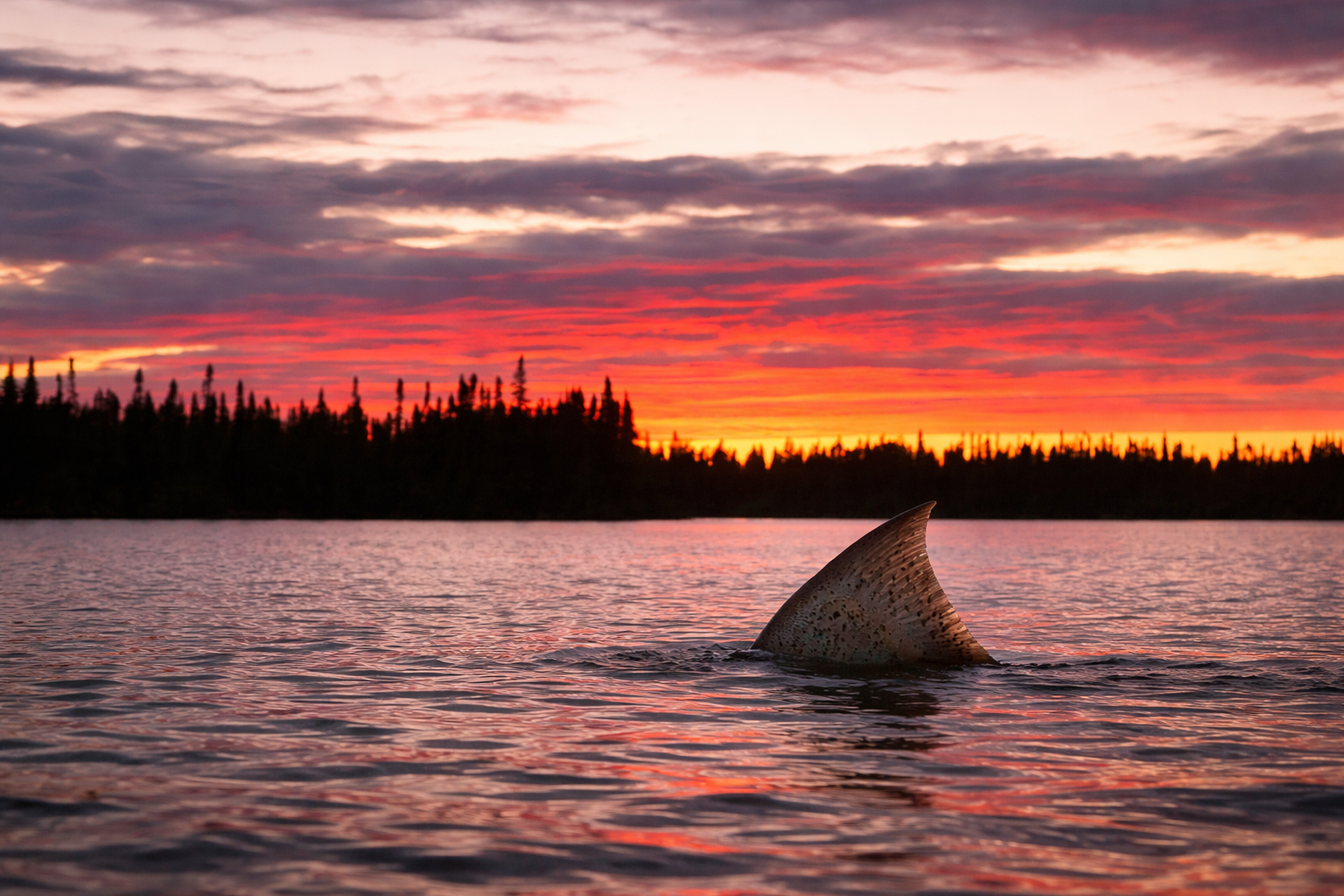
THE LONGEST NAMED PLACE IN CANADA
Pekwachnamaykoskwaskwaypinwanik Lake is a freshwater lake in Manitoba, Canada. Its name is Cree for “where the wild trout are caught by fishing with hooks,” and it holds the record as the longest place name in Canada at 31 letters.
The lake is located south of Red Sucker Lake, near the Ontario border, and is known locally for its trout fishing.
Pekwachnamaykoskwaskwaypinwanik Lake’s coordinates are approximately 54°1’42“N, 93°32’1”W, and it sits at an elevation of 219 metres. The lake is roughly 8.9 km in length. It sits on the Canadian Shield, ancient Precambrian rock, in remote boreal forest.
The region is genuinely remote and fly-in or winter-road accessible.
The Name and Its Weight
A Manitoba toponymist project has noted that Indigenous place names across the province describe the land and its uses, connecting people to their history and culture. The name Pekwachnamaykoskwaskwaypinwanik Lake is a perfect example: it is not a label but a description of a practice: hook fishing for wild trout.
The People Who Actually Lives Near Pekwachnamaykoskwaskwaypinwanik Lake
The real-world nearest community to Pekwachnamaykoskwaskwaypinwanik Lake is the Red Sucker Lake First Nation. However, a precision point worth noting:
Red Sucker Lake is an Oji-Cree First Nation in Manitoba, located about 706 km northeast of Winnipeg. The peoples of Red Sucker Lake were historically part of the Island Lake Band of “Cree,” and the native language is the Island Lake dialect of Oji-Cree.
The people in the area are Oji-Cree (Anisininew), are not strictly Cree. The story uses Cree words (Okwâskwêpicikêw, Kinoosao, Wâswânipiy) without identifying the group by name, which is a deliberate narrative choice, and probably a wise one, given the blended linguistic and cultural identity of the region.
The community is accessible only by winter road from Garden Hill, with no permanent road access, and the nearest hospital is in Norway House or Thompson.
The Mythology
The story’s creature, felt before seen, scarred like its victim, drawing a fisher toward it rather than away, maps closely onto documented Algonquian water spirit traditions.
Central to Ojibwe (and related Oji-Cree) religion are powerful spirit beings. Among the most prominent are the Mishebeshu, underwater and underground serpents whose activities are often harmful.
The underwater panther (Mishipeshu or Mishibizhiw) has the head and paws of a giant cat but is covered in scales and has dagger-like spikes running along its back and tail. It is the most important of the underwater animals for the Ojibwa.
Mishipeshu dwells in the depths of lakes and is regarded as a symbol of the lake’s power. The water spirit travels through underwater tunnels and you’ll never hear it coming.
In Cree tradition, the Misikinebik is an underwater horned serpent common to the legends of most Algonquian tribes, said to lurk in lakes and eat humans. The Great Lynx (Mishipizhiw) is a powerful mythological creature something like a cross between a cougar and a dragon, a dangerous monster who lives in deep water and causes men and women to drown.
The story’s creature doesn’t match any of these exactly, it’s deliberately undefined, but its behaviour pattern (residing in deep water, dragging people down, leaving a scar on its first contact, being drawn to light) resonates with the broader category of Algonquian underwater beings.
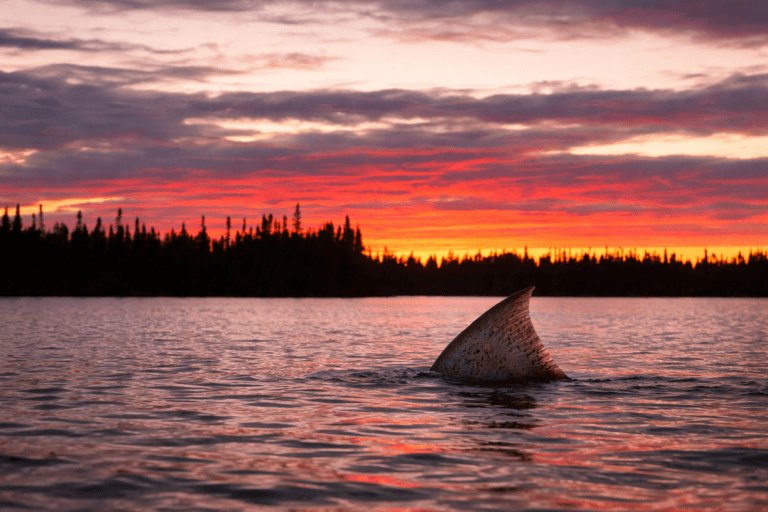
THE TOWING THE LINE SHORT STORY
It was part of a challenge we gave ourselves with various locations in Canada.
A government surveyor is there to investigate a mysterious creature in the Pekwachnamaykoskwaskwaypinwanik lake and the fisherman obsessed with bring it down.
The story is a stand alone and does not connect, for the moment, to any other short stories or novels in the Warriors of the Last Days series for the foreseeable future.
A new post-apocalyptic story from Canada. Every month.
The earlier you join, the larger your library becomes.
Join now. Start building your library before the next hundred.
 Stéphane Roy is a lifelong reader and writer with a deep love for science fiction, apocalyptic worlds, and tightly constructed mysteries. This is his first novel. He lives in the Yukon with his dog and his aquarium, where long winters, silence, and wide, sometimes glowing, skies leave plenty of room for imagining the end of the world, and what might come after it. He is also waiting, with cautious optimism, for the aliens to finally reveal themselves and straighten us all out.