
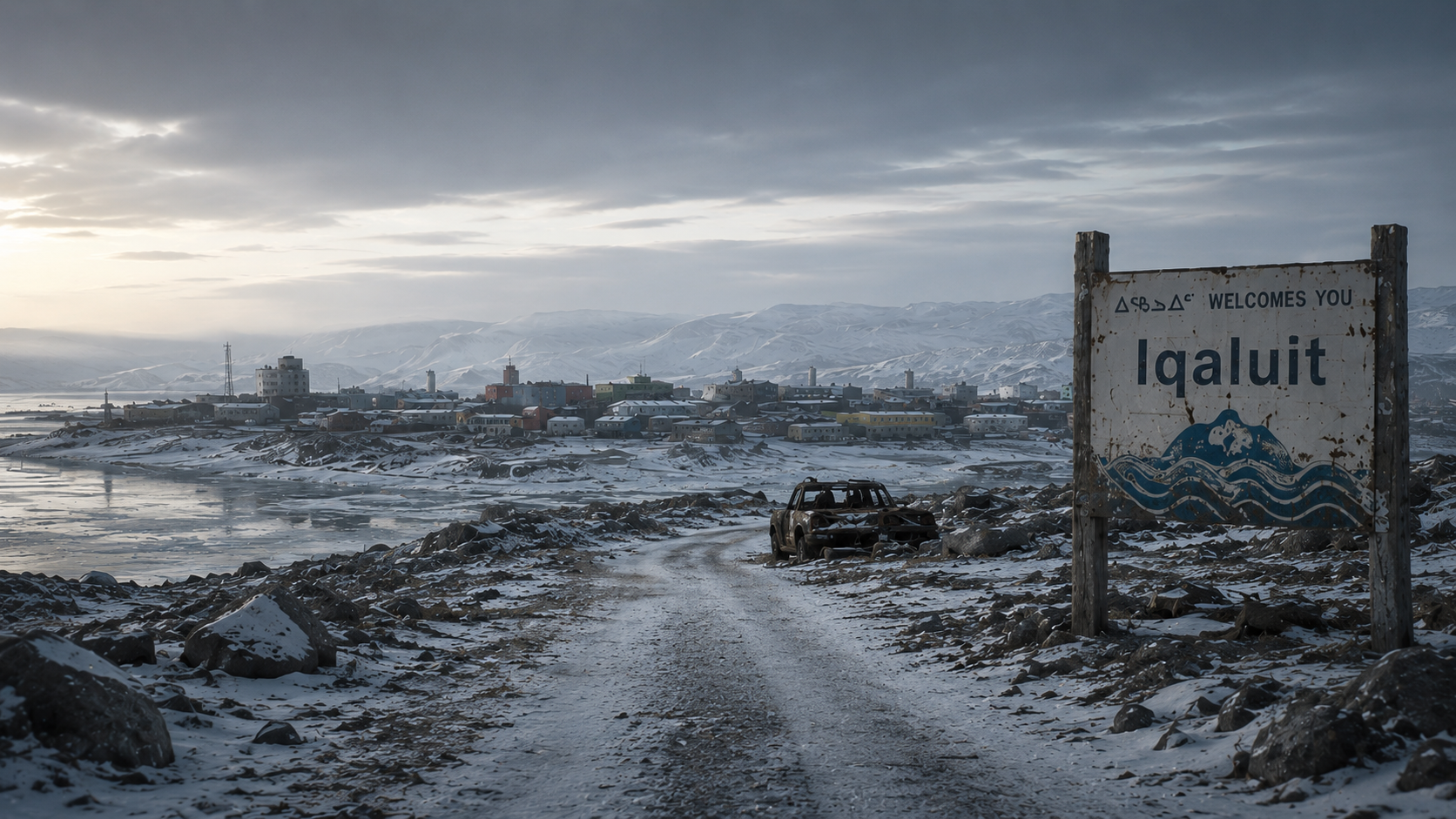
Frozen Worlds: Exploring Post-Apocalyptic Fiction in Nunavut
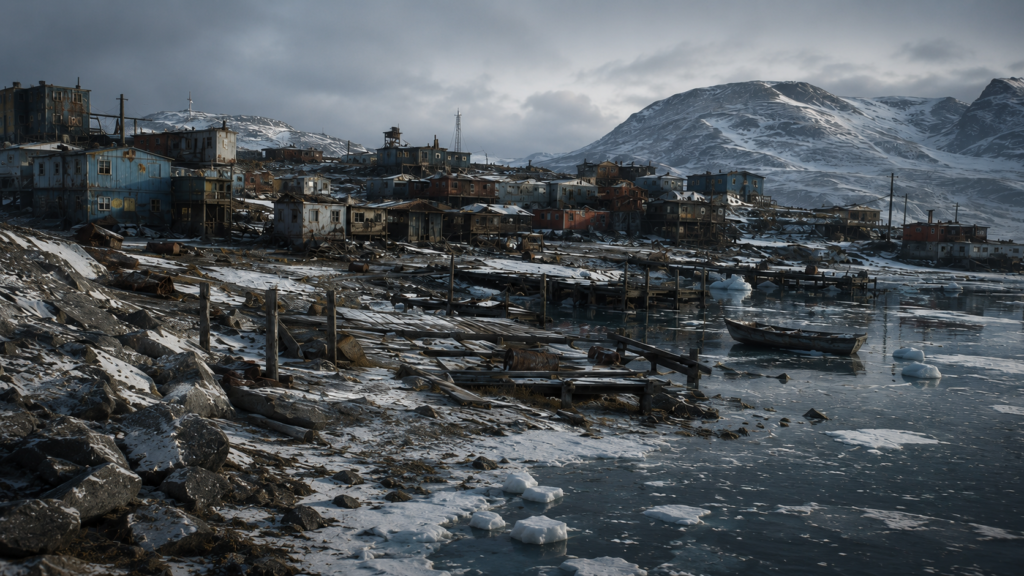
The Arctic has always occupied a unique place in the imagination of writers. Vast, isolated, and often unforgiving, Canada’s North offers a setting unlike any other for post-apocalyptic fiction. In Nunavut, where communities are separated by immense distances and survival has always depended on cooperation, knowledge, and resilience, the collapse of modern civilization takes on an entirely different meaning.
Unlike traditional post-apocalyptic stories that focus on ruined cities, abandoned highways, and urban decay, post-apocalyptic fiction in Nunavut often asks a different question: what happens when the systems that southern society depends upon disappear, but the people who have lived on the land for millennia remain?
Why Nunavut Is the Perfect Post-Apocalyptic Setting
Nunavut is already a place where survival requires careful preparation. Many communities are accessible only by air or seasonal sea routes. Store shelves rely on long supply chains stretching thousands of kilometers south. Winter temperatures can plunge far below -40°C, while months of darkness test both physical and psychological endurance.
In a post-apocalyptic scenario, these realities become central to the story.
A widespread pandemic, global war, climate catastrophe, or technological collapse would cut remote communities off from outside support almost immediately. Yet unlike many southern populations, Inuit communities possess generations of traditional knowledge, known as Inuit Qaujimajatuqangit, that provides proven strategies for living from the land, traveling safely, hunting, and surviving extreme conditions.
As a result, many northern speculative works portray the Arctic not simply as a place of hardship, but as a place of possibility.
Indigenous Futurism and Northern Survival
Much contemporary northern speculative fiction falls under the growing movement known as Indigenous Futurism. Rather than focusing solely on destruction and despair, these stories emphasize cultural continuity, adaptation, and survivance.
Many Indigenous writers point out that their communities have already endured profound societal upheavals through colonization, forced relocations, residential schools, and cultural suppression. Consequently, post-apocalyptic fiction in Nunavut often explores resilience rather than collapse.
Instead of survivors scavenging supermarkets or hiding in underground bunkers, readers encounter communities relying on collective knowledge, hunting traditions, oral histories, and deep relationships with the land.
Notable Works and Inspirations
Taaqtumi: An Anthology of Arctic Horror Stories
Edited by Aviaq Johnston and featuring stories by Thomas Anguti Johnston, Taaqtumi presents a collection of Arctic horror and speculative fiction deeply rooted in Inuit culture and northern landscapes.
Several stories explore post-apocalyptic or near-apocalyptic scenarios involving pandemics, isolation, and survival on the tundra. The collection demonstrates how Arctic horror can blend ancient beliefs with modern crises to create uniquely northern visions of the end of the world.
Moon of the Crusted Snow by Waubgeshig Rice
Although set in a remote Anishinaabe community in northern Ontario rather than Nunavut, Moon of the Crusted Snow has become essential reading for anyone interested in Arctic and sub-Arctic survival fiction.
The novel follows an isolated community after power grids fail and outside communication disappears. As food supplies dwindle and winter closes in, traditional knowledge once again becomes vital. The story perfectly captures many of the challenges remote Nunavut communities would face during a societal collapse.
The Marrow Thieves by Cherie Dimaline
Cherie Dimaline’s acclaimed dystopian novel imagines a future where environmental catastrophe has stripped humanity of the ability to dream. Indigenous peoples become targets because their bone marrow holds the secret to restoring this lost ability.
While not set in Nunavut, the novel powerfully explores themes of cultural endurance, resistance, and survival that resonate strongly throughout northern Indigenous speculative fiction.
The Wolves of Winter by Tyrell Johnson
Set in the Yukon after civilization has collapsed, The Wolves of Winter follows a family struggling to survive in a frozen, isolated wilderness.
The novel captures many of the realities that define northern post-apocalyptic fiction: hunting, trapping, maintaining shelter, conserving heat, and defending scarce resources in an unforgiving environment.
Inuit Futures Beyond the Apocalypse
Award-winning Inuit writer Megan Ungalak of Igloolik has explored futures in which Inuit communities thrive after global catastrophe. One celebrated short story imagines a prosperous Nunavut community in 2050 following a devastating worldwide plague.
Rather than depicting social breakdown, the story presents an Arctic utopia built upon Inuit Qaujimajatuqangit, demonstrating how traditional knowledge may offer pathways not merely to survival, but to renewal.
Nunavik: Northern Quebec’s Untapped Wasteland
Curiously, explicit post-apocalyptic fiction set in Nunavik—the Inuit region of northern Quebec—remains surprisingly rare.
Given Nunavik’s dramatic landscapes, isolated villages, and rich cultural traditions, the region offers enormous potential for future writers. Endless tundra, abandoned mining sites, shifting sea ice, and communities connected primarily by air provide fertile ground for stories of survival and rebuilding.
Works such as Sanaaq by Mitiarjuk Nappaaluk, while not post-apocalyptic, offer invaluable insight into traditional Inuit life and survival on the land. For writers seeking authenticity in northern settings, these stories provide essential cultural and historical context.
Warriors of the Last Days: Arctic Horror in Canada’s Far North
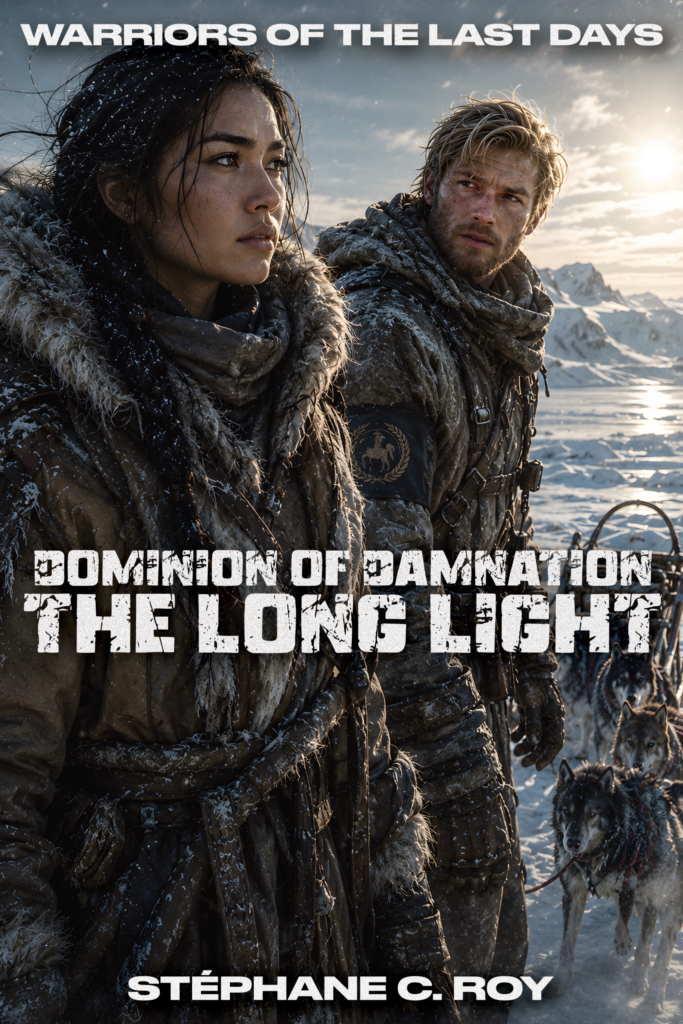
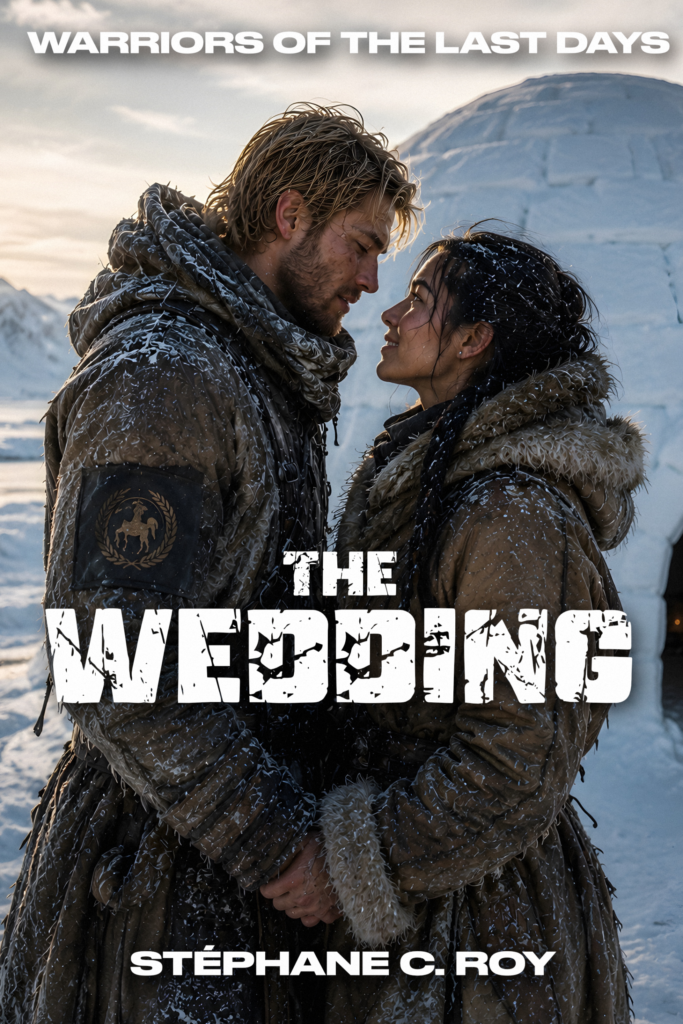
The Warriors of the Last Days universe also ventures into Canada’s Arctic, blending post-apocalyptic survival with Inuit legends and cosmic horror with short stories of post-apocalyptic fiction in Nunavut. A novel is also in preparation for 2028.
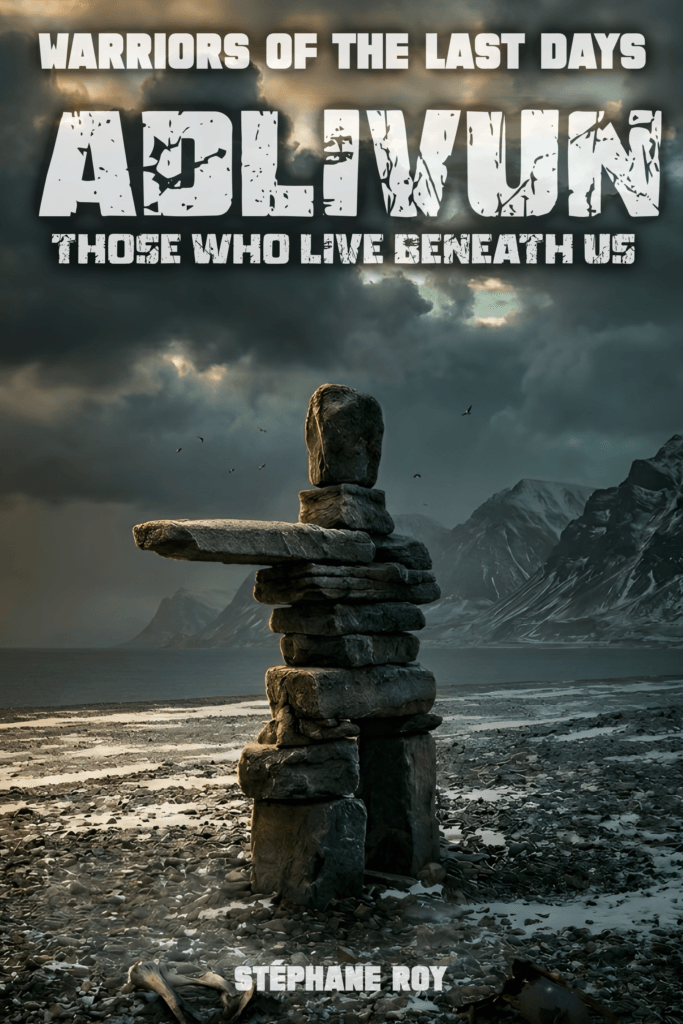
Adlivun: Those Who Live Beneath Us
Set in an isolated northern community after the collapse of modern supply networks, Adlivun: Those Who Live Beneath Us follows Taktuq, a cautious hunter confronted with unsettling changes in the sea ice and increasingly strange behavior among local wildlife.
Guided by a forgotten chain of Inuksuit stretching toward the coast, Taktuq embarks on a dangerous journey to uncover what now lurks beneath the open water before whatever has emerged from the depths permanently alters the future of his community. Drawing heavily on Inuit traditions and Arctic landscapes, the story explores themes of survival, ancestral knowledge, and the unknown forces hidden beneath the frozen North.
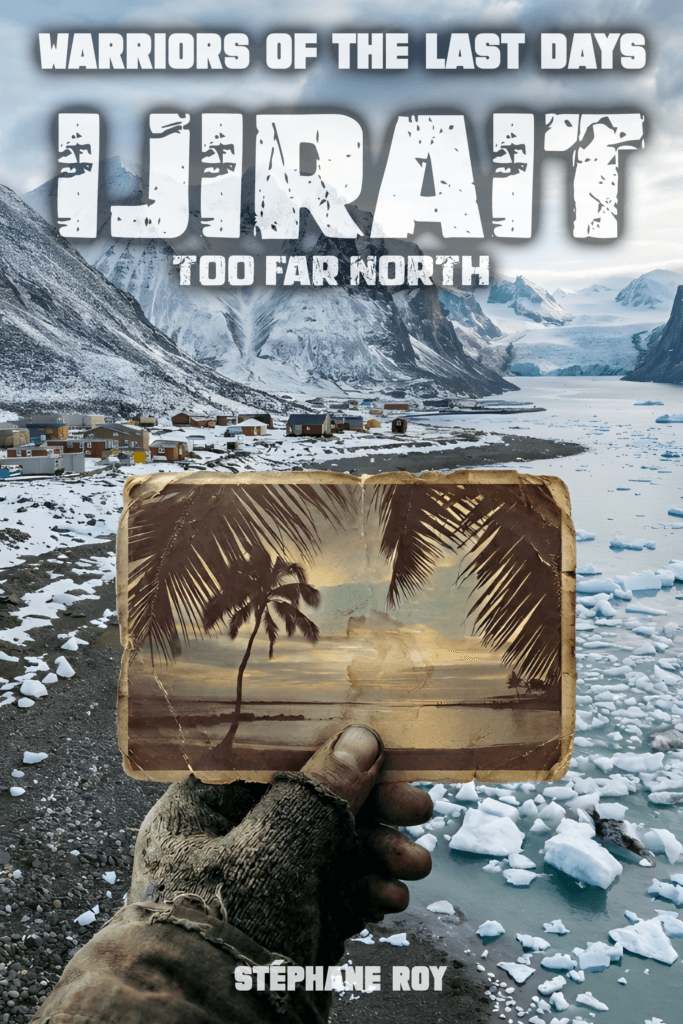
Ijirait: Too Far North
In Ijirait: Too Far North, the familiar routines of northern travel begin to unravel when a mail driver makes an unscheduled detour to deliver a tropical postcard to Canada’s northernmost community.
What begins as a simple act of kindness quickly becomes a nightmare as subtle distortions of reality begin to spread. Entire moments disappear from memory, landmarks shift, and the route itself slowly becomes impossible to read. As the phenomenon intensifies, the driver must document what is happening and escape before the mysterious influence consumes both his memories and his sense of direction.
Inspired by the legendary Ijirait of Inuit tradition, enigmatic beings associated with disorientation and altered perception, the story transforms one of the Arctic’s most remote landscapes into a deeply unsettling post-apocalyptic frontier.
A Different Kind of Apocalypse
Post-apocalyptic fiction in Nunavut challenges many conventions of the genre. The North is not merely a backdrop for disaster; it is an active force that shapes every aspect of survival.
In these frozen worlds, technology often fails, supply chains vanish, and modern comforts disappear. What remains are community, knowledge, adaptability, and the enduring relationship between people and the land.
As Indigenous Futurism continues to grow, readers can expect even more powerful stories emerging from Canada’s North, stories that remind us that surviving the end of the world may depend less on weapons and stockpiles, and more on culture, cooperation, and remembering how to live with the land rather than against it.
© Copyright 2026 WARRIORS OF THE LAST DAYS All rights reserved Privacy Policy
- Frozen Worlds: Exploring Post-Apocalyptic Fiction in Nunavut
- Why Nunavut Is the Perfect Post-Apocalyptic Setting
- Indigenous Futurism and Northern Survival
- Notable Works and Inspirations
- Nunavik: Northern Quebec’s Untapped Wasteland
- Warriors of the Last Days: Arctic Horror in Canada’s Far North
- A Different Kind of Apocalypse
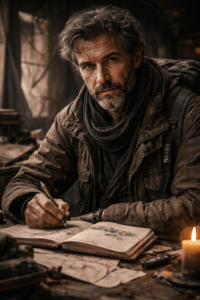 Stéphane Roy is a lifelong reader and writer with a deep love for science fiction, apocalyptic worlds, and tightly constructed mysteries. This is his first novel. He lives in the Yukon with his dog and his aquarium, where long winters, silence, and wide, sometimes glowing, skies leave plenty of room for imagining the end of the world, and what might come after it. He is also waiting, with cautious optimism, for the aliens to finally reveal themselves and straighten us all out.